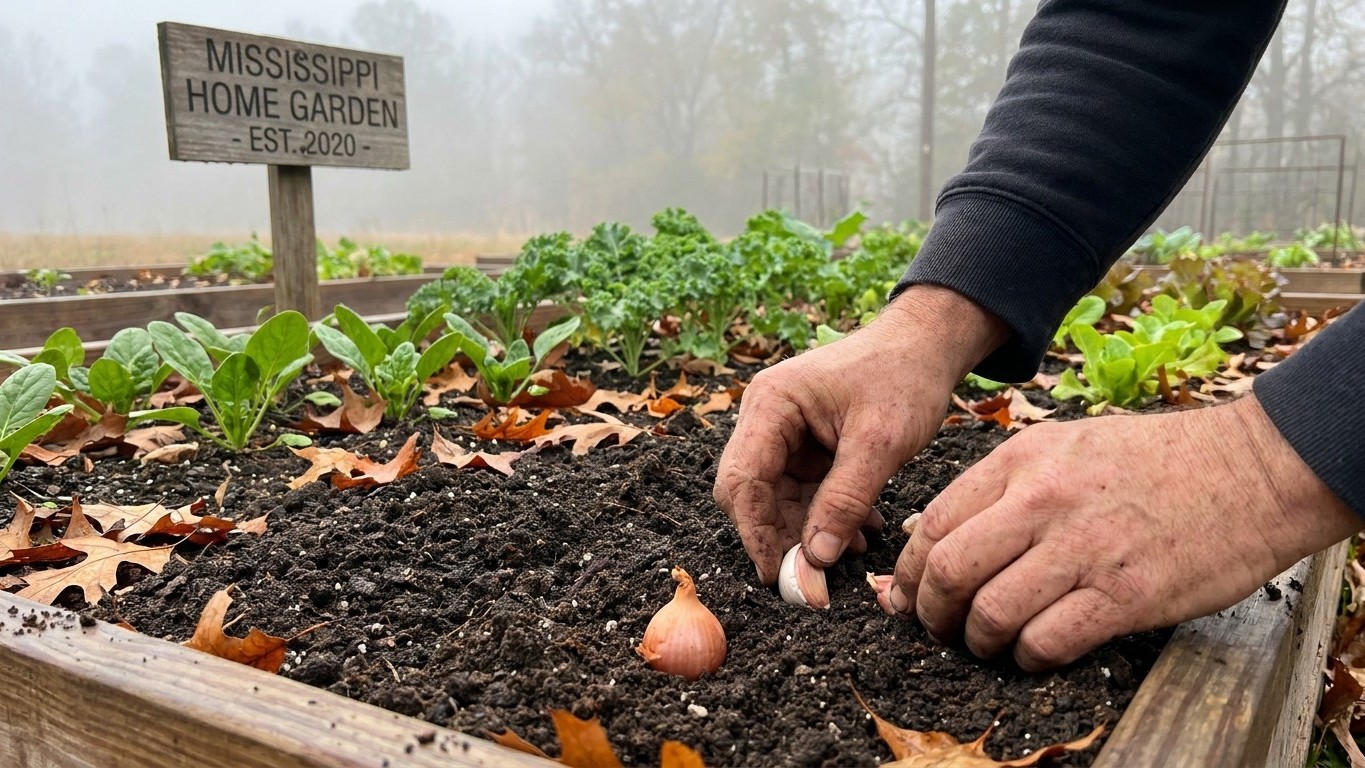

Mississippi gardeners can still put a lot in the ground in November: garlic, shallots, spinach, kale, collards, mustard greens, turnips, radishes, carrots, lettuce and English peas all tolerate the light frosts that typically show up between November 7 and November 22 across the state. With most of Mississippi sitting in USDA zones 7b to 9a, the growing season doesn’t shut down this month, it just shifts toward cold-hardy crops.
What goes in the ground in November

The decision this month isn’t the calendar, it’s soil temperature and whichever side of the first frost window a garden falls on. Mississippi’s average first fall freeze lands between November 7 and November 22 depending on location, and that range comes from one reference weather station, not a state-wide guarantee. A garden fifteen miles inland or slightly higher in elevation can see frost a week or two earlier than that window suggests, so treat early November as still-safe territory and treat late November as the point where a hard freeze becomes a real possibility.
Before that freeze risk sets in, direct-sown crops that germinate well in cooling soil are the safest bet: spinach, radishes, turnips, mustard greens, lettuce and English peas all handle soil in the 40 to 65 degree range and shrug off a light frost once established. Garlic and shallots are the signature November planting in the Deep South, going in as cloves or sets now so they root through winter and bulb up by late spring. Onion sets and transplants for a fall crop also go in during this window in much of the state.
What doesn’t belong in a Mississippi garden bed this month is anything warm-season: tomatoes, peppers, squash, beans and cucumbers will not survive the first freeze, no matter how mild a particular week feels. That’s the gamble to avoid.
| Category | Examples | November verdict |
|---|---|---|
| Alliums | Garlic, shallots, onion sets | Safe, classic November planting |
| Hardy greens | Spinach, kale, collards, mustard | Safe, tolerates light frost |
| Root crops | Radishes, turnips, carrots | Safe for direct sowing |
| Warm-season | Tomatoes, peppers, squash | Avoid, will not survive frost |
What to start under cover
The math for cover-grown seedlings runs backward from the last spring frost, not forward from today’s weather. Mississippi’s average last spring frost falls between March 6 and March 22 at the reference station, and again, county-level gardens often see it a week or two later. Onion transplants for spring typically go into the ground four to six weeks before that last frost date, which lands somewhere in late January to early February. Seed started indoors needs eight to ten weeks of growth before it’s ready to transplant, and counting back from that late-January window puts the seed-starting date squarely in mid-to-late November.
That’s the crop worth starting under cover right now: onions destined for a February or early March transplant, plus early cabbage and lettuce seedlings meant for a cold frame rather than open ground. A cold frame or unheated greenhouse also lets a gardener keep a second round of lettuce, spinach and Asian greens going through the coldest stretch, since the cover buys several degrees of protection on a frosty night.
Two mistakes ruin this timing. Starting too early leaves onion or cabbage seedlings sitting in trays for weeks past their prime, and they turn leggy and rootbound before there’s anywhere safe to put them. Starting too late means the seedlings are still juvenile when the transplant window arrives, and they never catch up to a fall-sown crop planted directly outdoors. Counting backward from the frost window, rather than from a fixed date on a seed packet, keeps both mistakes off the table.
What is ready to pick
November harvests in Mississippi lean on what went into the ground back in September: turnip greens, mustard, collards and kale sown then are usually hitting full size now, and a light frost actually improves their flavor by converting starches to sugar. Radishes and early turnips sown in early fall should be pulling out of the ground on schedule, and carrots planted in late summer are typically ready as soon as their shoulders show above the soil line.
Sweet potato harvest usually wraps up by early November before soil temperatures drop too far, and pecans, one of the state’s signature crops, are dropping and being gathered through much of the month. On the Gulf Coast and in warmer pockets of south Mississippi, satsuma and other cold-hardy citrus often ripen in November, though a hard freeze can end that window abruptly, so picking before a cold snap beats losing the crop to it.
Anyone storing winter squash, sweet potatoes or onions from earlier harvests should be checking that stockpile now. A soft spot, a sweet fermented smell or any give when squeezed means that piece needs to be used or composted before it spreads rot to the rest of the batch. Curing sweet potatoes in a warm, humid spot for a week or two after digging extends their storage life considerably, and skipping that step is the most common reason a stored sweet potato crop goes bad early.
The jobs that matter this month
Dormant pruning on deciduous fruit trees and cane berries can start once the leaves have dropped, and Mississippi’s mild winters mean that window opens earlier here than it does farther north. Getting ahead of it now, rather than waiting for a January cold spell to force the issue, means cleaner cuts and less stress on the tree.
Protecting tender plants
Citrus trees, satsumas especially, need frost protection ready before the first hard freeze hits, not after. That means having frost cloth, blankets or a portable heat source on hand, since a single hard freeze can kill wood on an otherwise healthy tree. Mulching root zones of perennials and newly planted garlic or shallots with two to three inches of straw or shredded leaves buys insulation against sudden temperature swings, and Mississippi’s abundant fall leaf drop makes free mulch easy to come by this month.
Soil, seed and tools
Empty beds benefit from a cover crop of crimson clover or winter rye sown now, which holds soil structure through winter rain and adds organic matter come spring. This is also the practical window to order seed for next season before the popular varieties sell out, to get a soil test done while labs aren’t backed up with spring rush samples, and to clean and sharpen pruners and shears before they sit unused through the coldest weeks. None of these jobs feel urgent in the moment, but skipping them costs real time come planting season.
What not to do in November
The most common mistake is trusting a warm afternoon over the calendar and setting out tomato or pepper transplants because the air felt like spring. Mississippi’s November weather swings hard, and a 75-degree day can be followed within a week by a freeze that kills anything tender. If a warm-season crop is still producing in the garden, it’s better treated as a bonus to enjoy until frost takes it, not a reason to plant more of the same.
Uncovering row covers or cold frames too early after a mild stretch is the second trap. A few warm days in a row tempt gardeners to pull protection off hardy greens, and then a sudden overnight freeze catches those plants exposed. Leaving covers loosely in place, even on mild days, costs nothing and prevents that loss.
Feeding nitrogen to trees, shrubs or perennial beds this late pushes soft new growth right before a freeze, and that new growth is exactly what cold damages first. Nitrogen applications belong in spring when plants can use the growth to build strength, not in the weeks heading into winter. A light application of compost is a safer way to feed soil biology without triggering that tender new growth.
Checking this against your own county
A state-wide frost window is a starting point, not an instruction for a specific yard. Mississippi runs from USDA zone 7b in the hill country of the north to zone 9a along the coast, and that spread alone shifts frost timing by two to three weeks between the top and bottom of the state. Elevation, tree cover and how close a garden sits to a body of water all nudge the numbers further. The Mississippi State University Extension Service publishes county-level guidance that accounts for these local differences, and it’s worth checking against the state-wide figures here before committing a bed to any one planting date.
Common questions
Can you plant garlic in Mississippi in November?
Yes. November is the standard window for planting garlic cloves and shallot sets across the state, giving them time to root before the coldest weather arrives.
Is it too late to plant tomatoes in Mississippi in November?
Yes. With the first fall frost typically arriving between November 7 and November 22, tomato and other warm-season transplants set out now won’t survive long enough to produce.
What vegetables tolerate frost in Mississippi gardens?
Spinach, kale, collards, mustard greens, turnips, radishes, carrots and English peas all handle light frost, and several of these actually taste sweeter after a cold snap.
When should Mississippi gardeners protect citrus trees from cold?
Frost protection should be ready before the first hard freeze, since the exact date varies by location and a single unprotected freeze can damage wood on satsuma and other cold-sensitive citrus.
Gardeners who plant by the Moon can check the November 2026 moon planting calendar, a tradition rather than a proven method.
Related guides
Elsewhere? See what to plant in November in every state and province.