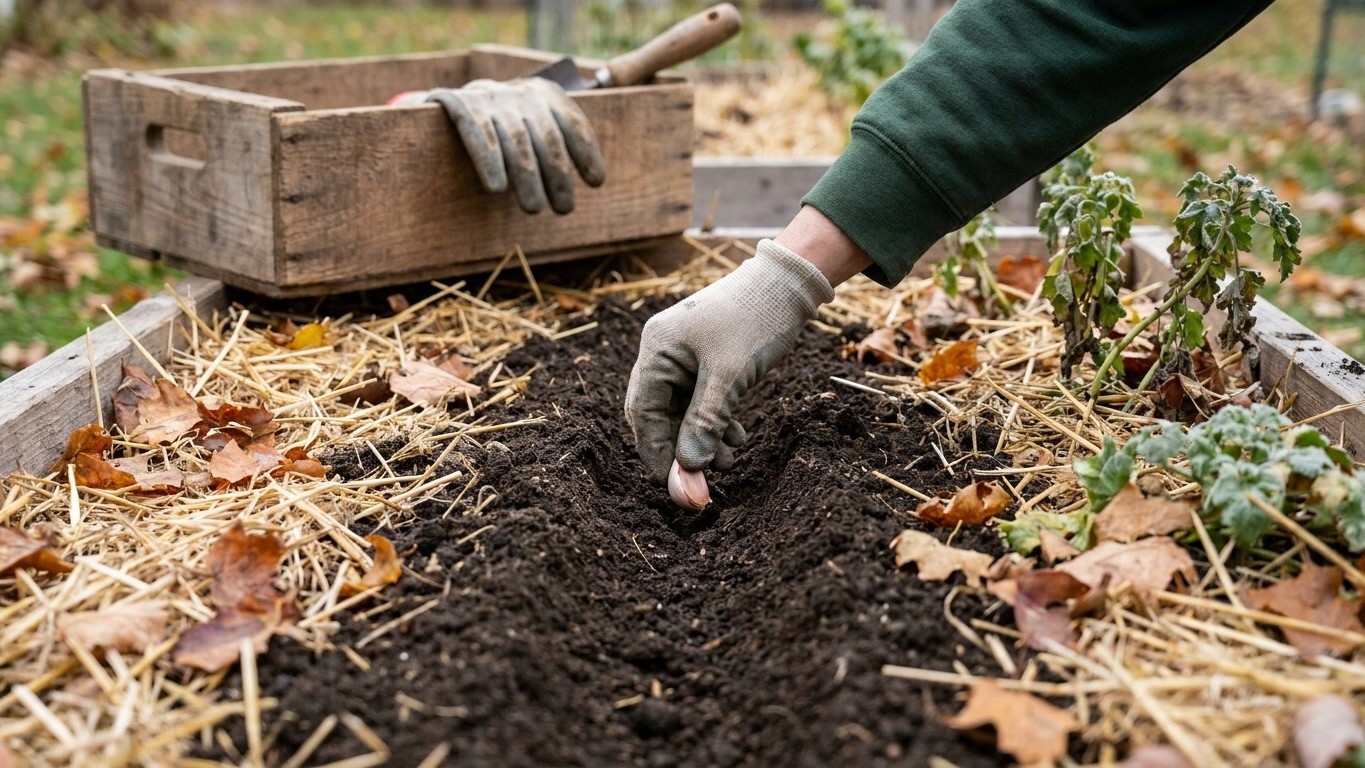

By November, most of Montana has already crossed its first fall frost, so the open garden is done for the season in nearly every county. The real answer this month is dormant planting, cold frames, and prep work: garlic where soil is still workable, bare-root fruit stock while the ground isn’t frozen solid, and the indoor and cold-frame jobs that set up next spring.
What goes in the ground in November

First fall frost at the Billings reference station lands between October 1 and October 14, and by November most Montana soil is at or near freezing, especially away from the valley floors. That single fact reshapes the whole month: this isn’t a planting window, it’s a closing-out window, and pretending otherwise wastes seed and effort. Montana’s USDA hardiness zones run 3a to 6a, with Billings sitting on the milder end of that range, so what’s still possible even there won’t hold in the colder mountain valleys.
For most of the state, nothing new goes into open, uncovered ground in November. Say that plainly, because a lot of general planting advice online assumes a longer season than Montana actually has. But a few things still work:
- Garlic and shallots, if the soil in your particular spot hasn’t frozen yet, especially in warmer valley locations like the Billings area. This is a late window, not an ideal one, so cloves planted now should go in deep and get mulched heavily right away.
- Bare-root and dormant fruit trees, canes, and shrubs, which can still go into unfrozen ground since they aren’t actively growing and don’t need to establish roots before winter the way a leafy transplant would.
- Cold frames and low tunnels holding hardy greens sown earlier in the fall, like spinach, mache, and claytonia, which can keep producing sporadically under cover well past the point the open garden has shut down.
- Forced rhubarb and chicory, brought into a dark, cool space to push tender shoots and leaves indoors, a classic way to get fresh greens without any outdoor soil work at all.
Everything else, from cool-season greens to root vegetables, needed to be in the ground weeks earlier to make any real growth before the season closed. If you’re holding seed packets for lettuce or peas hoping for a late run, that ship has sailed for outdoor planting this month.
What to start under cover
Counting backward from the local frost window is the only way this month makes sense, because Montana’s last spring frost runs April 29 to May 10 at Billings, and colder valleys push that later still. Tomatoes started 6 to 8 weeks ahead of that date land in February. Peppers, needing 8 to 10 weeks, land in January. Onions and leeks, often started 10 to 12 weeks out, land in February as well. None of those crops belong on a seed-starting tray in November, and starting them now guarantees leggy, rootbound plants long before it’s safe to set them outside.
What does fit November is winter sowing: many hardy perennials, native wildflowers, and self-sowing annuals need 8 to 16 weeks of cold, moist stratification before they’ll germinate. Sealing seed and moist medium into vented containers and leaving them outside through winter lets Montana’s own cold do that work naturally, with germination timed to arrive near the spring frost window on its own. This is also a reasonable month to start sprouts and microgreens indoors on a countertop, since they run on a matter of days rather than weeks and don’t care what the calendar or the frost dates say.
The two failure modes worth naming: starting tender vegetable transplants too early leaves you with weak, overgrown plants stuck indoors for months, while waiting too long on cold-stratified seed means it never gets the sustained chill it needs and simply won’t sprout. November timing only works if you match the method to the crop.
What is ready to pick
Across most of Montana, there’s little to nothing left standing unprotected in the garden by November. First frost already passed in early-to-mid October at Billings, and colder valleys saw it sooner, so anything not harvested or covered by now has likely been damaged. That’s the honest state of the outdoor garden this month.
What still feeds a household comes from a few reliable sources. Leeks left in the ground under a thick layer of mulch or snow can be dug as needed well into winter, since they tolerate hard freezing better than almost any other vegetable. Kale under a cold frame or low tunnel often keeps producing usable leaves even after repeated freezes, sometimes tasting sweeter for it. Indoors, sprouts and microgreens can be cut on a rolling basis regardless of what’s happening outside the window.
The other job this month is going through what’s already in storage. Squash should be checked for soft spots or a sunken, dull patch on the skin, both signs it needs to be used soon rather than left to rot and spread to the rest of the pile. Potatoes showing green skin or sprouting eyes should be pulled out and used first. Onions with a soft neck or a moldy smell near the top should come out of storage immediately, since one spoiling onion can take down its neighbors if left in a bag or bin with them.
The jobs that matter this month
November carries a full slate of work even without anything new going into the soil, and skipping it costs real ground come spring. Dormant pruning tops the list: once fruit trees and berry canes have fully dropped their leaves and gone dormant, cuts made now heal without the stress of active sap flow, and it’s far easier to see the tree’s structure without foliage in the way. Apples, pears, cherries, raspberries, and currants all benefit from this timing.
Seed catalogs deserve attention now too, since the most popular varieties, especially short-season options suited to Montana’s tight frost window, tend to sell out well before spring planting arrives. Pulling out last season’s garden notes to plan crop rotation is a quiet but valuable use of a cold afternoon, and it’s much easier to do with a clear head in November than in a rush come April.
Soil testing and amending should happen while the ground is still workable in your area. Adding compost, lime, or other amendments now gives them the whole winter to integrate before anything gets planted. Compost piles need turning too, to keep the decomposition process from stalling out completely in the cold. Tools deserve a cleaning, sharpening, and light oiling before they go into storage for the season, both to protect the metal and to make spring work easier. Raised beds, fencing, and cold frame sashes are worth inspecting and repairing now, while there’s no growing crop in the way and no rush to get it done. Finally, stored crops need a weekly check, since a single rotting potato or squash can spread trouble through an entire bin if it’s not caught early.
What not to do in November
The most common mistake this month is working soil that’s frozen or waterlogged. Digging or tilling under those conditions compacts the structure in a way that’s hard to undo, leaving dense, poorly draining ground for spring planting. If the soil doesn’t crumble easily in your hand, leave it alone until it does.
Feeding nitrogen fertilizer late in the season is another trap, particularly on lawns or perennial beds. Nitrogen pushes soft, tender new growth, and that growth has no time to harden off before a hard freeze arrives, which means it simply dies back and wastes the plant’s stored energy. If soil testing shows a real need for amendments, favor slow-release options that won’t spike growth right before winter.
A mild stretch of November weather tempts a lot of gardeners into pulling mulch or row cover off beds too soon, thinking the worst of the cold has passed. It hasn’t. Montana’s freeze pattern doesn’t move in a straight line, and uncovering hardy greens or newly planted garlic during a warm spell just exposes them to the next hard freeze with no protection in place. Vent cold frames on warm days if needed, but leave the covering itself where it is.
Tender potted plants left outside on the assumption that “it’s not that cold yet” are another recurring loss. Once nighttime temperatures start flirting with freezing, those pots need to come indoors or into an unheated but enclosed space, not stay out on a porch waiting for a clear hard freeze warning that may arrive with little notice.
Checking this against your own county
A statewide picture for November is a starting point, not a set of instructions for your particular yard. Montana’s hardiness zones span 3a to 6a on the USDA map, and that range alone tells you conditions vary enormously between locations. Elevation shifts frost timing by weeks in either direction, and a mountain valley can see a hard freeze in a month when a lower-elevation town nearby stays clear. The frost dates cited here come from the Billings station specifically; other parts of the state, particularly higher and more northern locations, will run colder and earlier.
For numbers specific to your county, the Montana State University Extension service is the right next stop, along with the state’s own planting calendar resources.
Common questions
Can I still plant garlic in Montana in November?
In some milder valley locations where soil hasn’t frozen yet, yes, though it’s a late window rather than an ideal one. Plant deep and mulch heavily right away to protect the cloves through the cold months ahead.
What vegetables survive a Montana winter under cover?
Kale, spinach, mache, and claytonia are among the most reliable performers in a cold frame or low tunnel, often producing usable leaves through repeated freezes when open-garden crops have long since given out.
When should I start seeds indoors for a Montana garden?
It depends on the crop, counted backward from the local last spring frost, which runs April 29 to May 10 at the Billings reference station. Tomatoes typically start 6 to 8 weeks before that date, peppers 8 to 10 weeks before, and onions or leeks 10 to 12 weeks before, which puts most of that work in January and February rather than November.
Is Montana one hardiness zone?
No. The USDA Plant Hardiness Zone Map places Montana across a range of 3a to 6a, based on average annual extreme minimum temperature. That spread means a planting date or hardy variety that works in a milder valley like Billings may not hold up in a colder mountain location elsewhere in the state.
Gardeners who plant by the Moon can check the November 2026 moon planting calendar, a tradition rather than a proven method.
Related guides
Elsewhere? See what to plant in November in every state and province.