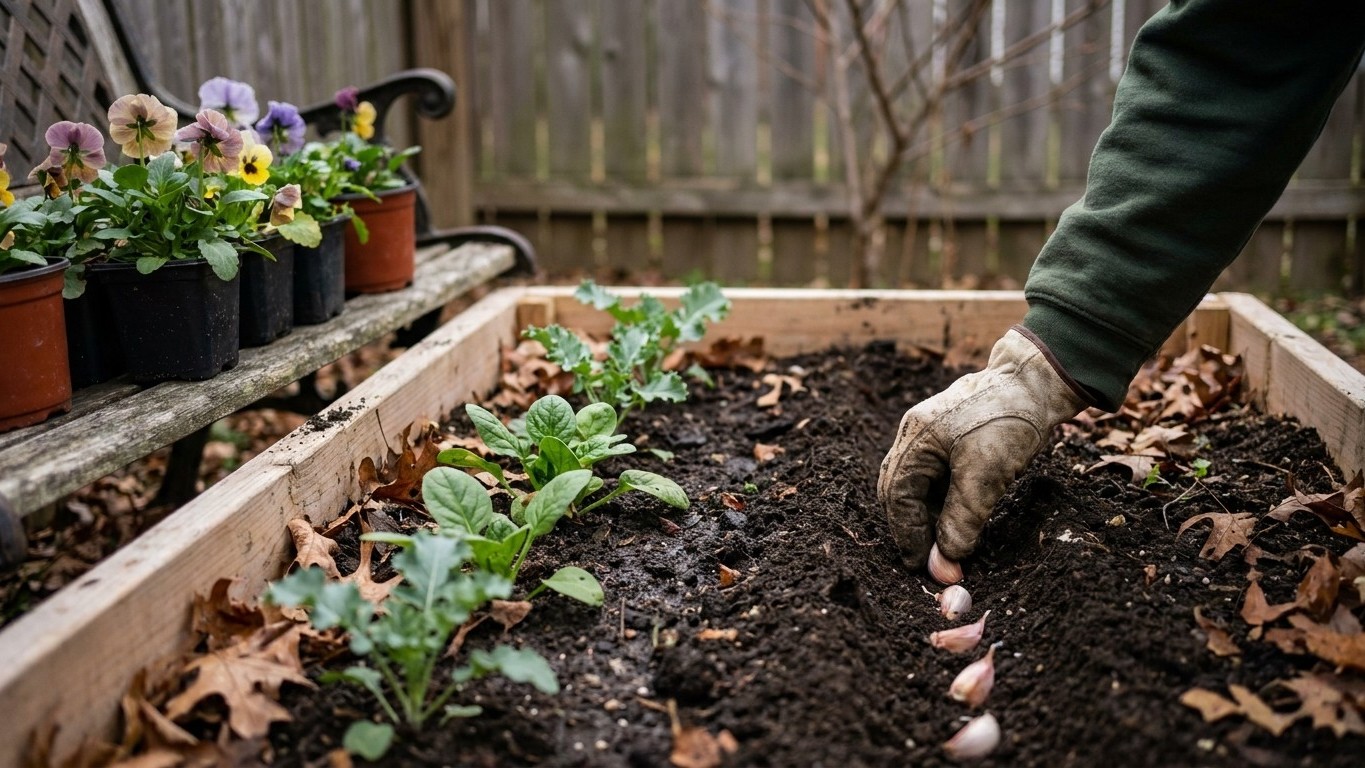

October in Montana means one thing above all: the first fall frost is landing somewhere in the state, often statewide. In the Billings valley, that freeze arrives between October 1 and October 14. So the real question isn’t what to plant broadly, it’s what still makes sense once the killing frost has come or is about to. The short answer: garlic, shallots, and spring bulbs go in now. Nearly everything else outdoors is finishing, not starting.
What goes in the ground in October

The frost window drives every decision this month, not the date on the wall. In Billings, that window runs October 1 to October 14, and that’s a reference point for one of the state’s milder valleys. Higher mountain valleys across Montana can see frost weeks earlier, sometimes any month of the growing season. So before you plant anything, know where your ground sits relative to that range, not just what the calendar says.
Garlic is the anchor crop for October in this state. Cloves need roughly four to six weeks of root establishment before the soil locks up hard, which lines up well with planting through the first half of the month in valleys where the ground is still workable. Shallots follow the same logic and go in at the same time. Both want full sun, loose soil, and a mulch layer once the ground starts to cool, which protects the developing roots through the freeze-thaw cycles ahead.
Spring-flowering bulbs belong in this same window. Tulips, daffodils, crocus, and alliums all need a real cold period to bloom properly, and planting them six to eight weeks ahead of a hard, ground-freezing cold snap gives roots time to establish before dormancy sets in. Montana’s hardiness zones run from 3a up to 6a on the USDA Plant Hardiness Zone Map, and Billings sits toward the milder end of that range, so gardeners in colder pockets of the state should lean toward the earlier half of October for bulb planting, not the later half.
What doesn’t belong in open ground now: anything warm-season, and most tender greens unless they’re going under protection. If you have hardy crops still standing, cold frames and low tunnels can buy real weeks. A cloche or row cover over kale, spinach, or overwintering onions can push the harvest window past that first frost date without much extra work. Beyond that, this is a month for dormant and bare-root plantings of trees and shrubs, since the top growth has stopped but roots can still settle in before the ground fully freezes.
What to start under cover
Starting anything under cover in October means working backward from the first fall frost window, not forward from a fixed date. In Billings, that window sits between October 1 and October 14. If you want a cold-frame harvest of hardy greens like spinach, mache, or arugula, those seeds need roughly four to five weeks of growth before cold and shortening daylight stall them out almost completely. Counted backward from a frost landing in early October, that means seed needs to already be in the ground by the first days of the month in most valleys, and in higher, colder pockets of the state, that window may have already closed before October opens.
The two failure modes here look different from spring starts. Starting too early isn’t really the risk in fall, since cool-season greens tolerate a slow start fine. The real risk is starting too late: sow spinach or mache after that backward-counted window closes, and the seedlings won’t size up enough to survive dormancy, no matter how good the cold frame is. Cold soil temperatures also slow germination sharply once nights dip near freezing, so a seed sown in late October may simply sit without sprouting at all.
Indoors, October is a reasonable time to start forcing bulbs for winter bloom. Amaryllis and paperwhites need eight to ten weeks from potting to flower, so counting backward from a desired bloom date in midwinter puts the potting job squarely in this month. Herbs like chives, parsley, and thyme can also be potted up now and moved to a sunny windowsill, giving the household fresh cuttings through the darker months while the outdoor garden goes quiet.
What is ready to pick
October is a heavy harvest month before it’s anything else. Winter squash and pumpkins should come in once the rind resists a fingernail scratch and the vine has started to die back; leaving them past a hard freeze risks soft spots that spread in storage. Potatoes are ready once the foliage has yellowed and collapsed, usually a sign the skins have set enough to cure for winter. Storage onions follow a similar cue: tops fall over and dry papery, at which point they should be pulled, cured in a dry spot, and checked again before long-term storage.
Root crops like carrots and beets actually improve with a light frost, since cold pushes sugars into the roots. Cabbage and Brussels sprouts do the same, holding in the garden longer than most people expect as long as they’re not left through repeated hard freezes. Leeks are among the most frost-tolerant crops in the garden and can often stay in the ground under mulch well past the point everything else has come in.
Once the harvest is in, the job shifts to checking what’s already stored. Squash, potatoes, and onions from earlier in the season should be inspected now for soft spots, mold, or sprouting, since one turning squash in a bin can spread rot to its neighbors within days. Pull anything questionable and use it immediately rather than letting it sit.
The jobs that matter this month
October rewards the gardener who treats it as prep season, not downtime. Garlic and bulb beds need mulch once planted, both to buffer the freeze-thaw cycles ahead and to reduce frost heave that can push cloves and bulbs right out of loosened soil. That mulch layer, whether straw or shredded leaves, is far easier to lay down before the ground turns hard than after.
Dormant pruning of fruit trees and berry canes can begin once leaves have dropped and the plant has clearly gone into dormancy, though the bulk of that work often extends into the following winter months. What matters in October is a first pass: removing dead, damaged, or diseased wood while it’s easy to see against bare branches, and clearing fallen fruit and leaf litter that can otherwise harbor pests and disease over winter.
Seed catalogs for next season start circulating now, and ordering early matters more than it sounds. Popular varieties, particularly cold-hardy vegetables suited to Montana’s shorter seasons, tend to sell out well before spring planting begins. Pairing that with a soil test this month, while the ground is still workable, gives enough lead time to amend with lime, sulfur, or compost before the next growing season starts.
A few more jobs earn their place on the October list: turning the compost pile one more time before it slows down in the cold, draining and storing hoses and irrigation lines before a hard freeze cracks them, cleaning and sharpening tools before they sit unused, and walking the property to repair raised beds, trellises, or fencing while the weather still allows outdoor work. None of these feel urgent in the moment, but skipping them costs real time in spring.
What not to do in October
The most common mistake this month is trusting a warm afternoon over the actual frost data. A stretch of 60-degree days in early October can feel like summer isn’t over, but the fall frost window for Billings runs from October 1 to October 14, and that’s one of the milder valleys in the state. Treating a warm spell as proof the season has more room left is how tender crops get caught overnight.
Uncovering row covers or cold frames too early after a mild stretch is the flip side of the same error. Montana’s fall frost dates are a range, not a single cutoff, which means a frost-free week doesn’t mean the season is safely past. Pull protection off too soon and one cold night can undo weeks of extended harvest.
Fertilizing with nitrogen late in the season is another classic misstep. Nitrogen pushes soft new growth, and soft new growth is exactly what gets damaged first when temperatures drop. Perennials, shrubs, and fruit trees are better served by holding off on nitrogen from this point forward and instead focusing on mulch and moisture to help roots settle into dormancy.
Finally, planting garlic too late is a mistake that only shows up in spring. Cloves need real time to root before the ground freezes solid; push planting into late October or beyond in the colder parts of the state, and the crop may emerge stunted or fail to bulb properly next summer.
Checking this against your own county
A statewide October guide is a starting point, not an instruction sheet. Montana’s elevation swings, its mountain valleys, and the difference between its northern and southern counties can shift frost timing by weeks in either direction from the Billings reference dates used here. A garden at higher elevation may have already frosted before October begins; a sheltered valley further south may still have workable ground into the month’s later weeks. For a planting calendar tuned to your specific county, the Montana State University Extension office is the right next stop.
Common questions
Is it too late to plant garlic in October in Montana?
Not in most valleys. Garlic needs four to six weeks of root growth before the ground freezes solid, so planting through the first half of October works in milder areas like Billings. In higher, colder counties, earlier is safer.
Can I still start vegetables from seed outdoors in October?
Only hardy greens like spinach or mache, and only if planted before the first fall frost window closes. Once frost has passed through an area, direct-sown seed largely stops germinating until spring.
What vegetables actually taste better after a frost?
Carrots, beets, cabbage, and Brussels sprouts all convert starches to sugars when hit by light frost, which is why many gardeners leave them in the ground rather than harvesting early.
Should I fertilize my lawn or garden beds in October?
Skip nitrogen this late. It encourages tender new growth that frost will damage. Focus instead on mulch, moisture, and any soil amendments identified by a fall soil test.
Gardeners who plant by the Moon can check the October 2026 moon planting calendar, a tradition rather than a proven method.
Related guides
- the Montana planting calendar
- What to Plant in Montana in September
- What to Plant in Montana in November
Elsewhere? See what to plant in October in every state and province.