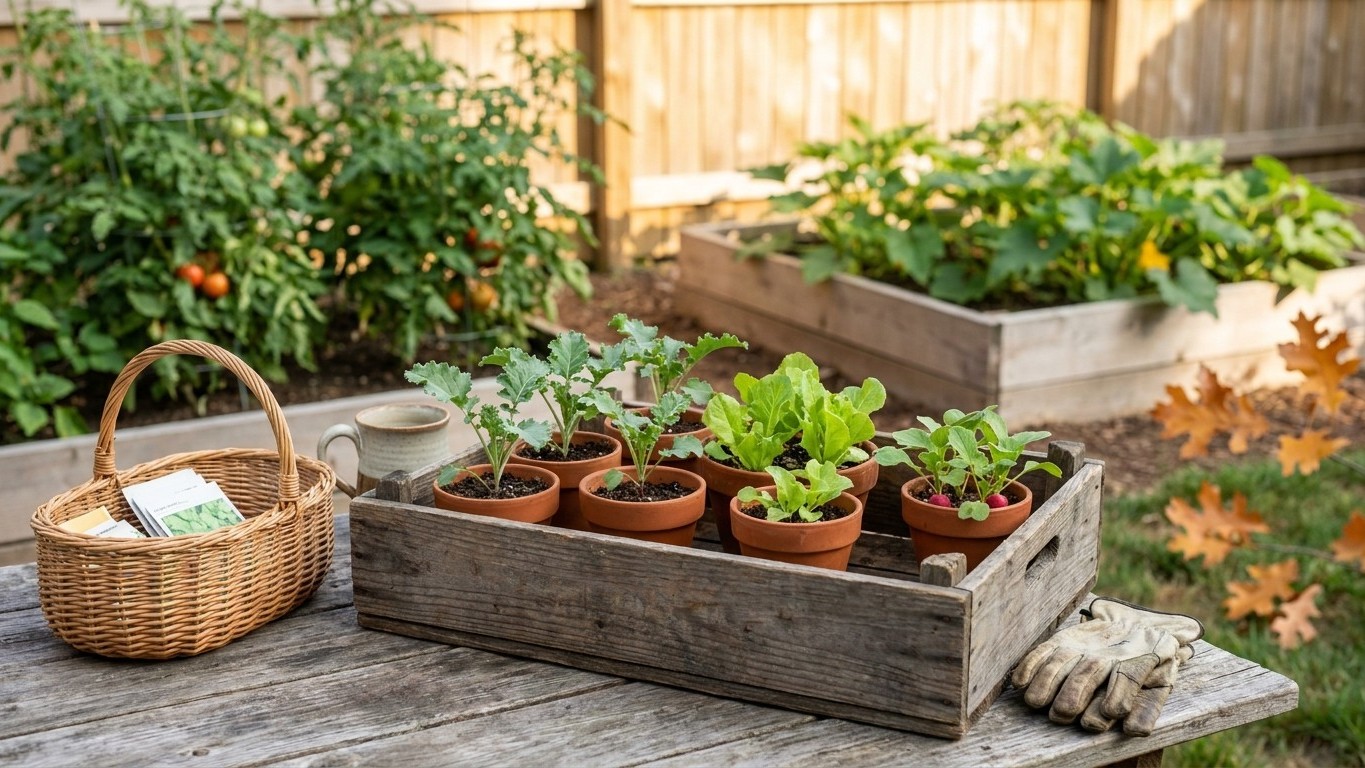

August in New Jersey is a fall-planting month, not a lull between summer harvests. With the first frost typically landing between November 4 and November 16 in the Trenton area, gardeners still have roughly 90 to 105 days to get cool-season crops from seed to table. The trick is knowing which vegetables can finish in that window and which ones need a head start under cover.
What goes in the ground in August

By August, soil temperature stopped being the limiting factor months ago. The real constraint now is arithmetic: how many days are left before that first frost, and does the crop you want to plant fit inside that stretch. Count from the date you plant to November 4, the earlier edge of the frost window, and treat November 16 as a bonus, not a guarantee.
Fast crops still make sense as direct sows in early-to-mid August. Bush beans planted in the first week or two of the month can mature before cold arrives, assuming average conditions. Beets, carrots, turnips, radishes, and kohlrabi all fall into the same category, needing somewhere between 30 and 60 days depending on variety. Kale, collards, and Swiss chard sown now will size up through September and often keep producing well past the first light frosts, since all three tolerate cold better than heat.
Lettuce and spinach are trickier in August because the soil is still warm enough to make germination spotty. Both germinate poorly above roughly 80 degrees Fahrenheit, so direct-sown seed benefits from shade cloth, a spot under taller plants, or simply waiting for late August when nights start cooling. Chinese cabbage and other quick Asian greens behave the same way, doing better as the month winds down than at the start.
Transplants deserve a separate mention. Broccoli, cauliflower, and cabbage started indoors or in a shaded nursery bed in July are ready to go into open ground through early-to-mid August for a fall harvest. Setting transplants out rather than direct-seeding buys back three to four weeks against the calendar, which matters when the frost window is fixed and the clock is not.
What does not belong in the ground now: winter squash, pumpkins, and melons started from seed. All three need 80 to 100-plus days and August plantings simply run out of season before the fruit sizes up.
What to start under cover
Counting backward from the frost window is more useful here than any fixed date on a seed packet. Take a fall brassica like cauliflower: it needs about 55 to 80 days from transplant to harvest, and transplants themselves take four to six weeks to reach a plantable size. Working backward from November 4, that means seed started under cover needs to go into a tray by early August at the latest to leave room for both the nursery period and the time in the ground.
The same math applies to fall lettuce and spinach raised as transplants rather than direct-sown. Starting seed in trays in a cooler spot, a basement, a shaded porch, or an air-conditioned room, sidesteps the poor-germination problem that plagues direct-sown seed in hot August soil. Transplants can then go outside once temperatures ease, typically giving a two-to-three-week jump on crops sown straight into the ground.
Two failure modes show up every year. Starting too early produces rootbound, leggy transplants sitting in trays for weeks with nowhere to go, stressed and stunted by the time they finally reach the garden. Starting too late runs the opposite risk: seedlings go out just as days shorten and growth slows, and the crop never reaches full size before frost ends the season. Splitting sowings across two or three dates in August, rather than committing to one batch, hedges against both problems and against a hot spell or an early cold snap throwing off the schedule.
What is ready to pick
August is peak harvest for the summer garden, and picking often is itself a form of maintenance. Tomatoes should come off the vine when fully colored but still slightly firm; letting them over-ripen on the plant invites splitting and pest damage. Peppers can be picked green or left to color further, depending on preference, but leaving too many on the plant slows the production of new fruit.
Summer squash and cucumbers need daily or near-daily checks in warm weather. Squash left even a day or two past ideal size turns woody and seedy fast, and an oversized cucumber signals the plant to slow down rather than set new fruit. Sweet corn is ready when the silks turn brown and dry while the husk stays green; a quick peek at a kernel, milky liquid when pressed means ready, clear liquid means wait, is the most reliable test.
Bush and pole beans should be picked while still slender, before the seeds inside swell and the pod turns tough. Basil and other leafy herbs benefit from regular cutting, which also delays flowering and keeps the plant productive. Blueberries wrap up their season in most of the state during this stretch, while early apple and peach varieties start coming in depending on the planting and the year’s weather. Stored garlic and onions from the summer harvest should get a check now too: soft spots or a sprouting neck mean that bulb needs to be used first, not saved for later.
The jobs that matter this month
Succession sowing is the single highest-leverage task in August. Every week without a new round of beans, beets, or salad greens going into a cleared bed is a week of harvest lost in October. Pair that with a hard look at the calendar: once a crop’s days-to-maturity no longer fit before the frost window, stop sowing it and move to something faster.
Watering rhythm matters more in August than almost any other month. Deep, infrequent watering, aiming for the equivalent of an inch of rain a week, encourages roots to grow down rather than stay shallow, and it’s the single best defense against blossom end rot in tomatoes and peppers during hot, dry stretches. A three-to-four-inch mulch layer around vegetables cuts evaporation, keeps soil temperature more even, and reduces the weeding load at exactly the point in the season when weeds are trying hardest to set seed.
Pest scouting pays off now because populations build fast in the heat. Squash vine borer damage shows up as sudden wilting in an otherwise healthy squash plant; catching it early sometimes allows a rescue by slitting the stem and removing the larva. Japanese beetles strip leaves in days if left unchecked, and tomato hornworms can defoliate a plant almost overnight. A quick walk through the garden every couple of days catches all three before the damage compounds.
Staking and tying sprawling tomato and pole bean vines before they collapse under their own weight saves fruit from rot and makes harvest easier. And this is a reasonable point in the season to start amending beds that have finished producing, working in compost ahead of fall plantings rather than waiting until everything is cleared at once.
What not to do in August
The most common mistake is treating warm air temperature as a green light for long-season, warm-weather crops. Squash, melon, or pumpkin seed sown in August feels reasonable when it’s 85 degrees outside, but the plant needs 80 to 100-plus days to mature, and the frost window arrives long before that math works out. The fix is simple: check days-to-maturity against the calendar before the seed goes in the ground, not after.
A second mistake is sowing lettuce and spinach directly into hot, sun-baked soil and being surprised when germination is spotty. Both crops germinate poorly in high heat regardless of moisture, so seed needs shade cloth, a cooler nursery tray, or a later sowing date once temperatures ease.
Nitrogen timing trips up a lot of tomato and pepper growers in August. A heavy nitrogen feeding this late in the season pushes leafy growth at the expense of fruit set and can actually delay ripening right when the plant should be finishing up before frost. A lower-nitrogen, higher-potassium feed supports fruit development instead of green growth the plant doesn’t have time to use.
Finally, letting harvest slide is its own mistake. Overripe squash, beans, and tomatoes left on the plant signal it to slow production, invite pests and disease, and waste the last stretch of warm weather that could otherwise be producing more food.
Checking this against your own county
A statewide planting month is a starting point, not an instruction. New Jersey spans USDA Hardiness Zone 6a through 7b, and the frost dates cited here come from a single reference weather station, not the whole state. Gardens at higher elevation in the northwest, in low-lying frost pockets, or well inland from the coast often see frost arrive a week or two earlier than this figure suggests, while sheltered or coastal spots can run later.
Before committing a full bed to any of the crops above, check local conditions against the Rutgers Cooperative Extension, which tracks county-level growing information and can adjust for elevation, frost pockets, and local microclimate in ways a statewide date never can.
Common questions
Is it too late to plant tomatoes in New Jersey in August?
Yes, for a seed-started crop. Tomatoes need 60 to 90-plus days from transplant to harvest, and a fresh August planting won’t mature before frost arrives in early-to-mid November. Existing tomato plants should instead be managed for a strong finish rather than replaced.
Can I still plant garlic in August in New Jersey?
No. Garlic goes into the ground in fall, typically October, so it can establish roots before winter dormancy. August is better spent preparing the bed with compost so it’s ready when planting time comes.
What vegetables can I still direct-sow in August for a fall harvest?
Bush beans, beets, carrots, turnips, radishes, kohlrabi, kale, collards, and Swiss chard all fit within the roughly 90-to-105-day window before first frost when sown early in the month.
Why did my lettuce seed not germinate when I sowed it in August?
Lettuce and spinach seed germinate poorly once soil temperatures climb into the 80s. Sowing under shade cloth, starting seed indoors in trays, or waiting until late August when nights cool down usually solves the problem.