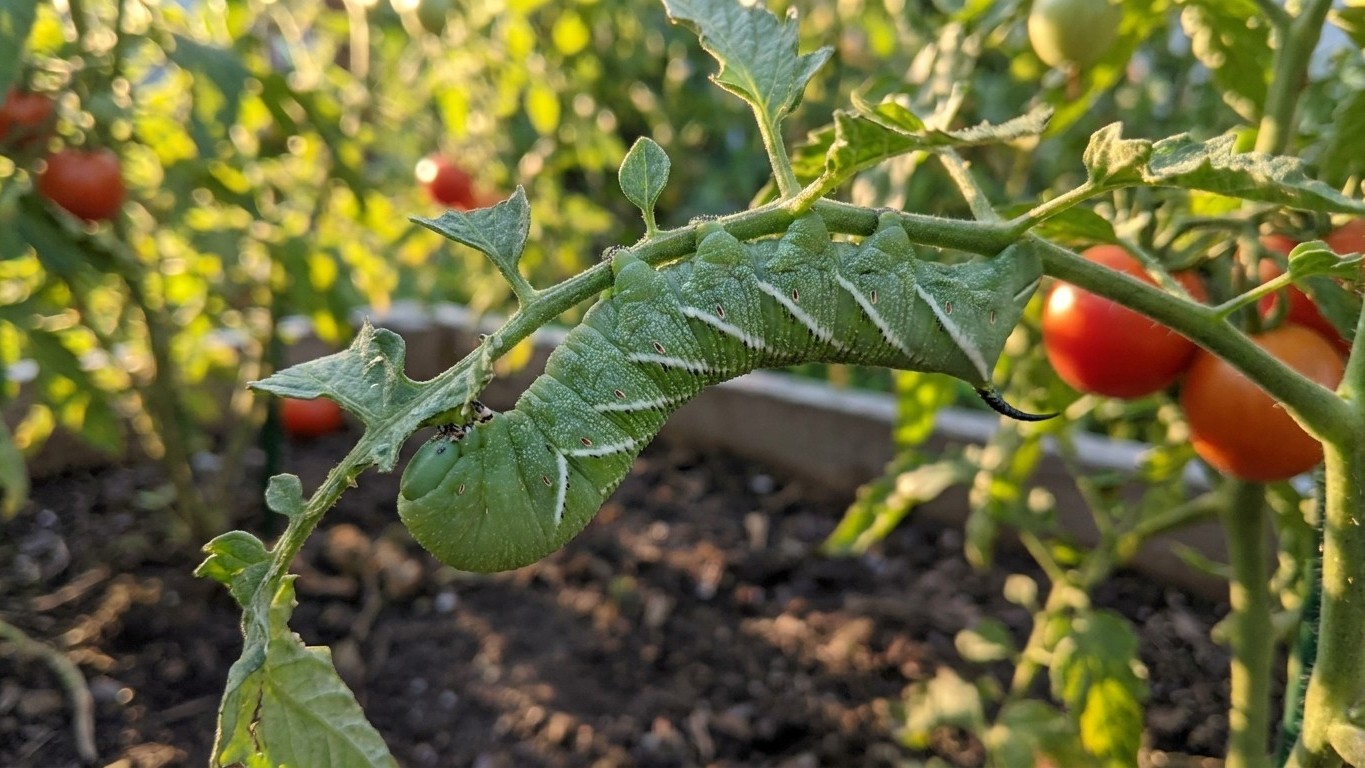

Tomato hornworms show up in New Jersey gardens in two waves each year, the first in late June through July and a second, often heavier, wave in August through September. The insect overwinters as a pupa buried in garden soil, so anyone who grew tomatoes, peppers, or eggplant the previous season already has next year’s population waiting a few inches underground. Stopping them comes down to three things that actually work: hand removal, the bacterial spray Bacillus thuringiensis, and fall tillage that exposes overwintering pupae to frost and hungry birds.
When Tomato Hornworms Actually Show Up in New Jersey

New Jersey’s climate supports two generations of the tomato hornworm (Manduca quinquemaculata) most years, sometimes a partial third generation in warmer coastal counties like Cape May or Atlantic. The adult, a heavy-bodied gray moth called the five-spotted hawkmoth, emerges from the soil in late May or early June once nighttime temperatures reliably stay above 50°F. These moths are strong fliers and are frequently mistaken for hummingbirds at dusk, since they hover at flowers like petunias and jimsonweed to feed on nectar.
Eggs laid by that first moth flight hatch into the caterpillars that gardeners notice stripping tomato foliage in late June and July. Those caterpillars pupate in the soil by late July, and a second moth flight follows in early August, producing the generation that does the most damage from mid-August through September, right as tomato plants are loaded with fruit. Rutgers Cooperative Extension notes that this second generation tends to be larger and more destructive simply because more moths survived the first cycle and more eggs get laid.
Soil temperature drives the timing more than the calendar does. A cool, wet spring in North Jersey can push the first moth flight back by two or three weeks compared to a warm spring in South Jersey, so gardeners in Sussex or Warren County often see hornworm damage arrive later than those in Cumberland or Salem County.
How to Tell a Tomato Hornworm From a Tobacco Hornworm
Two nearly identical green caterpillars feed on tomato plants across New Jersey, and mixing them up doesn’t change how you control them, but it helps to know which one you’re looking at.
- Tomato hornworm: eight V-shaped white markings along each side, a black or dark blue horn at the rear
- Tobacco hornworm: seven diagonal white stripes, a red or orange-red horn
- Both grow to nearly 4 inches long and blend in almost perfectly with tomato foliage
The tobacco hornworm (Manduca sexta) is actually more common in southern New Jersey than the “official” tomato hornworm, despite the name mix-up. Either species will hollow out leaves overnight and chew through green fruit, and the response is identical for both.
Where to Look First
Hornworm droppings, dark green or black pellets about the size of a peppercorn, collect on leaves below where the caterpillar is feeding. Since the insect itself is remarkably well camouflaged, that droppings trail is often the fastest way to locate one before it strips an entire branch. Check the top few feet of the plant first; hornworms tend to feed high up before working downward as they grow.
What Actually Stops Tomato Hornworms in a New Jersey Garden
Hand-picking remains the single most effective control for backyard-scale plantings. A flashlight sweep at dusk, when hornworms are most active and easiest to spot against the darkening foliage, lets a gardener remove several caterpillars in one pass. Dropping them into soapy water kills them quickly. This sounds tedious, but a 10-by-10-foot tomato patch usually takes less than five minutes to check thoroughly.
For anyone dealing with a heavier infestation, or who can’t check plants nightly, Bacillus thuringiensis subspecies kurstaki (often sold as Bt or BTk) offers a targeted option. It’s a naturally occurring soil bacterium that disrupts the caterpillar’s digestive system after ingestion and has no measurable effect on bees, birds, pets, or humans. Rutgers Cooperative Extension and the EPA’s fact sheet on Bt both list it as one of the lowest-risk insecticides available for home vegetable gardens. Spray it directly on leaves in early evening, since UV light breaks it down within a few days, and reapply after heavy rain.
Fall soil disturbance breaks the cycle before it starts. Tilling or turning over the top 4 to 6 inches of soil in tomato and pepper beds after the season ends exposes overwintering pupae to freezing temperatures and to birds, which will happily pick them off a freshly turned bed. This single fall task, done once, measurably reduces the following year’s first moth flight because it removes the population that would otherwise emerge in late spring.
Natural Predators Already Working in New Jersey Gardens
Braconid wasps parasitize hornworms by laying eggs on their backs; the wasp larvae feed inside the caterpillar and eventually emerge as small white cocoons that look like grains of rice stuck to the hornworm’s skin. A caterpillar covered in these cocoons is already dying and is spreading the next generation of its own predator. Leaving that specific hornworm alone, rather than killing it, lets the wasps complete their cycle and expands the population of a control agent that costs nothing and needs no spraying.
Ground beetles, paper wasps, and several bird species, including house wrens and cardinals, also prey on hornworm eggs and small larvae. Planting dill, fennel, or sweet alyssum near tomato beds gives parasitic wasps a nectar source and tends to keep them working the garden through the season rather than moving on.
Preventing the Next Wave
Crop rotation matters more for hornworms than gardeners often assume, since the pupae stay put in soil that hasn’t been disturbed. Moving tomatoes, peppers, and eggplant to a different bed each year, even a modest 10-foot shift, forces newly emerged moths to search further for host plants, and fewer eggs end up laid on the plants a gardener is actually trying to protect.
Black light traps set up 20 to 30 feet from the vegetable garden can intercept adult moths before they lay eggs, though this works best as a supplement to hand-picking and Bt rather than a standalone fix. Row covers during the early moth flight period, roughly late May into June, physically block egg-laying but need to come off once tomato flowers require pollination.
Gardeners who till in fall, hand-pick through summer, and leave parasitized caterpillars in place typically report the lightest hornworm pressure by their second or third season of consistent practice. The insect doesn’t disappear from New Jersey soil, but its numbers drop enough that a nightly flashlight check turns into a once-a-week habit instead of a daily chore.
Related guides
- Tomato hornworm in Pennsylvania: When It Shows Up and What Stops It
- Tomato hornworm in Delaware: When It Shows Up and What Stops It
- Tomato hornworm in Utah: When It Shows Up and What Stops It
- Tomato hornworm in Virginia: When It Shows Up and What Stops It
- Spotted lanternfly in New Jersey
- Spotted asparagus beetle in New Jersey
- Tomato hornworm in California: When It Shows Up and What Stops It