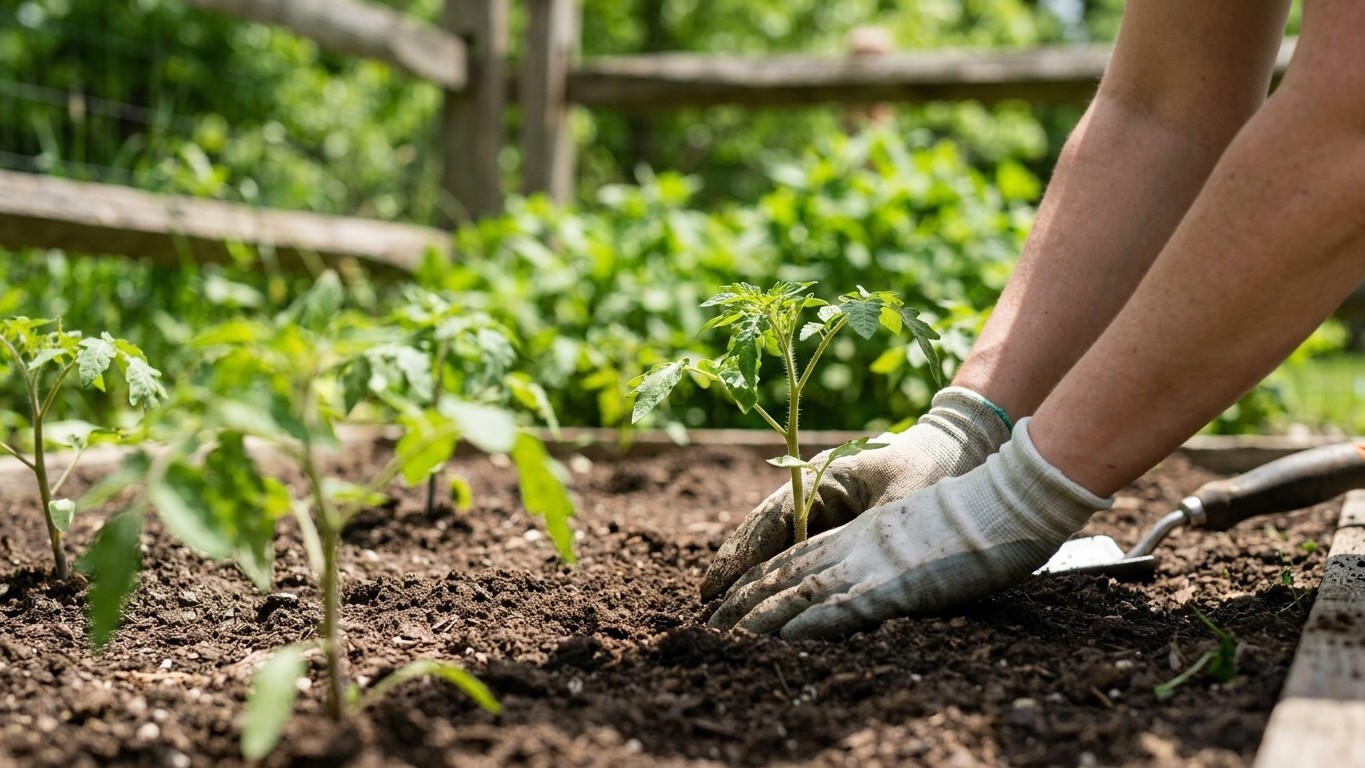

June in New Jersey is prime planting territory. The state’s last spring frost window (March 29 to April 6, per NOAA climate data) has already closed for weeks, so soil temperatures have caught up with the calendar. This is the month for warm-season crops that spring cold would have killed: beans, squash, cucumbers, melons, and any tomato or pepper transplants still waiting on a porch.
What goes in the ground in June

Soil temperature, not the date on a calendar, decides what survives outdoors. By June, most New Jersey gardens have soil sitting well above 60°F at planting depth, the threshold that lets bean and squash seed germinate instead of rotting in cold, wet ground. That’s the real shift this month: the frost risk that shaped April and May plantings is gone, replaced by a different question, whether there’s enough season left before the first fall frost (November 4 to November 16 at the reference station) for a crop to mature.
Direct-sown crops that do well started in June include snap beans, lima beans, summer squash, zucchini, cucumbers, and sweet corn. All of these germinate fast in warm soil and race to harvest before the season narrows. Melons and pumpkins can still go in early in the month across most of the state, though gardeners in the higher elevations of northwestern counties should lean toward the earlier half of June to leave enough growing days.
What’s a gamble by now
Some spring crops are running out of runway. Lettuce and spinach sown in open ground in June will likely bolt or turn bitter once daytime highs push into the 80s, a real risk given how much of New Jersey sits in USDA hardiness zones 6a to 7b, with summer heat to match. Peas planted this late rarely produce a full crop before heat shuts them down. If a gardener wants those crops again, cool-season greens are better saved for a fall succession sown from seed in August.
Transplants of tomatoes, peppers, and eggplant that missed the May window can still go in during the first half of June without much yield penalty. Basil, another heat-lover, transplants easily right alongside them. Sweet potato slips, too, want this kind of warmth and are worth planting now if they weren’t already in the ground.
What to start under cover
June under cover isn’t about hurrying spring crops anymore, it’s about setting up fall. Counting backward from the first frost window (November 4 to November 16) is the way to plan this, rather than picking a start date out of habit.
Take fall broccoli or cabbage as an example. Most varieties need roughly 60 to 80 days from transplant to harvest, plus another three to four weeks in a seed tray before they’re ready to move outside. Working backward from an early-November frost, that puts the ideal indoor start somewhere in the second half of June for many New Jersey gardens, with transplanting into the garden happening in late July or early August once summer heat has eased slightly. Gardeners closer to the November 16 end of the frost range, generally in the state’s southern counties, get a little more room to push those dates later.
The two ways this goes wrong are familiar to anyone who’s started seed indoors before. Start too early, chasing an arbitrary date, and the seedlings sit too long in small trays, turning leggy and rootbound before the weather cooperates for transplanting. Start too late, and the plants run out of daylight and warmth before they mature, leaving half-formed heads when frost finally arrives. The fix is the same in both directions: count from the harvest goal backward, not from the first of the month forward.
Fall lettuce, kale, and other cool-season greens don’t need to start indoors in June for most gardens, they’ll get direct-sown later in summer. But storage cabbage and the slower brassicas are worth starting under cover now if a fall harvest is the goal.
What is ready to pick
June is one of the more generous harvest months in a New Jersey garden. Spring-planted peas, especially snap and shell varieties sown as soon as soil was workable, hit their peak early in the month. Pods are ready when they feel plump and firm but still snap cleanly, before the peas inside turn starchy.
Lettuce, spinach, and other spring greens planted in April are finishing their run now, and picking them promptly, before hot stretches push them to bolt, gets a few more usable weeks out of each plant. Garlic scapes, the curling flower stalks that hardneck garlic sends up, are worth cutting off in early-to-mid June anyway, since removing them redirects the plant’s energy into bulb size rather than seed production, and the scapes themselves are edible.
Strawberries planted in prior seasons hit their main harvest window in June across most of the state. Berries are ready when they’ve fully colored, since strawberries don’t ripen further once picked. Herbs like chives, oregano, and early basil are ready for regular cutting, and cutting them back actually encourages bushier growth rather than harming the plant.
Rhubarb stalks are still pickable early in the month in most gardens, though by late June the plant is better left alone to rebuild strength for the following season. Overwintered onions, if any were planted, are bulking up but usually aren’t ready for full harvest until later in summer.
The jobs that matter this month
Staking and caging tomatoes has a narrow window of usefulness: once the plant has sprawled and set fruit low to the ground, forcing it upright later damages roots and stems that have already settled into position. Getting supports in early in June, before plants get much taller than knee-high, avoids that problem entirely.
Mulching does double duty this month. A two-to-three-inch layer around vegetables locks in the soil moisture that June’s longer, hotter days start pulling out fast, and it keeps weed seeds from germinating in the same warm soil that’s helping the crop grow. Skipping mulch now often means fighting weeds through July and August instead.
Watering rhythm matters more in June than earlier in the season, because plants are bigger and heat is climbing. Deep, less frequent watering, aimed at soaking six inches down rather than wetting the surface daily, trains roots to grow deep instead of staying shallow and heat-vulnerable.
Succession sowing beans, summer squash, and cucumbers every two to three weeks through June keeps harvests coming steadily into late summer, rather than producing one large flush that overwhelms the kitchen and then stops. It also hedges against pest or disease losses hitting an entire planting at once.
Pest scouting is worth doing weekly by now. Squash vine borer moths are active in New Jersey through June, and catching the first signs, sawdust-like frass near the base of squash stems, before the larvae tunnel deep in gives a much better chance of saving the plant. Japanese beetles also start appearing toward the end of the month and are far easier to manage by hand-picking early than once populations build.
What not to do in June
The most common mistake this month is planting heat-loving crops into soil that’s still cooler than it looks. A warm afternoon in early June doesn’t mean the ground six inches down has caught up, especially in shaded beds or heavy clay soil that holds cold longer. Seed that sits in cool, damp soil rots before it germinates. Checking soil temperature with a simple thermometer, rather than judging by air temperature, avoids the wasted seed and the replanting delay that follows.
Leaving spring greens uncovered through a hot stretch is another frequent error. A few days of 85°F afternoons is often enough to push lettuce and spinach into bolting, turning leaves bitter and tough. A light shade cloth over spring greens during hot spells buys extra harvest days that would otherwise be lost.
Feeding nitrogen-heavy fertilizer to tomatoes and peppers once they’ve started flowering is a mistake that shows up weeks later as a problem. Too much nitrogen at that stage pushes the plant into producing lush green foliage at the expense of fruit set. Switching to a fertilizer lower in nitrogen and higher in phosphorus and potassium once flowering starts keeps the plant’s energy pointed toward the harvest instead of the leaves.
Overcrowding is easy to do in June, when everything looks small at planting time. Squash, melon, and cucumber vines especially need the spacing listed on their seed packet, not the spacing that looks reasonable for a six-inch seedling, because by July those plants will have tripled in size and be competing hard for light, water, and airflow.
Checking this against your own county
A statewide planting month is a starting point, not an instruction specific to any one yard. New Jersey’s elevation changes, particularly in the northwestern highlands, and its long stretch from the Delaware Bay shore to the New York border mean frost dates and soil warming can shift by a couple of weeks between counties. A garden in Sussex County will typically lag behind one in Cape May by a meaningful margin.
The frost figures cited here come from a single reference weather station, and suburban and rural gardens often see frost arrive a little earlier in fall and linger a little later in spring than that station shows, sometimes by one to two weeks. For local guidance tuned to a specific county, the Rutgers New Jersey Agricultural Experiment Station publishes planting calendars and extension office contacts worth checking before finalizing a June planting plan.
Common questions
Is it too late to plant tomatoes in New Jersey in June?
No. Transplants set out in the first half of June still have plenty of season left before the first fall frost (November 4 to November 16), especially with fast-maturing varieties.
Can lettuce still be planted outdoors in June in New Jersey?
It’s risky. Rising heat pushes lettuce toward bolting and bitterness. A shaded spot or a fall planting later in summer usually gives better results.
What vegetables mature fastest when planted in June?
Bush beans and summer squash are among the quickest, often ready to harvest within 50 to 60 days of a June sowing, well ahead of the fall frost window.
Should fertilizer be applied to established vegetables in June?
Established plants generally need less nitrogen once they start flowering. A fertilizer balanced toward phosphorus and potassium supports fruit set better than a high-nitrogen feed at this stage.