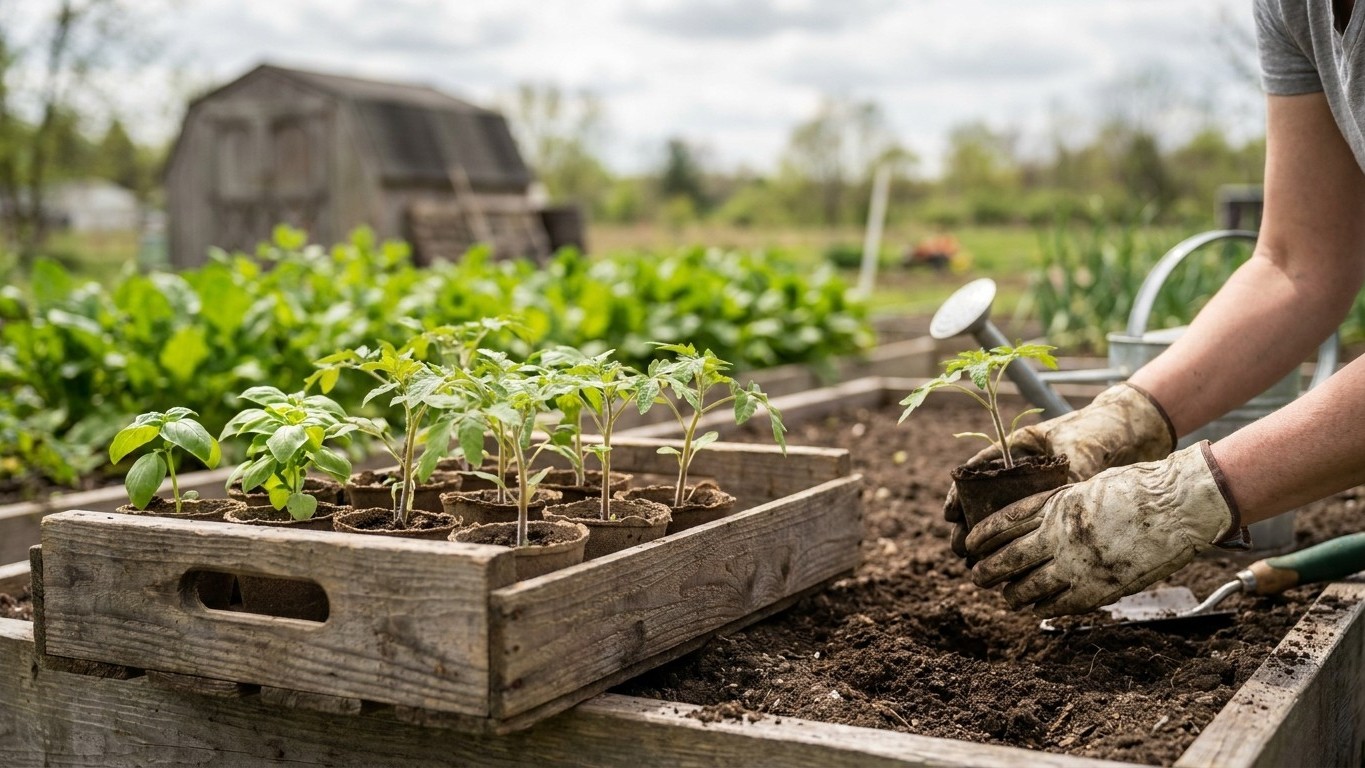

May is the month most New Jersey gardens finally shake off frost risk for good, and the list of what can go in the ground jumps overnight from lettuce and peas to tomatoes, beans, and squash. Soil temperature decides the safe day for each crop, not the calendar, and that safe day can land two to three weeks apart between South Jersey and the northern highlands.
What goes in the ground in May

The reference frost window for this region runs March 29 to April 6, based on NOAA’s 1991-2020 climate normals for 32°F freeze probability at the tracked airport station. By May, that window has closed for most of the state on paper. But it’s an airport reading, and suburban and rural gardens, especially at elevation or in low-lying frost pockets, often see a real last frost one to two weeks later. Treat the first week or two of May as still capable of a light frost inland, and the rest of the month as clear.
Cool-season crops that missed an April sowing still belong in the ground now: beets, carrots, lettuce, spinach, radishes, onion sets, and potatoes if they haven’t gone in yet. These tolerate a stray cold night without much damage.
Once soil temperature holds near 60°F, which usually happens by early-to-mid May statewide, direct-sow beans, sweet corn, summer squash, and cucumbers. Melons and winter squash prefer it a touch warmer, closer to the middle or end of the month.
Tender transplants, tomatoes, peppers, eggplant, and basil, are the real test of patience. They need nighttime lows staying reliably above 50°F, which arrives on different calendars depending on where you garden.
| Region | USDA zone | General frost clearance | Safer window for tender transplants |
|---|---|---|---|
| South Jersey | 7b | Earlier, often by early May | Early to mid-May |
| North / highlands | 6a | Later, can extend into mid-May | Mid to late May |
When in doubt, wait the extra week. A tomato set out into 45°F soil sulks for a month even if it never technically freezes.
What to start under cover
Most of the spring seed-starting rush is already behind you by May, but two jobs still make sense under cover. The first is giving winter squash, pumpkins, and melons a two-to-three-week head start indoors or in a cold frame before setting them out once soil is reliably warm, rather than direct-sowing and losing those weeks to slow germination in cool ground.
The second is starting fall brassicas, broccoli and cabbage, for a later transplant. Work backward from the first fall frost window of November 4 to 16. A broccoli transplant typically needs around 70 days from setting out to harvest, plus another four to five weeks as a seedling before it’s ready to go outside. Counting back from the earlier edge of that frost window, November 4, leaves seed-starting landing in late May to early June to have any margin against an early cold snap.
Two ways this goes wrong. Start those fall seedlings too early under cover with no outdoor spot ready for them, and they turn leggy and rootbound sitting in small trays waiting their turn. Start them too late, aiming for a fast broccoli that actually needs the full season, and an early frost catches the crop half-grown. Neither mistake is easy to fix once the seedlings are past a few weeks old, so the backward count matters more than an exact date.
What is ready to pick
Asparagus hits its peak in May across most of the state, with spears best cut at 6 to 8 inches before the tips start to loosen and the stalk turns woody near the base. Rhubarb stalks are ready once they’re firm and have colored up, typically 10 to 15 inches long, and should be pulled rather than cut to keep the crown healthy.
Overwintered spinach and kale are racing toward bolting as days lengthen and warm, so harvest heavily now rather than letting leaves turn bitter or the plant send up a flower stalk. Spring lettuce planted in March or early April is usually ready, along with the first radishes and green onions.
Toward the end of May, especially in South Jersey’s zone 7b areas, the earliest strawberries and the first sugar snap peas start coming in. Check peas by feel, pods should be plump but the peas inside still tender, not starchy. If a stored crop from the previous season, winter squash or onions kept over the cold months, is still around, this is a good month to sort through it one last time and use up anything showing soft spots before it takes down the rest of the batch.
The jobs that matter this month
Hardening off transplants before they go in the ground is the single most skipped step and the one that costs the most when it’s ignored. Give seedlings raised indoors seven to ten days of gradually increasing outdoor exposure, starting in shade for an hour and working up to a full day in sun, before transplanting. Skip it, and a perfectly healthy tomato plant can scorch or stall within days of being set out.
Mulch once soil has actually warmed, generally mid-to-late May here, not earlier. Mulching cold soil in early spring just keeps it cold longer and delays root growth.
Stake or cage tomatoes, peas, and pole beans at planting time rather than waiting until they sprawl. Driving a stake in around an established root ball a month later does real damage.
Watering rhythm shifts this month too. As days lengthen and temperatures climb, most vegetable beds need close to 1 to 1.5 inches of water a week, delivered deeply and less often rather than a light daily sprinkle that only wets the top inch of soil.
Succession sow fast crops, lettuce, radishes, bush beans, every two to three weeks through the month to avoid a glut followed by a gap. And scout for early pest pressure now while populations are still small: asparagus beetle on emerging spears, flea beetles on young brassicas, and the first Colorado potato beetle adults on newly emerged potato foliage. Catching these in the first week or two of an infestation is far easier than fighting a established population in June.
What not to do in May
The most common mistake is planting tomatoes, peppers, or basil into soil that’s still cold because the air finally felt warm. Air temperature and soil temperature are not the same thing, and a warm sunny weekend can mask soil that’s still sitting in the 40s a few inches down. A tender transplant set into that soil doesn’t always die, but it can sit stalled for weeks while a plant set out a week later, into warmer soil, overtakes it.
A close second is pulling row covers or cold frames off too early after a mild stretch, then getting caught by a colder night, particularly in North Jersey’s zone 6a areas or in low spots where cold air pools overnight. Keep covers within reach through the first half of the month if your garden runs cooler than the state average.
Fertilizing at the wrong point in the season causes its own problems. Heavy nitrogen feeding is useful early on leafy greens and brassicas, but applying the same feed to tomatoes or peppers once they start flowering pushes leafy growth at the expense of fruit set. Switch those crops to a lower-nitrogen, higher-phosphorus feed once flowers appear.
Finally, resist the urge to cram every transplant in the ground the first warm weekend once the soil finally allows it. Crowded seedlings compete for light and airflow all season, and thinning after the fact never fully undoes it.
Checking this against your own county
A state-wide month is a starting point, not an instruction. New Jersey spans USDA hardiness zones 6a to 7b, and elevation, coastal influence, and simple north-south distance move real planting dates by weeks in either direction from the reference figures cited here. A garden in the Pine Barrens or along the shore in South Jersey often clears frost risk noticeably earlier than one in the northern highlands.
For a planting calendar built around your specific county, along with current frost and pest advisories, check the Rutgers New Jersey Agricultural Experiment Station extension service.
Common questions
When is it safe to plant tomatoes in New Jersey?
Once nighttime lows hold reliably above 50°F, which tends to arrive earlier in South Jersey’s zone 7b areas, often early to mid-May, and later in the northern zone 6a highlands, sometimes not until the back half of the month.
Can I plant corn in May in NJ?
Yes, once soil temperature is holding near 60°F, which is typical statewide by early to mid-May. Corn seed sitting in cold, wet soil is prone to rot rather than germinating.
What vegetables can survive a late May frost?
Peas, spinach, lettuce, radishes, onions, and brassicas like broccoli and cabbage handle a light frost with little damage. Tomatoes, peppers, beans, squash, and cucumbers do not.
Is it too late to start a garden in New Jersey in May?
No. May is one of the most productive planting months of the year here, with the widest range of both cool- and warm-season crops available to go in the ground at once.
Gardeners who plant by the Moon can check the May 2027 moon planting calendar, a tradition rather than a proven method.