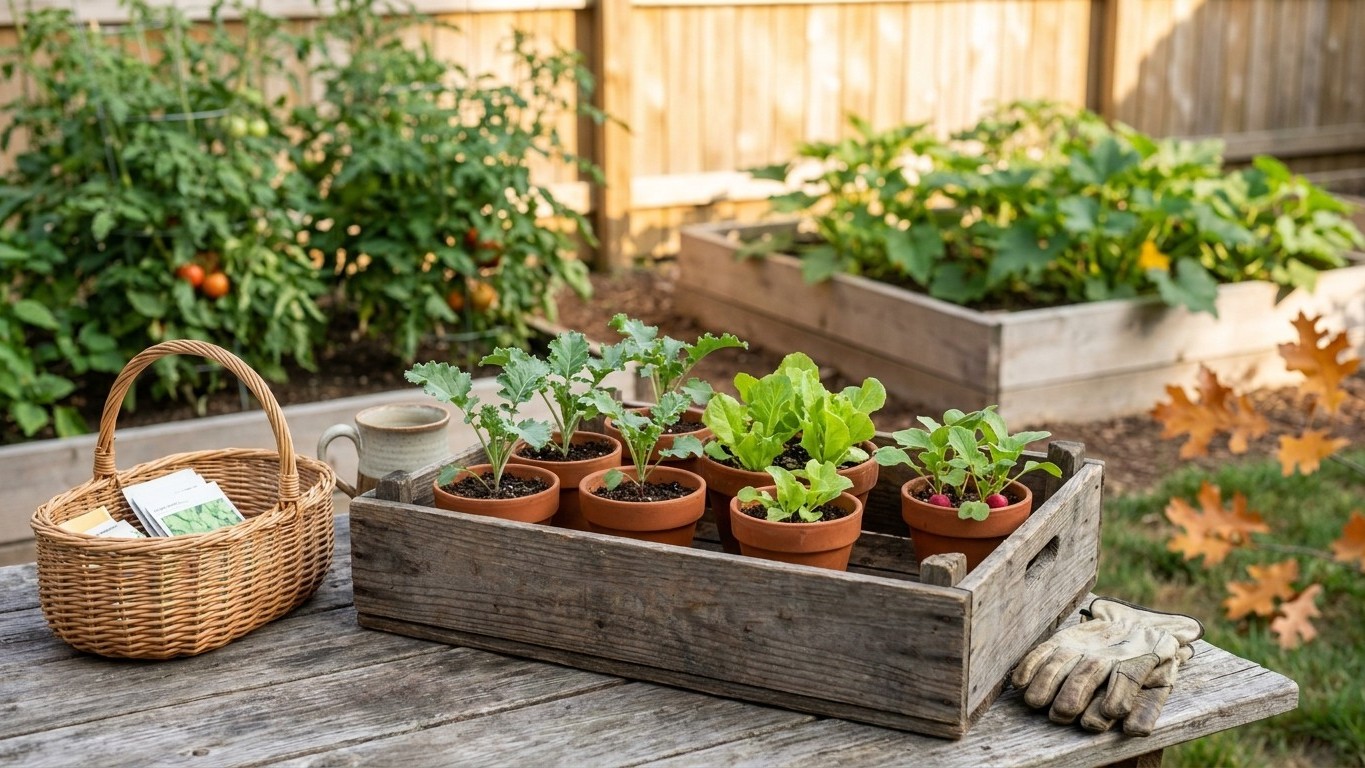

August in New York runs two gardens at once. The summer garden is still pumping out tomatoes, squash and beans, and needs steady watering and daily picking to keep producing. At the same time, this is the month to get fall crops into the ground and fall transplants started under cover, because the first frost is closer than it feels in the middle of a hot week.
What goes in the ground in August

Soil temperature, not the page on the calendar, decides what still works this month. Ground that has been warming since May holds heat well into fall, which is exactly why quick-maturing crops germinate fast in August even as daylight starts to shrink. The real limit is the first fall frost, and in New York City that window falls between November 14 and November 27, based on NOAA’s 1991-2020 climate normals for Central Park. Count backward from that date and August still leaves plenty of room for anything that finishes in under two months.
Safe bets versus the one gamble
Beets, carrots, turnips, radishes, kale, collards, Swiss chard, lettuce, spinach, arugula and scallions can all go into open ground through the month without much risk in the lower Hudson Valley, New York City and Long Island. Bush beans are the one gamble worth naming directly: sow them in the first week or two of August and they have a real shot at a harvest before frost; sow them in the last week and they are racing the calendar. Broccoli, cabbage and cauliflower go in only as transplants already started under cover, not as fresh seed sown straight into the bed. Garlic and shallots are not an August job in New York; that planting belongs to fall, once the soil has cooled again.
| Crop group | Method | Safe window in August |
|---|---|---|
| Bush beans | Direct sow | First one to two weeks only |
| Beets, carrots, turnips, radishes | Direct sow | Through the month |
| Lettuce, spinach, arugula | Direct sow | Through the month, later still near the coast |
| Kale, collards, Swiss chard | Direct sow or transplant | Through the month |
| Broccoli, cabbage, cauliflower | Transplant only | Early to mid-August, from already-started seedlings |
| Garlic, shallots | Not this month | Wait for fall planting |
Upstate counties and anywhere near the Adirondacks shrink this window by weeks compared with the city, so treat the back half of August there as the practical cutoff rather than the whole month.
What to start under cover
Fall transplants need to be started well before they go into open ground, and the arithmetic runs backward from that same frost window. Take the earlier edge of it, November 14, and work back: a fall broccoli or cabbage transplant needs several weeks in the ground to mature, and it needs to arrive there as a stocky four-to-six-week-old seedling rather than a leggy one. Push that timeline back further and August is exactly when that seed belongs in a flat, a seed tray, or a shaded nursery bed, not in the open garden itself.
The two ways to get the timing wrong
Start too early and the seedlings sit too long before conditions are right to transplant, turning rootbound and leggy in their cells, which brassicas in particular repay with early bolting once they finally hit the ground. Start too late and there is not enough season left for the plant to size up and mature before the cold arrives, especially with slower-maturing cabbage varieties. Parsley, cilantro and dill sown under cover in August also fill this same slot, giving a fresh fall crop of herbs once the summer plantings have bolted from the heat.
What is ready to pick
August is peak harvest across most of New York. Tomatoes, peppers, eggplant, summer squash, zucchini, cucumbers, sweet corn, green beans and melons are all coming in steadily, alongside early apples, peaches, blueberries and brambles depending on the region and the planting.
Telling ready from not-yet
Tomatoes should give slightly under gentle pressure and show full color; peppers can be picked green or left to color up for a sweeter flavor. Summer squash and zucchini are best picked small, before the skin toughens, and cucumbers turn bitter fast once they yellow and swell. Melons are the trickiest read: a cantaloupe slips cleanly from the vine when ready, while watermelon is judged by the dulling of the skin on top and a dried tendril nearby.
Daily picking matters more in August than any other month. A zucchini missed for two days can double in size and turn woody, and beans left on the vine too long grow stringy and signal the plant to slow production. Checking the garden every day, not every few days, is the difference between a productive August and a wasted one.
The jobs that matter this month
A handful of routine tasks decide whether the rest of the season goes smoothly or turns into a scramble.
Watering, mulching and staking
Deep, even watering matters more than a light daily sprinkle, especially for tomatoes and squash, where irregular moisture is the main driver of blossom end rot and split fruit. A layer of mulch holds that moisture in and keeps soil temperature steadier through hot stretches. Tomato cages and stakes need checking and reinforcing now, before the weight of a full crop topples the plant onto the ground where fruit rots and slugs move in.
Scouting, succession and storage
Walk the garden specifically looking for Japanese beetles, squash vine borer and tomato hornworm, all of which do most of their damage in August, along with the powdery mildew that thrives in humid late-summer air. Keep succession-sowing the quick crops from the first section every couple of weeks rather than treating it as a one-time job. Onions and garlic harvested earlier in summer need to finish curing in a dry, airy spot, and it is worth starting to prepare the bed where fall garlic will go, testing soil and working in compost even though the actual planting waits for cooler weather.
What not to do in August
The classic August mistake in New York is misjudging how much season is left, in both directions.
Fertilizer and watering mistakes
Feeding a high-nitrogen fertilizer to tomatoes, peppers or squash this late pushes leafy growth at the expense of fruit and can delay ripening right when the plant should be finishing up. Overhead watering late in the day, rather than at the soil line in the morning, keeps foliage wet overnight and invites the fungal problems that spread fastest in New York’s humid August air.
Harvest timing mistakes
Letting produce sit too long on the plant, oversized zucchini, bitter cucumbers, stringy beans, does more than waste that one vegetable; it signals the plant to slow down or stop setting new fruit. On the planting side, the opposite error shows up too: assuming there is still time for a long-season crop like a main-crop pumpkin or a fresh tomato transplant. Both need more weeks than August has left before the New York frost window arrives, and skipping succession sowing because “it’s probably too late” wastes a window that, for fast crops, is still wide open.
Checking this against your own county
A state-wide answer for August is a starting point, not an instruction. New York spans USDA hardiness zones 3b through 7b, a range built on a single measure, the average annual extreme minimum temperature, and the frost dates cited here come from Central Park, a dense urban site in New York City. Elevation, lake effect off the Great Lakes and the Finger Lakes, and simple distance from the coast can move real planting and frost windows by weeks in either direction. Cornell Cooperative Extension, New York’s land-grant extension service, is the reliable next stop for county-level planting guidance.
Common questions
Is it too late to plant tomatoes in New York in August?
Yes, for a fresh transplant expecting a full crop. New tomato plants need more weeks of warm weather than August has left before the region’s fall frost arrives. Established plants already in the ground should be kept watered and picked rather than replaced.
Can I still start a vegetable garden in August in New York?
Yes, for fast crops. Beets, carrots, radishes, turnips, lettuce, spinach and kale can all be direct-sown through the month and still produce before frost, especially in New York City and coastal areas where the season runs longer.
When should garlic actually go in the ground in New York?
Not in August. Garlic and shallots are a fall planting, once the soil has cooled from summer, so August is better spent preparing that bed with a soil test and compost rather than planting.
Why does my zucchini plant seem to stop producing in late summer?
Usually because fruit was left on the vine too long. An oversized zucchini or squash signals the plant to slow down new fruit set, so picking daily while fruit is still small keeps production going through the rest of August.