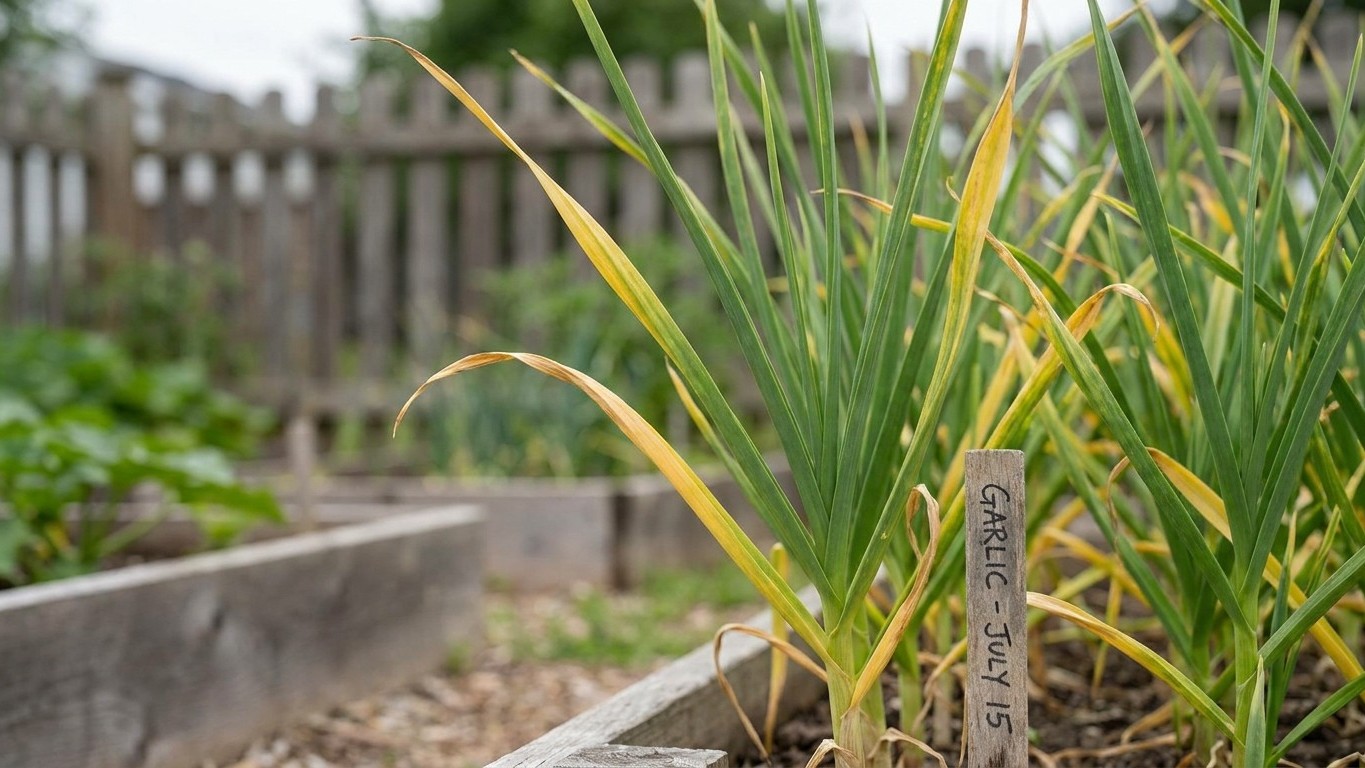

Yellow leaves on garlic are usually the plant ripening, not a problem to fix. If the yellowing starts at the tips of the lowest, oldest leaves and works upward while several leaves near the top stay green, that is a garlic plant finishing its bulking and telling you it is close to harvest. Before you do anything else, walk out and count the green leaves left on a few plants: that number, more than the color, tells you whether this is on-schedule ripening or something that started going wrong months ago.
What you are looking at

Garlic leaves grow from the center of the plant outward, so the oldest leaves are always the lowest and outermost ones. As the bulb finishes bulking, the plant pulls nutrients and moisture out of those oldest leaves first and sends them down into the bulb wrappers, which is why the bottom leaf yellows and browns from the tip inward while everything above it is still green. This is the ordinary sequence of ripening, and it happens leaf by leaf over a couple of weeks, not all at once.
What confirms this is ripening rather than trouble is the pattern: gradual, bottom-up, one or two leaves at a time, with the plant still upright and the remaining leaves a normal green. What rules it out is yellowing that shows up on many leaves at once, on upper leaves before lower ones, or on plants that are still weeks away from the size they should be at harvest. Whole-plant yellowing that happens fast, especially paired with wilting, stunted growth, or a soft or discolored bulb when you dig a test plant, points to something else entirely.
The look-alikes worth ruling out before you write this off as ripening:
- Orange-to-brown raised pustules on the leaf surface, which is garlic rust, not simple yellowing
- Sudden collapse of the whole plant with a soft, watery bulb base, which points to a rot rather than senescence
- Yellowing that starts weeks before scapes even form on hardneck types, which is far too early to be ripening
- Streaked or mottled yellow rather than solid yellow, which often signals a virus carried over in the seed clove
If none of those match and what you have is the slow, bottom-up fade with the plant otherwise upright and full, you are looking at a garlic plant doing exactly what it is supposed to do.
What actually causes it
Normal ripening is driven by the bulb’s own maturity clock, not by anything going wrong. As the bulb reaches full size, the leaves stop being useful to the plant and the plant recycles what it can out of them before they die. This is the same process that yellows onion tops, and it is why growers use leaf color as the harvest signal for growing garlic in the first place.
When the real problems act
Most of what shows up as yellow leaves at harvest time was actually decided much earlier. Garlic planted in autumn needs a stretch of cold weather over winter to trigger proper bulb formation, a process called vernalization. If that chilling period was too short or too warm, the plant may bulb poorly and show stress, including early or uneven yellowing, the following summer, but the decision that caused it was made back at planting and through the winter that followed. How much cold your particular location reliably delivers varies a great deal by state and even by county, so check your state extension service for what counts as adequate winter cold in your area before you plant your next crop.
Stress that happens later in the season acts faster. Heat or drought during the final weeks of bulking can push leaves into premature yellowing because the plant is rationing water rather than finishing the bulb properly. Disease is different again: soil-borne problems such as white rot or fusarium basal rot usually enter through an infected seed clove at planting and progress quietly underground for months before the leaves show it, so by the time you see yellowing the infection is already established in the bulb.
| Cause | When it acted | Recoverable this season? |
|---|---|---|
| Normal ripening | Final weeks before harvest | Not a problem, harvest as usual |
| Short or mild winter chilling | Planting and the winter that followed | No, this year’s bulbs are already set |
| Heat or drought stress | Late spring into early summer | Partly, water can slow further decline |
| Soil-borne disease from infected cloves | At planting | No, lift and remove affected plants |
| Early nitrogen shortage | Spring, before bulbing began | Rarely, usually too late to matter |
What you can still do this season
If the yellowing matches ordinary ripening, there is nothing to do but let it finish and harvest when the right number of leaves have died back, since pulling too early leaves you with a small, papery bulb and pulling too late risks split wrappers and poor storage. If you left a scape on a hardneck variety, that also shifts the plant’s timing somewhat, and it is worth reading how that affects bulb size in Garlic Bolting Early: What the Scape Tells You About the Bulb.
If the yellowing is early and uneven, dig one affected plant now rather than waiting. A soft, discolored, or foul-smelling basal plate means disease, and those plants should come out and go in the trash, not the compost, since several of the pathogens that cause this persist in soil for years. Plants pulled early with no rot, just small or unsplit bulbs from heat or drought stress, are still perfectly good to eat fresh. They simply will not store as long as a fully matured bulb, so use them first rather than setting them aside for winter.
What you cannot do is reverse a winter that was too short or too mild, or undo damage from a stress event that already happened weeks ago. That decision is closed for this year’s crop, and the honest move is to salvage what you can from the bulbs in the ground now and plan differently for the next planting.
What does not work
Fertilizing a yellowing garlic bed rarely helps and can actively hurt. Nitrogen applied once leaves are already yellowing pushes new leaf growth at exactly the point the plant is trying to shut leaves down, which delays maturity, keeps wrappers thin, and often leads to bulbs that do not cure or store well.
Extra watering after yellowing has started is another common instinct that misses the mechanism. If the yellowing is ordinary ripening, water does nothing because the plant is not thirsty, it is finished. If the yellowing is from a soil-borne disease, extra moisture around the bulb can make rot spread faster, not slower.
Fungicide sprays applied to yellowing leaves also miss the target in most cases. Foliar fungicides act on the leaf surface, but by the time yellowing shows up from a basal rot or fusarium infection, the pathogen is already inside the bulb where a spray cannot reach it. Cutting the yellow leaves off the plant does not help either. The plant has already pulled what it can from them, so removing them early only takes away tissue that was quietly finishing its job.
Getting it right next year
The decisions that matter, and when to make them
Almost everything that causes early or uneven yellowing traces back to choices made at planting the previous autumn, so that is when to act, not next summer. Start with clean seed stock: buy certified disease-free cloves rather than replanting bulbs of unknown history, since infected seed is the most common route soil-borne rot takes into a new bed. Choose planting depth and spacing appropriate to your clove size, since crowded or shallow-planted garlic is more prone to stress-driven yellowing later.
Matching variety to your local winter is the other half of it. Hardneck types generally need a more definite cold period to bulb well than softneck types do, and how much cold your winters reliably provide is a question for your state extension service or the general growing guidance in Growing Garlic, since it varies widely across the country and even within a state.
Finally, keep an eye on curing once you do harvest a crop with any early stress on it. Bulbs pulled a little early or under stress cure less predictably, and problems that started at curing rather than in the field show up later as a different issue entirely, covered in Garlic Sprouting in Storage: What Went Wrong at Curing. Treat this season’s yellowing as information for the autumn planting ahead, not as something to fix in the bed you are looking at now.
Common questions
My garlic is turning yellow but it’s only been a few weeks since I planted, is that bad?
Yes, that is too early to be ripening and worth investigating rather than ignoring. Check for waterlogged soil, cold damage, or a clove that was planted too shallow, since young garlic should stay green through spring.
Can I still eat garlic that turned yellow way too early?
Usually yes, as long as the bulb itself is firm and does not smell off when you dig it. Small or unsplit bulbs from early stress are fine to eat fresh, they just will not keep as long in storage as a fully matured bulb.
Should I cut off the yellow leaves to help the bulb finish?
No, leave them alone. The plant is still moving nutrients out of those leaves into the bulb, and removing them early cuts that process short rather than speeding it up.
How many green leaves should be left when I pull my garlic?
Growers generally aim to harvest while a handful of the uppermost leaves are still green and only the lower leaves have yellowed, rather than waiting for the whole plant to die back, since fully collapsed foliage often means the wrappers have already started to degrade underground. Dig one test bulb from the row to check wrapper condition before you commit to pulling the rest.