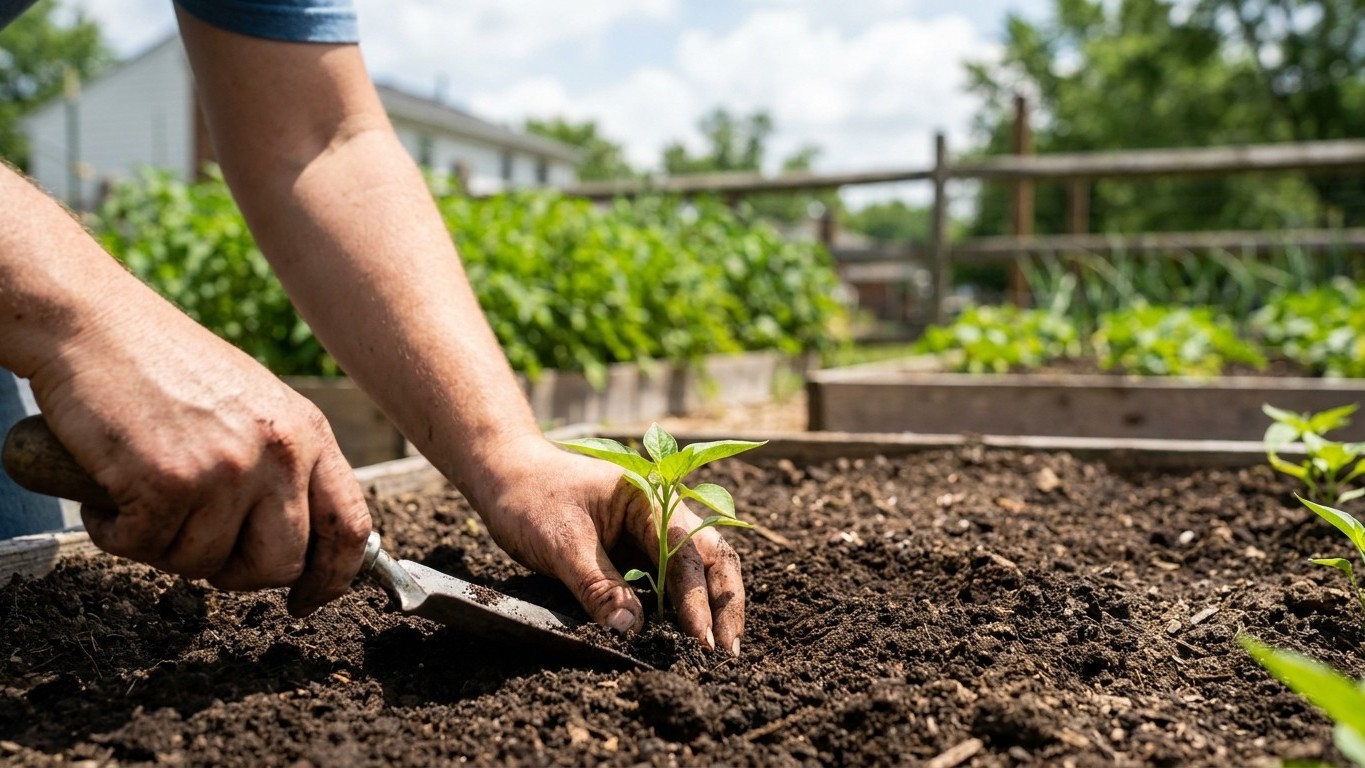

Late spring frost risk in North Dakota clears by mid-May in most years, and the first fall frost doesn’t typically arrive until late September or early October. That leaves July sitting in the thick of the growing season: soil is warm, days are long, and the question isn’t whether you can plant, but which crops still have enough days left to finish before the season turns.
What goes in the ground in July

The arithmetic that matters here is simple: count backward from the first fall frost window of September 25 to October 5 (NOAA NCEI, 1991-2020 normals, reference station), and match it against how many days a crop needs to mature. A bush bean that needs 55 days planted on July 1 is done by late August, well clear of frost. A winter squash that needs 100 days planted the same week is cutting it close, and one planted in late July almost certainly won’t finish outdoors.
Early July is still a good window for a second round of bush beans, beets, carrots, and summer squash or cucumbers, provided the variety matures in 55 to 65 days. Quick greens like radishes and loose-leaf lettuce work too, though lettuce sown in full summer heat tends to bolt fast unless it gets afternoon shade or you pick a bolt-resistant variety. Sweet corn is a gamble past the first week of July unless you’re running an early-maturing type, since anything needing 80-plus days pushes right up against that fall frost band.
What’s a gamble by late July
By the back half of the month, direct-sowing anything that needs more than 60 days becomes a real risk in northern counties, less so in the Red River Valley where the growing window runs a bit longer. Melons, winter squash, and pumpkins started this late are chasing a frost that may already be closing in by the time they’d need six more weeks to ripen.
Transplants are a different story. Fall broccoli and cabbage starts, raised indoors in June, go into the ground in early to mid-July and still have plenty of season left, since transplants skip the weeks a direct-sown seed would need just to germinate and establish.
What to start under cover
July is when the calculus flips from “is it too early” to “is it too late,” and both mistakes are common. Count backward from that September 25 to October 5 frost window: a fall cabbage or broccoli transplant needs roughly six to eight weeks in the ground before harvest, plus another five to six weeks as a seedling before it’s ready to transplant. Add that up and seed started under cover in early July is about the last realistic window for a fall brassica crop that still has time to mature before frost shuts things down.
Starting too early backfires just as badly as starting too late. A tray of broccoli seedlings sown in a hot, stuffy space in June can turn rootbound and leggy by the time the garden bed is free, and a stressed transplant rarely catches up. The fix is timing the sowing to when the outdoor bed will actually be open, not to a fixed date on a seed packet.
Shade cloth or a cool corner of a porch matters more this month than any cold frame, since the failure mode in July is heat stress on seedlings, not cold. Chard, kale, and kohlrabi started under light shade now will be ready to move outdoors in three to four weeks, timed for an August transplant that still leaves enough runway before frost.
What is ready to pick
July is one of the fullest harvest months of the North Dakota garden year. Garlic planted the previous fall comes out once the lower third to half of the leaves have browned; pull a test bulb, and if the cloves are well-formed and the wrapper is intact, the rest can come up for curing. Peas are usually finishing by mid-month, best picked while pods are full but before they turn dull and swollen, which signals the sugars have converted to starch.
Early potatoes planted in spring are often ready to dig as “new potatoes” once the plants flower, well before the vines die back completely. Summer squash and cucumbers should be picked young and often, since letting one oversized zucchini hang on the vine actually slows down the whole plant’s production. Bush beans, beets, and carrots from earlier plantings are usually ready too, and the first tomatoes tend to start coloring toward the end of the month in a normal year.
Lettuce and spinach sown earlier in spring are often bolting by now in the heat; once the center stem shoots up and the leaves turn bitter, that planting is done, and it’s worth clearing the space for a fall-planted round.
The jobs that matter this month
Mulch is the single job with the most leverage right now. A two- to three-inch layer around tomatoes, squash, and peppers holds soil moisture through hot stretches and keeps roots from baking, which matters more in July than any other month. Watering rhythm matters just as much: deep, infrequent watering that reaches six inches down builds resilient roots, while frequent shallow sprinkling just trains roots to stay near the surface where they dry out fast.
Staking and trellising should already be done by now for tomatoes, pole beans, and cucumbers, since a plant that’s sprawled and tangled by mid-July is much harder to stake without breaking stems. If it hasn’t happened yet, do it this week rather than next.
Pest scouting and succession sowing
July is peak season for Colorado potato beetle on potatoes and squash bugs on cucurbits, and both are far easier to control by hand-picking eggs and adults early than after a population explodes. Check the undersides of leaves every few days rather than waiting for visible damage. On the planting side, keep succession sowing bush beans, beets, and quick greens every two weeks through early July to spread out the harvest instead of getting one big glut and then nothing.
Weeding pays double this month, since weeds that go to seed now become next year’s problem, and every weed competing for water in a July heat wave is taking moisture straight from the crop you’re trying to grow.
What not to do in July
The most common mistake this month is treating an established plant as maintenance-free during a heat wave. A tomato or pepper that looked fine last week can wilt hard during a run of 90-degree days, and skipping even one deep watering during that stretch can set fruit development back for weeks.
Overhead watering at midday is another habit worth breaking. Water sprayed on leaves under full sun evaporates fast and does little for the roots, while also raising humidity around the foliage right when fungal diseases like powdery mildew are most active. Watering at the base, early morning, does far more with the same amount of water.
Nitrogen-heavy fertilizer is tempting when plants look a little pale in the heat, but feeding high nitrogen to a tomato or squash plant that’s already flowering pushes leafy growth at the expense of fruit set. A balanced or lower-nitrogen feed suits this stage better.
Finally, don’t direct-sow a long-season crop just because there’s still open space in the bed. An empty row in late July is better filled with a 50-day crop than a 90-day one that has no real chance of finishing before the first frost arrives.
Checking this against your own county
These frost windows and the USDA hardiness range of 3a to 4b across North Dakota come from one reference station, and they shift by county. Elevation, proximity to the Missouri River or Devils Lake, and simple north-south position across the state can move the last spring frost and first fall frost by one to two weeks in either direction, sometimes more. A garden in the Red River Valley often has a longer frost-free window than one at higher ground farther west.
Treat every date in this article as a starting point, not a guarantee. For county-level guidance, check the NDSU Extension service, which tracks local conditions more closely than any statewide figure can.
Common questions
Can you still plant tomatoes in July in North Dakota?
Direct-seeding tomatoes in July is too late almost everywhere in the state, since they need 60 to 85 days plus warm soil to germinate. Transplanting an already-started tomato seedling in very early July can still work in a normal year, but it’s a narrow window.
Is it too late to plant a vegetable garden in July?
No. Fast-maturing crops like bush beans, beets, carrots, radishes, and summer squash sown in early July still have time to mature before the first fall frost window of September 25 to October 5. What’s off the table by July is anything needing 90-plus days.
What vegetables can I direct sow in North Dakota in July?
Bush beans, beets, carrots, radishes, and summer squash or cucumbers are the safest bets in early July, provided the variety matures in roughly 55 to 65 days. Lettuce and spinach can go in too but need shade to avoid bolting in the heat.
When should I stop planting to avoid frost damage in the fall?
Count backward from the first fall frost window (September 25 to October 5 at the reference station, earlier in many rural counties) using the days-to-maturity on the seed packet. If the math doesn’t clear that window with a few weeks of margin, hold off until the following spring.