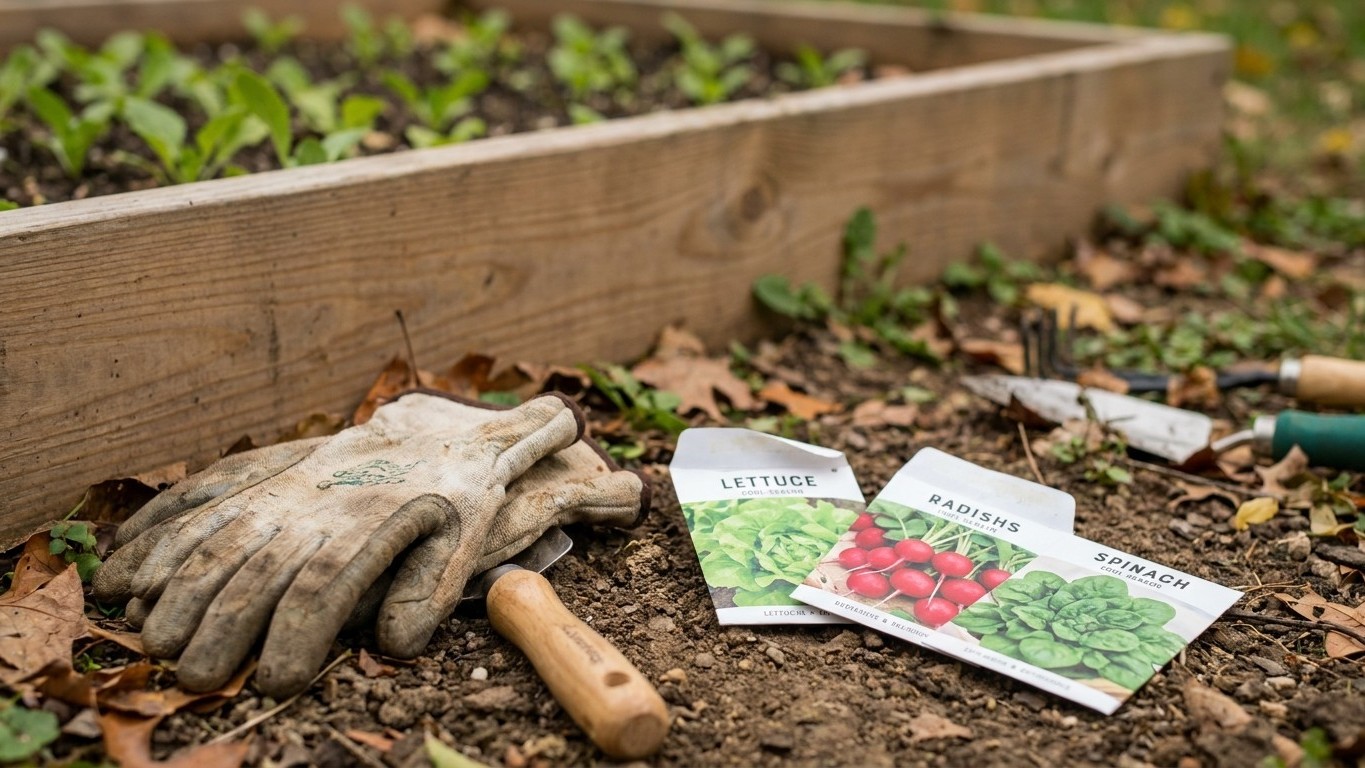

Early September in North Dakota still has growing days left, but the clock is loud. The first fall frost lands somewhere between September 25 and October 5 across most of the state, so this month is for fast crops sown in the first week or two, garlic going in for next year, and getting tender vegetables off the vine before a cold night wipes them out.
What goes in the ground in September

The number that actually runs this month isn’t the calendar date, it’s the gap between today and that first fall frost window of September 25 to October 5. Every seed packet lists days-to-maturity, and that number has to fit inside whatever is left of the season. A radish at 25 to 30 days sown on September 1 has real room. A carrot at 70 days sown the same day does not, unless it’s going in strictly for baby-size roots.
Soil temperature still matters even this late. After a full summer of sun, North Dakota soil in early September is often warmer than the air feels in the morning, which is why quick greens germinate fast right now even as nights cool. Spinach, arugula, radishes, turnips, and loose-leaf lettuce sown in the first half of the month are the safe bets. Push past mid-month and the arithmetic stops working for anything but the very quickest greens under some kind of cover.
Garlic and shallots are the other clear winner, though the timing runs later in the month or into early fall rather than the first week. Cloves want cool soil and about six weeks to root before hard freeze without pushing top growth, which lines up well with a state sitting in USDA Hardiness Zone 3a to 4b, a zone built entirely on average extreme minimum winter temperature rather than growing season length. That zone range matters most for what survives winter dormant, and garlic is built for exactly that stress.
Skip anything warm-season. Beans, squash, tomatoes, peppers, sweet corn: none of it belongs in open ground this month in this climate. The days-to-maturity math simply isn’t there, and a warm afternoon in early September doesn’t change what the calendar has coming in three to four weeks.
What to start under cover
Working backward from that September 25 to October 5 frost window is the only way this math holds up. A lettuce variety needing 45 days to maturity, sown September 1, reaches harvest size right around the frost date itself, which means it needs a cold frame or low tunnel to buy an extra two to three weeks of protected growth on the back end. Sown a week later, that same lettuce is racing a frost it likely won’t beat without cover.
Spinach is more forgiving. It tolerates light frost outright and actually sweetens after a cold snap, so seed sown under a floating row cover in the first two weeks of the month can keep producing well past the first freeze date, especially with the cover pulled tight at night and vented on sunny afternoons.
The two ways this goes wrong are almost opposite each other. Start too early relative to available light and warmth and seedlings under cover can bolt or stall, especially lettuce, which reads shortening days as a signal to flower rather than bulk up. Start too late and there’s no cushion left. A cold frame or low tunnel adds maybe two to four weeks of frost buffer, not a whole new season, so the backward math from the frost window still has to leave room for actual harvest, not just survival.
Onion sets and leek starts for overwintering into next spring are a harder sell in a Zone 3a to 4b climate. Most home gardeners in this state do better starting those indoors in late winter for spring transplant rather than trying to overwinter seedlings through a North Dakota winter under cover.
What is ready to pick
September is the harvest crunch, and it comes with a deadline. Tomatoes, peppers, summer squash, sweet corn, and pole beans planted back in spring need to come off before that first fall frost, because a single hard freeze ends all of them overnight. Green tomatoes can still ripen indoors on a windowsill, so a full picking before a forecasted freeze beats leaving fruit on the vine and gambling.
Winter squash and pumpkins tell you they’re ready with a rind that resists a fingernail push and a stem that’s dried and corked rather than green and pliable. Pull them before frost touches the fruit itself, even if the vines can take a light one.
Onions signal readiness when the tops flop over and start to yellow, which usually happens on their own timeline regardless of the date. Potatoes are ready to dig once the foliage dies back, and a light touch with a garden fork rather than a hard dig keeps skins from tearing during curing.
Garlic from last year’s planting is long gone by this point, but anything stored from midsummer harvest, onions, garlic, winter squash, deserves a check now. Soft spots, sprouting, or a sweet fermenting smell in storage mean pull that one out before it takes down its neighbors in the bin.
The jobs that matter this month
Harvest timing outranks almost everything else this month, because a missed frost warning costs an entire season’s tomatoes in one night. Keep an eye on overnight lows as the month moves toward that September 25 to October 5 window, and have row cover or old sheets ready to throw over tender crops on any night forecast near freezing, even if the afternoon before felt like midsummer.
Curing and storage
Onions and garlic need one to two weeks of curing in a warm, dry, airy spot before storage, tops still attached, out of direct sun. Winter squash cures best around 80 degrees for about ten days to harden the skin further before it goes into cool, dry storage. Skipping this step is the single most common reason stored crops rot early.
Soil and structure
As beds empty out, this is the window for a soil test, since amendments like lime or compost need a season to work into the soil before next spring’s planting. Spent plants come out and either go to the compost pile or, if diseased, to the trash rather than the pile. Perennial beds, asparagus, rhubarb, berry canes, benefit from a layer of mulch applied once growth slows, which protects roots through the harsh winter that this state’s Zone 3a to 4b range is built around measuring.
Seed catalogs for next spring start circulating now, and the popular short-season varieties bred for northern climates sell out well before planting time. Ordering in September, right after the current season’s performance is fresh in mind, beats scrambling in March.
What not to do in September
The classic mistake is trusting a warm afternoon over the calendar. A 75-degree day in mid-September doesn’t mean frost risk is gone, because clear, calm nights let heat radiate out of the soil fast, and temperatures can drop 20 degrees or more between dusk and dawn. Gardeners who pull row covers off after a warm spell and leave them off often lose tender crops to a frost that arrived with almost no warning in the air temperature that day.
Planting anything warm-season this month is a wasted seed packet in this climate, not a shortcut. The days-to-maturity math doesn’t bend for optimism, and soil that stays warm doesn’t change how few daylight hours are left to finish a 60-day crop.
Nitrogen fertilizer is the other trap. Feeding leafy greens or lawns a high-nitrogen boost late in the month pushes soft new growth right as the plant should be hardening off for cold, and that new growth is exactly what a frost kills first. If feeding anything this month, a lower-nitrogen, higher-phosphorus and potassium mix supports root development and cold tolerance instead of tender top growth that won’t survive anyway.
Garlic cloves planted too early, well before the ground has cooled, risk pushing green shoots above ground before winter, which weakens the bulb. Better to wait for cooler soil later in the fall window than rush it in early September heat.
Checking this against your own county
These frost dates come from one reference weather station, and North Dakota’s real ground truth varies more than a single statewide range suggests. Elevation, proximity to the Red River Valley, and simple north-versus-south positioning across the state can shift both the first fall frost and the last spring frost by a week or two in either direction, sometimes more in low-lying areas prone to cold air pooling.
Suburban and rural gardens outside the immediate airport-station area typically see frost arrive earlier in fall and linger later in spring than the reference figures here. The North Dakota State University Extension service tracks local conditions county by county and is the better source for a planting window tailored to a specific location rather than the state as a whole.
Common questions
Can tomatoes still ripen if frost hits before they’re red?
Green tomatoes picked before a freeze will often ripen indoors on a counter or windowsill over one to two weeks, though the flavor rarely matches vine-ripened fruit picked in warm weather.
Is it too late to plant garlic in September?
Not necessarily, but garlic generally does better planted a bit later in fall once soil has cooled further, giving roots time to establish without pushing green top growth before winter sets in.
Do quick greens sown in September actually have time to mature?
Radishes, arugula, and spinach sown in the first half of the month usually finish before the first fall frost window arrives, especially with a floating row cover extending the warm days by a couple of weeks.
Why did frost damage crops on a night that felt mild during the day?
Clear skies and calm air let heat radiate out of the ground overnight, so a warm afternoon can still be followed by a frost-level overnight low with almost no warning from the daytime temperature.