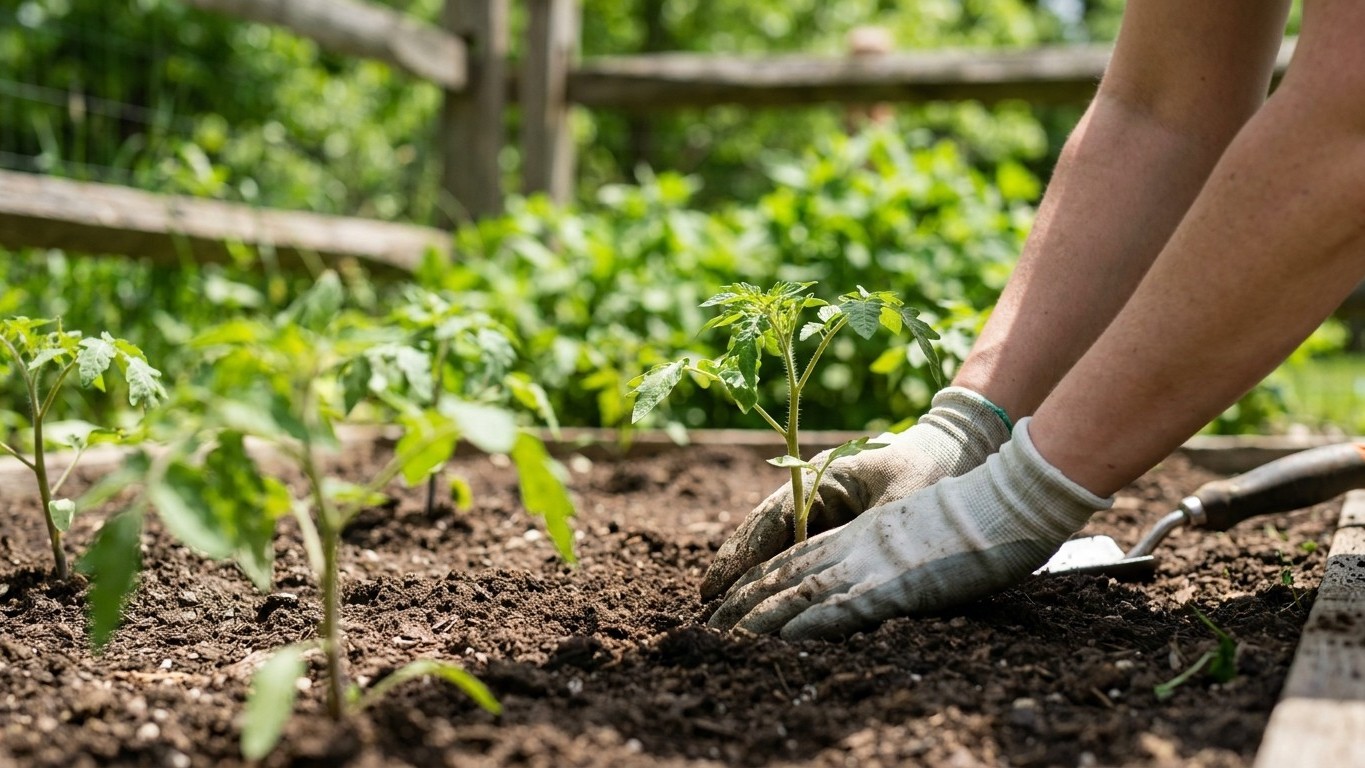

June is the pivot month for Northwest Territories gardens: the average last spring frost lands May 25, so by the time June opens most beds are workable, but the territory’s Canadian hardiness zone 1b means soil warmth, not the calendar page, decides what actually survives. Hardy greens, alliums and peas go in early; anything tender waits for real soil heat, usually mid-to-late month, and always under some form of cover.
What goes in the ground in June

The average last frost date of May 25 is a midpoint, not a guarantee. Environment and Climate Change Canada’s own normals mean that in one year out of two, frost arrives later than that date at the Yellowknife A station. So the first week of June is still a gamble in an open bed, and soil temperature, not the thermometer reading at noon, is what actually tells you whether seed will rot or grow.
In a Canadian zone 1b climate, soil often lags well behind air temperature. Ground that thawed weeks ago at the surface can still be cold a few inches down, especially where permafrost sits close under the topsoil. That cold root zone is what kills warm-season seedlings faster than a light frost does.
What’s safe to put in the ground through June: hardy greens like spinach, lettuce, kale and mustard tolerate a light frost and germinate in cool soil. Alliums (onion sets, shallots, garlic if not already in from an earlier planting) handle the swings without much drama. Peas are built for this window; they germinate in cold soil and actually prefer it to heat. Root crops such as carrots, beets, radishes and turnips can go in as direct-sown seed once the ground is workable and not waterlogged from spring melt.
What’s still a gamble
Tomatoes, peppers, squash, cucumbers and beans are the crops to hold back on unless you’re using a cold frame, low tunnel or greenhouse. Given the first fall frost lands on average September 18, the frost-free stretch between the two dates runs to roughly 116 days on paper, but that number assumes the average holds both ends, and a late spring or early fall can shave weeks off it fast. Transplanting tender starts outdoors before the soil itself has warmed simply stalls them, even if no frost touches the leaves.
What to start under cover
Counting backward from the frost window is the only method that works here, because a fixed calendar date ignores how short and unpredictable the NWT season actually is. If the average last frost is May 25 and a tomato needs roughly six to eight weeks indoors before it’s ready to go out, the sowing date lands in early-to-mid April, well before June opens. By the time June arrives, the main job under cover shifts from starting long-season crops to keeping them growing well and beginning fast-maturing successions.
Quick crops still make sense to start under cover in June: a fresh tray of lettuce, another round of brassica transplants for a later planting, or basil and other herbs that take only a few weeks to reach transplant size. These fill gaps without competing for the limited weeks between May 25 and September 18.
Two mistakes show up every season. Starting too early means seedlings sit indoors too long, become rootbound in small trays, and stretch into leggy, weak stems that never recover fully once transplanted. Starting too late is the opposite problem and just as costly: with only about sixteen weeks separating the average frost dates, a crop sown under cover in late June may not have time to mature and ripen before the first fall frost arrives, especially if that frost comes earlier than the September 18 average. Matching the sowing date to the actual days-to-maturity on the seed packet, then working backward from both frost dates, catches most of this before it becomes a wasted tray of seedlings.
What is ready to pick
June is early in the Northwest Territories growing season, so what’s actually ready to pick outdoors is limited. Anything direct-sown in May is still establishing; anything transplanted in June hasn’t had time to produce. The honest picture is that most of what reaches the table this month comes from what was planted or stored earlier, not from fresh harvest.
Perennial herbs like chives and sorrel, if established from a previous season, are often the first real harvest of the year, pushing new growth as soon as the soil warms. Rhubarb, another hardy perennial, is typically ready to start cutting stalks by June if the crown survived winter, and it tolerates the short, cool spring better than almost anything else in a northern garden.
Cold frames or low tunnels started earlier in spring may be yielding baby greens, radishes or early lettuce by now, since the protected environment lets soil warm faster than the open bed. Indoors, sprouts and microgreens remain a reliable stopgap, ready in days rather than weeks, and don’t depend on outdoor soil conditions at all.
For anyone still working through winter storage, June is also the month to check root cellars and cold storage closely. Potatoes, onions and any stored squash that made it this far are approaching the end of their shelf life; soft spots, sprouting eyes or a sweet fermented smell mean it’s time to use or discard them before they spread rot to the rest of the batch.
The jobs that matter this month
Soil preparation is the single job that pays off most in June, because in a zone 1b climate the soil is often the limiting factor, not the air. Raised beds, dark mulch, or simply working the soil to loosen and aerate it all help it warm faster and hold that warmth once the sun is up nearly around the clock. Testing soil now, before the bulk of the season’s growth demands nutrients, gives time to amend with compost or organic matter while it can still make a difference.
Mulching should wait until the soil has actually warmed; mulch applied too early insulates cold ground and slows warming exactly when the goal is the opposite. Once soil temperature has climbed, though, mulch around alliums, greens and root crops helps retain the moisture that long June daylight hours burn off quickly.
Staking is worth doing before plants sprawl rather than after. Peas and any climbing crop benefit from a trellis set in place at planting time, since disturbing roots later to add support does more harm than the sprawl itself.
Watering rhythm deserves attention specifically because of the near-continuous daylight NWT gardens get in June. Long days mean more photosynthesis, but also more evaporation and transpiration, so beds can dry out faster than a gardener used to shorter summer days expects. Checking soil moisture by hand, rather than relying on how the surface looks, catches this early.
Succession sowing of fast crops like radishes, lettuce and spinach keeps the harvest coming through a season that’s already short. Pest scouting matters too: cutworms and root maggots are active as soon as soil warms, and catching an infestation on young seedlings is far easier than replacing a bed that’s been wiped out.
What not to do in June
The most common mistake is planting warm-season crops into cold soil because the air finally feels warm. A string of sunny days with air temperatures in the 60s can mask soil that’s still cold a few inches down, particularly in a region where permafrost or slow-draining ground keeps the root zone chilled well after the surface warms. Tomatoes, peppers and squash set out into that cold soil don’t die outright, but they stall, turn purplish from cold stress, and often never catch up even once the weather stays warm.
Uncovering cold frames or low tunnels too early after a mild spell is another trap. A few warm days don’t mean the frost risk has passed, especially given that the average last frost of May 25 means half of all years see frost after that date. Pulling protection off tender plants too soon exposes them to a swing back to freezing that a covered bed would have shrugged off.
Feeding nitrogen at the wrong point in the season causes its own problems. Heavy nitrogen early on root crops like carrots and beets pushes leafy growth at the expense of the root, and on alliums it can delay the bulbing process. Nitrogen makes more sense once leafy greens and brassicas are actively growing and need the boost, not at the moment of planting into still-cool soil.
Ignoring thaw depth is a mistake specific to this region. Digging or tilling too deep, too early, can disturb a thawing layer sitting over still-frozen ground below, which changes drainage and root conditions in ways a gardener further south never has to consider.
Checking this against your own county
A territory-wide average is a starting point, not an instruction. The May 25 and September 18 frost dates come from a single station, Yellowknife A, and elevation, latitude and local terrain shift these windows by weeks across the Northwest Territories. Communities further north or at higher elevation should expect a later last frost and an earlier first fall frost than the Yellowknife average suggests, while more sheltered or southern locations may get a slightly longer window.
For local guidance, the Government of the Northwest Territories’ agriculture services page is the place to start: https://www.iti.gov.nt.ca/en/services/agriculture.
Common questions
Is it safe to plant tomatoes outdoors in the Northwest Territories in June?
Not without protection. The average last frost is May 25, but that’s a midpoint date, meaning frost arrives later in roughly half of all years. Tomatoes and other tender crops do better started under cover and moved out only once soil has genuinely warmed, ideally with a cold frame or low tunnel as backup.
What does Canadian hardiness zone 1b actually mean for a garden?
Zone 1b is the Canadian system, built from seven climate variables, and it does not convert to a USDA zone. It marks the Northwest Territories, at the reference city measured here, as one of the coldest, shortest-season zones in the country, which is why hardy crops and season-extension tools matter more than they would in most of the continental US.
How long is the actual frost-free growing season?
Based on the average dates, roughly 116 days separate the last spring frost (May 25) and the first fall frost (September 18). That’s an average span, not a guarantee, and both ends can shift earlier or later in any given year.
What should I plant if I only have a few weeks left before fall frost risk starts?
Fast-maturing crops make the most sense: radishes, lettuce, spinach and other quick greens can still produce a harvest even sown later in June, since they mature well within the remaining weeks before the average September 18 frost date.