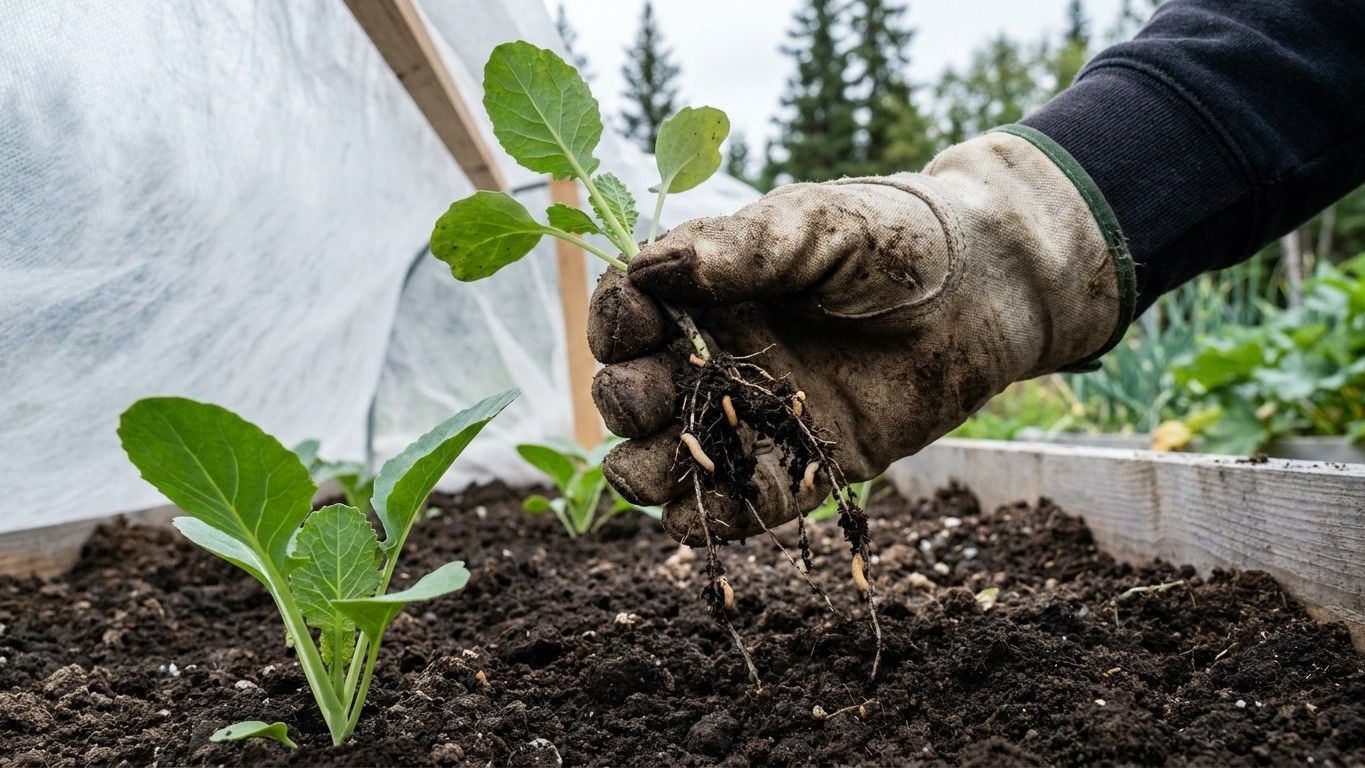

Root maggots hit brassica and onion crops hardest during the narrow window between late May and early July, when adult flies emerge from overwintering pupae and lay eggs at the base of young plants. In the Northwest Territories, that window is compressed by a short, intense growing season, which means gardeners around Yellowknife, Hay River, Fort Smith, and Inuvik often see damage concentrated in a single generation rather than the two or three cycles common farther south.
The fix isn’t complicated, but it depends on timing more than any single product. Physical barriers placed at seeding or transplanting, tight crop rotation, and prompt removal of damaged roots do more to stop these pests than pesticides ever will in a home garden setting.
Which Root Maggots Turn Up in NWT Gardens

Two species account for almost all the damage reported by northern gardeners. The cabbage maggot (Delia radicum) targets the brassica family: cabbage, broccoli, cauliflower, kale, turnip, and radish. Its cousin, the onion maggot (Delia antiqua), goes after onions, shallots, and leeks. A third player, the seedcorn maggot, shows up occasionally in cool, wet soils and will feed on germinating seeds of beans, peas, and corn before those crops even break the surface.
All three are the larval stage of small flies that look a lot like ordinary house flies, just grayer and smaller. The adults don’t do damage themselves. It’s the legless, cream-colored larvae, roughly a quarter-inch long at maturity, tunneling through roots and stems below the soil line that cause the wilting, stunting, and rot gardeners notice above ground.
Why Brassicas and Onions Are the Main Targets
Female flies are drawn to the specific sulfur compounds these plants release from their roots. That’s why a tight rotation away from brassicas and onions, even in a small backyard plot, genuinely reduces egg-laying pressure the following season. Flies searching for host plants by scent simply have fewer targets to find.
Root Maggots and the NWT Growing Season
Timing in this territory looks different than it does in temperate Canada. Adult flies need a certain accumulation of warm days, what entomologists call degree-days, before they emerge and start laying eggs. Farther south, that threshold gets reached earlier and repeats itself two or three times over a long summer. In the NWT, soil warms later, days stay long but temperatures swing more, and the whole cycle often compresses into one heavy emergence rather than several smaller ones.
That first generation, typically appearing sometime between late May and the third week of June depending on how fast the ground thaws and warms that particular year, tends to be the one that matters most. A cold, late spring pushes emergence back; an early thaw around Fort Smith or Hay River can bring flies out weeks ahead of a similar garden near Inuvik or Norman Wells, where permafrost keeps soil temperatures lower longer into the season.
Long daylight hours during the NWT summer speed up larval development once eggs hatch, so the gap between egg-laying and visible root damage can be shorter than gardeners expect. A plant that looked fine on a Saturday inspection can show serious wilting by the following weekend.
One Generation Instead of Three
This compressed cycle is actually useful information for gardeners. Instead of monitoring and protecting crops all season the way growers in southern Alberta or Ontario need to, NWT gardeners can concentrate their defenses on that critical three-to-four-week emergence window right after the last frost risk passes. Miss that window with protection in place, and the rest of the summer is comparatively low-risk for a second wave.
Spotting the Damage Early
Above-ground symptoms show up as wilting during the heat of the day, even when soil moisture seems adequate, along with a bluish or grayish tint to leaves and stunted growth compared to unaffected plants nearby. Seedlings hit hard enough can collapse entirely.
Pull one suspect plant and check the roots before assuming it’s a watering or nutrient problem. Cabbage maggot damage looks like brown, slimy tunnels and scarring on the main root and lower stem. Onion maggot damage often starts at the base of the bulb, sometimes killing the growing point outright, which is why an entire row of onion sets can fail within days of each other once the larvae get established.
Radishes and turnips, grown as fast crops in many northern gardens because they mature before the short season runs out, are particularly vulnerable since gardeners tend to harvest and inspect them less carefully than slower-growing brassicas.
What Actually Stops Root Maggots
Control comes down to keeping egg-laying females away from plant stems, disrupting the pupae overwintering in soil, and rotating hosts so flies can’t find a meal close to where they emerged.
Floating Row Covers and Collars
A lightweight row cover, sealed at the edges with soil or boards, physically blocks adult flies from reaching the base of brassica or onion plants to lay eggs. This is the single most reliable tool available to home gardeners and works especially well in the NWT because the compressed emergence window means covers only need to stay on for a few weeks rather than an entire season. Remove them once the local emergence period has passed, or leave them on longer for crops that don’t need pollinator access.
Individual collars, cut from cardboard, tar paper, or heavy plastic and fitted snugly around the stem of each transplant at soil level, work as a lower-effort alternative when covering an entire bed isn’t practical. The collar prevents newly hatched larvae from reaching the soil around the root, which is the first step they need to take before tunneling in.
Timing Plantings to Dodge the Peak
Delaying brassica transplanting by even a week or two, once local gardeners or the territorial agriculture extension office report the first fly activity, can mean seedlings go into the ground after the heaviest egg-laying pressure has already passed. Starting seedlings indoors and transplanting larger, sturdier plants also helps, since bigger root systems tolerate some larval feeding without collapsing the way a fragile seedling will.
Crop Rotation That Actually Breaks the Cycle
Pupae overwinter in the soil close to where the previous crop grew. Moving brassicas and onions to a different bed each year, ideally with at least a two-year gap before returning to the same spot, forces emerging flies to travel farther to find a host, and many simply won’t survive the search. In a small NWT garden plot where space is limited, even rotating within raised beds or containers makes a measurable difference.
Cleaning up crop debris in fall rather than leaving roots and stems to overwinter in place removes another chunk of the pupae population before it gets the chance to emerge the following spring.
Diatomaceous Earth and Beneficial Nematodes
Food-grade diatomaceous earth worked into the soil surface around the base of vulnerable plants can deter egg-laying and damage larvae on contact, though it needs reapplication after rain and loses effectiveness once wet. Beneficial nematodes, applied as a soil drench, attack root maggot larvae directly and have shown decent results in cool-soil conditions similar to what much of the NWT experiences, though product availability and cost can be a barrier for casual gardeners in more remote communities.
Neither of these should replace row covers as the primary defense. They work best as backup layers for gardeners who’ve already had a bad year and want extra insurance.
What Doesn’t Work as Well as People Think
Sprinkling wood ash or coffee grounds around stems is a common home remedy with little consistent evidence behind it in controlled trials. Broad-spectrum insecticides applied to foliage miss the target entirely, since the larvae live underground and the damage is done before adults are ever seen on leaves. Soil insecticides exist but come with restrictions on food crops and timing that make them impractical for the small-scale, mixed vegetable beds typical of NWT home gardens.
The most consistent feedback from northern extension programs and community garden coordinators points back to the basics: physical exclusion during the emergence window, rotation, and fall cleanup. None of it requires special products, which matters in communities where garden supplies have to be shipped in and shelf space for specialty pest controls is limited.
Gardeners who’ve lost a crop to root maggots one season often find the second season goes much better simply by moving the bed and covering transplants two weeks earlier than they did the first time around.