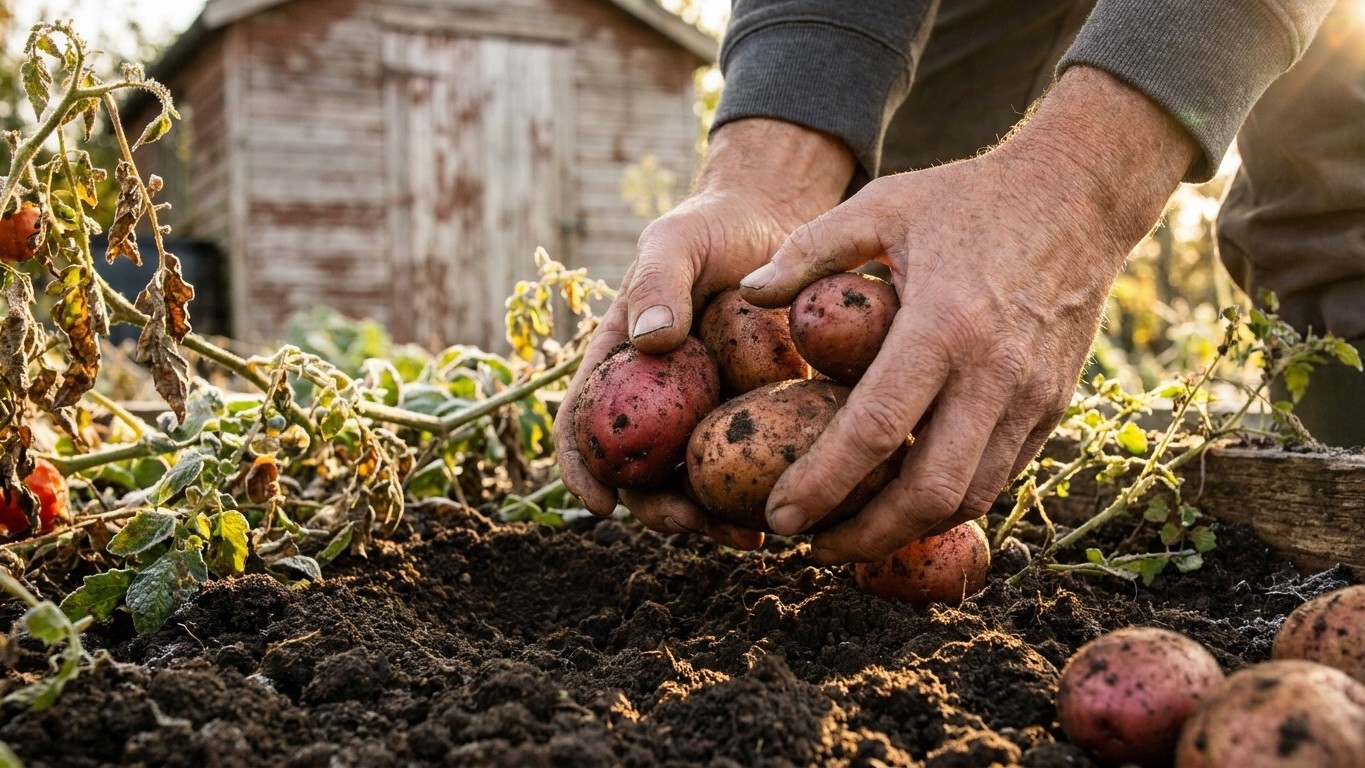

Dig potatoes in Alberta before the average first fall frost of September 16, since vines and tubers left in the ground after a hard freeze rot fast. Cure the crop at 55-60°F in high humidity for two to three weeks, then move it somewhere dark and 40-45°F for winter. With this province’s coldest month averaging a nightly minimum of just 8.2°F, an unheated shed or porch will freeze potatoes solid; storage has to sit inside a heated or well-insulated space.
The short answer
Two numbers frame everything about growing and keeping potatoes here. The first is September 16, the average date of the first fall frost recorded at the Calgary Int’l A station under Environment and Climate Change Canada’s 1981-2010 climate normals. The second is 8.2°F, the mean daily minimum temperature of the coldest month at that same reference station. Together they tell you when to pull the crop and what kind of building you’ll need to keep it through winter.
That September 16 date is a mean, not a guarantee. In roughly one year out of two, the first frost actually falls later than that, sometimes by a week or two. Treat it as the midpoint of a window rather than a safe deadline, and watch your own local forecast rather than the calendar alone. Alberta also isn’t one climate: the Calgary figure describes conditions around that station, and districts to the north, or at higher elevation in the foothills, tend to see frost weeks earlier. If you garden near Grande Prairie or up in the Peace Country, push your harvest timeline earlier than the Calgary-based average suggests.
Once the tops die back, or frost blackens the vines, tubers should come out within a few days. Leaving them in cold, wet soil past that point invites rot and makes digging harder as the ground firms up. Most Alberta gardeners are lifting their crop sometime between early and mid September, ahead of that average frost date rather than after it, since a late-season cold snap can arrive without much warning.
The 8.2°F figure answers the storage half of the question directly: an unheated space in this province will freeze through winter, not hover in the 40-45°F range that stored potatoes need. A detached garage, a garden shed, or an enclosed porch without heat will drop well below freezing for weeks at a stretch once the coldest month sets in. That rules out casual outdoor storage options that work in milder climates. Whatever space holds your potatoes here needs either a heat source, insulation tied to a heated part of the house, or genuine below-frost-line placement, the way a traditional root cellar works.
Curing, and where
Curing is the step between digging and storing, and skipping it shortens how long potatoes last. Utah State University Extension recommends curing at 55-60°F with high humidity for two to three weeks, a period that lets cut or bruised skins heal over and thickens the skin against moisture loss and rot. Alberta’s outdoor conditions at harvest time, cooling fast toward that average September 16 frost, rarely offer that combination outdoors for long. The window closes quickly once nights start dropping toward freezing.
Finding 55-60°F indoors
Most Alberta homes have a spot that comes close: an unheated basement corner, a mudroom against an interior wall, or a heated garage kept just above outdoor temperatures. An open porch or an uninsulated shed won’t hold steady humidity or temperature once the season turns, so they’re poor choices for this step even though they might seem like the obvious outdoor option.
- Dig potatoes on a dry day and let them sit on the soil surface for an hour or two, no longer, to shed loose dirt without exposing them to sun or frost.
- Brush off excess soil by hand rather than washing the tubers, since moisture on the skin encourages rot during curing.
- Move the potatoes to a space holding roughly 55-60°F with high humidity, a basement room or a heated garage corner in most Alberta homes.
- Spread them in a single layer, or in shallow crates, so air reaches all sides and no tuber sits pressed against another.
- Leave them undisturbed for two to three weeks, checking occasionally for soft spots and pulling any that show rot before it spreads.
- After curing, sort again, setting aside anything bruised or damaged for near-term eating rather than long storage.
Basements tend to work best here because they hold both temperature and humidity more evenly than any above-grade room, especially once outdoor conditions start swinging toward frost. A heated garage is the next-best option, provided it doesn’t dip below that 55°F floor overnight, which can happen in an unheated bay once the coldest month approaches.
Storing through this winter
Once curing ends, the crop needs a different set of conditions. Utah State University Extension places ideal storage at 40-45°F, kept dark, while the University of Maine Cooperative Extension gives a tighter figure of 38°F at 95% humidity. Both sources agree on the two things that matter most for keeping potatoes edible for months: cold enough to slow sprouting and rot, but not so cold that the tubers freeze.
Why Alberta’s winter changes the math
That range sits well above the 8.2°F mean minimum this province sees in its coldest month. A garage, shed, or porch left unheated will fall far below the 38-45°F target for weeks on end, freezing the potatoes and turning the flesh soft and sweet-tasting in a way that means the crop is ruined, not merely chilled. Freezing damage doesn’t reverse once tubers thaw; the cell walls have already broken down.
A cold basement corner, particularly one away from a furnace or heating duct, usually lands close to that 40-45°F window through most of an Alberta winter, sometimes running cooler during the deepest cold snaps. Rooms near a heat source often drift too warm, encouraging sprouting well before spring. If you’re storing in a garage, it needs enough heat, even a modest amount, to stay above freezing continuously, since a single hard freeze event can undo months of otherwise good storage. Darkness matters as much as temperature: light exposure turns potato skins green and bitter, so a cardboard box, a burlap sack, or a lidded bin inside that cool space keeps both light and temperature swings in check.
Check stored potatoes every few weeks. Pull any that have softened or sprouted, since one rotting tuber spreads moisture and rot to its neighbors quickly in a closed bin.
What goes wrong here
Harvest-day and storage risks in Alberta’s climate
- Digging too late. Waiting past the average September 16 frost risks a hard freeze in the ground, which turns tubers soft and unusable before they’re even out of the soil. Dig as soon as vines die back rather than waiting for a fixed date.
- Curing outdoors in a cooling season. An open porch or unheated shed rarely holds the 55-60°F Utah State University Extension recommends once fall arrives here. Move curing indoors to a basement or heated garage instead.
- Storing in an unheated garage or shed. With a coldest-month mean minimum of 8.2°F, these spaces freeze solid for weeks at a time, ruining the crop. Add heat, or move storage to a cool basement room.
- Storage space running too warm. A spot near a furnace or heating duct pushes past the 40-45°F range and triggers early sprouting. Choose the coolest part of the basement, away from heat sources.
- Skipping regular checks. A single soft or rotting tuber left in a bin spreads decay to everything around it. Inspect stored potatoes every few weeks and remove any showing damage.
- Pest or disease pressure at harvest. Damaged tubers store poorly regardless of temperature. Where insects or fungal issues appear in the patch, appropriate insecticides or an appropriate fungicide, applied ahead of harvest, reduce the damage that later shows up in the bin.
Common questions
Can I leave potatoes in the ground past the first frost?
A light touch of frost on the vines alone doesn’t damage tubers still underground, but waiting too long risks a hard freeze reaching the soil, especially once the season moves past that average September 16 date. Dig promptly once the vines have died back.
Is a root cellar necessary in Alberta, or will a basement work?
A basement room, particularly one away from heating ducts, generally holds close to the 40-45°F range Utah State University Extension recommends. A dedicated root cellar isn’t required if a cool, dark basement corner is available.
What happens if stored potatoes freeze?
Frozen tubers turn soft and unusually sweet as starches convert to sugar, and the damage doesn’t reverse on thawing. This is why an unheated shed or garage, which regularly drops near or below the 8.2°F coldest-month minimum, isn’t safe for winter storage here.
How long does curing actually take?
Utah State University Extension specifies two to three weeks at 55-60°F with high humidity. Cutting that period short leaves skins thin and more vulnerable to moisture loss and rot once potatoes move into long-term storage.