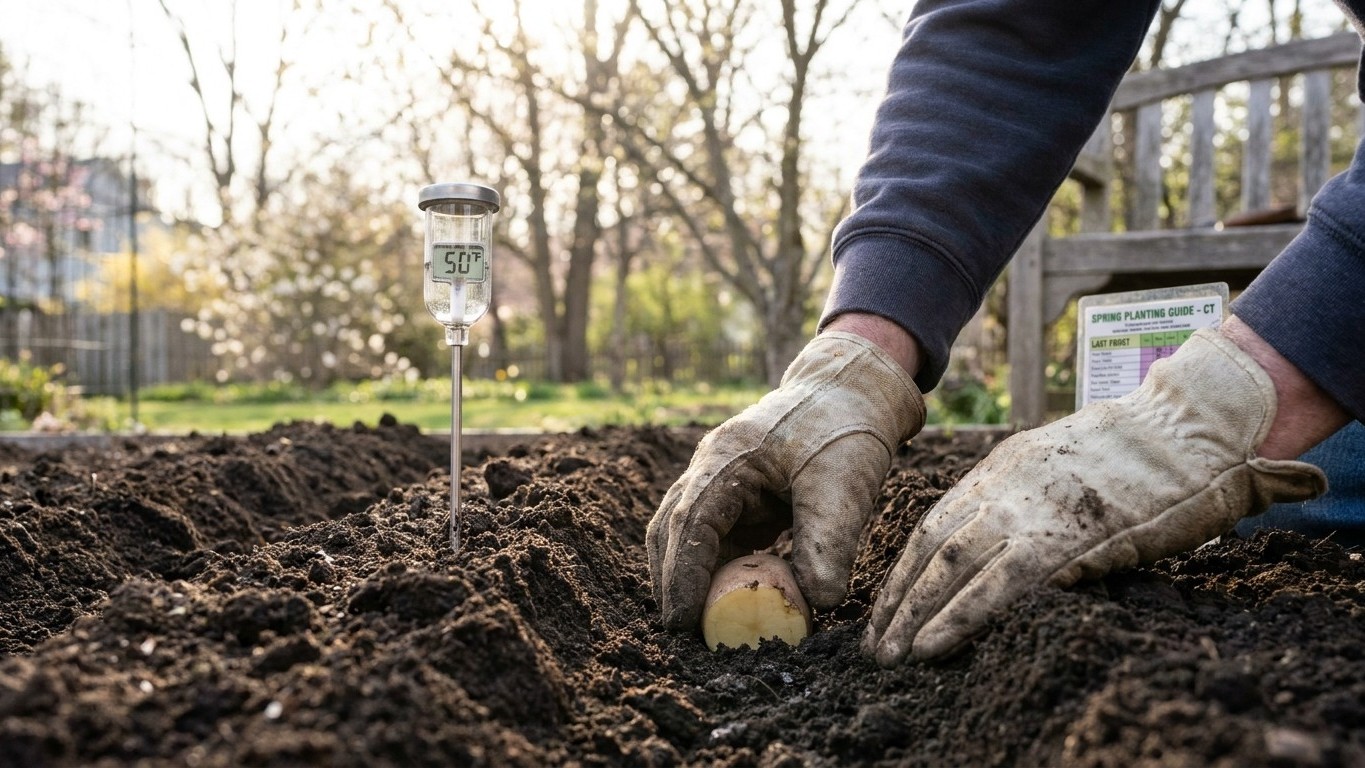

In Connecticut, potato planting isn’t set by a date on the calendar. It’s set by soil temperature working backward from the last spring frost, and the two numbers that matter most, a frost window of April 2 to April 12 and a 14-to-21-day countdown, come from federal climate data and university extension research, not folklore. What changes the answer is where in the state you garden and what happens to the soil later in the season, once the heat sets in.
The short answer
The last spring frost along the Connecticut coast falls between April 2 and April 12, according to NOAA’s National Centers for Environmental Information, using the 1991-2020 Climate Normals for station USW00094702 in Bridgeport. That’s the reference point. Potatoes don’t wait for frost to pass, though. Per Utah State University Extension and the University of Maine Cooperative Extension, seed potatoes go into the ground as soon as soil reaches 50°F, which typically lands 14 to 21 days before the last frost date, not after it.
Run the math against the Bridgeport window and the planting target lands somewhere between mid-March and late March: subtract 21 days from April 2 and you land near March 12; subtract 14 days from April 12 and you land near March 29. That’s the coastal answer, and it’s the mildest one Connecticut has to offer.
Bridgeport sits on Long Island Sound, and that water moderates temperature swings in a way inland and northwest Connecticut simply don’t experience. Places like Litchfield County or the higher elevations of the northwest hills freeze later into spring and earlier into fall than the coast does. No equivalent NOAA figure for those zones is part of this data set, so the honest answer for a gardener in Norfolk or Cornwall is: expect your planting window to fall later than Bridgeport’s, but treat any specific date as unverified until you check soil temperature yourself.
That soil-temperature rule is what makes the frost date useful in the first place. It’s not the finish line. It’s the anchor you count backward from.
What actually decides it
Soil temperature, not the calendar
A seed potato sitting in cold, wet soil doesn’t wait patiently for spring. It rots. That’s the entire reason the 50°F soil threshold exists as the real trigger, per Utah State and University of Maine Extension guidance, rather than a fixed date that happens to look tidy on paper. Air temperature can feel like spring on a sunny March afternoon while the soil eight inches down is still locked in winter. A gardener who plants by the calendar instead of a thermometer is gambling on a number that doesn’t reflect what the tuber actually experiences underground.
The heat ceiling that ends the season
Tuber set and fill stall out once soil temperatures climb above 90°F, and that’s not a problem more watering can solve, according to Utah State and Maine Extension research. This is the mechanism that decides the whole crop, more than the planting date itself. A gardener who plants late, then watches soil temperatures push into the 90s before the tubers have finished sizing, ends up with a smaller harvest no matter how much irrigation goes down. The practical response in a state where summer soil can run hot is to plant early and treat the crop as a spring-to-early-summer dig, not a season-long project that limps through August heat.
Season class and the maturity clock
Potato varieties fall into early, mid-season, and late classes, and that classification, not a specific day count, is what both Utah State and University of Maine Extension publish. An early variety is built to size up and finish before the heat ceiling becomes a factor. A late variety needs a longer stretch of cool soil to do the same work, which makes it a better fit for a gardener with a longer frost-free window than for one racing against a hot Connecticut July. Matching season class to your local frost dates and expected summer heat Matters More Than chasing a specific maturity number, since neither source publishes one.
How to do it
- Choose a potato selection by season class, early, mid-season, or late, based on how much cool-soil time your site realistically offers before summer heat arrives.
- Buy certified seed potatoes rather than potatoes from a grocery store; uncertified seed stock carries virus that a store potato was never screened for.
- Check soil temperature directly with a thermometer pushed several inches into the bed, and wait until it reads a consistent 50°F rather than trusting the look of the weather.
- Count back 14 to 21 days from your local last-frost window to mark the earliest reasonable planting date, shifting later if you garden inland or in northwest Connecticut.
- Cut larger seed potatoes into pieces with eyes intact, and let the cut surfaces dry and callus before they go into the ground, reducing rot risk in cool spring soil.
- Plant into prepared rows once the soil is workable and has warmed, rather than forcing the date if a cold, wet stretch has kept the ground saturated.
- Hill soil around the stems as plants emerge, which protects developing tubers from light and buys some insulation against a lingering light frost.
- Track soil temperature through the growing season, and if it’s trending toward 90°F with tubers still filling out, plan to dig sooner rather than let the crop sit and stall.
What goes wrong
- Planting by the calendar instead of the thermometer. A gardener sees a warm March day, digs a trench, and drops seed potatoes into soil that’s still cold and wet underneath. The pieces rot before they sprout. The fix is simple: wait for a soil reading of 50°F, regardless of what the date says.
- Using grocery store potatoes as seed. They’re convenient and cheap, but they carry a real risk of virus that certified seed potatoes are specifically grown to avoid. The remedy is buying certified seed from a garden supplier, every season, rather than reusing kitchen stock.
- Applying the coastal frost date to an inland garden. A gardener in the northwest hills uses the Bridgeport window and plants two or three weeks too early, then loses seedlings to a late frost. The remedy is watching local soil and weather conditions directly, since no specific inland frost figure is part of this data set.
- Letting a late-season variety run into 90°F soil. The tubers stop sizing, and no amount of extra watering brings that growth back. The fix is matching season class to your actual climate window on the front end, or digging early rather than hoping the crop catches up.
- Skipping the curing step on cut seed pieces. Freshly cut potato pieces planted straight into cool, damp soil are prone to rotting before they can sprout. Letting the cut surfaces dry and callus for a day or two first gives the plant a real chance to establish.
Common questions
Can I use potatoes from the grocery store as seed potatoes?
It’s not recommended. Uncertified seed stock, including grocery store potatoes, can carry virus that certified seed potatoes are grown and inspected to avoid. Certified seed is the more reliable starting point for a healthy crop.
What if I garden in inland or northwest Connecticut instead of near the coast?
The April 2 to April 12 frost window comes from a coastal station in Bridgeport, the mildest part of the state. Inland and northwest Connecticut freeze later in spring and earlier in fall, so expect your safe planting window to shift later, even though no specific date for those areas appears in this data.
Should I wait until after the last frost to Plant Potatoes?
No. Per Utah State and University of Maine Extension guidance, potatoes go into the ground once soil hits 50°F, which usually falls 14 to 21 days before the last frost date, not after it. Waiting for frost to fully pass often means planting too late.
What’s the real difference between early, mid-season, and late potato varieties for Connecticut gardeners?
It comes down to how long the variety needs in cool soil before the heat ceiling around 90°F starts limiting tuber growth. Early varieties are built to finish before summer heat arrives, while late varieties need a longer cool stretch, which makes timing and season class matter more than any specific day count.