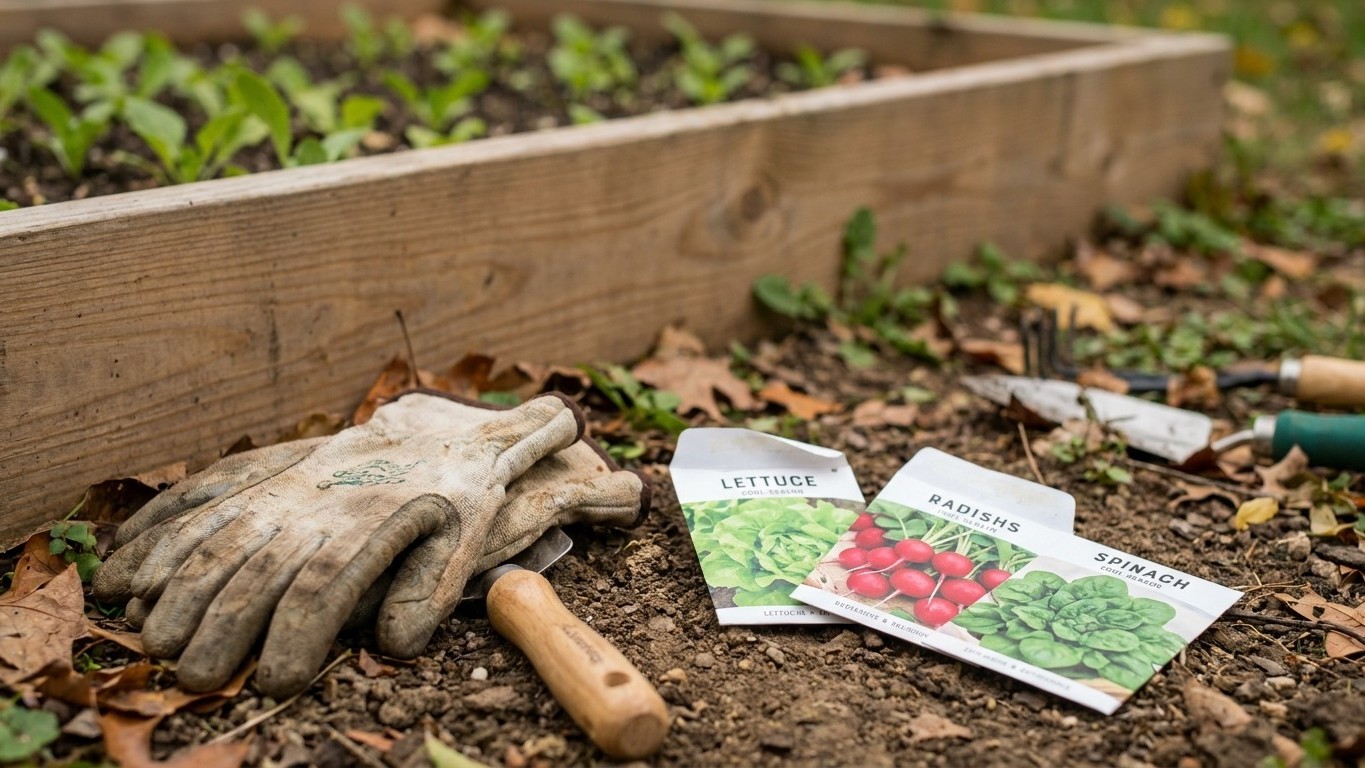

September is Oklahoma’s second planting season. With soil still warm from summer and the first fall frost not expected until October 29 to November 8 (NOAA NCEI 1991-2020 Climate Normals, reference station), gardeners get a genuine six-to-nine-week window to fill beds with fast, cool-tolerant crops before the ground shuts down for winter.
What goes in the ground in September

The decision here isn’t the calendar, it’s the math: count how many weeks are left before that October 29 to November 8 frost window, then match that number against a crop’s days-to-maturity. A radish that matures in 25 to 30 days is a safe bet sown any week this month. A crop that needs 80 days is a gamble unless you’re planting it as an already-started transplant instead of raw seed.
Direct-sown, September favors the same fast leafy and root crops that thrive in spring: lettuce, spinach, arugula, mustard greens, turnips, radishes, beets, and carrots. Peas sown early in the month for a fall crop usually beat the frost if the soil hasn’t baked dry. Green onions and shallots can go in from sets or seed and will sit through the cooler weeks ahead without complaint.
Transplants are the better play for anything slower. Broccoli, cabbage, cauliflower, and Brussels sprouts started indoors or bought as starts in August should go into the ground in the first half of September so they have real growing weeks before cold shuts them down. Kale and collards planted as transplants now will often keep producing well past the first light frost, since both crops improve in flavor once temperatures drop.
What doesn’t belong in the ground this month: tomatoes, peppers, squash, beans, cucumbers, melons, and corn. These warm-season crops need 60 to 90-plus frost-free days to fruit, and September simply doesn’t have that many left on the clock. Planting them now isn’t optimistic, it’s a guaranteed loss when the first freeze arrives.
| Crop | Method | Approx. days to maturity | September verdict |
|---|---|---|---|
| Radish | Direct sow | 25-30 | Safe, any week |
| Spinach | Direct sow | 40-45 | Safe, sow early to mid-month |
| Lettuce | Direct sow | 45-55 | Safe, favor heat-tolerant varieties early |
| Turnip | Direct sow | 45-60 | Safe, sow first two weeks |
| Broccoli | Transplant | 55-70 from transplant | Safe as transplant, not from seed |
| Garlic | Cloves | Overwinters | Too early; wait for cooler soil |
| Tomato | Transplant or seed | 60-90 | Too late, skip |
What to start under cover
Count backward from the first frost window instead of forward from today’s date. If the earliest realistic freeze in your county lands around late October, and a crop needs 50 to 60 days plus a two-week buffer for slow fall growth, that pushes the sowing deadline back to roughly the first two weeks of September. Miss that window and the plant either doesn’t size up before cold arrives, or it limps through winter half-grown.
Under cover this month means shade cloth or a lightly shaded cold frame more than a heated indoor setup. Lettuce and spinach seed germinate poorly in soil that’s still baking from summer sun, so starting them in trays under partial shade, or seeding them in the ground and covering with shade cloth until they sprout, solves the heat problem without losing calendar time. Once seedlings have their first true leaves, they move to open beds or the shade cloth comes off.
Brassica transplants for a second fall round (a later cabbage or cauliflower crop) can still be started under cover in early September for planting out in early October, right at the edge of what the frost window allows. The two failure modes to watch for: starting too early leaves you with rootbound, leggy seedlings sitting in trays with nowhere to go; starting too late means the transplant goes into the ground too small to bulk up before growth slows in the cold.
What is ready to pick
September harvests are still generous in Oklahoma because summer crops are finishing their run at the same time fall crops are just getting started. Tomatoes, peppers, and eggplant keep producing until the first real cold snap, so check plants every couple of days rather than letting fruit overripen on the vine. Okra needs picking every one to two days once pods start forming, since okra left too long turns woody almost overnight.
Sweet corn planted in early summer usually wraps up its harvest this month, tested by peeling back a bit of husk to check kernel color and firmness. Southern peas (crowder, black-eyed, purple hull) come in through September as pods dry and rattle. Melons are ready when the tendril nearest the fruit turns brown and dries out completely, not just partially.
Winter squash and pumpkins planted earlier in the season are usually curing on the vine by now. Check the skin with a thumbnail: if it resists puncturing, the squash has hardened enough to store. Herbs like basil, oregano, and thyme are still productive but should be harvested before any cold night threatens, since basil in particular turns black at the first hint of chill.
The jobs that matter this month

Succession sowing is the single most valuable habit in September. Sowing a short row of lettuce, spinach, or radishes every 10 to 14 days through the month stretches the fall harvest out over weeks instead of dumping it all at once. Skip a succession round and there’s a gap in the kitchen in November with nothing to fill it.
Mulch matters differently now than in July. A two to three-inch layer around new fall seedlings holds soil moisture through the last hot afternoons of the month and moderates the swing between warm days and cooling nights that stresses young roots. Watering rhythm should stay steady rather than tapering off just because the calendar says fall: newly seeded beds need light, frequent watering to keep the surface from crusting over before germination.
Pest scouting pays off directly this month. Armyworms and cabbage loopers move into fresh brassica transplants fast, and squash bugs are still active on any remaining summer squash or pumpkins. Checking the undersides of leaves twice a week catches an infestation before it strips a bed.
Soil preparation for the beds coming empty as summer crops finish is worth doing now rather than waiting. Working in compost while the ground is still workable and before fall rains (if they come) turn it to mud sets up better structure for whatever goes in next, whether that’s a fall crop or a spring bed left fallow with a cover crop over winter. Staking or caging any late tomato or pepper plants that have sprawled keeps fruit off the ground and out of reach of slugs and rot.
What not to do in September
The most common mistake is planting warm-season crops because a warm afternoon feels like summer is holding on. Air temperature in the 80s doesn’t change the countdown to frost. A tomato transplanted in mid-September has no realistic path to a harvest before the first freeze arrives in late October or early November, and the effort is better spent on a crop that actually fits the remaining season.
Pulling back mulch or row cover too early after a mild stretch is the second trap. A few cool nights don’t mean the season has settled; Oklahoma’s fall weather swings back and forth well into October, and a fall garden left unprotected during one of those swings can lose tender seedlings overnight.
Nitrogen timing is the third issue. Heavy nitrogen fertilizer pushes leafy, tender growth, which is exactly what’s needed for lettuce and spinach but exactly wrong for anything that needs to toughen up before cold weather, like garlic cloves going in later or brassicas hardening off for winter. Feed the fast leafy crops as usual, but hold off on high-nitrogen feeding for anything meant to sit through the cold.
Finally, don’t till bone-dry soil just because rain hasn’t come. Working overly dry ground breaks down structure and creates dust rather than workable tilth. Wait for at least light moisture, or water the bed the day before, so tilling improves the soil instead of degrading it.
Checking this against your own county
The frost dates and hardiness range cited here (USDA zones 6a-8a across the state) come from one reference weather station and one national dataset. Elevation, local terrain, and simple distance from that station can shift a real frost date by a week or two in either direction, and suburban or rural gardens often see frost land earlier in fall and later in spring than airport-based figures suggest. Panhandle counties and the higher elevations of western Oklahoma run cooler and earlier than the eastern and southern parts of the state.
Before locking in a planting date, check current conditions and local guidance through the Oklahoma State University Extension service, which maintains county-level planting calendars and frost data specific to Oklahoma’s varied geography.
Gardeners who plant by the Moon can check the September 2027 moon planting calendar, a tradition rather than a proven method.
Common questions
Can I still plant tomatoes in Oklahoma in September?
No. Tomatoes need 60 to 90-plus frost-free days to produce a harvest, and September doesn’t leave that much time before the first fall frost, expected between October 29 and November 8 at the reference station. Save tomato planting for spring.
What vegetables can I plant in Oklahoma in September?
Fast, cool-season crops do best: lettuce, spinach, arugula, radishes, turnips, beets, carrots, and peas as direct-sown seed, plus broccoli, cabbage, cauliflower, and kale as transplants set out early in the month.
Is it too late to plant grass seed in September in Oklahoma?
This page covers vegetable and food-garden planting rather than turf, and no lawn-seeding data is included in the facts sourced here. Check with the Oklahoma State University Extension service for lawn-specific timing.
When should garlic go in the ground in Oklahoma?
Garlic generally goes in later in fall, once the soil has cooled further than it typically is in September. Planting garlic too early, while soil is still warm, can push premature top growth that then gets damaged by the first hard freeze.