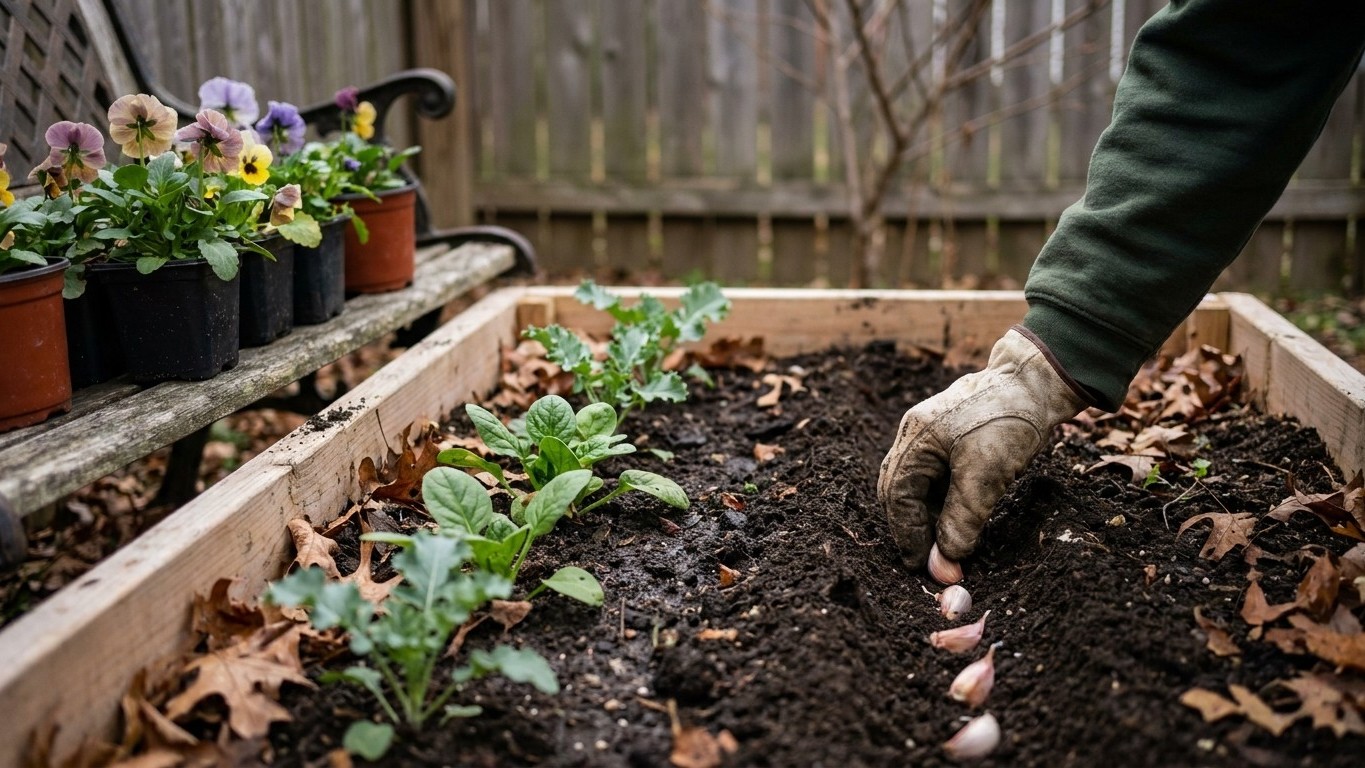

October in Oregon still favors the ground, at least west of the Cascades. Garlic, shallots, and cold-hardy greens like spinach, kale, and mâche go in now while soil stays workable and the first fall frost is still weeks out. East of the mountains, the high desert has usually already frozen, so the month shifts toward cover crops, mulch, and getting beds ready for a much longer dormant stretch.
What goes in the ground in October

The Willamette Valley and the rest of western Oregon sit ahead of their first fall frost through most of October, since NOAA NCEI’s 1991-2020 climate normals put that 32°F threshold between November 11 and November 27 for the reference station. That gap between now and freeze matters more than any date on a wall calendar, because soil temperature, not air temperature, decides what a seed or clove will actually do underground.
Garlic and shallots are the anchor crop of the month. Push cloves 2 inches deep, pointed end up, into beds that have had compost worked in, and they’ll root before the ground goes cold without pushing top growth that a hard freeze could damage. Bulb onions from sets follow the same logic. Fava beans, planted now in mild valley soil, often overwinter to give a head start come spring.
Leafy crops are the safe bet for direct sowing: spinach, corn salad (mâche), arugula, and mustard greens germinate in cooling soil and shrug off the light frosts that arrive before the real freeze window opens. Kale and collard transplants set out now have time to size up before growth slows. Peas sown for a fall crop can still make it in the mildest valley locations, though germination slows as soil temperature drops, so pushing this past mid-month is a gamble rather than a plan.
East of the Cascades
Central and eastern Oregon’s high desert runs on a much shorter, colder season than the valley, and by October the ground there has often already seen a killing frost. Garlic still goes in as a bare-minimum task, since it’s planted precisely to sit dormant through winter cold, but tender greens and fall peas are no longer a realistic bet in most of that region. Cold frames and low tunnels extend the option for spinach and mâche where the open ground has already shut the door.
What to start under cover
Working backward from a frost window beats working forward from a fixed date, and it’s a habit worth building no matter which Oregon county you garden in. Take the earlier edge of the local first-frost range, subtract the number of weeks a seedling needs to reach transplant size, and that tells you the last safe sowing date under cover, not the calendar month.
For quick greens like lettuce, spinach, and Asian brassicas, four to six weeks from seed to a plantable start is typical, which still leaves room to sow indoors or in a cold frame through much of October in western Oregon, where the frost window opens November 11 at the earliest. In the high desert, where frost has often already arrived, that same math argues for holding those seedlings for cold-frame or hoop-house planting rather than open beds.
The two failure modes are worth naming plainly. Start too early under grow lights or in a warm mudroom, and seedlings turn leggy and rootbound before there’s anywhere safe to put them, wasting the head start entirely. Start too late, and the plant runs out of daylight and warmth before it can size up, entering winter dormancy half-grown and vulnerable. Both mistakes come from anchoring to a date instead of to the actual frost window for the reader’s own location, which is why the arithmetic matters more than the month name.
Alliums for spring, like leeks started from seed for transplanting later, and hardy herbs such as parsley and cilantro, also do well started under cover now, since they tolerate the slow, cool growth that October light provides without demanding the fast finish that tender crops need.
What is ready to pick
Winter squash, pumpkins, and the last dry beans typically finish their curing and harvest in October across Oregon, and the test for squash is the fingernail check: press a thumbnail into the skin, and if it doesn’t dent, the rind has hardened enough for storage.
Apples and pears in home orchards ripen on their own schedule through the month depending on variety, and a fruit that separates from the branch with a gentle twist and upward lift is ready; one that has to be yanked is not. Late tomatoes still on the vine in the valley should come in ahead of any hard freeze, green ones included, since they’ll ripen indoors on a windowsill far better than they’ll survive a freeze outdoors.
Root crops like carrots, beets, and potatoes can often stay in the ground longer than gardeners expect, since cool soil actually sweetens carrots and beets, but once nighttime lows start flirting with the fall frost window, it’s worth pulling what’s left rather than risking a freeze in the ground. Leeks and kale, by contrast, handle real cold well and are worth leaving in place deliberately, since both improve in flavor after a frost touches them.
Anyone with squash, onions, or potatoes already in storage should check them now rather than waiting. A soft spot on a squash, a sprouting onion, or a potato going green under its skin spreads to its neighbors if left in the bin, so a monthly sort saves the rest of the harvest.
The jobs that matter this month

October is a working month even where nothing new goes into open ground, and the tasks done now set up everything that follows. Dormant pruning of fruit trees waits for full leaf drop in most cases, but October is the right time to start clearing damaged, crossing, or diseased wood on apples, pears, and cane fruit like raspberries, since cuts made now heal before the coldest weather sets in.
Soil work pays off disproportionately this month. Turning compost, spreading a fall application of aged manure or compost onto beds that are done for the season, and running a basic soil test all give amendments time to break down and integrate before spring planting starts the clock again. Beds cleared of summer crops should get a cover crop of crimson clover or winter rye now, both of which establish quickly in cooling soil and protect against winter erosion and nutrient loss, something bare soil can’t do.
Mulching around garlic, shallots, and any overwintering greens matters more in October than in November, because a 2 to 4 inch layer of straw or shredded leaves applied before the ground gets cold traps existing soil warmth rather than trying to insulate against cold that’s already arrived. Tool maintenance, cleaning, sharpening, and oiling shears and hoes, is easy to push off, but doing it now means gear is ready the moment spring work starts rather than sitting rusted through winter storage.
Seed ordering deserves attention now too. Popular varieties, particularly heirloom tomatoes and specialty garlic, sell out over winter, and ordering in October beats competing for stock in February. Planning next season’s rotation on paper, while this year’s beds are still visible and memory is fresh, produces a far more useful plan than trying to reconstruct it from memory in spring.
What not to do in October
The most common mistake is trusting a warm afternoon over the calendar’s frost math. A stretch of 70-degree days in early October can tempt gardeners into setting out tender starts like basil or peppers, but soil temperature lags air temperature, and a single cold night inside the fall frost window undoes weeks of growth. Warm-season transplants have no place going into the ground this late in Oregon, full stop.
Uncovering cold frames or row covers too eagerly during a mild spell is the inverse error. A few warm days don’t mean the frost window has closed; NOAA’s normals put that window as a range, November 11 to November 27, not a hard line, and pulling protection early exposes tender greens to the next cold snap with no buffer.
Nitrogen-heavy feeding is also poorly timed in October. Late nitrogen pushes soft new growth on perennials and shrubs right as the plant should be hardening off for winter, and that new growth is exactly what a fall frost damages first. If anything goes down this month, a balanced or phosphorus-leaning amendment supports root development instead, which is what dormant and overwintering plants actually need.
Leaving harvested squash, onions, or potatoes unchecked in storage is a quieter mistake, but one that costs real food. A single soft spot spreads through a bin over weeks, and skipping the monthly check is how a good harvest turns into a rotted one by the time it’s needed.
Checking this against your own county
A statewide month is a starting point, not an instruction. Oregon runs from Pacific coastline through the Willamette Valley to Cascade elevation and high desert, and USDA places the state across hardiness zones 4a to 9b, a spread wide enough that the same October date means garlic planting in one county and already-frozen ground in another. Elevation alone can shift a local frost window by weeks in either direction from the valley reference used here.
The Oregon State University Extension Service publishes county-level guidance and a planting calendar built for exactly this variation, and it’s worth checking against the address on your own property, not just the region.
Oregon State University Extension Service
Common questions
Is it too late to plant garlic in October in Oregon?
No, October is generally considered prime timing for garlic across most of Oregon, since cloves need several weeks of cool soil to root before winter dormancy sets in, and the state’s first fall frost typically arrives between November 11 and November 27 in the valley, leaving room for cloves to establish.
Can I still start vegetable seeds outdoors in October in Oregon?
Direct sowing works for cold-hardy crops like spinach, mâche, and arugula in western Oregon through most of October, but tender or slow-growing vegetables should go in under cover instead, since open-ground sowing this late leaves little margin before soil temperatures drop too far for germination.
What happens if I leave root vegetables in the ground too long in October?
Carrots and beets tolerate cool soil well and often taste better after mild cold, but once the fall frost window approaches, a hard freeze in the ground can damage the crop, so it’s safer to harvest before that window opens rather than testing how much cold the soil itself will protect them from.
Does eastern Oregon follow the same October planting rules as the Willamette Valley?
No. Central and eastern Oregon sit in a high-desert climate with a shorter growing season and typically an earlier frost, so by October the ground there has often already frozen, shifting the month’s focus toward cold frames, mulch, and dormant-season prep rather than open-ground planting.
Gardeners who plant by the Moon can check the October 2026 moon planting calendar, a tradition rather than a proven method.
Related guides
- the Oregon planting calendar
- What to Plant in Oregon in September
- What to Plant in Oregon in November
Elsewhere? See what to plant in October in every state and province.