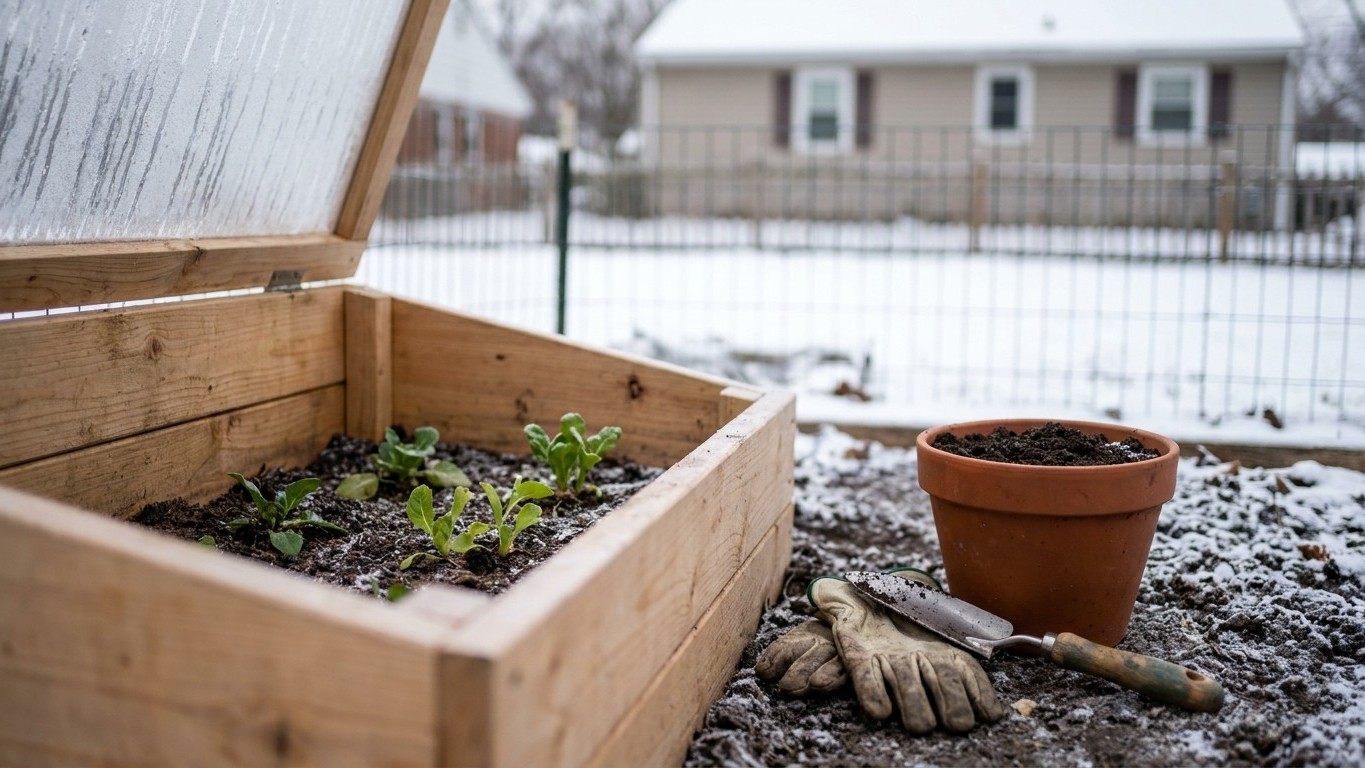

In Prince Edward Island’s Canadian hardiness zone 5b, January ground is frozen solid and usually buried under snow, so nothing goes into open soil this month. What’s available is limited to protected structures: cold frames, the rare bare-root planting on a workable day, and forcing rhubarb or chicory indoors from roots lifted before the ground froze. The real gardening work this month happens under cover and on paper, not in the dirt.
What goes in the ground in January

The mean last spring frost for the Charlottetown area lands around May 16, and the mean first fall frost lands around October 17, according to Environment and Climate Change Canada’s 1981-2010 climate normals for station Charlottetown A. Those are averages, not guarantees: in roughly half of all years frost arrives later than May 16, so treat that date as a midpoint, not a safe line. January sits nearly four months before that mean frost-free start, deep in the middle of the coldest stretch the Island sees. Soil temperature, not the date on the calendar, decides what a seed or root can survive, and in January that soil temperature across most of the province is at or below freezing to a considerable depth.
That rules out direct sowing and transplanting outright. Peas, hardy greens like spinach and mache, and overwintering alliums such as garlic and shallots all need workable, unfrozen soil to go into the ground, and in January that soil simply isn’t available across Prince Edward Island’s zone 5b conditions. Garlic and shallot cloves belong in the ground in fall, before freeze-up, not now.
What’s realistic instead
A few narrow options remain open:
- Cold frames or low tunnels set up earlier in the season may still be holding hardy greens like kale, mache, or spinach that were sown well before winter, insulated by snow cover and frame glazing.
- Bare-root fruit trees, canes, or shrubs can go into a planting hole only on the rare day the ground has thawed enough to dig, which is uncommon but not impossible during a mild spell.
- Rhubarb and chicory roots dug and stored before freeze-up can be forced indoors in a dark, cool spot for an early crop of tender stalks or blanched chicons.
Outside of those, the open garden stays closed until soil temperature and the frost window move together, weeks and weeks from now.
What to start under cover
Seed starting in January is a backward calculation from the mean last frost date of May 16, not a forward one from today. Onions, leeks, and celery are the slowest growers in the vegetable garden, typically needing 10 to 12 weeks of indoor growth before they’re ready to go outside as transplants once the frost risk has genuinely passed. Counting back from mid-May, that puts the ideal sowing window for those crops squarely in January, especially in the earlier half of the month for onions grown from seed rather than sets.
Artichokes, grown as an annual crop this far north, follow a similar long runway and belong on the same January seed tray as onions and leeks. Early cabbage-family crops destined for a cold frame transplant a bit later, such as early cabbage or broccoli, can also go in toward the end of the month under grow lights, though they grow faster and don’t need the same head start as the alliums.
Two mistakes show up every year with this kind of backward planning. Start too early, and by the time the ground and the calendar actually allow transplanting, the seedlings are leggy, rootbound in their trays, and stressed before they ever see outdoor soil. Start too late, and the plant runs out of runway to size up before it needs to go outside, leaving it small and behind schedule all season. Since the May 16 date is only a mean, and frost can legitimately arrive later, err on the side of counting the full 12 weeks rather than the minimum 10, and be ready to pot up onions and leeks into slightly larger containers if outdoor conditions lag.
What is ready to pick
Outdoors, January offers little to harvest across Prince Edward Island, and there’s no point pretending otherwise. Snow cover and frozen ground put the open garden on pause, and anything still standing in a bed is there for insulation and winter structure, not for the table.
Under cover is a different story. Cold frames and low tunnels set up in fall can still be yielding hardy greens like kale, mache, and spinach, particularly on milder days when the frame traps enough heat to keep leaves from freezing solid. Leeks and some kale varieties left in the open ground, mulched heavily and buried under snow, can sometimes be dug out for use even in deep winter, since snow itself acts as an insulating blanket rather than a threat.
Indoors, sprouts and microgreens are the most reliable January harvest a home gardener has, ready in a matter of days from seed on a windowsill or under a grow light, with no dependence on outdoor conditions at all. This is also the month to work through the root cellar or pantry: check stored squash for soft spots or a sweet smell that signals rot starting at the stem end, sort potatoes for any that have gone soft or sprouted, and pull onions that have started to green or soften before they spread decay to the rest of the bin.
The jobs that matter this month

January carries real deadlines even though the garden itself is dormant, and skipping them costs the season ahead rather than this one.
Pruning, ordering, and planning
Dormant pruning of fruit trees and berry canes is best done now, while the plant’s energy is stored in the roots and there’s no foliage in the way of seeing the branch structure clearly. Apple and pear trees, along with raspberry and currant canes, all benefit from cuts made in this window rather than after growth resumes. This is also the month to order seed, since the varieties gardeners want most, particularly onions, leeks, and any regionally adapted vegetable seed, tend to sell out earliest when demand is high and supply is limited.
Planning next season’s crop rotation on paper now avoids replanting the same family (tomatoes after tomatoes, brassicas after brassicas) in the same bed, a shortcut that builds up soil-borne disease and pest pressure over time. A soil test taken now, while the ground is inactive, gives enough lead time to source and apply lime or amendments before spring planting begins in earnest.
Maintenance that has nowhere else to go
Turning a compost pile, even a cold one that’s mostly frozen, keeps material breaking down as temperatures allow and prevents it from compacting into an unworkable block by spring. Cleaning and sharpening pruning shears, spades, and hoes now means they’re ready the moment soil work becomes possible, instead of losing the first workable days to rust removal. Checking beds, cold frames, and fencing for winter damage, loose boards, frost-heaved posts, torn row cover, catches small repairs before a late-winter storm turns them into bigger ones.
What not to do in January
The most common mistake this month is treating a mild spell as spring. A stretch of unusually warm air doesn’t mean the soil underneath has thawed or warmed to a workable depth, and pushing seeds or transplants into ground that only feels warm on the surface almost always ends in rot or a stalled plant once the cold returns, as it reliably does before the mean frost-free date of May 16 arrives.
Uncovering cold frames, removing row cover, or pulling back winter mulch during that same mild stretch is a related trap. Given that the mean first fall frost was back around October 17 and the mean last spring frost isn’t until May 16, Prince Edward Island’s winter stretch is long, and a warm week in January is virtually never the end of it. Plants exposed too early lose the protection they need for the freeze that follows, often with more damage than if they’d simply stayed covered through the cold snap.
Feeding nitrogen to anything dormant, whether a fruit tree, a cane, or an overwintering green in a cold frame, is also the wrong move now. Nitrogen applied during dormancy either leaches away uselessly before roots are active enough to take it up, or worse, pushes soft new growth right before a hard freeze can kill it. Save nitrogen applications for when active growth resumes and the plant can actually use what’s offered.
Checking this against your own county
A province-wide month is a starting point, not an instruction. Elevation, coastal exposure, and the difference between the north shore and the south shore of Prince Edward Island can shift frost windows and soil thaw by weeks in either direction from the Charlottetown A station figures used here. A garden close to open water often lags behind or leads ahead of an inland plot just a short drive away.
For local planting calendars and current guidance specific to a county or district, the Prince Edward Island Department of Agriculture maintains resources at princeedwardisland.ca/en/topic/agriculture, worth checking before committing seed or money to a January plan based on province-wide averages alone.
Common questions
Can I plant garlic in Prince Edward Island in January?
No. Garlic cloves need workable, unfrozen soil to establish roots before winter, and that window closes in fall, well before January. Planting garlic now means it sits on frozen or near-frozen ground with no chance to root in, so it belongs on the fall planting list instead.
Is there anything I can harvest outdoors in January on the Island?
Very little. Snow-insulated leeks and some hardy kale varieties can occasionally be dug from mulched beds, but most outdoor harvesting is on pause. Cold frames with greens sown earlier in the season, and indoor sprouts or microgreens, are the more reliable sources of fresh food this month.
When should I start onion and leek seeds for a Prince Edward Island garden?
Count back 10 to 12 weeks from the mean last frost date of May 16, which lands the ideal sowing window in January. Remember that May 16 is only an average, so build in some buffer rather than transplanting the moment that date arrives.
What does hardiness zone 5b mean for January gardening here?
Zone 5b is the Canadian hardiness rating (not a USDA zone, since the two systems use different variables and don’t convert directly) for the Charlottetown reference area, based on Natural Resources Canada’s 1991-2020 normals. It signals a cold winter climate where open-ground planting stays off the table through January, making cold frames, indoor starts, and dormant-season jobs the main options.
Gardeners who plant by the Moon can check the January 2027 moon planting calendar, a tradition rather than a proven method.