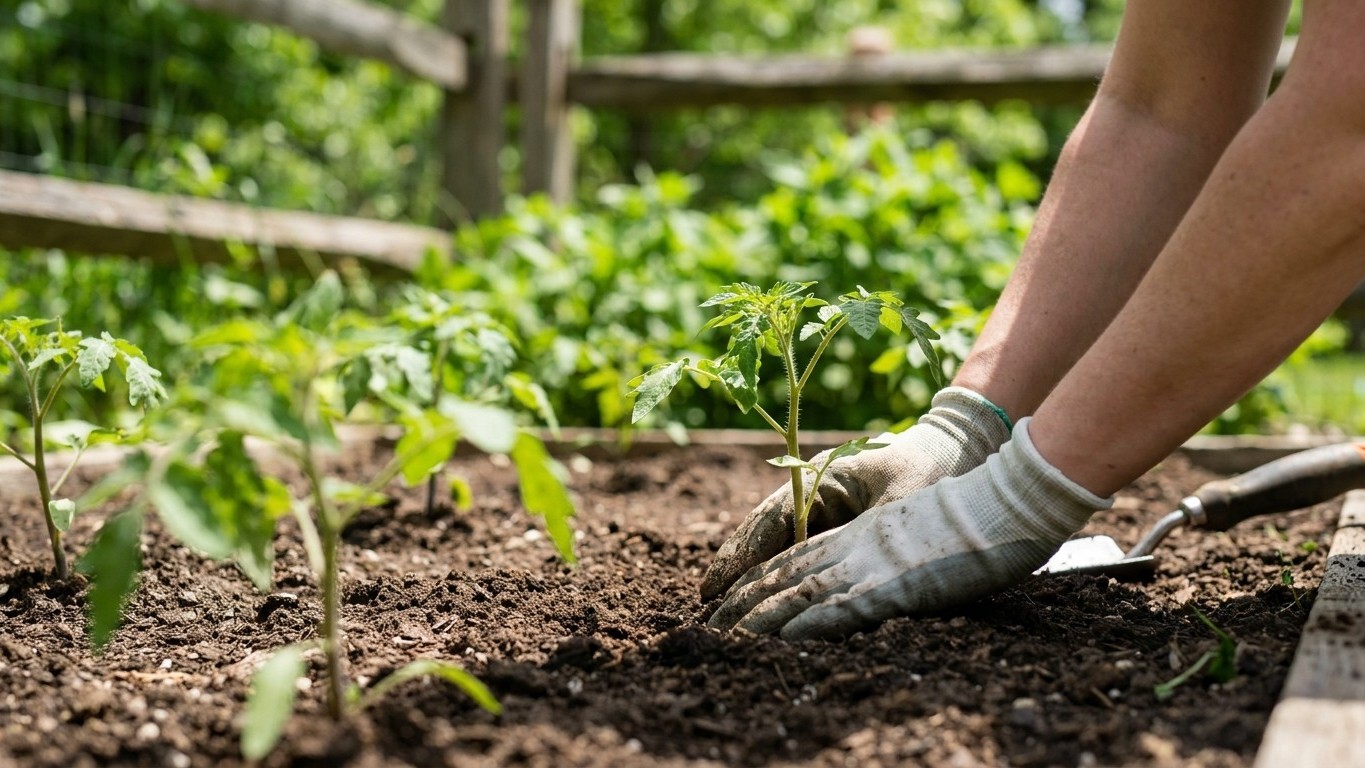

By June, Quebec’s growing season is finally wide open. The province’s average last spring frost sits around May 6, so a month later most tender crops can go straight into the ground: beans, squash, cucumbers, corn, and any tomato or pepper transplants still waiting on a windowsill. The real question this month isn’t whether frost will hit, it’s whether the soil itself has caught up with the air.
What goes in the ground in June

Air temperature lies. A sunny 70°F afternoon can sit over soil that’s still cold four inches down, and that cold soil is what actually decides whether a seed rots or sprouts. Reference station data for the Montreal area (Environment and Climate Change Canada, MONTREAL/ST-HUBERT A) puts the average last spring frost at May 6, which means in roughly half the years on record, frost showed up later than that. By June, that risk has mostly passed. This is the month soil catches up, and it’s the reason June, not May, is when most warm-season crops actually belong outdoors in Quebec.
Direct-sow beans, both bush and pole, once the soil feels warm to the touch rather than cool. Summer squash, winter squash, pumpkins, cucumbers, and sweet corn all germinate poorly in cold ground but take off fast once the soil has warmed. Transplant tomatoes, peppers, eggplant, and basil now if you haven’t already, and give them a few days of hardening off in a sheltered spot before they go into open beds.
Cool-season crops still have a place too. Leeks and onion sets can still go in early in the month. Lettuce, spinach, and radish can keep going as succession sowings, though as the month warms up, aim for a shadier spot or the cooler first half of June to avoid premature bolting later. Peas planted now will still produce, though earlier plantings usually out-yield June ones. What doesn’t belong in June is anything that needs a full 90-plus days and a cool finish, like storage cabbage started from seed outdoors, those should already be transplants by now, not fresh sowings.
What to start under cover
The arithmetic for June starts runs backward from fall frost, not forward from today. The average first fall frost for the region lands around October 5, another mean figure that can arrive earlier in a cooler year. Count back from that date and a fall broccoli, cauliflower, or cabbage crop needing roughly 10 to 12 weeks to mature needs its seedlings ready to transplant by mid-to-late July at the latest. That pushes the seed-starting window for those fall brassicas right into June, under cover or in a shaded cold frame where the heat of the month won’t cook young seedlings.
The same backward math applies to a second round of quick crops. Bush beans or summer squash started under cover in June can still be transplanted out in early July and finish comfortably before the October frost window closes. What doesn’t work is treating June like a free-for-all: start fall brassicas too early and they bolt or stall in summer heat before they ever get planted out; start them too late and they run out of days before the average frost arrives in the fall. Both mistakes come from ignoring the fall date and going by feel instead.
Leeks and celery for a fall harvest can also go in trays now, since both are slow starters that need the extra weeks under cover before they can handle open ground.
What is ready to pick
Rhubarb and asparagus are winding down their main harvest by June, and this is the last comfortable window to cut either one before the stalks toughen and the plants need to put energy into next year’s growth instead. Overwintered greens planted last fall, spinach and kale that made it through cold frames or a mild winter, are usually finishing up too, best pulled before the heat pushes them to bolt.
Lettuce and radish sown back in April or early May should be ready through the first half of the month. Pick lettuce heads before they get bitter in the heat, and pull radishes as soon as the shoulders show at the soil line, since they turn woody fast once left too long.
Late June is when garlic scapes start showing up on plants set in the previous fall. Cutting the scape as it curls redirects the plant’s energy into the bulb below, and the scape itself is edible, closer to a mild green onion than raw garlic. Chives, mint, and other perennial herbs are also fully productive by now and can take regular cutting without setback.
Toward the very end of June, early strawberry varieties in southern parts of the province start to color up, the first fresh fruit of the season for most home gardens.
The jobs that matter this month

Staking comes first, and it has a deadline. Peas, indeterminate tomatoes, and vining squash all sprawl fast once the June heat kicks in, and driving a stake through an established root ball a few weeks from now does more damage than doing it while the plant is still small. Set supports at planting time, not after the fact.
Mulching follows, not precedes, soil warming. Lay mulch too early in spring and it keeps the ground cold longer, which is exactly what you don’t want before warm-season crops go in. By June, soil has usually warmed enough that a two- to three-inch layer of straw or shredded leaves around squash, beans, and tomatoes now locks in moisture and suppresses weeds without fighting against the season.
Watering rhythm matters more in June than any other month so far, since this is when transplants are establishing roots in warming, faster-draining soil. Deep, less frequent watering encourages roots to grow down rather than staying shallow, which pays off once July heat arrives.
Succession sowing keeps the harvest steady rather than all at once. Dropping in a new short row of lettuce, radish, or bush beans every couple of weeks through June avoids the classic glut-then-gap pattern.
Pest scouting starts now too, before populations build. Check the undersides of squash and cucumber leaves for early cucumber beetles, and look at potato and eggplant foliage for the first Colorado potato beetle eggs. Catching either in June, while numbers are still low, is far easier than fighting an established infestation in midsummer.
What not to do in June
The most common June mistake in Quebec gardens is trusting the air instead of the soil. A warm, sunny stretch tempts gardeners to rush squash or bean seeds into ground that’s still cold a few inches down, and the result is seeds that rot rather than sprout. Wait until the soil itself feels warm before direct-sowing anything heat-loving.
A close second is pulling row covers or cold frame lids off too soon after a mild spell, only to have a cooler night set tender transplants back hard. Since the last frost date is a mean, not a guarantee, treat any stretch of unusually warm weather in early June with some caution before fully exposing young plants.
Nitrogen timing trips up a lot of gardeners too. Feeding a heavy nitrogen fertilizer to tomatoes, squash, or beans once they’re flowering pushes leafy growth at the expense of fruit set. Nitrogen is most useful earlier, while plants are still building leaf structure; once flowers appear, a lower-nitrogen, higher-phosphorus feed supports fruiting better.
Overwatering freshly transplanted seedlings is the last common trap. Newly set-out plants need consistent moisture while roots establish, but soaking the ground daily can suffocate roots and encourage rot just as easily as letting them dry out.
Checking this against your own county
A province-wide frost average is a starting point, not a set of instructions for any one backyard. The May 6 last-frost and October 5 first-frost figures come from a single station near Montreal, and elevation, lake effect, and the gap between Quebec’s southern valleys and its northern and upland districts can shift those dates by weeks in either direction. A garden in the Laurentides or along the north shore should expect a later spring and an earlier fall than a garden near the St. Lawrence lowlands.
For local frost data and planting timing specific to your area, the province’s agriculture ministry is the right next stop: Ministère de l’Agriculture, des Pêcheries et de l’Alimentation du Québec (MAPAQ).
Common questions
Is it safe to plant tomatoes outside in Quebec in June?
Yes, in most years. The average last frost falls around May 6, so by June the risk has largely passed, though it’s still worth hardening off transplants and watching for an unusually cold night early in the month.
What hardiness zone is used for planting in Quebec?
The reference city sits in Canadian zone 5b, based on Natural Resources Canada’s plant hardiness mapping. This is the Canadian system, built on seven climate variables, and it does not convert directly to the USDA zones used elsewhere in the United States.
Can I still start seeds indoors in June in Quebec?
Yes, particularly for fall crops. Counting backward from the average first fall frost around October 5, brassicas like broccoli and cauliflower need to be started under cover this month to have enough time to mature before frost returns.
When does the frost risk actually end in Quebec?
There’s no fixed safe date. May 6 is a mean figure from Environment and Climate Change Canada, meaning frost has historically landed later than that in about half of the years measured. Treat it as a rough midpoint, not a guarantee, especially in northern or higher-elevation areas.