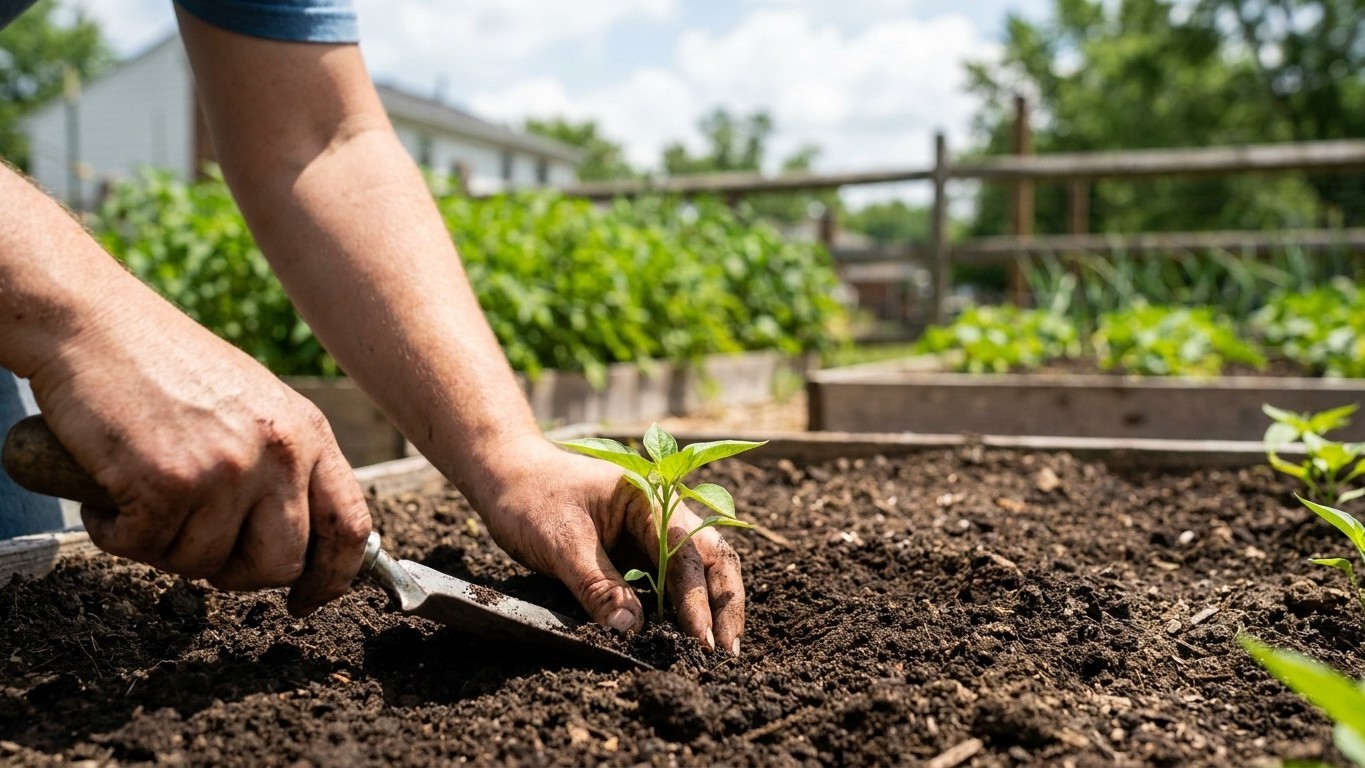

July in Quebec sits deep inside the growing season, well past the average May 6 last frost and still three months from the average October 5 first frost recorded at Montreal/St-Hubert A. That gives room for succession sowing of quick crops, transplanting fall brassicas, and heavy harvesting, but it also closes the door on anything that needs a full season to mature if started this late.
What goes in the ground in July

The decision this month isn’t whether the soil has warmed up enough, it clearly has, but whether there’s still enough time left before the average October 5 frost for a crop to finish. Count backward from that date and the picture gets clearer fast. Bush beans need roughly 50 to 60 days, so a first-week-of-July sowing still has a comfortable margin. Beets, carrots sown for fall storage, and quick radishes fit the same math. Lettuce and spinach can go in too, but July heat pushes both toward bolting, so look for heat-tolerant varieties or plant them where afternoon shade from taller crops falls across the row.
Cucumbers and summer squash can still be direct-sown in the first half of the month in most of southern Quebec and reach harvest before frost, though the window narrows fast after that. Corn is the same story: an early-July planting is the last realistic shot at a full-size crop.
Where the gamble really starts is with anything that needs 90 days or more from transplant, like tomatoes, peppers, or winter squash. Those should already be in the ground by July. Planting them now, betting on a late fall, is a bet against the average, not with it, and the average is exactly where the risk lives: half of all years run colder than the mean date, which means the other half run milder, and there’s no way to know in advance which side you’ll land on.
Garlic is the odd one out this month. It isn’t going in, it’s coming out, usually toward the end of July when the lower leaves start browning, which sets up the next planting window for the fall.
What to start under cover
July belongs to fall brassicas started under cover, in a nursery bed, a shaded cold frame, or trays kept out of direct sun. Broccoli, cabbage, and cauliflower destined for a fall harvest need about 60 to 70 days from transplant to maturity, plus another three to four weeks as seedlings before they’re ready to go into the garden. Working backward from the average October 5 frost, that means seed started now and transplanted by mid-to-late August lands close enough to the edge of the season to be worth doing, but not much later than that.
The two ways this goes wrong are both about timing rather than technique. Start the seedlings too early in July and they sit too long in trays, get rootbound, and stall once they finally go in the ground, producing small, stressed heads. Start them too late, say the first week of August instead of mid-July, and the plants never catch up before cooler, shorter days slow their growth to a crawl, leaving loose heads or none at all when frost arrives.
Keep the seedbed shaded and evenly moist rather than in full midsummer sun, since germination for brassicas drops off sharply in hot, dry soil. A light row cover over the nursery bed also keeps early cabbage moths off before the plants are even big enough to defend.
What is ready to pick
July is one of the fuller harvest months in the Quebec garden, and it starts with garlic pulled as the lower leaves brown off, usually toward month’s end. Early potatoes planted in spring are often ready for a first dig by mid-to-late July, once the plants flower, and can be checked by hand-digging a single hill before committing to the rest of the row.
Peas planted in spring finish their run this month before the heat shuts them down, and bush beans from an early sowing start coming in steadily. Zucchini and cucumbers move fast once they start, often needing picking every day or two to keep them from turning into baseball bats overnight. Lettuce and spinach sown early should be cut before they bolt in the heat rather than left to size up further.
On the fruit side, strawberries wind down early in the month in most of southern Quebec, while summer-bearing raspberries and currants come into their own. Broccoli and early cabbage varieties planted in spring also reach the table this month.
The tell for readiness is usually more reliable by feel than by date: a garlic bulb with three or four green leaves left, a cucumber that snaps rather than bends, a pea pod that’s filled out but still bright green. None of that depends on the calendar, which shifts by county anyway.
The jobs that matter this month

Water, mulch, and staking
Mulch is the single highest-leverage job of the month. A two-to-three-inch layer of straw or shredded leaves around tomatoes, squash, and peppers holds soil moisture through hot stretches and keeps weeds from competing just as roots are working hardest. It needs to go down before the soil dries out and cracks, not after. Staking and caging follow the same logic: tomatoes and peppers left to sprawl in July become tangled, harder to harvest, and more prone to fruit rot from soil contact, so cages and stakes should already be in place by the time plants start setting fruit heavily.
Watering rhythm matters more than volume. Most vegetable gardens need the equivalent of about an inch to an inch and a half of water a week during summer heat, delivered deeply and infrequently rather than as a light daily sprinkle, which encourages shallow roots that struggle the moment a hot spell hits.
Succession sowing and pest scouting
Succession sowing of beans, lettuce, and radishes every two to three weeks keeps the harvest coming instead of arriving all at once and then stopping. July is also when pest pressure peaks: Colorado potato beetle larvae strip potato and eggplant foliage fast, squash vine borer moths lay eggs at the base of squash stems, and cabbage worms show up on any brassica left uncovered. Checking the undersides of leaves once a week catches all three before they do real damage, and it’s far easier to squash a few eggs now than to lose a plant in August.
Potatoes benefit from a final hilling this month, mounding soil up around the stems to keep developing tubers covered and protected from sun greening.
What not to do in July
The most common mistake is treating a warm July afternoon as license to plant something that still needs a full 90-day season. Tomatoes, peppers, winter squash, and melons started from transplant this late are racing a clock they’re likely to lose against the average October 5 frost, and a poor showing in September doesn’t make up for it.
Uncovering row covers or cold frames too early after a mild stretch is another trap, mostly in reverse this month: pulling protection off young fall brassica starts too soon exposes them to both heat stress and the first wave of cabbage moths, when a light cover would have bought them another week of shelter.
Nitrogen timing trips people up too. Feeding tomatoes and peppers heavily with nitrogen once they’re flowering and setting fruit pushes leafy growth at the expense of the fruit itself, delaying ripening right when the season can least afford it. A lower-nitrogen, higher-potassium feed suits July better for anything already fruiting.
Finally, letting mulch pile up against stems rather than a few inches back from them invites rot and gives slugs a highway straight to the plant. A simple gap around the base solves it.
Checking this against your own county
The frost dates and hardiness figures here describe one reference point, the Montreal/St-Hubert A station, and Quebec is not one climate. Elevation in the Eastern Townships, the moderating effect of the St. Lawrence near Quebec City, and the much shorter, cooler season in the Saguenay or the Gaspé can shift both the last spring frost and the first fall frost by two to four weeks in either direction. The Canadian hardiness zone of 5b cited for this reference city, under the Canadian system built on seven climate variables rather than the single winter-minimum measure the USDA uses, will also read differently in a valley versus a hilltop a few miles away.
For a planting calendar tuned to a specific region, MAPAQ, Quebec’s ministry of agriculture, publishes provincial guidance at mapaq.gouv.qc.ca.
Common questions
Is it too late to plant tomatoes in Quebec in July?
Transplants set out early in the month can still ripen fruit before the average October 5 frost in warmer parts of the province, but the margin is thin and shrinks fast as the month goes on. Later plantings are a real gamble against that average.
What vegetables can still be direct-sown in July in Quebec?
Bush beans, beets, carrots for fall use, radishes, and heat-tolerant lettuce all have enough time left before the average first fall frost. Cucumbers, summer squash, and corn work best sown in the first half of the month.
When should garlic be harvested in Quebec?
Most gardeners pull garlic toward the end of July, once the lower three or four leaves have browned while several upper leaves are still green.
How do I know when to start fall brassicas under cover?
Count back 60 to 70 days for maturity plus three to four weeks of seedling growth from the average October 5 frost. In most of southern Quebec that means starting seed in mid-July for transplanting by mid-to-late August.
Gardeners who plant by the Moon can check the July 2027 moon planting calendar, a tradition rather than a proven method.