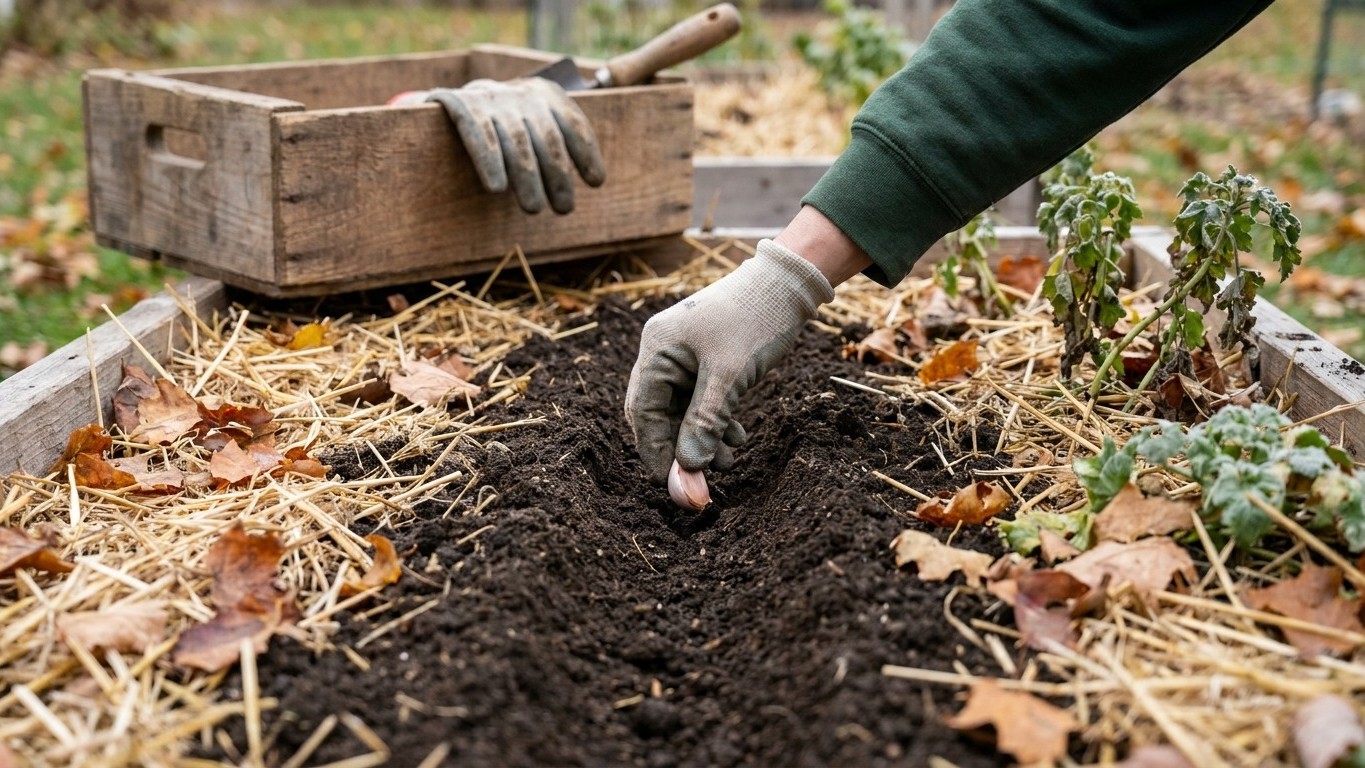

Direct answer: by November, most of Rhode Island has already crossed its average first fall frost, so the open garden is closing, not opening. Garlic and shallots can still go in during the first week or two if the soil is workable. After that, the real November garden lives under cover: cold frames, dormant plantings, and the backlog of pruning, soil work, and storage checks that keep a garden ready for spring.
What goes in the ground in November

The calendar says November, but the soil doesn’t care about the calendar. What decides whether anything goes into open ground is soil temperature and where you sit relative to the frost window, and for Rhode Island that window has usually already closed by the time this month starts. NOAA NCEI’s 1991-2020 climate normals put the average first fall freeze at the reference station between October 24 and November 3, based on 32°F freeze probabilities. Suburban and rural gardens, especially inland and away from the coastal moderating effect of Narragansett Bay, typically see that freeze arrive one to two weeks earlier than the reference figure, so treat this as a starting point rather than a guarantee for your own yard.
That means for the bulk of the state, November opens with the tender-crop season already over. What’s left is a short and specific list. Garlic and shallot cloves can still be tucked into workable soil in early November, and in many years this is genuinely the last practical window before the ground stiffens up. Bare-root fruit trees, roses, and perennials can also go in while the soil is still diggable, since roots continue to establish slowly even after top growth has stopped.
Cold frames and low tunnels stretch the season further than most gardeners expect. Hardy greens like spinach, mâche, and claytonia will still germinate and creep along under glass or plastic even as outside temperatures drop into the 30s, because the covered soil stays several degrees warmer. And this is the month for forcing crops indoors: dig chicory roots for witloof forcing in a dark bucket, or lift a rhubarb crown into a container to force an early, pale harvest in a cool basement. None of that needs open ground at all, which is exactly the point once the frost has already come through.
What to start under cover
Counting from the calendar leads people astray this time of year. The better arithmetic runs backward from the frost window that matters, and by November the fall frost has already passed for most transplant purposes, so anything started under cover now is either for winter eating or for spring stratification, not for a fall harvest.
For a spring harvest, some perennial and native wildflower seeds actually need a period of cold before they’ll germinate, and winter sowing is the trick: seeds go into a vented container outdoors now, where weeks of cold and freeze-thaw cycles break dormancy naturally, so they sprout on their own once the reference station’s average last spring frost arrives between April 7 and April 17. Started this way, there’s no grow-light juggling and no risk of leggy seedlings, because nature handles the timing.
For eating through the cold months, sow microgreens and sprouts indoors on a windowsill or under a small grow light, staggered every couple of weeks so a fresh batch is always coming ready. The two failure modes to avoid are starting standard spring transplants (tomatoes, peppers) indoors far too early, which leaves you with rootbound, stretched plants long before the April frost window opens, and waiting so late to winter-sow cold-hardy seeds that the ground freezes solid before you get the containers out. Both mistakes come from ignoring the arithmetic and going by feel instead.
What is ready to pick
Little to nothing comes out of open ground in Rhode Island by November, and there’s no point pretending otherwise. Once the first fall frost has passed, most unprotected crops are finished for the season. What still feeds the household comes from three places: what was planned for cold tolerance, what’s under cover, and what’s already in storage.
Kale, leeks, and Brussels sprouts left standing actually improve after a frost, since cold converts starches to sugars and sweetens the flavor, so these are worth harvesting through the month rather than rushing to pull them before the first freeze. Cold-frame spinach, arugula, and mâche will keep producing slowly, a few leaves at a time, as long as the frame stays closed on the coldest nights. Indoors, sprouts and microgreens are the one crop on a completely reliable schedule, ready in as little as one to two weeks from sowing regardless of what’s happening outside.
The other job this month is checking storage. Winter squash, potatoes, onions, and garlic put up earlier in the season need a hands-on inspection now, not a glance. Squash with a soft spot near the stem, potatoes that have started to sprout or wrinkle, and onions gone soft at the neck should be pulled and used first, since one rotting piece in a storage bin spreads decay to its neighbors faster than most gardeners expect.
The jobs that matter this month

November is a working month even without much left to plant, and skipping these tasks costs real time come spring. Dormant pruning of fruit trees, brambles, and grapevines is best done once the leaves have dropped, because the bare structure is easy to read and cold weather slows the spread of disease through fresh pruning cuts. This is also the window to cut back raspberry and blackberry canes that fruited over the summer, clearing the way for next year’s growth.
Seed catalogs and supplier lists are worth ordering from now rather than waiting until late winter, since the most popular varieties, especially disease-resistant tomatoes and heirloom beans, tend to sell out before spring planting season arrives. Pair that with actually planning next year’s crop rotation on paper, so beds don’t repeat the same plant family in the same spot two years running.
Soil work pays off precisely because it’s slow. A soil test done now, with lime or amendments applied based on the results, has months to adjust pH and nutrient balance before spring planting, which is far more effective than trying to correct soil chemistry in the weeks before you sow. Turning the compost pile one more time before it freezes keeps the decomposition going a little longer, and mulching garlic beds and perennial crowns once the ground has started to cool, but before it locks up solid, insulates roots without inviting rodents to nest in warm straw too early.
Round out the month by cleaning and sharpening tools before they sit unused, draining hoses and irrigation lines before a hard freeze cracks them, and patching bed edges or fencing while the ground still allows for digging in posts.
What not to do in November
The most common mistake this month is trusting the air temperature over the calendar and the soil. A stretch of warm, sunny days can feel like an invitation to leave cold frames open or tender potted plants outdoors, but a mild afternoon doesn’t mean the freeze risk is gone, and a sudden overnight drop can undo weeks of protected growth in a few hours. Bring tender potted perennials and any tropicals indoors well before a hard freeze is likely, rather than waiting for a forecast to confirm it.
Working wet soil is another trap. Tilling or even heavy foot traffic on saturated November ground compacts the structure for a full season, since clay and loam soils don’t recover from compaction quickly once they’re this cold and heavy with moisture.
Timing matters with mulch, too. Piling straw or leaves over perennial beds and garlic while the ground is still relatively warm creates a cozy space for rodents to move in before winter really sets in. Wait until the ground has started to cool and firm up, then mulch, so the insulation goes on once pests have already settled elsewhere.
Skip nitrogen fertilizer on lawns, perennials, or garlic beds this month. Nitrogen pushes soft new growth right when a hard freeze is most likely to damage it. If a soil test calls for phosphorus or potassium to support root development over winter, that’s the amendment to reach for instead.
Checking this against your own county
A state-wide November calendar is a starting point, not an instruction sheet. Rhode Island runs across USDA Hardiness Zones 6a to 7b, and that range alone tells you conditions on Block Island or coastal Newport differ by weeks from inland Woonsocket or higher ground in the northwest corner of the state. Coastal areas warmed by Narragansett Bay tend to hold off frost later into fall and see it end earlier in spring, while inland and elevated spots freeze sooner and thaw later.
Before acting on any date in this article, check it against your own county’s conditions through the University of Rhode Island Cooperative Extension, which tracks local frost patterns and planting guidance suited to specific parts of the state.
Common questions
Is it too late to plant garlic in Rhode Island in November?
Not necessarily, but the window is closing. As long as the soil is still workable and hasn’t frozen solid, garlic and shallot cloves can go in during the first half of the month. Once the ground stiffens, planting has to wait until spring.
What vegetables can survive a Rhode Island winter in a cold frame?
Spinach, mâche, claytonia, and arugula are the most reliable choices. They won’t grow quickly once daylight shortens, but a covered frame keeps them alive and slowly producing leaves through the cold months.
When should I bring potted plants indoors in Rhode Island?
Before the first hard freeze, not after a warm spell convinces you it’s safe to wait. Given that the average first fall frost at the reference station falls between October 24 and November 3, and can arrive earlier inland, most tender potted plants should already be indoors by the time November starts.
Does zone 6a-7b matter for what I plant in November?
It matters more for what survives the winter than for what you can newly plant this month. The USDA hardiness zone reflects the average extreme minimum winter temperature, which affects whether garlic, perennials, and overwintered greens make it through to spring, but it doesn’t change the fact that the open-ground planting window has already closed for tender crops by November.
Gardeners who plant by the Moon can check the November 2026 moon planting calendar, a tradition rather than a proven method.
Related guides
Elsewhere? See what to plant in November in every state and province.