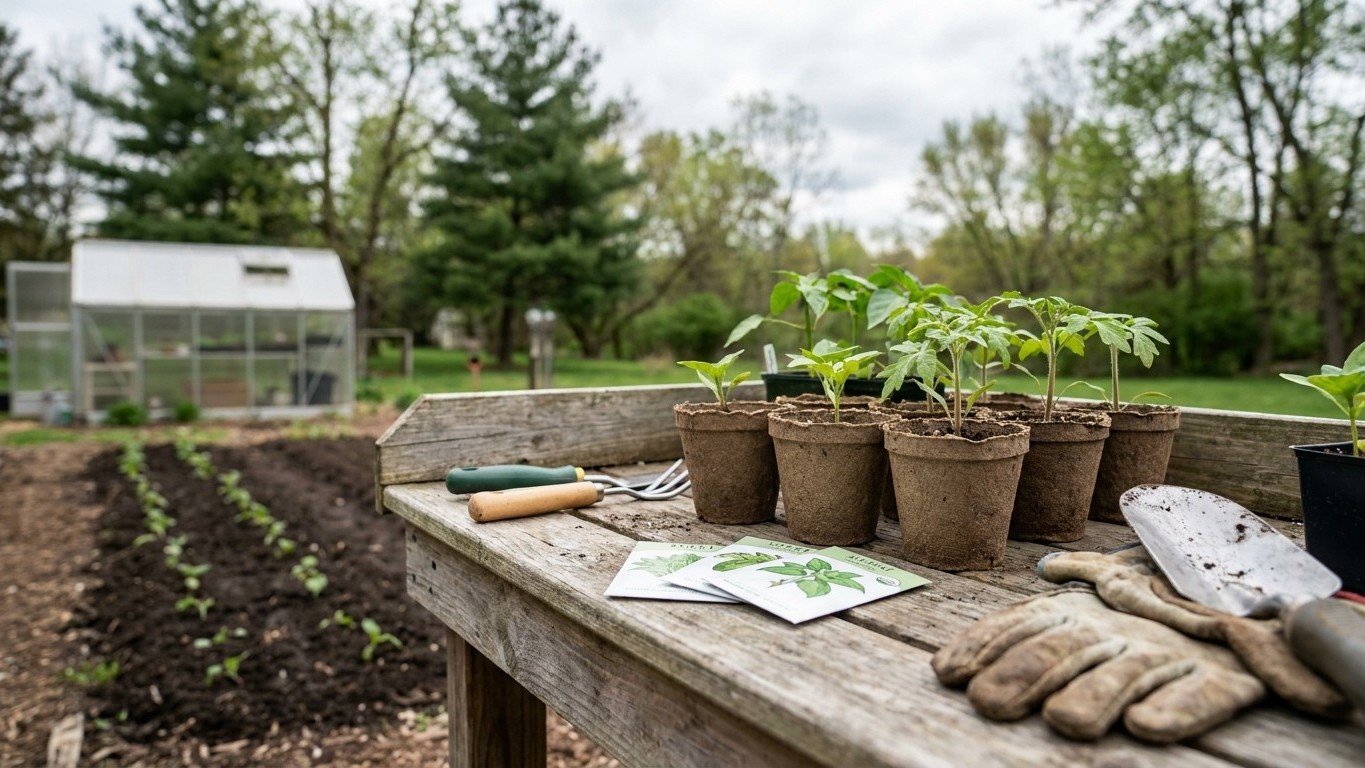

April in South Carolina sits well past the last frost window recorded for the Midlands and coastal plain, so the ground is open for the crops that actually feed a household: bush and pole beans, summer squash, cucumbers, sweet corn, and transplants of tomato, pepper and eggplant. Cool-season holdovers like lettuce, carrots and radish still earn a spot, especially in the Upstate where soil warms slower. The calendar matters less than what the soil thermometer says.
What goes in the ground in April

Soil temperature, not the date on the wall, decides what survives this month. NOAA NCEI’s 1991-2020 Climate Normals put the last spring frost for the reference station (USW00013880) between February 28 and March 17, which means April opens with that risk already behind most of the state. That gap is what makes April the widest planting window of the spring calendar in South Carolina, but it isn’t uniform. Peninsular Charleston runs milder than the airport station used for these normals, while Upstate counties near Greenville and Spartanburg can trail those dates by two to three weeks because of elevation and cold-air drainage off the mountains.
Once soil in the 60s Fahrenheit is confirmed, warm-season direct-sow crops go in without hesitation: bush beans, pole beans, sweet corn, summer squash and cucumbers all germinate reliably once the ground has shed its winter chill. Transplants of tomato, pepper, eggplant and basil follow the same rule, hardened off for several days before they go in the bed. Okra, notoriously slow to germinate in cool soil, does better sown mid-to-late April once nighttime lows stop dipping into the 40s.
Cool-season crops still worth a sowing
Early April in the Upstate still allows a last direct-sow of lettuce, spinach, radish, beet and carrot, since these germinate at soil temperatures far lower than beans or squash need. Onion sets and seed potatoes, if not already in from March, should go in during the first half of the month across the whole state; delay past mid-April and the crop loses growing time before summer heat shuts down bulbing and tuber set.
| Region | Warm-season direct sow | Risk if planted early April |
|---|---|---|
| Coastal plain / Charleston area | Safe from the start of the month | Low |
| Midlands (Columbia area) | Safe after first week | Low to moderate |
| Upstate (Greenville/Spartanburg) | Wait for mid-to-late month | Moderate, cold nights linger |
What to start under cover
Not every crop belongs straight in the garden bed, even once frost risk has passed. Melons, watermelon and winter squash for a fall harvest benefit from three to four weeks under cover before transplanting, so counting backward from the point when night soil temperatures reliably clear 65 degrees gives the sowing date, roughly early-to-mid April for coastal and Midlands gardeners, later for the Upstate. That arithmetic works for any county: find the week soil warms enough locally, subtract three to four weeks, and that’s the seed-starting date.
Starting too early under cover backfires just as badly as starting too late. Seedlings held indoors past their transplant window get rootbound in their trays, stall out, and produce weaker plants than ones started on time and transplanted promptly. Starting too late means the crop misses enough of the growing season to size up before summer heat or fall frost cuts it short. Both mistakes trace back to skipping the local soil-temperature check and going by a fixed date instead.
Second successions of tomatoes and peppers, started under cover in early April, give a fall crop that beats the first frost window of November 20 to December 5 with room to spare. Basil, cucumber and squash can also be started in trays for a staggered harvest rather than one glut, a trick that matters more for home gardeners than market growers since it spreads the kitchen workload over weeks instead of days.
What is ready to pick
April harvests build on what survived winter rather than what just went in the ground. Asparagus beds established in prior seasons send up their first spears this month, ready to cut once they reach six to eight inches and before the tips loosen. Overwintered collards, kale and leeks, especially in the Upstate where a hard freeze sweetened rather than killed them, are still worth cutting through early April before they bolt with the first real heat.
Spring-sown lettuce, radish and spinach from February and March plantings hit picking size now, and the rule for lettuce is the same everywhere: harvest outer leaves regularly rather than waiting for a full head, which buys weeks of extra production before bolting. Strawberries planted the previous fall begin ripening toward the end of the month in the Midlands and coastal plain, running later Upstate.
Stored crops from the previous season deserve a check this month too. Onions and garlic held over winter should be inspected for soft necks or sprouting, since April’s warmth accelerates spoilage in storage. Any potato showing green shoulders or soft spots should be pulled from storage and used immediately rather than left to rot alongside the good ones.
The jobs that matter this month

Staking and caging go in before tomatoes and pole beans need them, not after. A plant that’s already sprawled across the bed resists a cage without snapping branches, so the support structure belongs in the ground at transplant time.
Mulching follows close behind. A three-to-four inch layer of straw or shredded leaves, applied once soil has warmed, holds that warmth in, suppresses the first flush of weeds, and cuts down on the watering frequency that April’s rising temperatures start to demand. Watering itself shifts rhythm this month: seedlings and transplants need consistent moisture at the root zone rather than daily light sprinkling, which encourages shallow roots that struggle once summer heat arrives.
Succession sowing keeps beans, squash and corn producing over weeks instead of a single glut; sowing a new row every ten to fourteen days through April sets up a steadier harvest into summer. Pest scouting matters just as much: aphids and early squash bugs show up on tender new growth first, and catching them in April, before populations build, is far easier than fighting an infestation in June.
Fruit growers have their own April list. Thin excess fruit set on peach and apple trees before it sizes up, so the tree isn’t putting energy into fruit that will be culled anyway. Side-dress nitrogen on leafy brassicas that are still producing, but hold off on fruiting crops like tomato and pepper until they’ve set their first cluster, a timing point covered in the next section.
What not to do in April
The most common April mistake in South Carolina gardens is trusting the air instead of the soil. A warm afternoon in the 70s doesn’t mean the soil six inches down has caught up, and tomato or pepper transplants set into cold soil sit stalled for weeks, vulnerable to root rot, even if the air feels like summer. Check soil temperature directly rather than going by how the day feels.
Uncovering tender transplants too early after a mild stretch is the second trap. A run of warm days in early April can be followed by a cold front dropping temperatures sharply, and plants hardened off too fast under that false warmth take real damage. Keep row cover or cold frames within reach through the first half of the month rather than packing them away at the first warm weekend.
Nitrogen timing trips up a lot of tomato growers specifically. Feeding a heavy dose of nitrogen before the first fruit cluster sets pushes the plant into leafy growth at the expense of flowers and fruit, producing a lush green plant that yields poorly. Hold nitrogen-heavy feeding until fruit set begins, then side-dress to support the crop that’s actually forming.
Overwatering new transplants rounds out the list. Daily light watering keeps the top inch of soil wet while the root ball beneath stays dry, training roots to stay shallow. Deep, less frequent watering that soaks the full root zone builds a plant that can handle the dry stretches South Carolina summers reliably bring.
Checking this against your own county
A state-wide planting month is a starting point, not an instruction. Elevation alone shifts the last frost window by weeks between the coastal plain and the Upstate foothills, and local cold pockets, lake effect near larger reservoirs, and even which side of a ridge a garden sits on can move things further. The frost windows and hardiness zones cited here come from station-level and statewide data, useful for planning but not a substitute for what’s happening in a specific backyard.
Clemson Cooperative Extension tracks county-level guidance and local planting calendars that narrow these ranges down. Their extension service is the next stop for anyone whose garden sits noticeably higher, lower, colder or warmer than the statewide averages suggest.
Common questions
Is it too late to plant tomatoes in South Carolina in April?
No. April is well within the transplant window for tomatoes across the state, since the last spring frost for the reference station falls between February 28 and March 17. Upstate gardeners should still confirm soil temperature before transplanting, since cold soil stalls growth even after frost risk passes.
Can I still direct-sow lettuce and spinach in April in South Carolina?
Yes, particularly in the first half of the month and especially in the Upstate, where cooler soil extends the cool-season window. Coastal and Midlands gardeners should expect these crops to bolt sooner as temperatures climb.
What USDA hardiness zone is South Carolina in?
The USDA Plant Hardiness Zone Map places South Carolina across zones 7a to 9a, a range built on average annual extreme minimum temperature rather than frost dates. That range means perennial and fruit tree selections that work on the coast may not survive winters in the Upstate.
Why does my garden’s frost date differ from the statewide range?
Elevation, proximity to the coast, and local cold-air drainage all shift frost timing away from statewide averages. Peninsular Charleston runs milder than the airport station used for NOAA’s normals, while Upstate counties trail behind it by weeks. County-level data from Clemson Extension narrows this further.
Gardeners who plant by the Moon can check the April 2027 moon planting calendar, a tradition rather than a proven method.