
South Carolina’s December planting list is short but real: garlic and shallots still go in where the ground is workable, hardy greens can be direct-sown along the coast, and cold frames extend the season everywhere else. What separates a live option from a dead one this month is soil temperature and where you sit inside the state’s 7a-9a hardiness spread, not the date on the calendar.
What goes in the ground in December

South Carolina’s first fall frost lands somewhere between November 20 and December 5 across most of the state, according to NOAA’s 1991-2020 climate normals for the reference station. That means by the time December starts, frost has usually already touched the ground in the Midlands and Upstate. Coastal and Lowcountry gardens, sitting in the warmer end of the 7a-9a range, often lag behind that window and stay workable longer.
Garlic and shallots are the one crop still going into open soil statewide this month, and December is the last comfortable stretch to get them in before the ground locks up hard in the Upstate. Push cloves root-down, two inches deep, and mulch heavily right after planting.
Cold frames and low tunnels do the real work in December. Under a frame, soil stays workable weeks longer than the open bed next to it, which means lettuce, spinach, arugula, and mustard greens can still be direct-sown under cover even where an unprotected bed has already frozen solid.
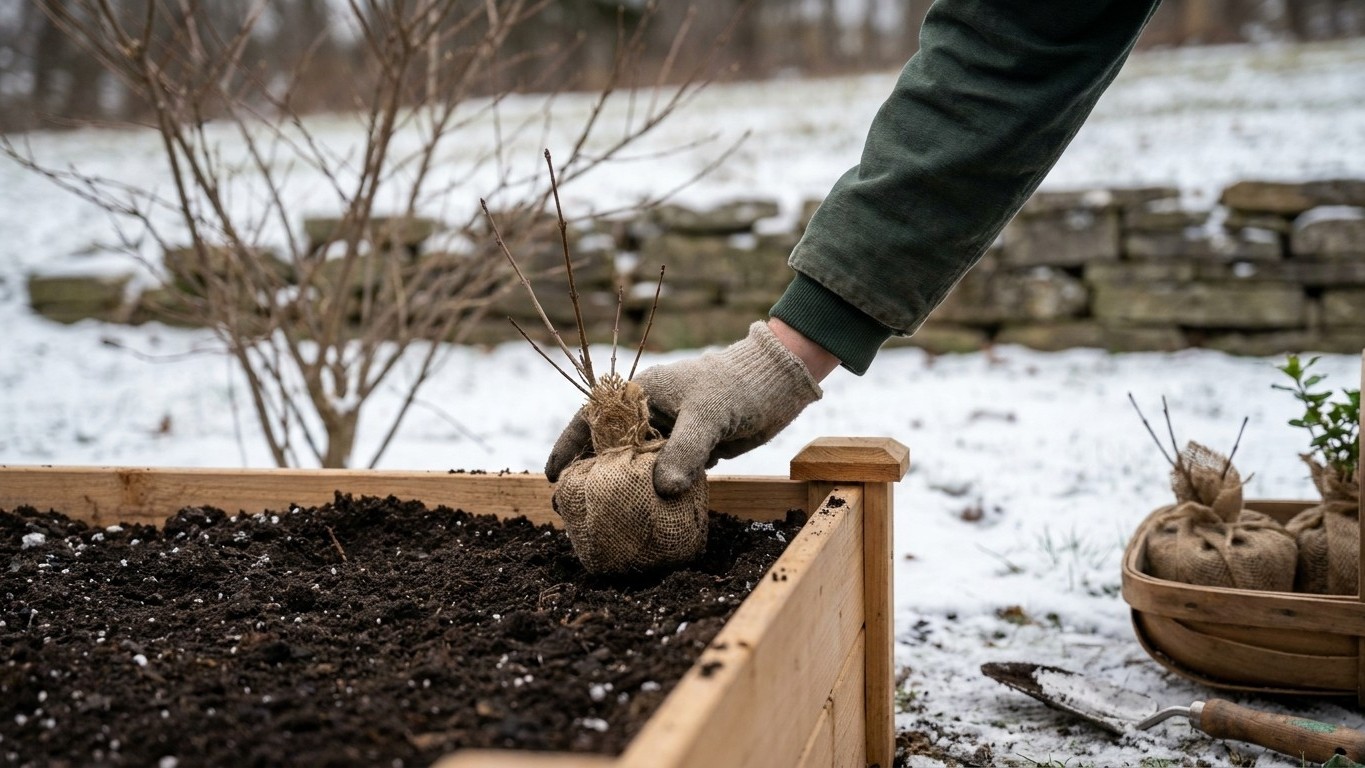
Bare-root season opens in December for fruit trees, muscadine grape vines, blueberries, and roses, all of which South Carolina gardeners plant while the wood is fully dormant. Dormant planting lets roots settle into cooling soil without the stress of active top growth, and it’s the cheapest way to buy fruit stock since bare-root plants cost a fraction of container-grown ones.
Forcing rhubarb or Belgian endive indoors, in a dark closet or basement over three to four weeks, is a small December project that gives fresh produce with none of the frost risk. It’s a fringe move for South Carolina gardeners who rarely need it, but it fills a genuine gap on a slow week.
What to start under cover
Work backwards from the last spring frost window, which for South Carolina’s reference station runs February 28 to March 17. Onions and leeks started from seed need roughly eight to ten weeks indoors before they go out as transplants, which puts a December sowing date squarely on target for a late-February or March move to the garden. Start now and the timing lines up almost exactly with the earliest end of that frost window.
Cole crops for an early spring transplant, cabbage, broccoli, and collards, run six to eight weeks from seed to transplant size. Sown in December, they’ll be ready right as the frost risk starts easing in the Upstate and well after it’s cleared along the coast. Hold off on anything warm-season: tomatoes, peppers, and squash started this early sit indoors for three months waiting on soil that’s still too cold, and they turn rootbound and leggy long before the garden is ready for them.
The two failure modes bracket this whole exercise. Start too early and transplants stretch thin, circle their pots, and stall once they finally go in the ground. Start too late and seedlings miss the transplant window entirely, forcing a rushed direct-sow that skips weeks of head start. December sowings for onions, leeks, and early brassicas sit in the safe middle of that range for most of the state; anything else can wait until January or February.
What is ready to pick
December harvests in South Carolina lean on what survived the first frost rather than anything freshly planted. Kale, collards, and mustard greens actually improve after a light freeze, since cold triggers the plant to convert starches into sugars, softening the bitter edge. Leeks left in the ground all fall are still pullable now, and a thick mulch layer keeps the soil around them workable even after a hard freeze elsewhere in the bed.
Brussels sprouts, if they were planted for a fall crop, are usually at their peak in December, picked from the bottom of the stalk upward as each cluster of sprouts firms up. Turnips, beets, and carrots left in the ground under mulch can still be dug as needed, essentially using the soil itself as cold storage.
Cold-frame lettuce and spinach, sown back in fall, are croppable through December in small cut-and-come-again harvests. Indoors, sprouts and microgreens fill the gap when nothing outside is producing, ready in one to two weeks from seed with no soil and no frost risk at all.
Stored crops need a hands-on check this month. Winter squash should feel hard and give off no soft spots when pressed; any squash with a bruised or sunken patch is starting to rot and should be used first. Onions and sweet potatoes in storage need the same once-over: pull anything showing mold, sprouting, or a soft neck before it spreads to the rest of the bin.
The jobs that matter this month

December’s real workload sits outside the planting bed entirely. Dormant pruning of fruit trees, muscadine grapes, and cane berries is best done now, while the plant has no leaves to protect and no active growth to disturb. Cutting into dormant wood also lowers the risk of spreading disease compared to pruning a tree that’s actively pushing sap.
Seed catalogs move fast in December, and the popular heirloom or disease-resistant varieties sell out well before spring planting season opens. Ordering now, rather than waiting until February, is often the difference between getting the variety you actually want and settling for whatever’s left.
Soil testing pays off far more in December than in March. Clemson’s extension service runs a standard soil test that tells you exactly what to add and how much, and results now give amendments the full winter to work into the soil before spring planting instead of scrambling to correct pH after seeds are already in the ground.
Turning the compost pile, even in cold weather, keeps decomposition moving and gives you finished compost ready for spring beds instead of a frozen, stalled heap. It’s also the month to clean and sharpen pruning shears and hoes, since rust and dull edges do more plant damage over a season than most gardeners realize, and to repair raised bed frames or fencing while the garden is otherwise idle and nothing is in the way.
Planning next season’s crop rotation belongs here too. Deciding now which bed grows tomatoes, which grows brassicas, and which rests under a cover crop means the plan is set before the first seed order even arrives, not improvised in the rush of spring.
What not to do in December
A string of 70-degree days in December fools a lot of gardeners into direct-sowing warm-season seed. The air feels like spring, but soil temperature lags behind air temperature by days or weeks, and seeds like squash or beans planted into soil that’s still in the 40s simply rot before they germinate. Wait for the actual frost window to close, not for one warm afternoon.
Uncovering cold frames or pulling row covers off garlic and greens after a mild stretch is another common misstep. South Carolina’s frost pattern is uneven enough that a mild week is often followed by a hard freeze, and plants that spent days re-hardening to the cold get set back or killed when covers come off too soon.
Nitrogen fertilizer applied late in fall or early winter pushes soft new growth right when the plant should be shutting down for the season. That new growth has no time to harden off before a freeze, and it’s usually the first thing to die back, wasting the fertilizer and weakening the plant going into winter. Save nitrogen feeding for active growth in spring.
Skipping mulch on newly planted garlic and shallots is a quieter mistake with the same result: freeze-thaw cycles heave cloves partway out of the soil, exposing roots to cold and drying wind. A four-inch mulch layer right after planting prevents almost all of that damage for the cost of a bag of straw.
Checking this against your own county
A statewide December calendar is a starting point, not an instruction for a specific yard. South Carolina’s elevation change from the coast to the Upstate, plus the spread across USDA zones 7a to 9a, shifts frost timing by weeks in either direction. Coastal Lowcountry gardens, including peninsular Charleston, run milder than the reference station used for these dates, while Upstate counties at higher elevation see frost arrive earlier and linger longer.
Before finalizing any December planting decision, check current conditions and local guidance through Clemson Extension, which tracks county-level frost data and maintains its own planting calendar tuned to South Carolina’s regional differences.
Gardeners who plant by the Moon can check the December 2026 moon planting calendar, a tradition rather than a proven method.
Common questions
Can I still plant garlic in South Carolina in December?
Yes, as long as the soil is workable and not frozen solid. Garlic planted in December still has enough time to establish roots before the coldest stretch of winter, especially with a mulch layer on top.
Is it too late to start seeds indoors in December?
No, but it depends on the crop. Onions and leeks started indoors in December line up well with a late-February or March transplant date. Warm-season crops like tomatoes and peppers are too early; starting them now leads to leggy, rootbound plants long before the garden is ready.
Why does South Carolina have such a wide hardiness zone range?
The USDA Plant Hardiness Zone Map bases its zones on one measurement, average annual extreme minimum temperature. South Carolina spans 7a in the Upstate to 9a along the coast because elevation and distance from the ocean create real differences in how cold it gets each winter.
Should I cover my cold frame every night in December?
Cover it whenever a freeze is expected, but avoid leaving it sealed during mild stretches. Plants that stay covered too long in warm weather can overheat or become soft, then suffer more damage when a hard freeze follows a warm spell.