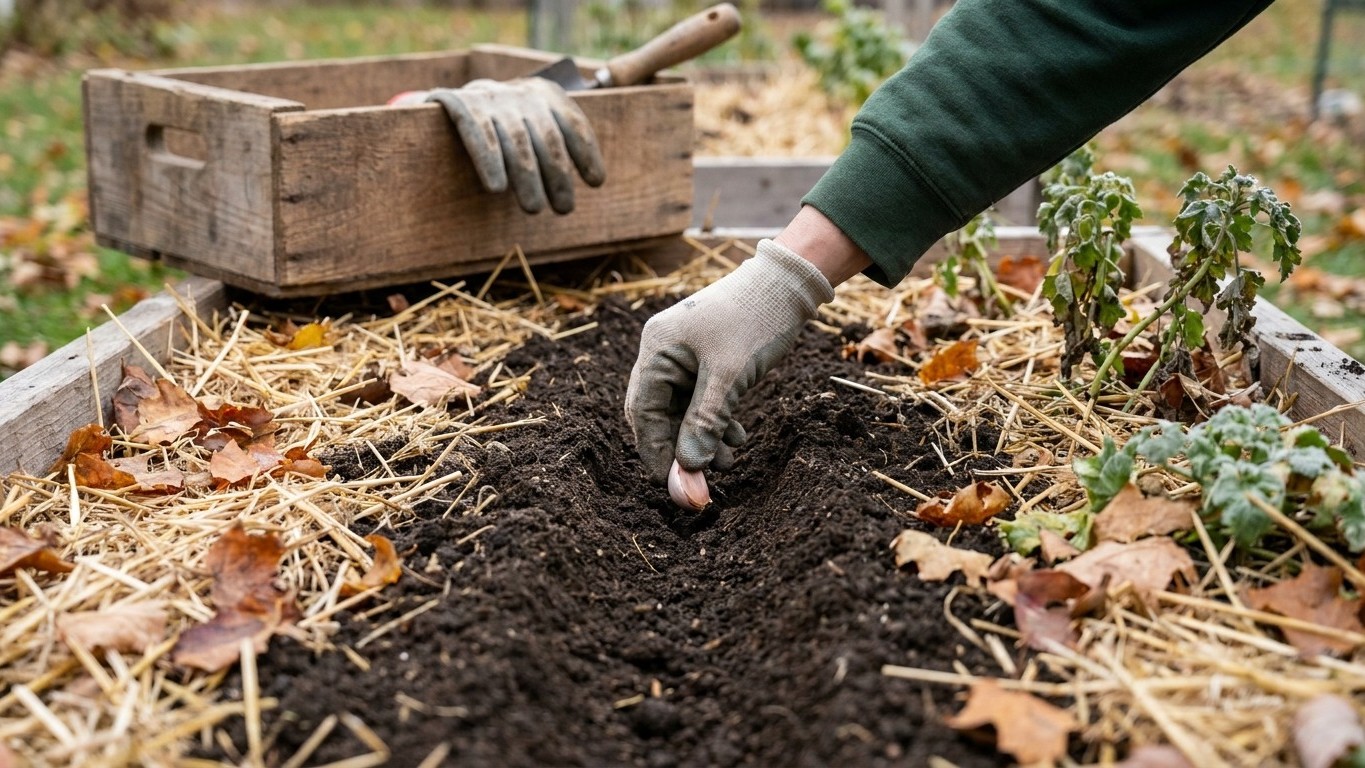

November in South Carolina still sits ahead of the average first frost across most of the state, so the answer isn’t “wait until spring.” Garlic and shallots go in now, hardy greens like spinach, kale, collards and mustard can still be direct-sown or transplanted, and cover crops like crimson clover or cereal rye belong in any bed going idle for winter.
What goes in the ground in November

The calendar says late fall, but the ground doesn’t care what the calendar says. What decides whether something survives outdoors this month is soil temperature and where the local frost window falls, not the date on the wall. NOAA’s 1991-2020 climate normals put the first fall freeze for the reference station (USW00013880) somewhere between November 20 and December 5, with 30 to 70 percent freeze probability across that stretch. That means the first half of the month, in a lot of the state, is still open ground.
Garlic and shallots are the anchor crop here. Cloves and sets go in through the month, well before the ground locks up, and they’ll sit quietly through winter before pushing growth in spring. Spinach, kale, collards, mustard greens, arugula and lettuce all tolerate the light frosts that arrive early in the window, and established plants shrug off a few nights in the upper 20s once they’ve hardened off outdoors for a couple of weeks.
Peas, both English and snow types, can still be direct-sown in the earlier part of the month in the warmer coastal and Midlands counties, though the Upstate is a tighter call. Onion sets and multiplier onions go in on the same logic as garlic: they want cold to trigger bulbing later, not warmth right away.
Once the first freeze actually lands, the safe list narrows fast. Cold frames and low tunnels buy another few weeks for lettuce and spinach seedlings that would otherwise stall. Bare-root fruit trees, roses and cane berries can go in as dormant stock once nurseries start carrying them, since they aren’t trying to grow, just to root in before spring. And if the ground has already frozen solid where you are, forcing chicory roots or a rhubarb crown in a dark bucket indoors gives you something to harvest while the outdoor beds sit dormant.
What to start under cover
Seed-starting decisions this month run backward from the first frost window, not forward from today’s date. If your county’s first freeze lands around November 20, a crop that needs six weeks from seed to a transplant-ready size should have gone under cover in early October, which means for most direct outdoor sowing that ship has sailed. What’s left to start under cover now is aimed at extending the season into winter rather than racing the frost.
Lettuce, spinach and Asian greens started in flats or plug trays under a cold frame, greenhouse, or even a bright windowsill will be ready to transplant into a protected bed within four to six weeks, giving you fresh greens through the coldest stretch. Microgreens and sprouts are the fastest payoff: seven to fourteen days from seed to harvest, no frost risk at all, and no reason not to keep a tray going indoors continuously.
The two ways this goes wrong are familiar to anyone who’s started seed indoors before. Start too early relative to when you can actually plant out, and you end up with leggy, rootbound seedlings sitting in trays too small for their roots, stretching toward whatever light they can find. Start too late, and you run out of daylight and warmth before the plant reaches a size that can handle the cold frame or garden bed. The fix for both is the same: count backward from your realistic frost-protected planting date, not from when the seed packet showed up in the mail.
Onion seed for the following spring’s crop is worth starting indoors now in a lot of the state, since onions grown from seed rather than sets need a long head start before they go out in late winter.
What is ready to pick
The outdoor harvest is still real this month, it’s just shifted entirely to cool-season crops. Kale, collards and mustard greens actually improve after a light frost or two, converting starches to sugars and losing some of their bite. Leeks left in the ground get sweeter with cold as well, and they hold in place far better than most root crops, so there’s no rush to pull them all at once.
Lettuce and spinach under a cold frame or low tunnel keep producing pickable leaves well past the point they’d have quit in the open. Broccoli and cauliflower planted in late summer are hitting their harvest window now in much of the state, with heads ready once they reach full size but before the florets start to loosen and separate.
Sweet potatoes, if not already dug, need to come out before a hard freeze reaches the soil, since the tubers themselves don’t tolerate cold the way the greens do. Winter squash and pumpkins should already be in storage; this is the month to go through that stash and check for the ones going soft at the stem end or developing a damp, sunken spot, since one turning squash will speed up the others around it.
Stored onions and potatoes deserve the same check. Any onion that’s gone soft, sprouted early, or started to smell should come out of the bin before it takes its neighbors with it, and potatoes showing green shoulders (from light exposure) or soft spots need pulling and either using immediately or composting.
The jobs that matter this month

November is when the garden’s paperwork comes due, and skipping it costs you in spring rather than now. Dormant pruning of fruit trees, grapes and cane berries can start once leaves drop and the plant has gone fully dormant, and doing it now rather than waiting means you’re cutting when the plant’s energy is stored safely in the roots, not tied up in active wood.
Soil, compost and beds
Any bed finishing its last harvest should get either a cover crop or a heavy mulch layer before it sits bare through winter. Bare soil erodes, compacts, and loses nutrients to leaching rain; a cover crop of crimson clover or cereal rye holds the ground together and, in clover’s case, fixes nitrogen for spring. This is also the month to pull a soil test if you haven’t in a couple of years, since amendments like lime take months to fully adjust pH and work best applied well ahead of spring planting rather than as a last-minute fix.
Turning compost piles now, before the coldest weather really sets in, keeps the pile active longer into winter. A pile left untouched through a cold spell slows down dramatically, and restarting decomposition in January is a lot harder than keeping it going now.
Tools, seed and storage
Cleaning and sharpening pruners, loppers and shovels before they go into winter storage means they’re ready to use the moment spring work starts, rather than sitting rusted in a shed. Seed catalogs for the following spring start circulating now, and ordering early matters more than it sounds: popular varieties, especially heirloom tomatoes and specific pepper cultivars, do sell out by midwinter.
Raised bed frames, fencing and trellis hardware are easier to repair now, in cooler weather with the garden mostly cleared, than in the scramble of early spring planting season.
What not to do in November
The most common mistake this month is trusting a warm afternoon over the calendar and the forecast. A run of 70-degree days in early November doesn’t mean the season has reset; it means you’re borrowing time before the freeze window (November 20 to December 5, per NOAA’s normals for the reference station) actually arrives. Planting warm-season crops like tomatoes or peppers into soil that feels warm on top but is still cold a few inches down almost always ends the same way: a frost kills them within days or weeks.
Uncovering cold frames or removing row cover too early after a mild stretch is the inverse mistake. One warm week doesn’t mean winter’s over, and greens that had hardened off under cover can get knocked back hard by the next cold snap if they’re suddenly exposed again.
Nitrogen timing trips people up too. Feeding a high-nitrogen fertilizer to garlic, shallots or overwintering greens late in the month can push soft, tender new growth right before a freeze, and that new growth is exactly what cold damages first. If a fall crop needs feeding at all, do it earlier in the season, not now.
Leaving tender perennials, citrus in containers, or young fig trees unprotected because “it hasn’t frozen yet” is a gamble that doesn’t pay off often enough to be worth it. Mulching root zones and wrapping trunks before the first hard freeze, rather than after, is the difference between a plant that comes back and one that doesn’t.
Checking this against your own county
Everything above is a state-wide starting point, not a instruction sheet for your specific yard. South Carolina spans USDA Plant Hardiness Zones 7a to 9a, and elevation, coastal proximity, and simply how far Upstate you are can shift frost timing by weeks. The airport-station frost window cited here runs several weeks tighter in the Upstate than on the coast, and Peninsular Charleston in particular runs milder than that reference station suggests.
Before betting a bed of garlic or a tray of seedlings on any date in this article, check it against Clemson Cooperative Extension, which tracks local frost data and planting timing specific to South Carolina’s counties.
Common questions
Is it too late to plant garlic in South Carolina in November?
No. Garlic planted through November has time to root in before the ground fully cools, and it’s one of the most reliable crops for this exact window across the state.
Can tomatoes still go outside in South Carolina in November?
Not as a direct-sow or transplant decision. With the first fall frost typically landing between November 20 and December 5 at the reference station, tomatoes set out this late have little time before cold ends them.
What vegetables tolerate frost in South Carolina?
Kale, collards, spinach, mustard greens, leeks and Brussels sprouts all handle light frost well, and several actually taste better afterward as the cold triggers sugar production in the leaves.
Should I cover my garden beds in November?
Any bed not holding a cold-hardy crop benefits from either a cover crop or a mulch layer before winter, since bare soil left exposed through the cold months erodes and loses nutrients to rain.
Gardeners who plant by the Moon can check the November 2026 moon planting calendar, a tradition rather than a proven method.
Related guides
- the South Carolina planting calendar
- What to Plant in South Carolina in October
- What to Plant in South Carolina in December
Elsewhere? See what to plant in November in every state and province.