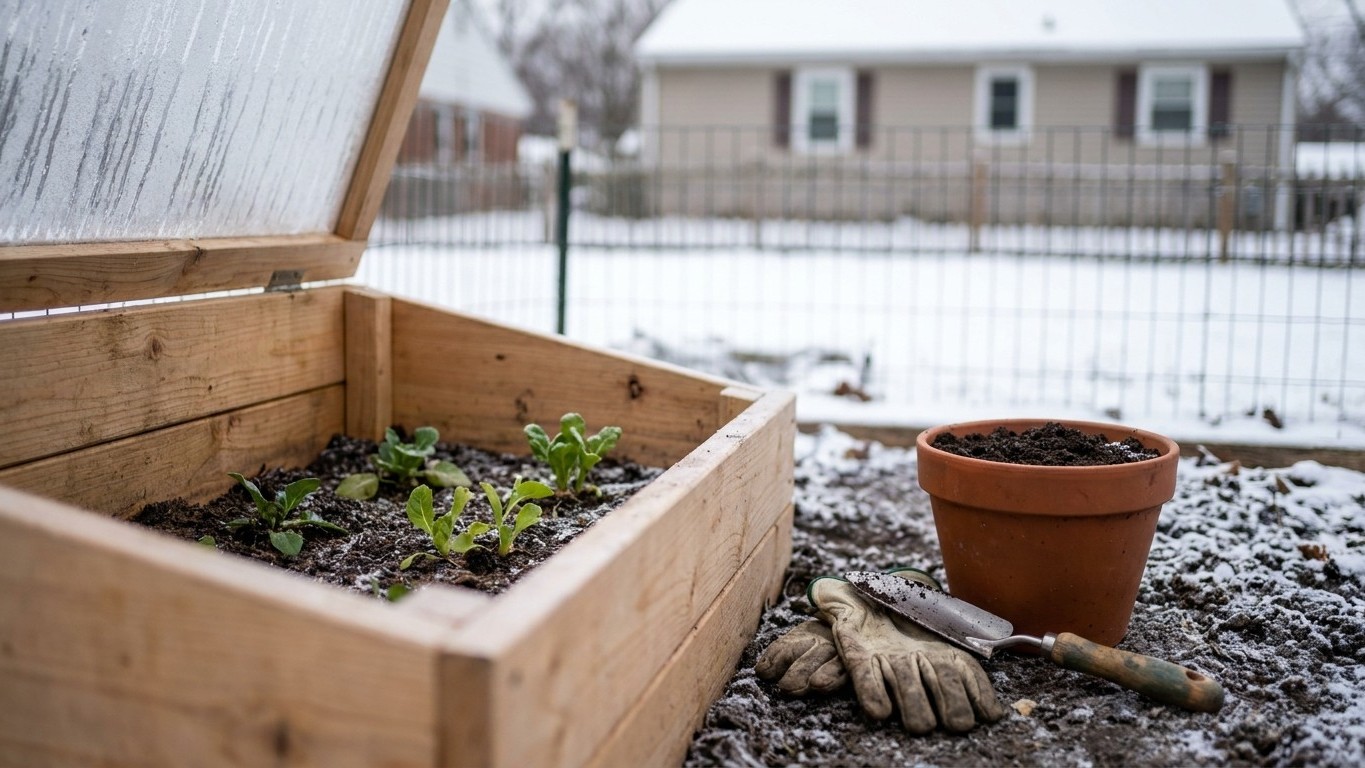

January in South Carolina sits weeks ahead of the last frost window (February 28 to March 17, per NOAA), so open-ground planting stays limited. The honest answer: garlic and shallots if you missed the fall window, bare-root fruit trees and canes, and hardy greens already growing under cold frames or low tunnels. Most of the real seed-starting work this month happens indoors, timed backward from frost.
What goes in the ground in January

The calendar says January, but the soil doesn’t care what the calendar says. What decides whether a seed or transplant survives is soil temperature and how many weeks stand between now and the last frost window of February 28 to March 17. That’s still six to ten weeks out across most of the state, and soil this cold rarely climbs past the mid-40s Fahrenheit even on a sunny afternoon. Warm-season seeds simply won’t germinate in that, and tender transplants will sit and rot rather than grow.
So say it plainly: nothing tender goes into open ground this month. But that doesn’t mean the garden sits idle.
Garlic and shallots are the exception that actually works. If you missed the ideal fall planting window, cloves and sets can still go in whenever the ground is workable and not frozen solid, which in most of South Carolina means most of January. They won’t catch up to a fall-planted crop in size, but they’ll still produce.
Bare-root roses, fruit trees, and cane berries (blackberries, raspberries) are dormant right now, and dormant is exactly when nurseries ship them and when transplant shock is lowest. Get them into the ground while they’re still asleep.
Cold frames and low tunnels change the math entirely. Under cover, hardy greens like spinach, kale, collards, and mustard can be direct-sown or transplanted even now, because the plastic or glass buys several degrees of protection and cuts wind exposure. English peas and fava beans tolerate light frost and can go into open ground in the milder coastal zone 9a pockets, though upstate zone 7a gardeners should hold off.
Forcing rhubarb crowns or chicory roots indoors, in the dark, is a January-specific trick that gives you fresh greens from something that would otherwise still be dormant outside.
What to start under cover
Indoor seed-starting is where January earns its keep, and the timing works backward from the frost window rather than forward from today. Tomatoes, peppers, and eggplant need six to eight weeks under lights before they go outside, and since the last frost falls between February 28 and March 17, that puts the ideal start window for those crops in early to mid-January across most of the state.
Onions grown from seed rather than sets need more lead time, closer to ten to twelve weeks before transplanting, which also lands squarely in January for anyone targeting a February or early March move outdoors.
Spring brassicas, broccoli, cabbage, and cauliflower destined for outdoor transplanting in February need roughly six to eight weeks indoors first, making January the natural sowing month for those too.
The two ways this goes wrong are worth naming directly. Start too early, ahead of that six-to-eight-week window, and you end up with leggy, rootbound seedlings straining against their cell packs weeks before it’s safe to plant them out. Start too late, especially with long-season peppers and eggplant, and you run out of growing season before the plants ever produce a real harvest. Count backward from your county’s frost range, not forward from the date on the seed packet.
What is ready to pick
Outdoors, January’s harvest is thin, but it isn’t nothing. Overwintered collards, kale, mustard greens, and turnip greens actually improve after a frost, since cold triggers the plant to convert starches into sugars, softening the bitterness that hot-weather greens carry. Leeks left in the ground all winter are still fully usable and often sweeter than they were in fall.
Anything protected under a cold frame or low tunnel, lettuce, spinach, arugula, keeps producing at a slower pace all month, and checking under the cover every few days keeps you from missing a harvest window before leaves bolt or yellow.
Indoors, sprouts and microgreens fill the gap for households wanting something fresh weekly without waiting on outdoor conditions. They’re ready in one to two weeks from seed, regardless of what’s happening in the yard.
Storage crops need a check-in now too. Winter squash, sweet potatoes, and stored onions and garlic should get a hands-on inspection: soft spots, a sweet fermented smell, or any give when you press near the stem end mean that piece needs to be used or composted before it spreads rot to the rest of the bin. One bad squash left too long can take down a whole crate.
The jobs that matter this month

Dormant pruning tops the list, and it has a real deadline attached: fruit trees, grapevines, and blueberry bushes should be cut back for shape and airflow while they’re leafless and sap isn’t moving. Prune after buds swell and you’re cutting away tissue the plant has already invested energy into, plus you risk spreading disease through fresh wounds during active growth.
Seed ordering belongs on this month’s list too, and not as an afterthought. Popular varieties, especially disease-resistant tomatoes and regionally adapted peppers, sell out well before the actual planting window arrives. Order now and you get first pick; wait until March and you’re choosing from what’s left.
Soil testing works best while beds sit empty. Clemson’s extension service runs a soil testing program, and results take a couple weeks to come back, which means submitting samples now gives you time to amend before spring planting rather than scrambling in March.
A handful of other jobs round out the month: turning compost piles to keep them breaking down through the cold, cleaning and sharpening pruners and shovels before the spring rush, repairing raised bed frames or fencing that took damage over fall storms, and mapping out crop rotation so nightshades and brassicas don’t land in the same bed two years running. None of this is filler. Skip the pruning window and you lose a season’s shape; skip the seed order and you lose your variety; skip the soil test and you’re guessing at fertilizer rates all spring.
What not to do in January
The classic January mistake in South Carolina is trusting a warm afternoon. The state gets genuine warm spells this month, sometimes pushing well into the 60s or 70s, and it’s tempting to read that as a green light for tomatoes or peppers. The soil hasn’t warmed nearly as fast as the air, and a transplant set out on a 68-degree afternoon can still be killed by a hard freeze three days later. Wait for the frost window, not the thermometer on a given Tuesday.
The same warm spell tempts gardeners to pull covers off cold frames and low tunnels early, exposing hardy greens right before the next cold front. Leave the covers in place, or at least keep them nearby and ready to redeploy, until the season is genuinely past the last frost range.
Nitrogen timing trips people up too. Feeding dormant fruit trees or overwintering garlic a heavy dose of nitrogen now pushes soft new growth that has zero cold tolerance, right when a freeze is still entirely possible. Hold nitrogen applications until growth actually resumes in spring.
Finally, don’t assume one timeline fits the whole state. A gardener in coastal zone 9a working with January soil that’s workable most days is in a different situation than someone in upstate zone 7a, where the ground may be frozen solid for stretches. Match the job to your actual conditions, not a statewide average.
Checking this against your own county
A statewide frost window is a starting point, not an instruction. South Carolina spans USDA hardiness zones 7a to 9a, and elevation, distance from the coast, and even proximity to a lake can shift planting dates by two or three weeks in either direction. Peninsular Charleston runs noticeably milder than the airport station used for the frost data above, while upstate counties near the mountains run tighter and colder at both ends of the season.
Before committing to a date, check your specific timing against Clemson Cooperative Extension, which publishes county-level guidance and a planting calendar built for South Carolina’s regional differences.
Common questions
Can I plant vegetable seeds outdoors in South Carolina in January?
Only cold-hardy exceptions like garlic, shallots, English peas, and fava beans in milder zones, and only if the soil is workable. Tender vegetables need to wait for the last frost window of February 28 to March 17.
Is it too early to start tomato seeds indoors in January?
No. Tomatoes need six to eight weeks under lights before transplanting, and with the last frost falling between late February and mid-March, early to mid-January is the right window for most of the state.
What can I harvest from a South Carolina garden in January?
Overwintered collards, kale, mustard and turnip greens, leeks, and anything growing under a cold frame or low tunnel. Indoors, sprouts and microgreens fill the gap.
Should I prune fruit trees in January?
Yes, while they’re still dormant and sap isn’t moving. Pruning after buds swell wastes the plant’s stored energy and increases disease risk.
Gardeners who plant by the Moon can check the January 2027 moon planting calendar, a tradition rather than a proven method.