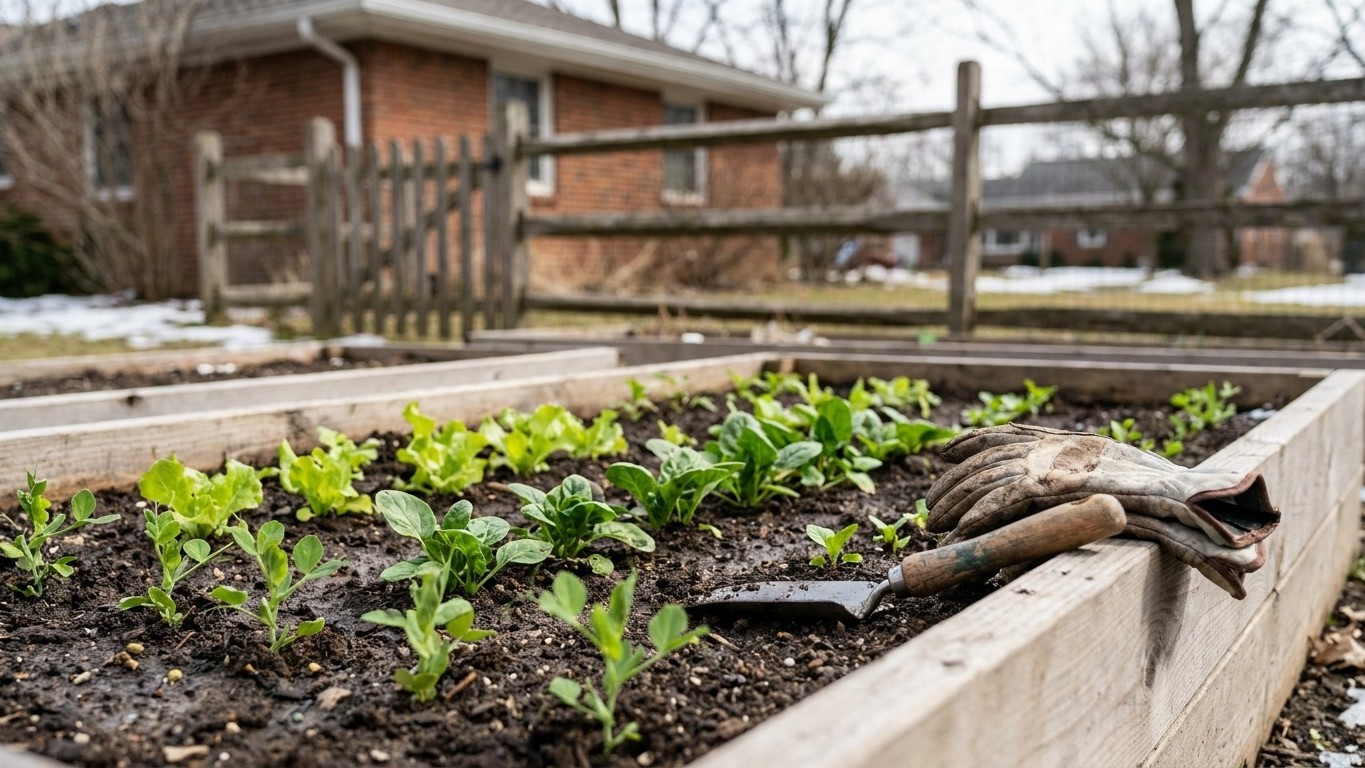

South Carolina’s frost window runs from February 28 to March 17 across most of the state, so March plantings split into two camps: cold-hardy crops that shrug off a late freeze, and warm-season crops that need to wait until that window closes. The trick this month is matching what you put in the ground to which side of that line you’re standing on.
What goes in the ground in March

Soil temperature, not the date on the calendar, decides what survives. Cold-hardy vegetables germinate and grow in soil as cool as 40°F, while tomatoes and peppers sulk or rot below 60°F. That’s the whole logic of a March planting list in South Carolina: the frost window from NOAA’s 1991-2020 Climate Normals for station USW00013880 puts the last spring freeze anywhere between February 28 and March 17, so early March still carries real risk and late March is usually clear in the Midlands and Lowcountry, though the Upstate lags behind by a couple of weeks.
Peas go in the ground first, direct-sown as soon as the soil can be worked, because they actually prefer cool soil and tolerate a light frost without complaint. Onion sets, seed potatoes, and shallots follow the same rule; gardeners across the state have long treated mid-March as potato-planting time, tucking seed pieces into hilled rows well before the last frost date because the sprouts stay underground long enough to dodge the cold. Spinach, lettuce, radishes, carrots, beets, and turnips can all be direct-sown now, and radishes especially reward the impatient gardener with a harvest in three to four weeks.
Hardened-off transplants of broccoli, cabbage, cauliflower, and collards can go into the ground once they’ve spent a week outside adjusting to wind and sun. These brassicas tolerate a frost down into the mid-20s once established, which makes them the safest transplant bet of the month.
What should stay out of open ground: tomatoes, peppers, eggplant, squash, cucumbers, beans, and corn. Air temperature might feel like spring on a sunny afternoon, but a single freeze event inside that February 28 to March 17 window will kill these crops outright. Save them for the section below.
What to start under cover
Warm-season crops need to be started indoors counted backward from the frost window, not from a fixed date on a seed packet. Tomatoes and peppers typically need six to eight weeks of indoor growth before they’re sturdy enough to transplant, and since they can’t go outside until after the last frost has passed, that puts seed-starting for these crops squarely in March for most of South Carolina, with transplanting following in April once the risk has cleared.
Squash, cucumbers, and melons grow fast and resent root disturbance, so they’re better started in individual pots two to three weeks before you plan to set them out, rather than the longer lead time tomatoes need. Starting them alongside your tomato seedlings in early March would leave them leggy and rootbound by the time it’s safe to transplant.
The two failure modes here are mirror images of each other. Start tomatoes too early, say in January, and you end up babying tall, pale, rootbound seedlings for weeks past their prime, fighting them for light on a windowsill. Start them too late, say in April, and you lose weeks of the growing season waiting for fruit that could have already been setting. Counting backward from the frost window, rather than forward from whenever the seed packet caught your eye, keeps the timing honest.
A heat mat and a sunny south-facing window, or a basic grow light setup, make the difference between spindly seedlings and stocky transplants ready to shrug off transplant shock. Cold frames extend this further, letting you start hardier crops like lettuce and brassica transplants outdoors under cover even while frost risk lingers.
What is ready to pick
Overwintered kale and collards are at their sweetest right now, since a season of cold exposure converts starches to sugars and mellows the bitterness that hits in warmer weather. If you planted these in the fall, March is peak eating season for them, and the plants will keep producing new leaves for weeks yet.
Lettuce and spinach sown in late winter under row cover or in a cold frame should be ready for a first cutting, and both respond well to a cut-and-come-again approach that stretches the harvest across several weeks rather than pulling whole plants. Radishes from an early-month sowing will be ready by late March, judged by the shoulders of the root pushing up through the soil surface.
Asparagus crowns established in prior seasons may start sending up their first spears toward the end of the month in the warmer parts of the state, though newly planted crowns need a full season or two before they’re ready to harvest at all.
Stored crops deserve a check now too. Winter squash, potatoes, and onions held in storage since fall should be inspected for soft spots, sprouting, or mold; anything showing early signs of rot should be used first or composted before it spreads to the rest of the batch. A single soft potato left in a bin can take down its neighbors within a couple of weeks.
The jobs that matter this month

Pruning and soil work
Dormant pruning of fruit trees, blueberries, and bramble canes needs to happen before buds break, which makes March the last realistic window for it across most of South Carolina. Cut out dead, crossing, and diseased wood on apples, pears, and peaches now, because pruning after leaf-out stresses the tree and invites disease into fresh wounds. Roses get the same treatment, cut back hard to encourage strong new canes before the growing season takes off.
Soil testing pays for itself this month more than any other, since results take a couple of weeks to come back and any lime or amendments recommended need time to work into the soil before warm-season planting begins. A $6 to $15 soil test through your local extension office beats guessing at fertilizer needs all season.
Beds, compost, and tools
Turning compost now, while temperatures are mild and the pile isn’t baking under summer sun, speeds decomposition and gets finished compost ready for spring bed prep. Raised beds and fencing damaged over winter need repair before they’re buried under a season’s worth of foliage, and tools that have sat idle deserve a sharpening and an oiling before they see heavy use.
Mulching cool-season crops already in the ground conserves moisture and suppresses the first flush of spring weeds, which germinate just as eagerly as your vegetables do once soil temperatures climb. Seed catalogs move fast this time of year too; popular tomato and pepper varieties sell out of their better cultivars before the ordering window closes, so this is the moment to lock in seed for anything you haven’t started yet.
What not to do in March
The classic March mistake in South Carolina is planting tomatoes, peppers, or squash into the ground because a warm afternoon felt like spring. Air temperature is a poor guide; soil temperature and the frost window from NOAA’s climate data, running through March 17 at the reference station, are what actually determine survival. A warm week followed by one more freeze event will wipe out anything tender that got planted too soon.
Pulling row covers or mulch off cold-hardy crops too early after a mild stretch is the second trap. That protective layer is doing real work insulating roots and moderating soil temperature swings; removing it prematurely exposes plants to a freeze they’d otherwise have shrugged off, and it takes very little effort to leave it in place another week or two until the window has clearly passed.
Heavy nitrogen fertilizing at the wrong moment causes its own problems. Feeding brassicas or alliums a big dose of nitrogen too early pushes soft, leafy growth that’s more vulnerable to a late freeze, rather than the steady, hardened growth that handles cold well. Better to fertilize lightly and let the plant’s own cold tolerance do the work, saving heavier feeding for after the frost risk has passed.
Working wet soil is the quiet mistake that costs the whole season. Tilling or digging beds while the soil is still saturated from winter rain compacts the structure and creates clods that take months to break down; a simple squeeze test, where a handful of soil crumbles rather than staying in a ball, tells you when it’s actually ready.
Checking this against your own county
A statewide frost window is a starting point, not an instruction for your particular yard. Elevation in the Upstate pushes the last frost date later by a couple of weeks compared to the Midlands, and peninsular Charleston runs noticeably milder than the airport station the NOAA data is drawn from, since urban heat and coastal water moderate the extremes. A backyard with poor air drainage in a low spot can also run several degrees colder than a nearby official station on a clear, calm night.
For a planting calendar tuned to your specific county, and for local soil testing, contact Clemson Cooperative Extension, which maintains county offices across the state with frost data and variety recommendations suited to local conditions.
Common questions
Is it too early to plant tomatoes outside in South Carolina in March?
For most of the state, yes. The last frost window runs from February 28 to March 17 according to NOAA climate data, so tomatoes set out in early or mid-March risk a freeze that will kill them. Start seeds indoors this month instead and plan to transplant outside in April once the risk has cleared in your area.
What vegetables can handle a late frost in South Carolina?
Peas, spinach, lettuce, radishes, carrots, beets, onions, and established brassica transplants like broccoli and cabbage all tolerate frost, some down into the mid-20s once hardened off. These are the safest crops to have in the ground while the frost window is still open.
When should seed potatoes go in the ground?
Many South Carolina gardeners plant seed potatoes in mid-March, ahead of the last frost date, because the sprouts stay below the soil surface long enough to avoid cold damage. Hilling soil over emerging shoots protects them further if a late frost does arrive.
Does the frost window differ across South Carolina?
Yes, meaningfully. The Upstate, at higher elevation, sees its frost window run later than the Midlands or coast, while peninsular Charleston tends to be milder than inland stations. USDA hardiness zones across the state range from 7a to 9a, another sign of how much local climate varies from one county to the next.
Gardeners who plant by the Moon can check the March 2027 moon planting calendar, a tradition rather than a proven method.