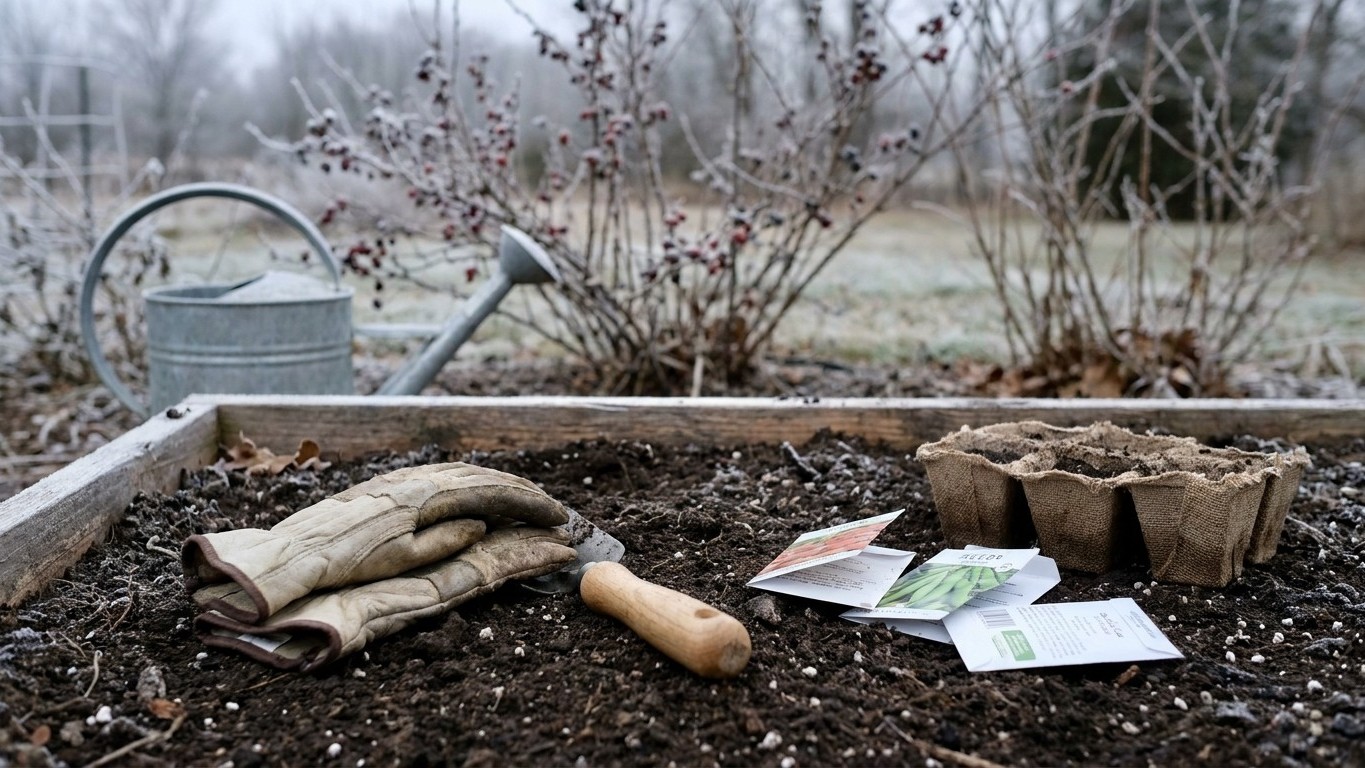

South Dakota gardens are locked down in February. With last spring frost dates running April 29 to May 9 at the reference station, nothing goes into open ground anywhere in the state this month, and pretending otherwise wastes seed and money. What February actually offers is prep work: bare-root and dormant plantings under cover, forcing tricks indoors, and a stack of jobs that decide how the rest of the season goes.
What goes in the ground in February

The honest answer is nothing goes into open, unprotected soil in South Dakota this month. Frozen or half-frozen ground and a last frost window that doesn’t open until late April at the earliest (April 29 to May 9 at the reference station, per NOAA’s 1991-2020 Climate Normals for station USW00014944) rule out direct-sowing and transplanting outdoors, statewide. Soil temperature, not the calendar, is what matters here, and February soil across South Dakota sits well below the range any seed needs to germinate.
That doesn’t mean the garden is idle. Garlic and shallots planted the previous fall are sitting dormant under mulch, and where a thaw has left a patch of workable ground, it’s still possible to tuck in a few more cloves if you missed the fall window, though germination will lag behind the fall-planted crop. Bare-root fruit trees, cane berries, and asparagus crowns, if they arrive from mail-order nurseries this early, can go into cold frames or unheated garages to wait out the last weeks of dormancy rather than sitting in open ground.
Cold frames and low tunnels are the real workaround this month. A cold frame set over a bed of hardy greens, spinach, or overwintered kale can buy several extra degrees, sometimes enough to keep the plants alive through the coldest stretches without new growth starting until the frame warms in March. Forcing is the other trick worth using now: dig a clump of rhubarb or a chicory root, bring it into a dark, cool basement, and within a few weeks you’ll have tender forced stalks or blanched chicons, a genuine harvest from a month that gives nothing outdoors.
What to start under cover
Seed starting indoors runs backward from the frost window, not forward from today’s date. With the last spring frost falling April 29 to May 9 at the reference station, count back roughly 8 to 10 weeks for onions and leeks, and 6 to 8 weeks for the slowest peppers, and February lands right in that window for gardeners starting their earliest crops.
Onions and leeks from seed are the clearest February candidates statewide, since they need the longest head start of anything in a typical vegetable garden and tolerate the leggy stretch better than most seedlings if light is limited. Early cabbage, broccoli, and other brassicas started now under grow lights will be ready to harden off as the frost risk fades in April. Peppers, especially slower hot varieties, can go in toward the end of the month if you’re working from an early-frost estimate.
The arithmetic cuts both ways. Start too early and you’re fighting rootbound, leggy seedlings stretching for light on a windowsill for ten extra weeks before it’s safe outside, a plant that stalls out rather than transplants well. Start too late and slow growers like onions or celery never bulk up before the short South Dakota season runs out. Tomatoes are the classic February mistake, since 6 to 8 weeks before frost points to mid-to-late March in most of the state, not February, and a tomato started now will be an overgrown, stressed plant by transplant time.
What is ready to pick
Outdoors, February gives almost nothing fresh in South Dakota. Anything left in the ground from fall, kale, leeks under a heavy mulch, has to be dug carefully where the soil isn’t frozen solid, and only if it was protected well enough to survive the coldest weeks. Most gardeners will find these are simply gone by now.
Indoors is where the harvest actually happens this month. Sprouts and microgreens started on a countertop are ready in one to two weeks and give a genuine, fast return when nothing else is producing. Any greens tucked into a cold frame in fall may still be alive under the glass, worth checking on a mild day, though growth will be minimal until more light returns.
The bigger job this month is triage on what’s already in storage. Squash, potatoes, and onions put up in fall need a hands-on check now: squash with a soft spot near the stem or a sweet smell is starting to break down and should be used first, potatoes that have gone soft or sprouted heavily belong in the compost rather than the pantry, and any onion that’s gone slimy at the neck will spread rot to its neighbors if left in the bag. A five-minute check of the root cellar or pantry shelf now saves a whole bin of vegetables later.
The jobs that matter this month

February is a planning and maintenance month in South Dakota, and the jobs done now set up everything that follows. Dormant pruning tops the list: fruit trees and berry canes are still fully dormant, with no sap flow to worry about, making this close to the ideal window to cut out dead, crossing, or diseased wood before growth resumes. Wait past this stretch into active bud break and pruning stresses the plant and invites disease into fresh wounds.
Seed ordering has a real deadline attached to it too. Popular varieties, especially the short-season vegetables South Dakota gardeners depend on, sell out from mail-order suppliers well before planting season, and ordering now means having seed in hand for the backward-counted start dates above rather than scrambling in March with a shrinking list of substitutes.
A short list of other jobs earns its place on the calendar this month:
- Test soil pH and nutrient levels while there’s time to amend before spring planting
- Turn and check compost piles, since even cold piles benefit from an occasional mix
- Clean and sharpen pruners, loppers, and shovels before the spring rush
- Repair raised beds, cold frames, and fencing while the garden is empty and accessible
- Sketch next season’s crop rotation so beds don’t repeat the same family two years running
None of this is filler. Skip the pruning window and you’re cutting into active growth later, with worse results. Skip the seed order and you’re planting whatever’s left on the shelf. Skip the soil test and you’re guessing at amendments all season.
What not to do in February
The most common February mistake in South Dakota is reading a warm afternoon as a planting signal. Air temperature in the 50s doesn’t mean the soil has warmed to match, and seeds sown into cold, wet ground either rot before germinating or sit dormant for weeks, losing any head start they were meant to gain.
Uncovering cold frames or removing winter mulch after a mild stretch is the second trap. A few warm days in February are common and don’t mean winter is over statewide, and plants exposed too early can be hit hard when temperatures drop back, which happens routinely before the real frost window closes in late April or early May. Leave protective mulch and frame covers in place until there’s a consistent pattern of milder weather, not just a single warm week.
Fertilizing at the wrong moment is the third mistake. Feeding nitrogen to dormant fruit trees or perennials this early does nothing for a plant that isn’t actively growing, and it can push tender new growth right before a hard freeze if applied too close to a warm spell. Save nitrogen feeding for when growth visibly resumes, and use February instead for the soil testing that tells you what’s actually needed come spring.
Starting warm-season transplants like tomatoes and cucumbers this early is the fourth trap, discussed above but worth repeating: counting backward from the April 29 to May 9 frost window puts these crops in March, not February, and starting now just produces stressed, overgrown seedlings.
Checking this against your own county
A statewide frost window is a starting point, not a fixed instruction. South Dakota’s elevation changes, the moderating effect of the Missouri River corridor, and the real gap between the Black Hills and the eastern plains all shift frost dates by weeks in either direction from the reference station figures cited here. Hardiness zones across the state range from 3b to 5b under the USDA Plant Hardiness Zone Map, and a garden at the cold end of that range needs a later start than one at the warm end.
Before locking in dates, check your county against the South Dakota State University Extension service, which tracks local conditions and planting guidance specific to your region rather than one airport station.
Common questions
Can I plant anything outdoors in South Dakota in February?
No. Statewide frozen ground and a last frost window of April 29 to May 9 at the reference station rule out direct-sowing or transplanting into open soil anywhere in South Dakota this month.
What’s the earliest I can start seeds indoors for South Dakota’s growing season?
Onions and leeks, which need 8 to 10 weeks before the last frost, are the earliest candidates and align well with a February start. Faster crops like tomatoes should wait until closer to March.
Is it too early to prune fruit trees in February in South Dakota?
No, this is close to ideal timing. Trees and canes are still fully dormant, with no sap flow, which minimizes stress and disease risk compared to pruning after growth resumes.
How do I know if my stored squash or potatoes are going bad?
Check for soft spots, a sweet or off smell near the stem end on squash, and sprouting or sliminess on potatoes and onions. Remove and use or discard affected produce promptly to protect the rest of the batch.
Gardeners who plant by the Moon can check the February 2027 moon planting calendar, a tradition rather than a proven method.