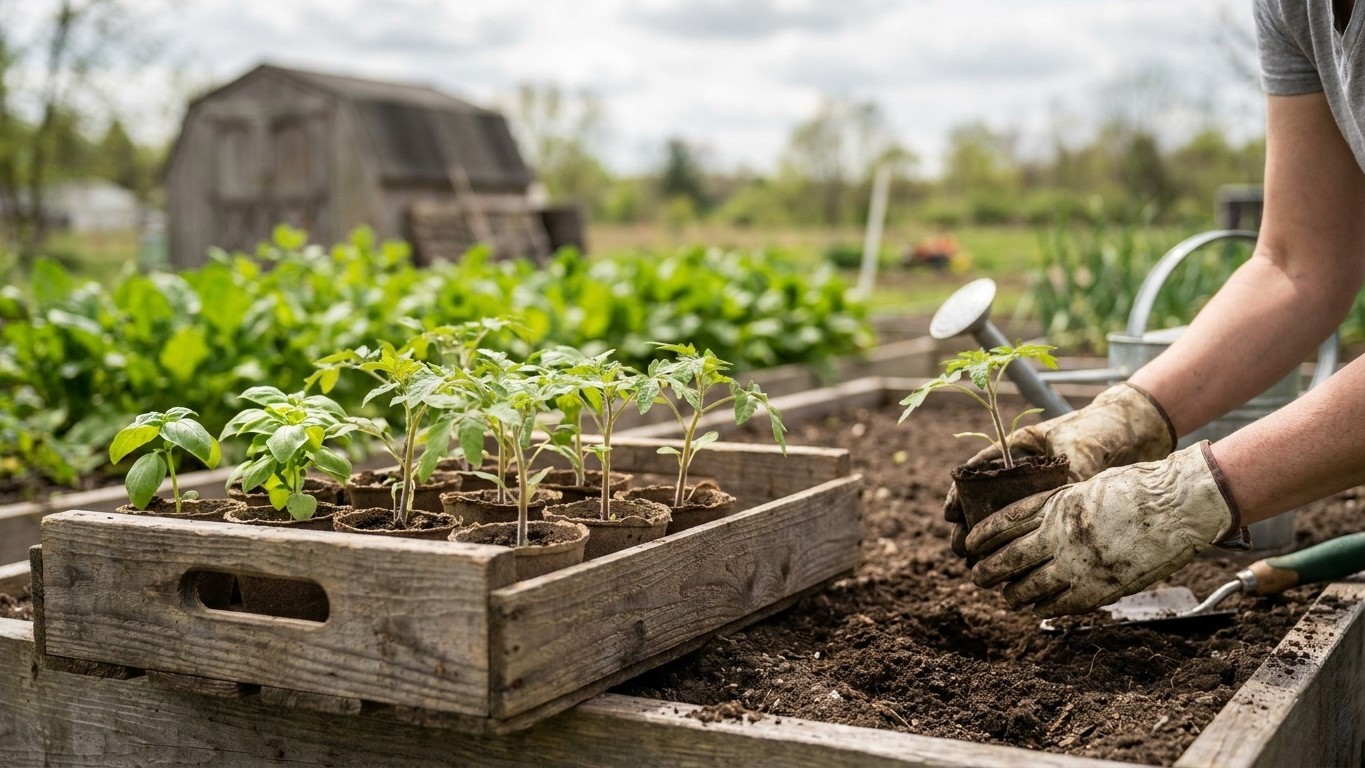

In most of South Dakota, May is the month the garden finally opens up. The last spring frost window runs from April 29 to May 9, so early May still carries real risk while the back half of the month is usually clear for tender crops. Hardy vegetables and cold-tolerant transplants go in right away; tomatoes, peppers, beans and squash wait for the calendar to clear that window in your own yard.
What goes in the ground in May

The frost window matters more than the date on the wall. NOAA’s 1991-2020 climate normals put the last 32°F freeze for the reference station at April 29 to May 9, which means anything planted in the first week of the month is still gambling against a hard freeze. Soil temperature, not air temperature, decides when seeds actually germinate rather than rot in cold, wet ground.
Early May belongs to the crops that shrug off a light frost. Peas can go into the ground as soon as soil is workable, and they actually prefer the cool start. Spinach, lettuce, radishes, carrots and beets tolerate direct sowing well before the frost window closes. Onion sets and seed potatoes go in during this stretch too, since both handle a late cold snap without much damage. Hardened-off transplants of broccoli, cabbage and kale can go out under a light frost blanket if a cold night is forecast.
Warm-season crops are the gamble. Tomatoes, peppers, squash, cucumbers, melons, beans and sweet corn should stay indoors or in the greenhouse until the frost window has clearly passed in your own location, not just on the state average. Soil temperature for these needs to sit consistently above 60°F at a few inches deep; a warm afternoon after a cold week doesn’t mean the soil has caught up. Gardeners in the eastern part of the state, where frost tends to break earlier, often push these out toward the third or fourth week of May, while western and higher-elevation gardens frequently wait into June.
Garlic, planted the previous fall, is already up and growing by May and needs nothing more than weeding. Shallots can still go in during the first half of the month if the ground was too wet earlier in spring. Asparagus crowns and strawberry plants, both perennial, are also safe May plantings since they’re dormant or just breaking dormancy and can handle a cold snap far better than annual seedlings.
What to start under cover
Work backward from the frost window instead of a fixed date. Tomatoes and peppers need six to eight weeks indoors before they go outside, which means the ideal start window for those was already in March for most South Dakota gardens; by May, starting them from seed indoors leaves very little runway before the ground is ready. Fast-growing warm-season crops are a better fit for May starts under cover.
Cucumbers, summer squash, zucchini and melons only need three to four weeks indoors before transplanting, so starting them under cover in early-to-mid May puts transplant-ready seedlings right at the point when soil has warmed past that mid-June threshold in cooler parts of the state. Sweet corn and beans generally do better direct-sown once soil warms rather than started indoors, since both resent root disturbance.
The two failure modes show up every season. Start too early and the seedlings outgrow their trays before the ground is warm enough, turning into leggy, rootbound plants that sulk for weeks after transplant. Start too late and the plant never gets enough of the growing season to produce before the first fall frost arrives, which lands between September 24 and October 4 at the reference station, itself often earlier in outlying areas. A cold frame or unheated hoop house buys a couple of extra weeks on both ends and is worth setting up if May frosts are still a threat where you garden.
What is ready to pick
May harvests in South Dakota are modest but real. Asparagus is the standout crop of the month, with established beds producing spears steadily through May once soil temperatures climb into the 50s. Rhubarb stalks are also ready for cutting, usually reaching harvestable size by mid-month; pull rather than cut the stalks to avoid leaving a stub that can rot.
Overwintered greens, if a cold frame or row cover protected them through winter, are often the first fresh salad of the season: spinach and kale that survived under cover resume growth as soon as light and temperature increase, and can be harvested leaf by leaf well before anything newly planted catches up. Chives and other perennial herbs push up early too and can be cut as soon as a few inches of growth appear.
Anything sown in cold frames in April, like radishes and quick lettuce varieties, may be ready by late May. Radishes are the fastest indicator crop in the garden; if the shoulders push up out of the soil and the root feels firm when pressed, they’re ready.
Indoors, this is also a good month to check stored crops from the previous season. Potatoes and onions held over winter should be inspected for sprouting or soft spots, and any squash still in storage should be checked for the skin going soft or the stem end starting to shrivel, both signs it needs to be used before it turns.
The jobs that matter this month

May rewards timing more than almost any other month in the South Dakota garden. Soil preparation tops the list: working clay-heavy soil while it’s still wet compacts it for the rest of the season, so wait until a handful of soil crumbles rather than balls up before tilling or turning beds. Once beds are prepped, mulching around cool-season transplants helps hold moisture as afternoons warm up, but hold off mulching warm-season beds until the soil itself has warmed, since mulch too early just insulates the cold in.
Staking and trellising need to happen before plants sprawl, not after. Peas planted early in the month will need support in place within a couple of weeks, and tomato cages or stakes should go in at transplant time rather than after the plant has flopped over and tangled its stems.
Watering rhythm shifts in May as days lengthen. Deep, infrequent watering trains roots downward, which matters more once June heat arrives; shallow daily watering now sets plants up to struggle later. Succession sowing of quick crops like radishes, lettuce and spinach every couple of weeks keeps a steady harvest coming rather than one glut followed by a gap.
Pest scouting starts in earnest this month. Flea beetles show up on young brassica and eggplant leaves as soon as temperatures rise, leaving small shot-hole marks, and cutworms can sever transplant stems at soil level overnight. A cardboard collar around the stem of a new transplant blocks cutworms cheaply and takes seconds to install. Dividing overcrowded perennials, cleaning out any winter debris in beds, and giving asparagus and rhubarb beds a light feeding as they resume growth round out the month’s essential work.
What not to do in May
The most common mistake is planting warm-season crops into cold soil because the air finally felt warm. A run of 70°F afternoons doesn’t mean the soil six inches down has caught up; tomatoes and peppers set into soil still in the 50s often just sit and sulk, or develop weak root systems that show up as poor yields in July. Check soil temperature with a simple soil thermometer rather than trusting the thermostat on the porch.
Uncovering plants too early after a mild stretch is the second trap. A few warm days in early May can tempt gardeners to pull row covers or cold frame lids off permanently, right before a cold snap moves through and undoes weeks of protected growth. Keep covers within reach through the whole frost window rather than storing them away at the first sign of warmth.
Nitrogen timing trips people up too. Heavy nitrogen feeding early on fruiting crops like tomatoes and squash pushes lush green growth at the expense of flowers and fruit later in the season. Save the nitrogen boost for leafy greens and save phosphorus-heavier feeding for anything grown for fruit or root. Skipping the hardening-off period for transplants raised indoors is the last classic error: seedlings moved straight from a warm windowsill to full outdoor sun and wind often scorch or snap within a day, when a week of gradual outdoor exposure would have prevented it entirely.
Checking this against your own county
A state-wide frost window is a starting point, not an instruction for your yard. Elevation changes in the Black Hills, proximity to the Missouri River, and the general east-west split across South Dakota all shift the last frost date by a week or two in either direction, and low-lying spots that collect cold air can lag even further behind the reference station. Before committing tender transplants to the ground, check current conditions and local guidance through South Dakota State University Extension, which tracks regional planting windows more closely than any single statewide figure can.
Common questions
Is it safe to plant tomatoes in South Dakota in May?
Only once the frost window has passed in your specific area and soil temperature has warmed consistently. The statewide reference window runs April 29 to May 9, but many gardens, especially in cooler or low-lying spots, don’t clear frost risk until later in the month.
What vegetables can go directly in the ground earliest in May?
Peas, spinach, lettuce, radishes, carrots, beets, onion sets and seed potatoes all tolerate the cooler soil and occasional light frost typical of early May.
Why isn’t much ready to harvest yet in May?
Most crops planted in spring need several more weeks of growth. Asparagus and rhubarb are the exceptions, both perennial crops that resume production as soon as the ground warms, along with anything that overwintered under cover.
Does South Dakota’s hardiness zone affect what I plant in May?
The USDA Plant Hardiness Zone Map places the state across zones 3b to 5b, based on average extreme minimum winter temperature. That range matters more for perennial and woody plant selection than for annual vegetable timing, which depends more directly on the frost window and soil temperature.
Gardeners who plant by the Moon can check the May 2027 moon planting calendar, a tradition rather than a proven method.