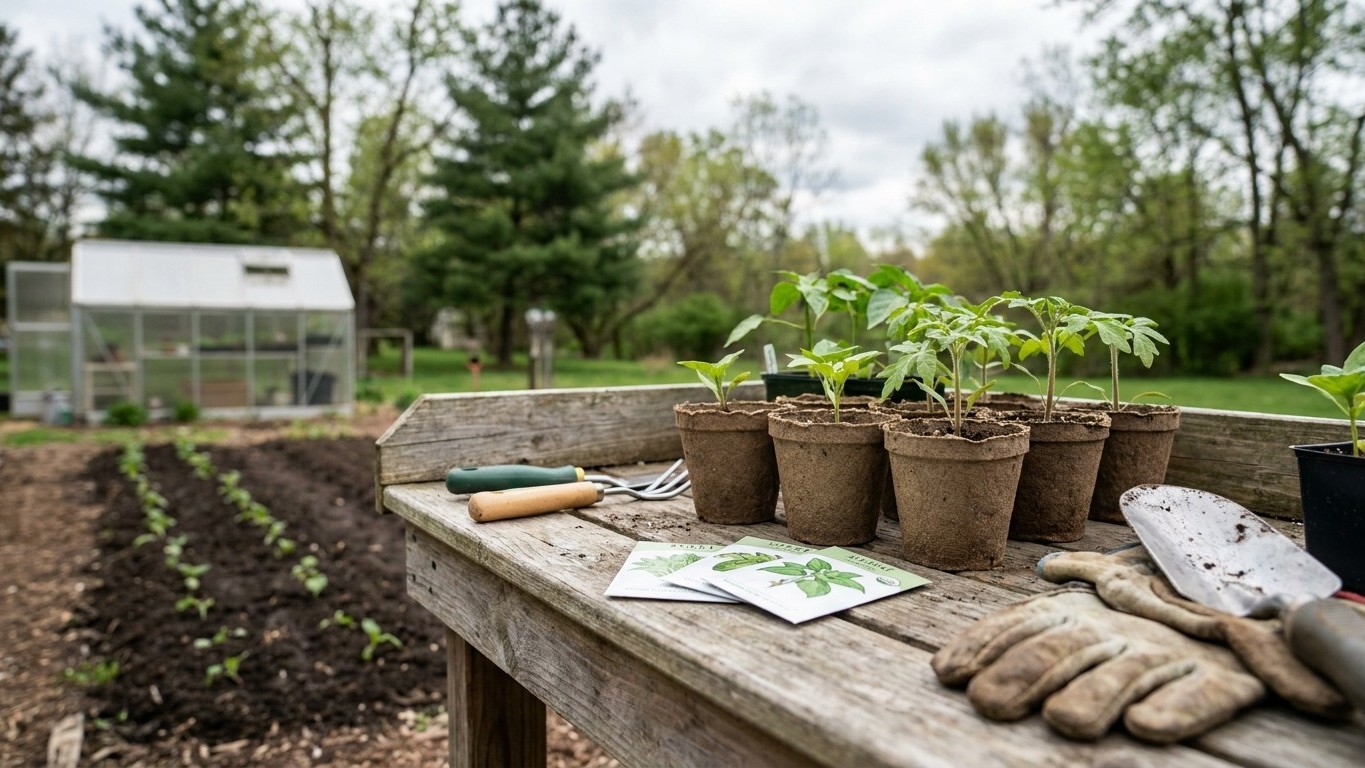

April splits Tennessee gardens into two camps: cold-hardy crops that can go into the ground the day the soil is workable, and warm-season crops that wait for the frost window to close. Onions, potatoes, peas, and leafy greens go in early. Tomatoes, peppers, beans, and squash wait until the second half of the month in most counties, later in the mountains. The dividing line isn’t the calendar page, it’s soil temperature and a frost date range that NOAA has actually measured.
What goes in the ground in April

The number that matters here is the last spring frost window: March 31 to April 12, based on NOAA’s 1991-2020 Climate Normals for station USW00013897, which sits in the 30-70% probability band for a 32°F freeze. That’s not a single date to circle on a calendar, it’s a stretch of nearly two weeks where a freeze is still plausible. East Tennessee and the Cumberland Plateau run cooler and later than that station’s reading, so treat the window as a starting point, not gospel for the whole state.
Statewide hardiness runs from zone 5b up to 8a on the USDA Plant Hardiness Zone Map, which is built on one variable, the average annual extreme minimum temperature. That range alone tells you the mountains and the western lowlands are not the same garden. Soil temperature is the better guide day to day: cold-hardy crops germinate in soil in the low 40s, while tender crops need soil consistently above 60°F to avoid rot and stalled growth.
Safe now
- Onion and shallot sets, and seed potatoes once the ground is workable
- Peas, both shelling and snap, direct-sown as soon as soil can be worked
- Lettuce, spinach, kale, collards, and other greens, direct-sown or transplanted
- Carrots, beets, radishes, and turnips, direct-sown
- Asparagus crowns and rhubarb divisions, bare-root
The gamble
Tomatoes, peppers, eggplant, beans, corn, and squash are the crops that get set out too early nearly every spring. Direct-sowing beans or corn into soil still in the 40s means slow, patchy germination at best and rot at worst. Transplanting tomatoes before the frost window closes risks losing the whole tray to one cold night. Wait until soil temperature holds above 60°F and the frost window has passed for your county before committing tender transplants to open ground, and keep row cover on hand as insurance through the first week or two after.
What to start under cover
Work backward from the frost window instead of forward from a fixed date. Tomatoes and peppers need six to eight weeks indoors before they’re ready to go outside, so by April those should already be growing under lights if the goal is transplanting once frost risk clears in mid-to-late April. What’s still worth starting under cover this month is the next wave: cucumbers, summer squash, melons, and winter squash, which only need three to four weeks indoors before transplant and can be timed to go out right after the frost window closes.
Cool-season flowers and a second round of brassicas for a fall crop can also start under cover now, timed for transplant once the current round of spring greens finishes bolting in the heat. Direct-seeding some of these outdoors later in the month, once soil has warmed, works just as well and skips the transplant shock.
The two ways this goes wrong are predictable. Start too early and tomatoes or peppers sit rootbound in small cells for weeks, turning leggy and stressed before they ever see the garden. Start too late, especially for anything with a long days-to-maturity number like eggplant or melons, and there isn’t enough season left before fall frost, October 28 to November 8 by the same NOAA data, to bring a full harvest home. Match the seed packet’s days-to-transplant number to the actual weeks left before your local frost window closes, not to how warm the afternoon feels.
What is ready to pick
Overwintered kale, collards, and leeks are usually the first real harvest of the season, sweeter after cold exposure and ready to cut as soon as new growth resumes. Asparagus beds established in prior seasons send up their first spears this month, and once spears start, cutting every day or two keeps the bed producing instead of going to seed. Rhubarb stalks thick enough to pull usually follow close behind.
Early lettuce and spinach sown under cover in late winter should be ready for thinning and cutting by now, and radishes sown as soon as soil opened up are often the fastest crop in the garden, ready in three to four weeks. Spring onions from fall-planted sets can be pulled young for scallions well before the bulbs finish sizing up.
Indoors, this is also the tail end of the storage season. Check stored onions, potatoes, and winter squash for the ones starting to soften, sprout, or smell off, and use those first before they take down the rest of the bin. A potato that’s sprouting eyes is still fine to cook; one that’s gone soft and wet at one end is not.
The jobs that matter this month

Soil preparation is the job that pays off longest and shows up nowhere on a harvest list. Working compost into beds before the tender crops go in, once the soil is dry enough not to compact under a boot, sets up drainage and fertility for the whole season ahead. Skipping it doesn’t fail immediately, it fails in July when roots hit a hardpan.
Staking and support structures for peas, and cages for tomatoes going in later, are far easier to install before the plants sprawl than after. Trying to cage a tomato that’s already flopped over its neighbors usually breaks stems in the process.
This is also the last realistic window for dormant pruning of fruit trees and cane berries before buds break open. Once leaves unfurl, pruning cuts into the plant’s stored energy instead of shaping it. Alongside that, finish ordering seed for anything not yet in hand, since the popular varieties of heirloom tomatoes and specialty peppers tend to sell out by early spring. Turning compost, sharpening and cleaning tools before the season’s heavy use starts, and scouting for the first aphids and flea beetles on brassicas round out the list. Catching a flea beetle problem on young kale now is a five-minute fix; catching it after the leaves are lace is a lost crop.
Start succession sowing of radishes, lettuce, and spinach every two to three weeks now to avoid a glut followed by a gap, and check soil moisture rather than watering on a fixed schedule. Newly transplanted greens need consistent moisture; established peas and alliums tolerate more of a dry spell between waterings.
What not to do in April
The most common mistake is planting warm-season crops on the strength of one warm afternoon. Air temperature swings fast in spring; soil temperature doesn’t, and a 75°F day doesn’t mean the ground six inches down has caught up. Check soil temperature with a simple soil thermometer before setting out tomatoes or direct-sowing beans, rather than trusting how the air feels on your skin.
A close second is uncovering row covers, cold frames, or newly hardened-off transplants too early after a mild stretch. The frost window running March 31 to April 12 for the Nashville area, and later than that farther east, means a string of 70-degree days can still be followed by a freeze. Leave protection in place, or ready to redeploy overnight, until that window has genuinely closed for your county.
Nitrogen timing trips people up too. Heavy nitrogen feeding on root crops like carrots and beets early in their growth pushes leafy top growth at the expense of the root, and feeding fruiting crops like tomatoes too much nitrogen once they flower tends to produce lush plants with little fruit. Feed root crops lightly and fruiting crops after fruit set starts, not before.
Finally, resist heavy pruning on spring-flowering shrubs like forsythia or azalea this month if they haven’t finished blooming. Cutting now removes the flower buds that already set the season before, trading this year’s bloom for a haircut that could have waited three weeks.
Checking this against your own county
A statewide frost window and a single hardiness range are a starting point, not a set of instructions for your yard. Elevation alone can shift a frost date by a week or more, and East Tennessee and the Cumberland Plateau consistently run cooler and later in spring than the middle and western parts of the state. A garden at 2,500 feet in the mountains is working with a different April than one in the Mississippi River lowlands.
Before committing tender transplants to the ground, check current conditions and local planting guidance through the University of Tennessee Institute of Agriculture Extension, which tracks county-level frost data and crop timing than any statewide range can.
Common questions
Is it safe to plant tomatoes in Tennessee in April?
Only once the local frost window has closed and soil temperature holds above 60°F. In much of the state that means waiting until the last third of the month; in the mountains and Cumberland Plateau, wait longer and keep row cover ready.
What vegetables can go directly in the ground in April in Tennessee?
Peas, onion and shallot sets, seed potatoes, carrots, beets, radishes, turnips, and leafy greens like lettuce, spinach, kale, and collards all tolerate direct sowing or transplanting this month, well ahead of the tender warm-season crops.
When is the last frost typically in Tennessee?
NOAA’s 1991-2020 Climate Normals put the last spring frost window at March 31 to April 12 for station USW00013897, representing the range where a 32°F freeze has a 30 to 70 percent probability. East Tennessee and the Cumberland Plateau run later than this figure.
What USDA hardiness zone is Tennessee in?
The state spans zones 5b through 8a on the USDA Plant Hardiness Zone Map, a range built on average annual extreme minimum temperature. That spread means a plant rated hardy in the western lowlands may not survive winters in the higher elevations of East Tennessee.
Gardeners who plant by the Moon can check the April 2027 moon planting calendar, a tradition rather than a proven method.