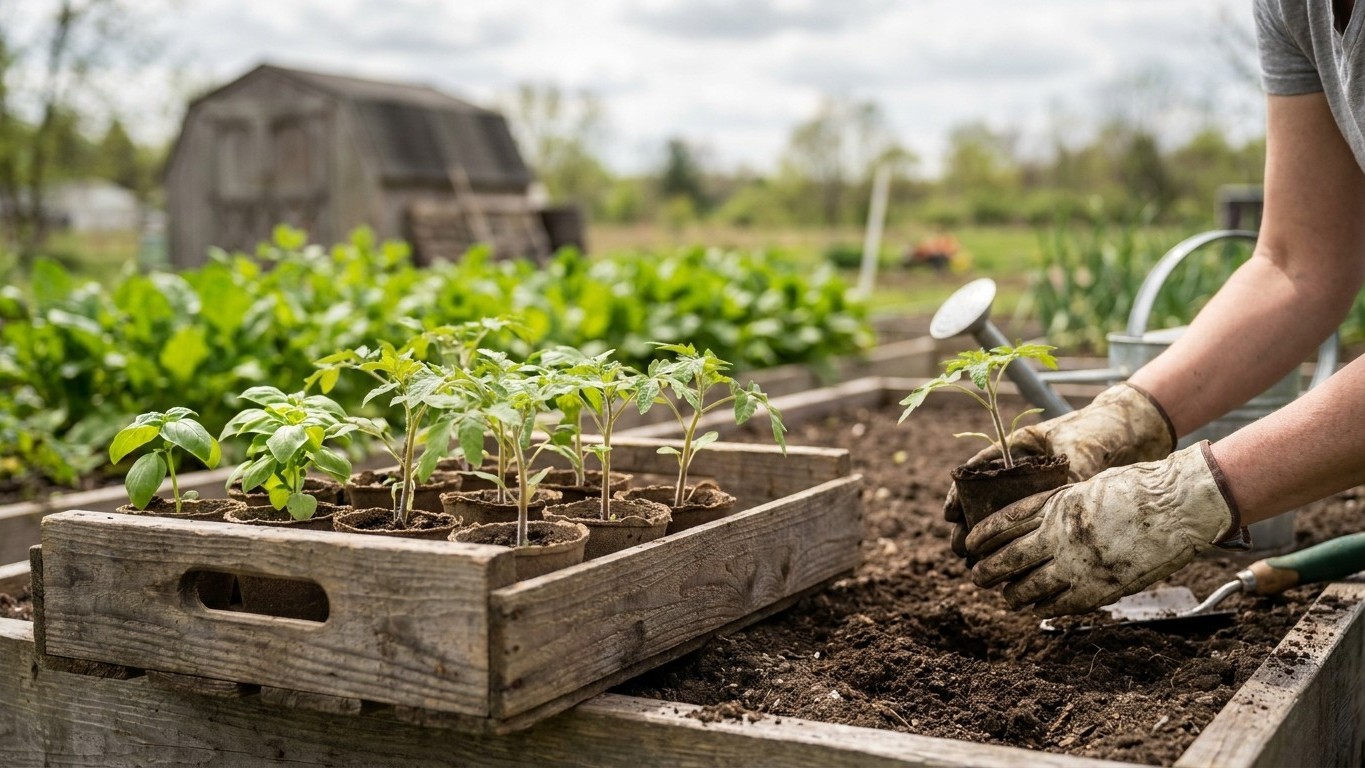

May is the month Tennessee gardens shift into full gear. The state’s last spring frost typically falls between March 31 and April 12 in the Nashville area, so by May the soil has had weeks to warm and the frost risk for most of the state has passed. That means tomatoes, peppers, beans, squash, and nearly every warm-season crop can go in the ground now, with one exception: gardeners on the Cumberland Plateau and in the higher elevations of East Tennessee should watch soil temperature before trusting the calendar.
What goes in the ground in May

Soil temperature, not air temperature, is what decides whether a seed germinates or rots. Warm-season crops like beans, corn, squash, cucumbers, and melons need soil in the mid-60s Fahrenheit or warmer to sprout reliably. In most of Tennessee, May soil hits that mark early in the month; on the Plateau and in higher East Tennessee valleys, it can lag a week or two behind. A simple check with a soil thermometer pushed four inches deep beats any guess based on how warm the afternoon feels.
By May, the region has moved well past its last frost window of March 31 to April 12, so the classic frost-tender transplants are no longer a gamble in most counties. That includes tomato, pepper, eggplant, and basil starts that were hardened off over the prior weeks. Sweet potato slips go in once nights stay reliably above 55 F, and okra, one of the most heat-loving vegetables grown anywhere in the country, does best sown directly once the soil has warmed through.
Direct-sown crops for May
- Snap beans, pole beans, and lima beans, sown directly once frost risk has cleared
- Sweet corn, in blocks rather than single rows for better pollination
- Summer squash, zucchini, and cucumbers, either direct-sown or set as young transplants
- Cantaloupe and watermelon, given full sun and room to sprawl
- A last round of beets, carrots, and bush beans for early summer harvest
Cool-season holdovers like lettuce and spinach can still go in early in the month in shadier spots, but they will bolt fast once daytime highs push into the 80s. Treat them as a bonus crop, not the main event this month.
What to start under cover
Starting seed under cover in May is less about spring crops, which are already in the ground, and more about getting a head start on fall. Work backward from the first fall frost window of October 28 to November 8. Slow-maturing cole crops like brussels sprouts and late cabbage often need 90 to 100 days from seed to harvest, plus another few weeks of hardening off before transplant. Counted backward from early November, that puts the ideal seed-starting window for the longest-season fall crops right around now, indoors or in a shaded cold frame where summer heat won’t cook young seedlings.
Broccoli and cauliflower destined for fall harvest can wait a few more weeks before their own indoor start, since they mature faster than brussels sprouts. Starting too early leads to the first failure mode gardeners run into this time of year: leggy, rootbound seedlings baking in trays through the hottest part of summer before the garden is even ready for them. Starting too late is the opposite problem, and just as common. Cole crops that go in the ground too late for their maturity window run straight into frost before they finish forming heads.
A shaded porch, a covered cold frame with the lid propped open for airflow, or a spot under row cover that blocks direct sun all work for this stretch. The goal isn’t protection from cold, it’s protection from heat and hungry pests while the seedlings size up for a midsummer move into the garden.
What is ready to pick
May harvests come almost entirely from what went into the ground back in late winter and early spring. Lettuce, spinach, and other leafy greens sown in February or March are hitting full size now, and the trick is cutting them before rising heat pushes them to bolt. Once a lettuce plant sends up a central seed stalk, the leaves turn bitter fast, so harvest on the early side rather than waiting for a “perfect” head.
Radishes sown in March are usually ready within a month, and the tell is simple: the shoulder of the root pushing up at the soil surface. Peas planted in early spring fill their pods through May, and pods should feel plump and snap cleanly, not papery or hollow. Green onions and scallions can be pulled as needed, and asparagus beds established in prior seasons keep sending up spears through the month, ready whenever they reach about the thickness of a pencil.
Strawberries are the headline crop for many Tennessee gardeners in May. Berries ripen unevenly across a bed, so checking every few days and picking only the fully red fruit keeps the rest from being damaged and gives later berries room to size up. Kale and collards that overwintered or were sown early continue producing through the month too, though leaves toughen as temperatures climb, so younger leaves near the center of the plant are the better pick.
The jobs that matter this month

Mulching earns its keep in May more than almost any other month. As soil temperatures rise and rainfall gets less predictable heading into summer, two to three inches of straw, shredded leaves, or wood chips around vegetables and in flower beds slows moisture loss and keeps weed pressure down before it becomes a full-time job. Skipping it now means fighting both drought stress and weeds through the hottest stretch of the year.
Staking and caging need to happen before plants sprawl, not after. Tomatoes, peas, and pole beans all grow fast once the weather warms, and trying to wrestle a cage around a plant that has already flopped over usually breaks stems and stunts growth. Set supports at planting time or within the first couple of weeks.
Watering rhythm shifts this month too. Deep, less frequent watering builds stronger root systems than a light daily sprinkle, which tends to keep roots shallow and plants more vulnerable when a dry spell hits. Aim for roughly an inch of water a week, adjusted for rainfall, and water at the soil line rather than overhead to cut down on fungal disease.
Succession sowing keeps the harvest coming instead of arriving all at once. Staggering bean and corn plantings by two to three weeks stretches the picking window well into summer. Pest scouting matters just as much: squash bugs, flea beetles, and Colorado potato beetles are all active by May, and catching the first eggs or larvae on the underside of leaves is far easier than dealing with an established infestation a few weeks later.
What not to do in May
The most common mistake this month is trusting the air rather than the soil. A run of warm, sunny days can push gardeners to set out tomato and pepper transplants a week or two before the soil has actually warmed enough to support root growth. The plants often survive, but they sit stalled and stressed for weeks rather than growing, and stressed transplants are more prone to disease later in the season.
Pulling row cover or mulch off too early after a mild stretch is another trap, especially in higher-elevation counties where a late cool night can still slip in even after the statewide frost window has closed. It costs nothing to leave protection on a few extra days; it costs a whole planting to lose tender seedlings to one unlucky night.
Heavy nitrogen fertilizer applied at the wrong point is a mistake that shows up later rather than immediately. Dumping high-nitrogen fertilizer on tomatoes and peppers once they start setting flowers pushes leafy green growth at the expense of fruit, leading to lush plants that produce disappointingly little. A balanced fertilizer, or one leaning toward phosphorus and potassium once flowering starts, serves fruiting crops far better than a nitrogen-heavy feed applied out of habit.
Overwatering young transplants is the last common misstep. Soil that stays soggy rather than moist encourages root rot and damping-off, particularly in the humid stretches Tennessee often sees in May. Let the top inch of soil dry between waterings rather than watering on a fixed schedule regardless of conditions.
Checking this against your own county
Everything above is a statewide starting point, not a guarantee for any single backyard. Tennessee’s hardiness zones run from 5b to 8a on the USDA Plant Hardiness Zone Map, and that range alone tells you how differently a garden in the Cumberland Plateau behaves compared to one near Nashville or in the far west of the state. Elevation shifts frost timing by weeks, not days, and local microclimates like valley bottoms or urban heat pockets move it further still.
For a planting calendar tuned to your specific county, the University of Tennessee Institute of Agriculture Extension is the right next stop, along with your local county extension office for soil test results and frost data specific to your area.
Common questions
Is it too late to plant tomatoes in Tennessee in May?
No. May is actually one of the best months statewide, since the last spring frost window (March 31 to April 12 in the Nashville area) has already passed and soil has had time to warm.
Can I still direct-sow lettuce in May?
Yes, but treat it as a short-term bonus crop. Rising heat pushes lettuce toward bolting quickly, so plant in a shadier spot and harvest early rather than waiting for full-size heads.
Why are my May transplants not growing even though it’s warm outside?
Air temperature and soil temperature are different things. If soil hasn’t warmed to the mid-60s Fahrenheit or warmer, roots stay stalled even when the air feels warm enough for shorts and t-shirts.
Do I need to worry about frost in May in East Tennessee?
The statewide frost window closes by mid-April, but higher elevations on the Cumberland Plateau and in East Tennessee run cooler and later than the rest of the state, so a cautious grower there might hold off on the most tender transplants a little longer than the Nashville area would suggest.
Gardeners who plant by the Moon can check the May 2027 moon planting calendar, a tradition rather than a proven method.