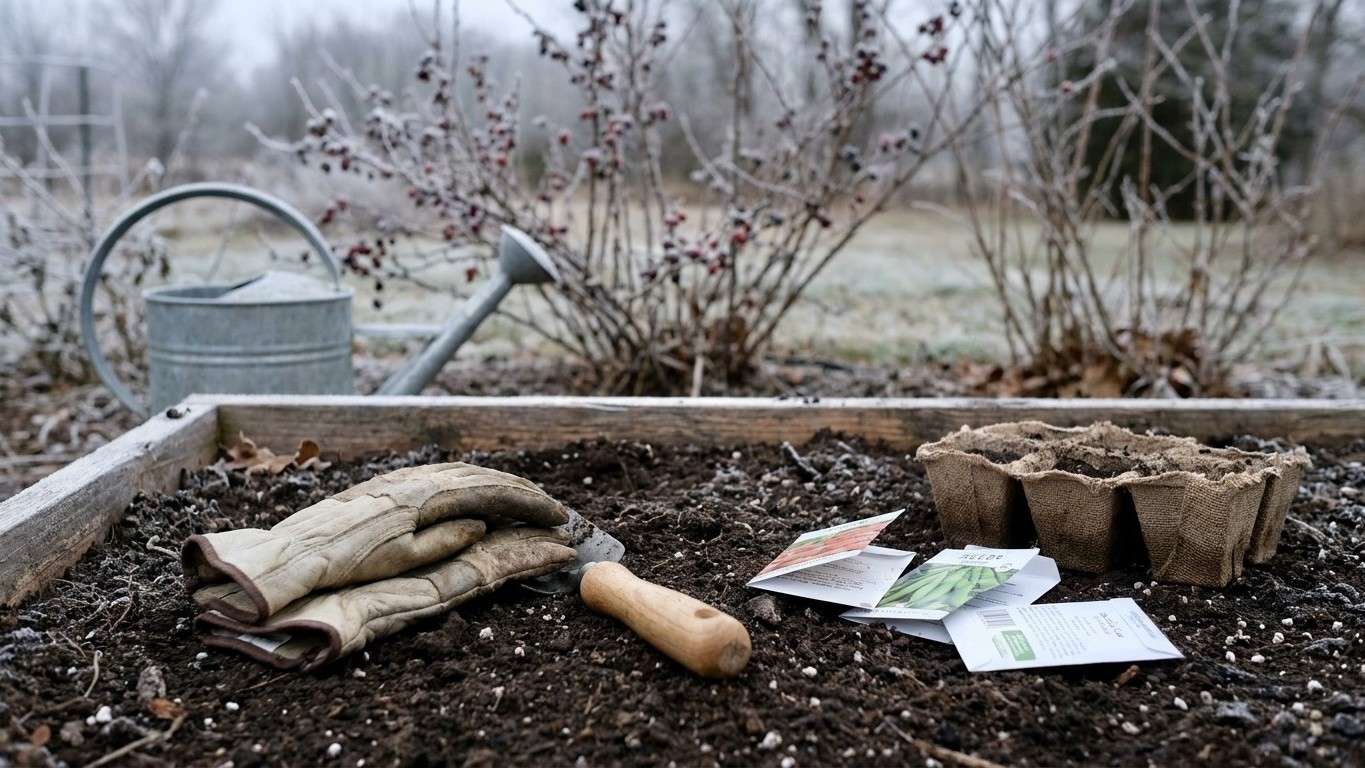

February sits well ahead of Tennessee’s last spring frost window (March 31 to April 12), so the open garden stays mostly shut for another several weeks. A handful of cold-hardy crops can still go into workable soil, cold frames stretch what’s possible, and the real payoff this month comes from dormant-season work: pruning, seed ordering, and getting beds ready before the frost window closes.
What goes in the ground in February

Soil temperature decides what survives outdoors this month, not the date on the calendar. With the last frost still four to ten weeks away depending on where in the state you garden, most warm-season crops have no business anywhere near open ground. But a short list of cold-hardy plants tolerates the freeze-thaw swing of a Tennessee February just fine, provided the soil isn’t waterlogged or frozen solid when you dig.
Where the ground is still workable
In the western third of the state, where USDA hardiness zones run closer to 7b-8a, gardeners with well-drained soil can direct-sow spinach, mustard greens, turnips, and English peas during a dry stretch. Multiplier onions and shallots can also still go in if they missed their fall window and the ground isn’t frozen. These crops shrug off light frost and even a hard freeze once they’re established, which is why they’re the exception to the wait-and-see rule that governs most of the month.
Kale and collard transplants that overwintered under row cover can be reset or thinned now too. None of this applies in the Cumberland Plateau or the higher valleys of East Tennessee, where soil often stays too cold and too wet to work until well into March.
What to avoid sowing now
Anything that needs warm soil to germinate, corn, beans, squash, tomatoes, peppers, is a losing bet in February no matter how mild a warm spell feels. Seeds will rot before they sprout, or sprout weak and stall. If you want a head start on those crops, that work belongs indoors, not in the ground (more on that below). Bare-root fruit trees, roses, and berry canes are the other safe February planting, since they’re dormant and don’t care about air temperature the way seedlings do. Cold frames and low tunnels extend the list slightly, letting you tuck in lettuce and radish a few weeks earlier than open soil would allow.
What to start under cover
Seed starting this month runs on subtraction, not addition. Take the last frost window, March 31 to April 12, and count backward by the number of weeks a given crop needs before it’s ready to transplant.
Counting backward from the frost window
Peppers and eggplant typically want eight to ten weeks indoors before they go outside, which puts a February start right where it needs to be for most of the state. Tomatoes need six to eight weeks, so an indoor start now still lines up comfortably with the frost window, especially in the cooler eastern counties where that window runs later. Cool-season transplants like broccoli, cabbage, and head lettuce need only four to six weeks under lights before they can handle the outdoors, since they tolerate a light frost once hardened off. That makes February the right moment to start them for a March or early April move outside.
The two ways to get it wrong
Start too early and you end up babysitting rootbound, leggy tomato seedlings for weeks past when they should have been transplanted, fighting them the whole way to a smaller harvest. Start too late and you run out of season entirely, especially with peppers and eggplant, which sulk if they’re set out small and cold-stressed. The fix in both directions is the same: count your own weeks from your own county’s frost range rather than trusting a fixed date that ignores where you actually garden.
What is ready to pick
Little comes out of an open Tennessee garden in February, and there’s no reason to pretend otherwise. But “little” isn’t “nothing,” and a well-planned fall garden is still feeding the table this month.
What’s still coming from the garden
Kale, collards, and leeks that were left in the ground under a layer of mulch or straw keep sweetening after frost and can be harvested as needed, even through a hard freeze, since the cold concentrates their sugars rather than ruining them. Cold-frame lettuce, spinach, and mache are usually pickable a few leaves at a time on any day the frame isn’t frozen shut. Indoors, sprouts and microgreens fill the gap fastest, ready in a week or two from a windowsill tray with no garden involved at all.
Checking stored crops
February is also the month stored squash, potatoes, and onions start to turn if they’re going to. Winter squash with a soft spot near the stem, potatoes that have gone soft or sprouted, and onions with a papery neck gone slimy should come out of storage and get used or composted before they take neighboring produce with them. A quick weekly check of the root cellar or pantry shelf now saves a much bigger loss later in the month.
The jobs that matter this month

The dormant months aren’t empty ones. February carries a full list of work that either pays off through the season or costs you the season if it slips past the window.
Pruning and cleanup
Dormant pruning of apple, pear, and peach trees, along with blackberry and raspberry canes, belongs in February while the plants are still fully asleep and the structure of the branches is easy to see without leaves in the way. Cuts made now heal cleanly before spring growth starts pulling sap through the wound. This is also the last reasonable stretch to clean and sharpen pruners, loppers, and shovels before the season’s real workload begins, and to check stored crops one more time for anything rotting quietly in the dark.
Planning and ordering
Seed catalogs move fast, and the varieties that sell out first tend to be the ones worth having, so ordering now beats discovering your favorite tomato is out of stock in April. This is also the natural moment to sketch next season’s crop rotation, since nothing is planted yet to get in the way of the plan. A soil test sent in now comes back with results in time to actually amend beds before planting starts. Turning the compost pile, even just once, keeps it breaking down through the cold rather than stalling into a frozen brick. Fences and raised-bed frames that took winter damage are also easiest to repair while the garden is empty and you’re not stepping over seedlings to get to them.
What not to do in February
The mistakes that show up every February in Tennessee gardens tend to come from the same source: a warm afternoon that convinces someone the season has turned when it hasn’t.
Cold soil, warm air
A 70-degree afternoon in February does not mean the soil four inches down has warmed up with it, and it does not mean the last frost window, still weeks away across most of the state, has closed. Direct-sowing tomatoes, peppers, beans, or squash because the air felt like spring is one of the most common ways gardeners lose a full packet of seed to a single cold night. Wait for the soil itself to warm, not the calendar or a mild stretch of weather.
Feeding and uncovering too soon
Pulling mulch or row cover off overwintered beds after a few warm days exposes tender growth right when a frost swing can still come through before March 31 at the earliest. Leave the covers on until you’re through the frost window, not just past a warm weekend. Nitrogen fertilizer applied to dormant fruit trees or perennial beds this month does little good and can push a false flush of tender growth right before a freeze damages it. Save the feeding for when growth is actually active.
Checking this against your own county
A statewide frost window is a starting point, not an instruction written for your yard specifically. Elevation, valley cold pockets, and the long east-to-west stretch of Tennessee move both the last spring frost and the first fall frost by weeks in either direction.
| Region | General tendency |
|---|---|
| West Tennessee | Warmer, closer to zone 8a, workable soil arrives earliest |
| Middle Tennessee (Nashville area) | Reference zone for the statewide frost dates cited here |
| East Tennessee and Cumberland Plateau | Cooler, later last frost, ground stays wet and cold longer |
For a planting calendar built around your specific county, and for current soil test guidance, the University of Tennessee Institute of Agriculture Extension is the source to check before finalizing what goes in the ground.
Common questions
Can I plant grass seed in Tennessee in February?
Cool-season grass seed generally needs soil temperatures the state hasn’t reached yet in February; most extension guidance points toward early spring or fall seeding windows instead.
Is it too early to start tomato seeds indoors in February?
Not for most of the state. Tomatoes need six to eight weeks indoors before transplanting, which lines up well with the March 31 to April 12 last-frost window when started in February.
What USDA hardiness zone is Tennessee in?
Tennessee spans USDA hardiness zones 5b through 8a, with the coolest zones in the higher elevations of East Tennessee and the warmest in the far west of the state.
Should I uncover my cold frame during a warm February stretch?
Venting on a warm, sunny day to prevent overheating is fine, but leave the frame itself in place until the last frost window has passed, since a cold night can still follow a warm one.
Gardeners who plant by the Moon can check the February 2027 moon planting calendar, a tradition rather than a proven method.