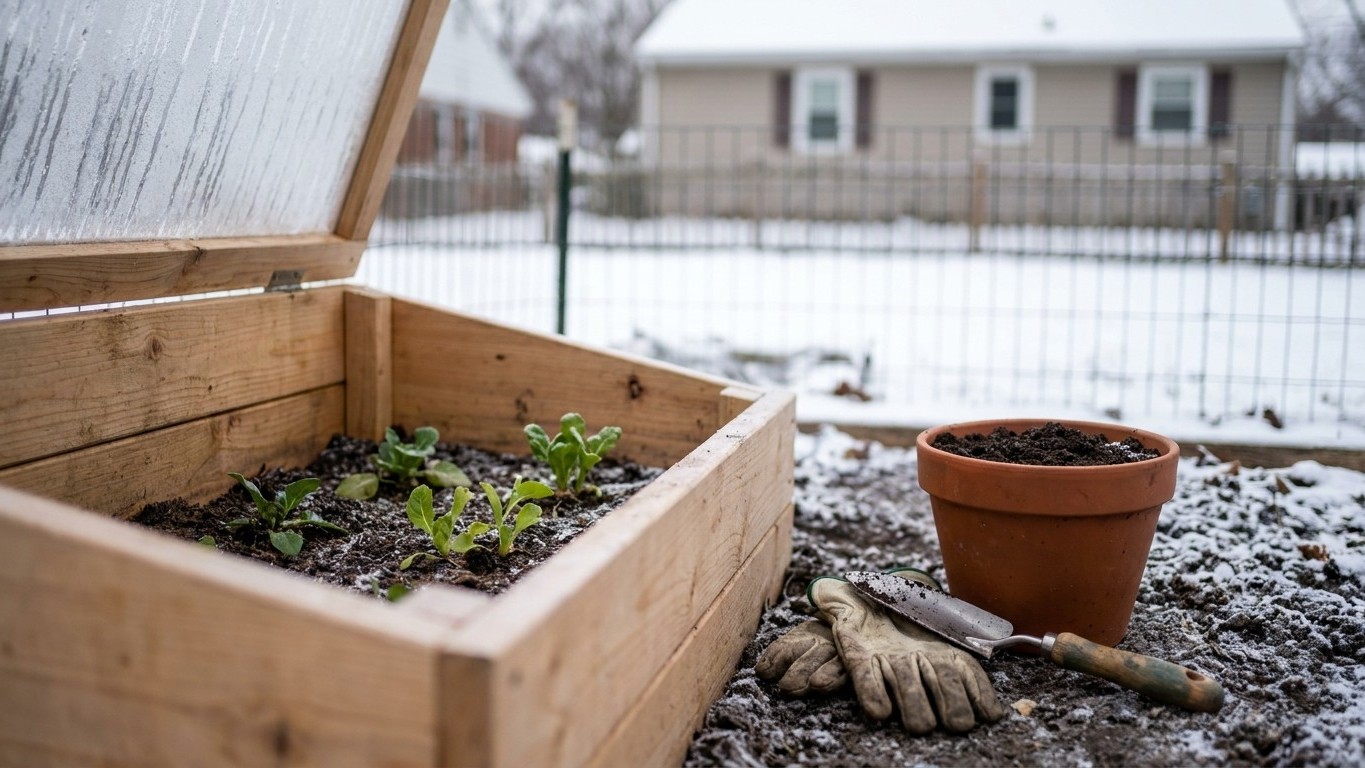

January puts almost nothing new into open Tennessee ground. The state’s last spring frost falls between March 31 and April 12, measured at the Nashville station, so soil stays cold and freeze risk stays real for weeks yet. What actually moves this month: bare-root fruit trees, garlic if the fall window got missed, cold-frame greens, and the indoor seed-starting that sets up spring’s first transplants. The real work happens with pruning shears and a soil test kit, not a trowel in open dirt.
What goes in the ground in January

The decision here isn’t the calendar. It’s soil temperature and how far off the last frost sits. Tennessee’s last spring frost runs March 31 to April 12 around Nashville, which puts January somewhere between eleven and fifteen weeks ahead of that window depending on where in the state you garden. East Tennessee and the Cumberland Plateau sit cooler and later than that Nashville figure, so anyone above about 2,000 feet should push their own timeline back further still. Across a hardiness range of 5b to 8a (USDA Plant Hardiness Zone Map), that gap between the coldest and warmest corners of the state matters more than most gardeners assume.
So the honest answer for most of Tennessee: nothing new goes into open ground this month. Soil is too cold to germinate seed reliably, and a hard freeze can still show up with almost no warning. That’s not the whole story, though.
Garlic and shallots still go in if the fall planting window got missed and the ground isn’t frozen solid or waterlogged. They root slowly through winter regardless of exactly when the cloves went in, so a late planting isn’t wasted, just delayed in its head size come summer. Bare-root fruit trees, brambles, and grapevines can be planted or heeled into a holding trench while dormant, provided the ground can be worked without turning to mud. Cold frames and low tunnels let a gardener push hardy greens (spinach, mache, claytonia) into a semi-protected bed weeks before open soil would allow it. Indoors, forcing rhubarb crowns or chicory roots in a dark, cool space produces tender stalks and chicons with none of the frost risk. None of this replaces a spring garden. It fills the gap until one is possible.
What to start under cover
Seed-starting math runs backward from the frost window, not forward from a date on the wall. Onions and leeks need 10 to 12 weeks under lights before they go outside, and since transplanting happens right around the last frost (March 31 to April 12 near Nashville), starting those seeds indoors now lines up correctly for most of the state. Cooler East Tennessee counties should count from their own later frost, which pushes the whole schedule back by a week or two.
Cabbage and broccoli follow a shorter clock, roughly 6 to 8 weeks from seed to transplant, and those transplants can go out under a cold frame or row cover a couple of weeks before the last frost since they tolerate a light freeze. Starting them indoors toward the end of this stretch, rather than at the start, keeps seedlings from turning leggy and rootbound before the ground is ready for them.
Warm-season crops are a different clock entirely. Peppers, eggplant, and tomatoes need 8 to 10 weeks indoors but can’t go outside until well after the last frost has passed and nights have warmed, so starting them now runs the seedlings out of pot space long before the garden can take them. That’s the first failure mode: starting too early and fighting stretched, weak stems for two extra months. The second failure mode sits at the other end, starting slow growers like onions too late and ending up with pencil-thin transplants that never catch up once they’re in the ground.
What is ready to pick
Little comes out of an open Tennessee garden in January, and that’s worth saying plainly rather than padding the list. What still feeds a household comes from three places: what survived the cold outside, what’s protected under cover, and what’s stored from fall.
Kale, collards, and leeks that were left in the ground often keep producing through winter, especially under a layer of mulch or a fallen snow cover that acts as insulation. Cold-hardy greens actually sweeten after a freeze as the plant converts starches to sugars, so a leaf that looked rough in December can taste better than it did in October. Cold frames extend this further, holding spinach, arugula, and lettuce in harvestable condition well past when open beds would have quit.
Indoors, sprouts and microgreens fill the gap with almost no equipment: a jar of mung beans or a shallow tray of pea shoots on a windowsill produces a harvest in under two weeks, no soil temperature or frost window involved at all.
Stored crops need a check-in this month. Squash, potatoes, and onions held in a root cellar or a cool pantry should get pulled out, inspected, and sorted. One soft potato or a squash with a sunken, discolored patch can spread rot to everything touching it, so pulling the bad ones now saves the rest of the bin.
The jobs that matter this month

January carries a full list of work even with the garden bed empty, and each item has a real deadline attached.
- Dormant pruning of apple, pear, and peach trees, along with blackberry and raspberry canes, is best done while the plant has no leaves to hide its structure and no sap actively flowing. Wait too long and swelling buds make every cut a lost fruit or flower.
- Ordering seed now beats waiting. Popular varieties, especially regionally adapted tomatoes and heirloom beans, sell out of the good seed houses by late winter most years.
- Soil testing takes weeks to return results through most university labs, and amendments like lime need months to shift pH before spring planting. A test ordered now is a test that actually informs this season’s beds.
- Turning compost keeps the pile active even in cold weather; a pile left untouched through winter can go anaerobic and slow to a crawl.
- Tool care, cleaning rust off blades and sharpening pruners and hoes, costs an afternoon now and saves torn stems and slow work once the season starts.
- Bed and fence repair is easier without plants in the way. Replacing a rotted raised-bed board or resetting a leaning fence post takes half the time in an empty garden.
None of this is filler work. Skip the pruning window and next year’s fruit crop shows it. Skip the seed order and the variety a gardener actually wanted is gone by March.
What not to do in January
The classic mistake is trusting a warm afternoon. A run of 60-degree days in the middle of winter feels like spring, but the soil underneath hasn’t caught up, and the frost window (March 31 to April 12 near Nashville) hasn’t moved. Direct-sowing warm-season seed or setting out tender transplants during one of these breaks almost always ends the same way, with a hard freeze a week later killing everything that went in.
Pulling mulch off garlic beds or cold frames during that same warm stretch is a related error. The mulch isn’t there to keep plants warm exactly; it’s there to keep soil temperature steady so roots don’t heave out of the ground during freeze-thaw cycles. Removing it early exposes the bed right before the next freeze arrives.
Fertilizing with nitrogen this month is close to wasted effort. Dormant plants aren’t taking up much of anything, so nitrogen either leaches through the soil with winter rain or, worse, pushes a flush of tender new growth on a shrub or tree right before the next hard freeze damages it. Hold nitrogen applications until active growth resumes.
Pruning spring-flowering shrubs like forsythia or azalea now is another common misstep. Those plants set their flower buds the previous summer, and a January pruning cut removes the very buds that would have opened. Save that pruning for right after they finish blooming.
Checking this against your own county
A state-wide month is a starting point, not an instruction. Tennessee runs from USDA hardiness zone 5b in the highest parts of the Cumberland Plateau and East Tennessee mountains down to 8a in the western lowlands, and that spread alone shifts planting windows by several weeks. Elevation matters even within a single county; a garden 1,000 feet higher than the valley floor nearby can run a full growing-season week or two behind it.
The University of Tennessee Institute of Agriculture Extension tracks local frost data and variety recommendations down to the county level, and it’s the better source once a gardener wants dates sharper than a state-wide range can offer.
Common questions
Can I plant grass seed in Tennessee in January?
No. Cool-season grass seed like fescue needs soil temperatures well above what January delivers, and warm-season grasses need it even warmer. Grass seeding works better in early fall or after the last frost in spring.
Is it too late to plant garlic in January?
It’s later than ideal but not wasted. Garlic planted in January still roots and grows, just with less time to bulk up, so expect smaller heads at harvest than from a fall-planted crop.
Should I cover my plants during a January warm spell?
Keep mulch and row covers in place through winter regardless of a few warm days. The frost window doesn’t close until March 31 at the earliest near Nashville, and removing protection early risks exposing plants to the next freeze.
What vegetables can survive a Tennessee winter outdoors?
Kale, collards, leeks, and spinach are the most reliable, especially with mulch or a cold frame for insulation. Many of these actually improve in flavor after exposure to cold as the plant stores more sugar in its leaves.
Gardeners who plant by the Moon can check the January 2027 moon planting calendar, a tradition rather than a proven method.