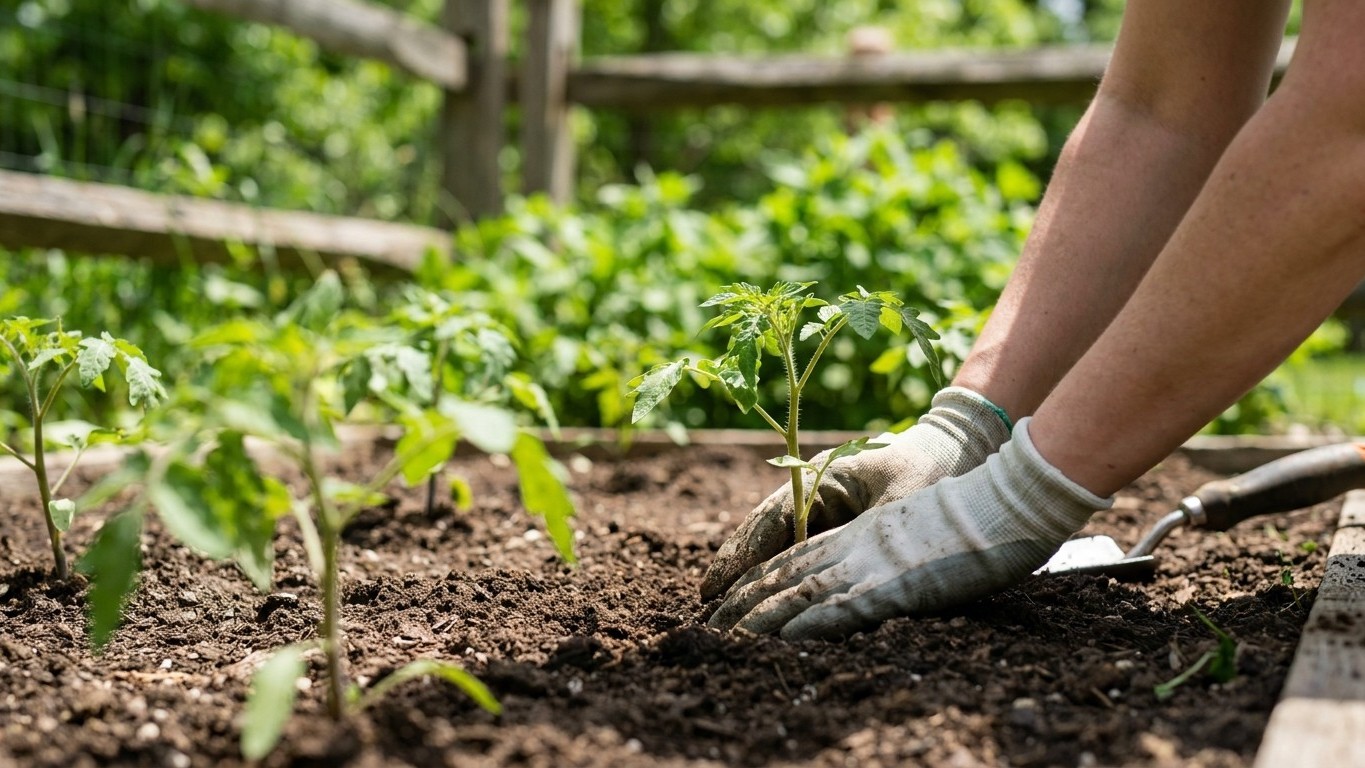

By June, Utah’s frost risk has passed in most valleys, but soil temperature and elevation still call the shots. Warm-season crops like tomatoes, peppers, squash and beans go in now, alongside a second wave of beans and corn. Cool-season holdovers from spring are wrapping up, and successive sowings keep the harvest coming through summer.
What goes in the ground in June

The last spring frost across the reference station lands between April 12 and April 29, which means June opens with that risk already behind most of the valley floor. That gap matters more than the calendar page: soil at 65°F and air nights staying above 50°F are what actually let warm-season roots take hold, not the date on a seed packet.
This is the month to get tomatoes, peppers, and eggplant transplants into the ground if they weren’t already set out in late May. Direct-sow bush and pole beans, corn, cucumbers, melons, winter squash and summer squash now that soil has warmed enough to sprout them without rotting. Basil and other tender herbs move outside too.
Beets, carrots, and bush beans can go in successively through the month for a staggered harvest instead of one glut. Sweet potato slips, if not already planted, still have time in the lower valleys and southern part of the state where soil warms fastest.
Higher elevations, the Bear Lake area, and mountain valleys run cooler and later. A gardener above 6,000 feet should treat early June the way a Salt Lake gardener treats mid-May: watch soil temperature with a simple probe thermometer rather than trusting the sun on your face. If nighttime lows are still dipping into the 40s at your address, hold warm-season transplants another week or two and use the time to direct-sow another round of beans or a summer squash variety instead.
Skip corn and melons entirely in short-season mountain gardens unless you’re using black plastic mulch or row cover to push soil temperature up artificially, otherwise you’re gambling weeks you don’t have before fall frost arrives.
What to start under cover
Fall crops get their start now, counted backward from the first fall frost window of October 18 to October 29. Broccoli, cauliflower, and cabbage transplants for a fall harvest need roughly 8 to 10 weeks from seed to a plantable transplant, plus another 8 to 10 weeks in the ground before frost. Working backward from late October, that means starting seed trays for fall brassicas indoors or in a shaded cold frame now, in June, so transplants are ready by late July or early August.
The same backward math applies to fall lettuce and spinach, though those need far less lead time, usually just 4 to 6 weeks from seed to a harvestable head. A gardener can start those trays in July and still make the frost window comfortably.
Starting brassica seed too early in June risks pots that turn rootbound and leggy sitting on a porch through the hottest weeks of summer, waiting for soil temperatures to drop enough to transplant safely. Starting too late, closer to August, leaves too few weeks before frost to size up a cauliflower head or a full cabbage. Split the difference: sow indoors under light shade cloth or in a cool basement setup, and hold transplants at the four-to-six true leaf stage rather than letting them sit and stretch.
In mountain and high-valley gardens where the growing window is already short, skip the fall brassica gamble unless you have reliable frost protection like row cover or a cold frame ready for autumn. Put that under-cover effort instead into a second round of lettuce and spinach starts, which forgive a shorter runway.
What is ready to pick
Spring’s cool-season crops finish out in June before the heat pushes them to bolt. Lettuce, spinach, and arugula planted in April are at their peak early in the month; pick heads and leaves before hot days trigger bitterness and premature flowering. Radishes sown in spring are ready within days of each other, so pull them promptly, since they turn woody and hollow if left too long in warming soil.
Peas planted in April reach their harvest window in June as well. Snap and snow peas are ready when pods fill out but still snap crisply; shelling peas are ready when pods are plump but not yet dried out on the vine. Check plants every other day, since peas can go from perfect to starchy within about a week once daytime temperatures climb.
Strawberries planted in prior seasons hit their main harvest in June across most of the state’s valleys, with berries ripening over a two- to three-week stretch. Pick when fruit is fully red with no white shoulder, since strawberries don’t ripen further once removed from the plant.
Early rhubarb stalks, if not already harvested in May, can still be cut through June as long as stalks remain firm and the plant hasn’t gone to seed. Garlic scapes, the curling flower stalks on hardneck garlic, are ready to snap off now too, and doing so redirects the plant’s energy into bulb size rather than seed production.
The jobs that matter this month

Mulching moves to the top of the list once warm-season transplants are in the ground. A 2- to 3-inch layer of straw, wood chips, or compost around tomatoes, peppers, and squash holds soil moisture through the hot, dry stretch that typically follows and suppresses the weed flush that early summer heat triggers. Skipping this step now means fighting both drought stress and weeds by July.
Staking and caging go in before plants sprawl, not after. Tomato cages and stakes set at transplant time avoid root damage; waiting until a plant is knee-high and already leaning means driving a stake through roots that have already spread. The same logic applies to trellising cucumbers, pole beans, and vining squash.
Watering rhythm shifts as days lengthen and temperatures climb. Deep, infrequent watering, aiming for roughly an inch of water a week delivered in one or two sessions rather than a daily sprinkle, encourages roots to grow down instead of staying shallow and vulnerable to the first hot spell.
Succession sowing keeps beans, beets, carrots, and summer squash coming rather than producing one glut and then nothing. Sow a new short row every two to three weeks through the month.
Pest scouting matters more in June than any other month, since aphids, squash bugs, and early flea beetles establish populations on tender new transplants before natural predators catch up. Checking the undersides of leaves weekly, and hand-removing egg clusters, heads off infestations that become unmanageable by midsummer.
What not to do in June
The most common mistake is trusting warm air over cold soil. A string of 75°F afternoons can feel like permission to set out tomatoes or peppers, but if soil hasn’t warmed to at least 60 to 65°F at root depth, transplants sit in cold, wet ground and stall or rot at the stem instead of taking off. Use a soil thermometer at planting depth, not the forecast, to make the call.
Uncovering row covers or cold frames too early after a mild stretch is another trap, especially at higher elevations where a warm afternoon can be followed by a night that drops well below what tender seedlings tolerate. Keep protection in place a few extra days past what feels necessary, particularly above 6,000 feet where late-month frost is still not off the table in a cold spring.
Feeding heavy nitrogen to tomatoes and peppers once they start flowering is a mistake that costs the harvest. Nitrogen applied at the wrong point pushes lush green foliage at the expense of fruit set; switch to a lower-nitrogen, higher-phosphorus and potassium feed once blossoms appear instead of continuing the all-purpose fertilizer used at transplant time.
Letting lettuce, spinach, and radishes sit too long in the ground once daytime heat arrives is another avoidable loss. These crops bolt and turn bitter fast once temperatures push into the 80s consistently; harvest promptly rather than waiting for a “better” moment that won’t come until fall.
Checking this against your own county
A statewide June is a starting point, not an instruction. Utah’s elevation swings from below 3,000 feet in the southern deserts to well above 7,000 feet in mountain valleys, and that difference alone can shift planting windows by three to four weeks in either direction. Lake effect near the Great Salt Lake and the Wasatch Front’s own microclimates add another layer of variation that a single statewide date can’t capture.
The USDA hardiness zone range for the state runs from 4a to 9a, which by itself signals how different a mountain garden is from a St. George backyard. For a planting window tuned to your county, elevation, and local frost history, use Utah State University Extension as the reference point rather than any single statewide date.
Common questions
Is it too late to plant tomatoes in Utah in June?
No. June is often the peak transplanting window for tomatoes in most Utah valleys, especially once nighttime lows are reliably above 50°F. In cooler mountain gardens, early June transplants can still size up and produce a full harvest before fall frost.
Can I still direct-sow corn or beans in June in Utah?
Yes, in valley and lower-elevation gardens. Corn and beans planted in early to mid-June still have enough season to mature before the first fall frost window of October 18 to October 29 in most locations. Higher-elevation gardens with shorter seasons should prioritize beans over corn, since corn needs a longer, more reliable warm stretch.
Why did my spring lettuce turn bitter in June?
Lettuce and other cool-season greens bolt and turn bitter once sustained daytime heat arrives, usually once temperatures push consistently into the 80s. This is a normal end-of-season response, not a disease or a watering problem; the fix is timing, not treatment.
Do I need to worry about frost in June anywhere in Utah?
In most valleys, no; the last spring frost window of April 12 to April 29 has passed. In mountain gardens above roughly 6,000 to 7,000 feet, a late cold snap in early June is still possible in some years, so holding tender transplants a week or two longer, or keeping row cover on standby, is a reasonable precaution.
Gardeners who plant by the Moon can check the June 2027 moon planting calendar, a tradition rather than a proven method.