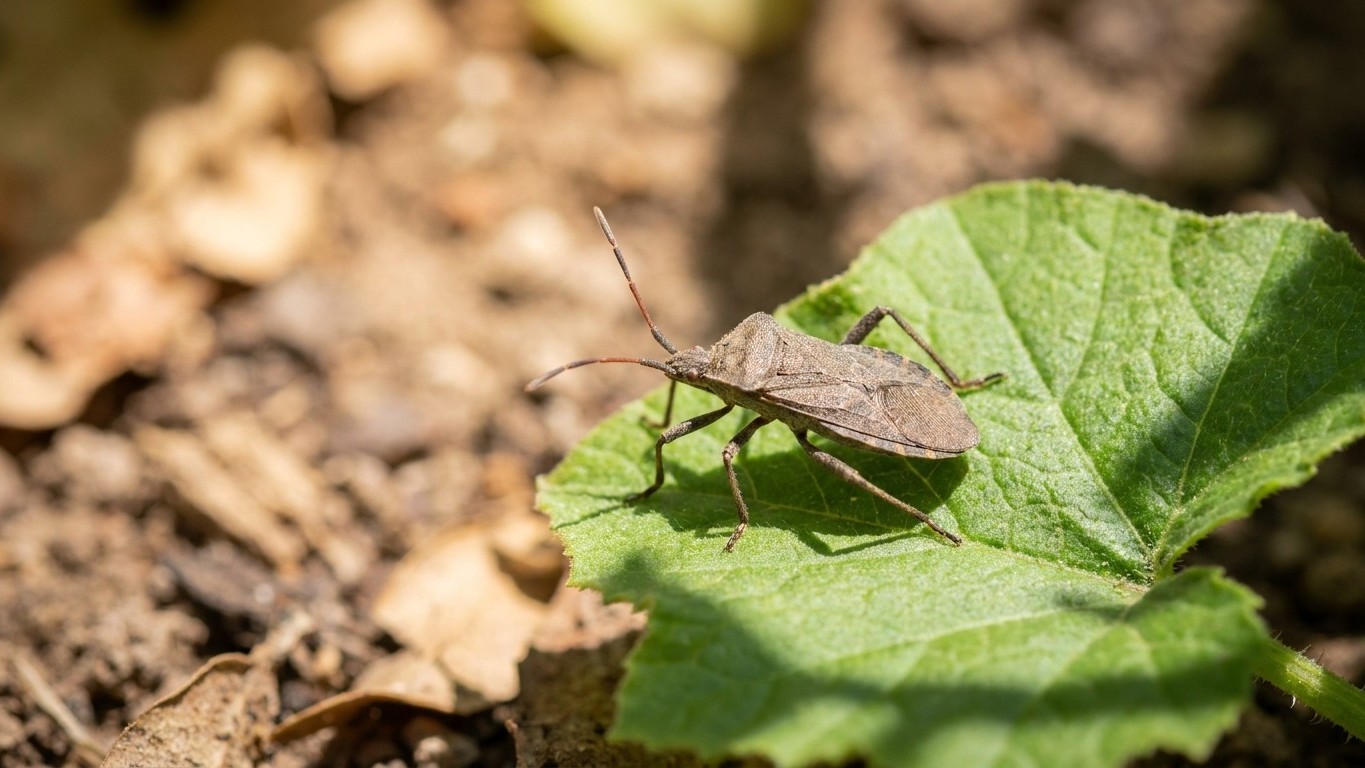

Squash bugs start showing up in Utah gardens once daytime soil temperatures hold above roughly 70°F for a stretch of days, which in most valley locations means late May through June. Once they arrive, only a handful of tactics actually knock back their numbers: fall garden cleanup that destroys overwintering sites, row covers during early growth, hand removal of egg clusters, and insecticidal soap applied while nymphs are still small. Adults are tough, flat-bodied, and hard to kill with sprays, so timing matters more than the product you choose.
That timing question is where a lot of Utah gardeners get tripped up. Between the warm low desert around St. George and the high mountain valleys near Logan or Park City, the squash bug calendar can shift by three or four weeks. Understanding your own microclimate does more for control than any single treatment.
Squash Bug Timeline in Utah’s Growing Season

Squash bugs (Anasa tristis) spend the winter as adults, tucked under leaf litter, mulch, old boards, or garden debris left in the soil. They don’t fly south or die off the way some pests do. They just wait. When the ground warms and cucurbit seedlings, squash, pumpkin, zucchini, and to a lesser extent cucumbers and melons, start putting out true leaves, those overwintered adults crawl out and go looking for food and mates.
In warmer parts of southern Utah, that emergence can happen as early as mid-April. In the Salt Lake Valley and points north, gardeners usually don’t see meaningful activity until June. Higher elevation towns in the Wasatch Back or Cache Valley often push emergence into late June or even early July, simply because the soil takes longer to warm and the growing season itself starts later.
Once mated, females lay clusters of bronze or copper-colored eggs on the undersides of leaves, frequently arranged in tidy rows or a loose V shape. Eggs hatch in one to two weeks depending on temperature. Nymphs go through five stages before becoming adults, a process that typically takes four to six weeks in Utah’s climate. Most of the state sees one full generation per year, though warmer regions in the southwest occasionally squeeze in a partial second generation before frost.
Why Elevation Changes the Math
Gardeners at 4,000 feet in Washington County and those at 7,000 feet in Summit County are essentially fighting different insects on different schedules, even though it’s the same species. Higher elevation means fewer heat units accumulate over the season, which slows nymph development and can shrink the window during which squash bugs cause serious damage. It doesn’t mean the pest skips those areas. It means the peak threat window is compressed and often later in the summer, right as pumpkins and winter squash are sizing up.
How to Spot Squash Bug Damage Before It Spreads
The first sign most people notice isn’t the bug itself. It’s the plant. Leaves start yellowing at the edges, then turn brown and crispy, almost like they’ve been scorched. This happens because squash bugs feed with piercing mouthparts that inject saliva while they suck sap, and that saliva contains compounds that disrupt the plant’s ability to move water through its stems. A vigorous zucchini plant can go from healthy to collapsed in under two weeks once a heavy nymph population sets in.
Flip the leaves over and look for the egg clusters described earlier. Finding them early, before hatching, is the single most effective early-detection habit a Utah gardener can build. Adults themselves are brownish-gray to nearly black, roughly five-eighths of an inch long, with a flattened, shield-shaped body. They tend to cluster at the base of the plant, near the crown, where stems meet soil.
Young nymphs look nothing like the adults. They’re small, gray, almost spider-like, with black legs and antennae. As they mature they take on a dusty grayish-brown color that blends surprisingly well with dry mulch and soil, which is part of why infestations often go unnoticed until the plant is already stressed.
Squash varieties differ a lot in how much damage they show. Zucchini and yellow crookneck squash tend to wilt fast and hard. Butternut and other harder-skinned winter squash generally tolerate feeding better and show damage more slowly, which is one reason some Utah extension gardeners lean toward butternut in gardens with a history of squash bug pressure.
What Actually Stops Squash Bugs
No single method wipes out a squash bug population. Control works as a stack of small actions applied at the right moments, not one silver bullet sprayed once in July.
Cultural Controls That Reduce the Starting Population
Fall cleanup matters more than most gardeners assume. Since adults overwinter in plant debris, leaving old squash vines, dead leaves, and cardboard mulch in the garden bed through winter basically hands them a hotel. Pulling and disposing of cucurbit residue after harvest, and avoiding thick straw or leaf mulch right at the base of next year’s plants, cuts down on the number of adults that survive to spring.
Rotating cucurbits to a different bed each year also helps, since it forces emerging adults to travel farther to find food, and some simply don’t make it. Trap cropping is another option some Utah growers use: planting a small block of blue hubbard squash, which squash bugs strongly prefer, a few feet from the main crop, then concentrating removal efforts there.
Mechanical and Biological Tactics
Hand removal remains one of the most reliable tools, low-tech as it sounds. Checking the undersides of leaves twice a week during peak season and crushing egg clusters between finger and thumb prevents entire generations before they hatch. A classic trick still used across the Mountain West involves laying a flat board or shingle near the base of plants in the evening; squash bugs congregate underneath it overnight, and in the morning the board can be lifted and the bugs collected or crushed.
Row covers placed over young plants block adults from finding them at all, but they need to come off once flowering starts so pollinators can reach the blossoms. That timing window, cover on during early vegetative growth, cover off at bloom, is one of the more useful pieces of practical advice for anyone gardening at Utah’s elevation, where the growing season is already short enough without losing pollination time.
Natural enemies help more than people give them credit for. A tachinid fly, Trichopoda pennipes, parasitizes adult squash bugs by laying a white egg on their body; the larva then develops inside the bug and eventually kills it. Broad-spectrum insecticides applied casually can wipe out these parasitoids along with the pest, which sometimes makes an infestation worse the following year. Gardeners who skip unnecessary spraying and let this fly do its work often see a natural decline in squash bug numbers over a couple of seasons.
When a Treatment Is Actually Warranted
Young nymphs are far more vulnerable to insecticidal soap, neem oil, and pyrethrin-based products than adults are. Their soft, undeveloped exoskeletons let these treatments work; adult squash bugs, with a hardened shell, mostly shrug them off. That’s the practical reason timing beats product choice: a well-timed soap spray on newly hatched nymphs does more than a stronger chemical sprayed on established adults two weeks later.
Diatomaceous earth dusted around the base of plants can also deter and injure nymphs as they move across it, though it needs reapplication after watering or rain. For anyone dealing with a heavy, established infestation on a high-value planting, a labeled insecticide applied directly to the base of plants in early morning or evening, when bees aren’t active, is a reasonable last step, but it works best as a targeted mop-up rather than the first response.
Squash Bug Pressure Across Utah’s Regions
Southwestern Utah’s longer, hotter season means gardeners there often deal with squash bugs earlier and sometimes see a partial second wave in late summer, which makes fall cleanup even more important to break the cycle before winter. Central Utah, including the Sanpete and Sevier valleys, tends to see a single generation with peak nymph activity in July.
Northern Utah and the benches along the Wasatch Front generally get a slightly compressed window, with damage most visible from mid-July through August as plants near harvest. High-elevation gardens in places like Kamas or Bear Lake often escape the worst pressure simply because the season is too short for populations to build to damaging levels, though a mild winter followed by an early warm spring can change that pattern quickly.
A mild winter is worth watching for specifically. Because adult squash bugs survive under debris rather than dying off from cold, a winter with fewer hard freezes across the valley floors can mean more overwintering survivors and an earlier, heavier start to the following season’s population.
Related guides
- Squash bug in Idaho: When It Shows Up and What Stops It
- Squash bug in Colorado: When It Shows Up and What Stops It
- Squash bug in Wisconsin: When It Shows Up and What Stops It
- Squash bug in Arizona: When It Shows Up and What Stops It
- Squash bug in Connecticut: When It Shows Up and What Stops It
- Squash bug in Manitoba: When It Shows Up and What Stops It