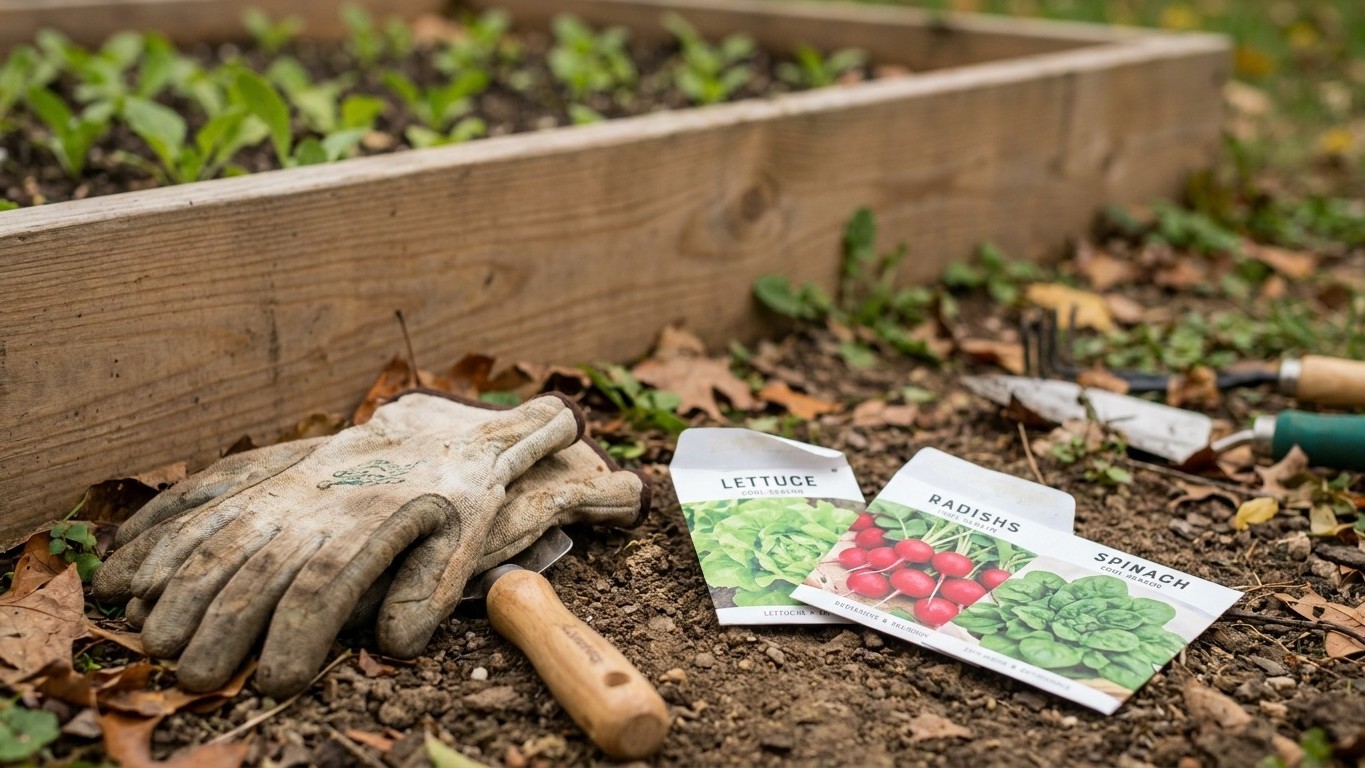

September is the reset button for a Virginia garden. With the first fall frost still six to twelve weeks away across most of the state, this is the month for fall greens, quick root crops, and second-round beans, while the last of the tomatoes and peppers still ripen on the vine. Cool nights start doing half the work for you.
What goes in the ground in September

Soil temperature, not the calendar, decides what survives here. Virginia’s coastal station at NAS Oceana shows a first fall frost between November 10 and November 24, based on NOAA’s 1991-2020 climate normals. That’s the coastal end of the state, the mildest part of Virginia’s range. Inland and up into the Blue Ridge and southwest counties, that first frost lands weeks earlier, so the September planting window closes sooner the farther you get from the coast.
Direct sowing works well this month for anything that finishes fast and tolerates a light chill. Spinach, lettuce, arugula, mustard greens, and kale all go into warm September soil and size up as nights cool. Radishes and turnips are among the fastest crops in the garden, often ready in three to five weeks, which makes them a safe bet even late in the month. Beets sown in the first half of September usually have enough runway before frost, but waiting until the last week is a gamble in most of the state. A fall crop of snap peas or snow peas, sown at the very start of the month, can still mature before cold locks things down, though this window is narrow and closes fastest inland.
Garlic is the crop gardeners always want to plant in September, and it’s worth saying plainly: it’s early. Garlic and shallots go in later, once the soil has cooled further, so September is better spent prepping that bed with compost than planting the cloves themselves. Broccoli, cabbage, and cauliflower transplants started under cover in August can go into the ground now, giving them a head start before the days shorten too much. Cover crops like crimson clover or winter rye are also fair game this month on any bed that’s finished producing, holding the soil and adding organic matter over the coming months.
What to start under cover
The arithmetic for September sowing runs backward from the frost window, not forward from a date on a calendar. With first frost landing between November 10 and 24 on the coast, and earlier inland, a gardener needs to count the days-to-maturity listed on the seed packet, add extra time because shortening daylight slows growth even when the weather stays mild, and then work backward to find the last safe sowing date. A lettuce that matures in 45 days sown on September 1 has a comfortable margin on the coast; sown September 20 in the Blue Ridge, it’s tight.
Cold frames and low tunnels extend that math. Spinach, mâche, and other hardy greens sown under cover this month can be harvested well past the point when open-ground crops have stalled, because the cover buffers the worst of the cold without needing supplemental heat. This is also the window to start a last round of lettuce or Asian greens specifically for cold-frame production, rather than the open bed.
Two mistakes show up every year. Starting too early, while soil and air are still summer-hot, pushes greens to bolt or brassica transplants to get leggy and rootbound waiting for cooler weather to move outside. Starting too late runs the opposite risk: seedlings that germinate fine but never bulk up before growth all but stops in the shortening days of late fall. The safest approach is to sow in batches a week or two apart through the first half of September rather than betting everything on one date.
What is ready to pick
September still delivers plenty from summer plantings. Tomatoes, peppers, and eggplant keep producing until the first real cold snap, and a lot of Virginia gardeners get their heaviest tomato harvest of the season in these weeks, as plants that struggled through August heat rebound in cooler nights. Summer squash and beans planted in a late-July succession are often just hitting their stride now too.
Ripeness signs matter more than the date on the seed packet. A tomato should give slightly under gentle pressure and show full color, not just a blush. Peppers can be picked green or left to color up fully for sweeter flavor, depending on preference. Winter squash, if any is already sizing up from a spring planting, is ready when the skin resists a fingernail scratch and the stem has started to dry and harden; those should be cured in a warm spot for a couple of weeks before storage.
Fruit is also coming in across much of the state this month. Apples and pears in Virginia orchards and backyard trees ripen through September, and the earliest fall greens sown back in August should be ready for a first cut of baby leaves. If beans or squash are still setting new flowers late in the month, don’t count on them finishing, cooler nights slow fruit set even before frost arrives.
The jobs that matter this month

Soil preparation pays off fastest right now. Any bed that finished producing tomatoes, beans, or squash benefits from a layer of compost worked in before a cover crop or fall greens go in, since September’s warm soil breaks down organic matter quickly. Mulch matters just as much: a two- to three-inch layer around new fall seedlings buffers the swing between hot afternoons and cool nights that’s typical of this month, and it holds moisture so newly sown seeds don’t dry out between waterings.
Watering rhythm needs attention even as temperatures ease. September afternoons can still hit summer highs, and shallow-sown seeds like lettuce and carrots dry out fast in the top inch of soil. A light daily watering until germination, then a deeper soak two or three times a week, keeps young roots pushing down instead of staying shallow.
Succession sowing is the other habit that separates a full fall harvest from a thin one. Radishes, arugula, and baby lettuce can go in every ten to fourteen days through the first three weeks of September in most of the state, giving a rolling harvest instead of one glut. Pest scouting shouldn’t slip either: cabbage worms and aphids often move onto new brassica transplants right as they’re most vulnerable, and a five-minute check under the leaves twice a week catches an infestation before it spreads. On the orchard and shrub side, this is also the month to stop feeding nitrogen to trees and perennials, since new growth pushed now won’t have time to harden off before frost.
What not to do in September
The most common mistake is trusting warm afternoons over soil reality. Air temperature in the 80s doesn’t mean it’s safe to start a new round of warm-season crops like tomatoes or squash from seed, there simply isn’t enough season left before frost for them to mature, no matter how mild the days feel. That effort is better spent on the fall greens and roots that actually have time to finish.
Uncovering cold frames or removing row cover too early after a warm stretch is another recurring error. A run of 75-degree days in mid-September can fool a gardener into thinking the season has stalled at summer, but a cold snap can follow within a week, especially inland, and tender greens left exposed take the hit. Better to vent covers on warm days and close them back up at night than to remove them outright.
Nitrogen timing trips people up too. Feeding a high-nitrogen fertilizer to fruit trees, roses, or perennial beds this late pushes soft new growth that has no time to harden before the first frost, and that new growth is often what gets damaged first when cold does arrive. Fall fertilizing, where it’s needed at all, should lean toward phosphorus and potassium rather than nitrogen. And skipping water on the assumption that cooler weather means less need is a fast way to lose a bed of newly germinated fall greens to a dry week.
Checking this against your own county
A statewide picture is a starting point, not an instruction for a specific backyard. Virginia’s hardiness range runs from USDA zone 5a in the highest parts of the Blue Ridge to zone 8b along the coast, based on the USDA Plant Hardiness Zone Map. The frost dates cited here come from the coastal Oceana station, the mild end of the state; gardeners in the mountains and southwest should expect their first fall frost weeks earlier and their planting windows to close sooner. Elevation changes things fast in Virginia, sometimes over just a few miles.
For a planting calendar tuned to your specific county, Virginia Cooperative Extension is the reliable next stop.
Common questions
Can I still plant tomatoes in Virginia in September?
No, not from seed and not reliably from transplant either. With first frost landing between November 10 and 24 on the coast, and earlier inland, there isn’t enough season left for tomatoes to set and ripen fruit. Existing plants from a spring or summer planting will keep producing into this month, but new plantings are a poor bet.
Is September too early to plant garlic in Virginia?
Yes, in most of the state. Garlic goes in later in the fall, once soil temperatures have dropped further. September is better used to prepare the bed with compost so it’s ready when planting time comes.
What vegetables mature fastest for a September planting?
Radishes and turnips are among the quickest, often ready in three to five weeks, which makes them safe even for a later-September sowing. Baby lettuce and arugula aren’t far behind.
Does Virginia’s hardiness zone affect what I can plant in September?
Indirectly. The USDA hardiness zone (5a to 8b across the state) reflects average extreme winter minimum temperatures, not fall frost timing on its own. For September planting decisions, the first fall frost window matters more directly, and it varies by weeks between the coast and the mountains.
Gardeners who plant by the Moon can check the September 2027 moon planting calendar, a tradition rather than a proven method.