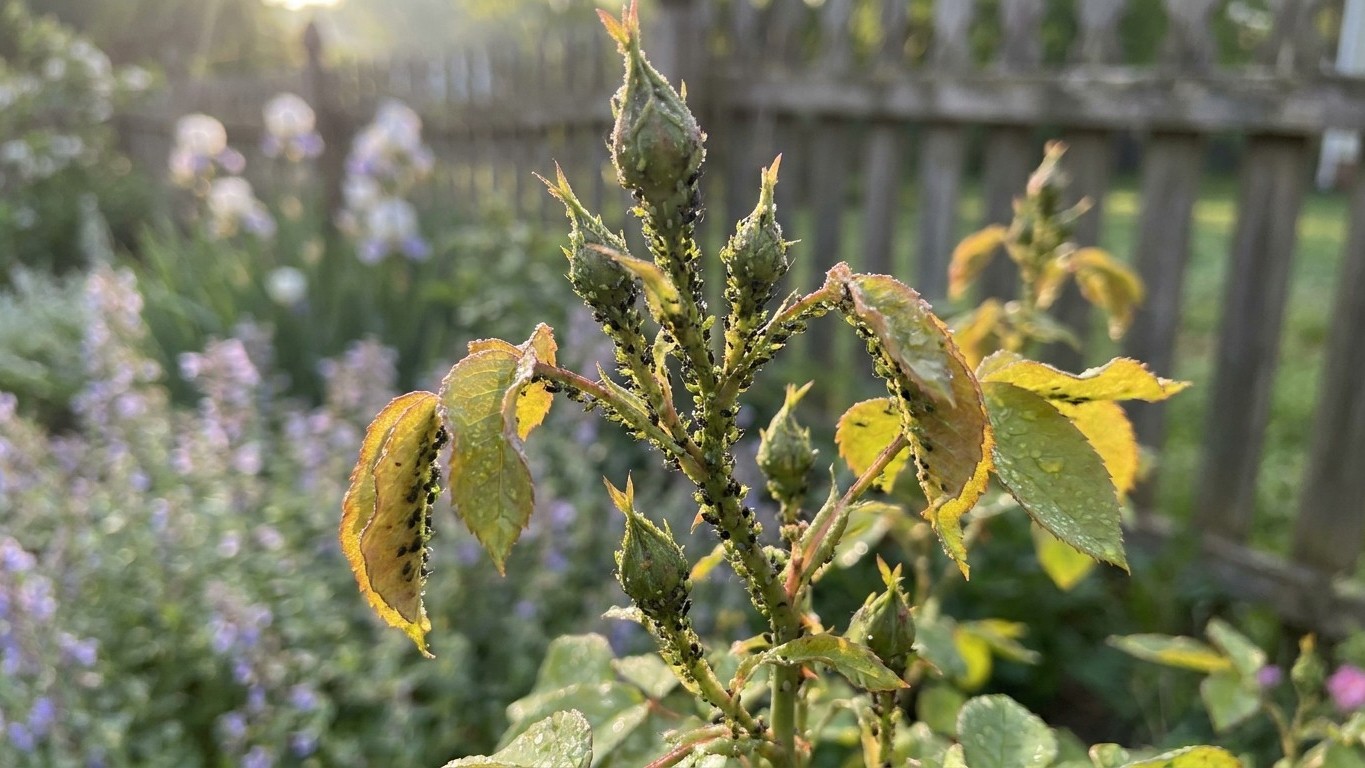

Aphids show up in Virginia in two distinct waves: a heavy one in April and May when new growth flushes out, and a smaller rebound in September and October as cooler nights slow plants down again. Between those windows, populations dip but rarely disappear. What actually stops them isn’t a single spray, it’s timing your response to when they’re most vulnerable and least protected by weather or ants.
When Aphids Show Up in Virginia’s Climate

Virginia’s mix of humid summers, mild springs, and short but real winters gives aphids a longer active window than colder states get. Most species overwinter as eggs on woody stems or bark crevices, and once daytime temperatures hold above 50°F for a stretch, usually mid-to-late March in the Piedmont and closer to early April in the mountains, those eggs hatch into wingless females that start reproducing almost immediately without mating.
That’s the part people underestimate. A single female aphid can produce dozens of offspring in a week, and those offspring are reproducing within days of being born. By the time you notice curled leaves on a rose bush in early May, you’re not looking at a new problem, you’re looking at three or four generations already stacked on top of each other.
Growth spurts attract them. New leaves, tender shoots, and unopened buds carry higher nitrogen content and softer tissue, which is exactly what aphid mouthparts are built to pierce. This is why vegetable gardens, crepe myrtles, and roses across the Commonwealth tend to get hit hardest right as they’re putting out their first real growth of the season, not in the dead heat of July when plant tissue toughens up.
Summer in Virginia actually slows some species down. Heat above 90°F stresses aphid reproduction and shortens their lifespan, so August often looks quieter even though the plants are still growing. Then September arrives with cooler nights and a second flush of tender growth on many ornamentals, and aphid numbers climb again before winter dieback sets in around late October or November depending on the first hard frost.
Signs You’re Dealing With an Aphid Problem
The giveaway usually isn’t the aphid itself. Most species are pale green, yellow, or black, and small enough that a light infestation blends into the leaf. What people notice first is honeydew, a sticky residue aphids excrete after feeding on sap, which coats leaves and anything underneath them, including patio furniture, cars, and sidewalks.
That honeydew attracts two things worth watching for. Ants show up to farm it, sometimes in visible trails running up trunks and stems, and they’ll actively protect aphid colonies from predators to keep the sugar supply flowing. Sooty mold follows close behind, a black fungal growth that colonizes the honeydew layer and can make leaves look scorched even though the fungus itself isn’t attacking the plant tissue directly.
Curled or puckered new leaves are another marker, especially on roses, fruit trees, and vegetable transplants. Heavy feeding distorts leaf tissue as it grows, so damage from an infestation two weeks ago is still visible on foliage that’s since expanded and twisted. Yellowing, stunted shoots, and a general lack of vigor on otherwise healthy-looking plants round out the pattern.
What Actually Stops Aphids in Virginia Yards
Biological control does most of the heavy lifting in established landscapes, and it happens whether you notice it or not. Lady beetles, lacewing larvae, hoverfly larvae, and several species of tiny parasitic wasps all target aphids specifically, and a healthy predator population can crash an aphid colony within one to two weeks once it gets established. The catch is that predators typically lag a week or two behind the pest, showing up after aphid numbers have already climbed enough to draw them in.
Broad-spectrum insecticides work against this natural balance more often than they help it. Products that kill aphids on contact usually kill their predators too, and predators take longer to rebuild their numbers than aphids do. That’s the mechanism behind the rebound infestations people report a few weeks after spraying something strong, the aphids came back faster because nothing was left to eat them.
For active infestations that need a faster response, a few lower-impact options hold up well in Virginia conditions:
- A firm water spray from a garden hose knocks aphids off stems and leaves; it won’t kill them, but most can’t climb back up and dehydration or predation finishes the job within a day or two
- Insecticidal soap breaks down the aphid’s outer cuticle on contact and needs to hit the insect directly, so thorough coverage of leaf undersides matters more than the product itself
- Horticultural oil smothers eggs and soft-bodied nymphs, and works best applied in early spring before populations build or in late fall on woody stems where eggs overwinter
- Neem oil combines a mild insecticidal effect with a growth disruption that reduces reproduction in surviving aphids over several applications
Timing these treatments to early morning or evening avoids burning leaf tissue in Virginia’s summer heat and reduces harm to bees and other pollinators that are less active during those hours.
Crepe Myrtle Bark Aphid: A Virginia-Specific Concern
Crepe myrtles are planted across nearly every Virginia neighborhood for their long summer bloom, and they’ve picked up a specific pest problem that’s worth calling out separately. The crepe myrtle bark aphid is a species that feeds on trunk and stem tissue rather than leaves, and it produces enough honeydew to coat entire tree canopies in black sooty mold by mid-summer.
Unlike the aphids that hit vegetable gardens and roses, this species targets one host almost exclusively, and it’s spread widely through the mid-Atlantic and Southeast over the past couple of decades. Because it feeds on bark rather than soft new leaves, standard water-spray knockdowns are less effective, and heavier infestations often call for systemic treatments applied to the soil around the trunk, which the tree absorbs and distributes through its vascular system.
Virginia Cooperative Extension has flagged newer crepe myrtle cultivars bred for resistance to this specific aphid, which reduces the maintenance burden considerably for anyone planting new trees rather than dealing with an established one.
Prevention That Fits Virginia’s Growing Season
Nitrogen fertilizer is the single most avoidable trigger for aphid outbreaks in home landscapes. Heavy or repeated nitrogen applications push plants into exactly the soft, sap-rich new growth that aphids prefer, so a lawn or garden fed on a monthly high-nitrogen schedule through spring is setting up conditions for a bigger infestation than one fertilized less aggressively.
Companion planting has a real track record here too. Nasturtiums, dill, fennel, and yarrow attract the same predatory wasps and hoverflies that hunt aphids, giving those beneficial insects a food source and shelter close to the plants you’re trying to protect. Garlic and chives planted near roses and vegetables have shown some repellent effect in home garden trials, though the effect is modest compared to actively supporting predator populations.
Early monitoring beats reactive treatment every time. Checking the undersides of new leaves on roses, crepe myrtles, and vegetable transplants once a week starting in late March catches colonies while they’re small enough for a water spray or a few ladybugs to handle, rather than waiting until honeydew and sooty mold make the problem impossible to miss. Removing heavily infested shoot tips by hand, when the colony is still localized, physically eliminates the population without touching a sprayer at all.
Pruning practices matter more than most gardeners realize. Aphids concentrate on succulent new growth, so a rose bush pruned to encourage one strong flush rather than repeated light trimming throughout the season gives colonies fewer fresh entry points across the year. The same logic applies to crepe myrtles: heavy pruning cuts, sometimes called “crepe murder” among landscapers for the way they force dense clusters of soft new shoots, create ideal aphid habitat that a lighter pruning approach avoids entirely.