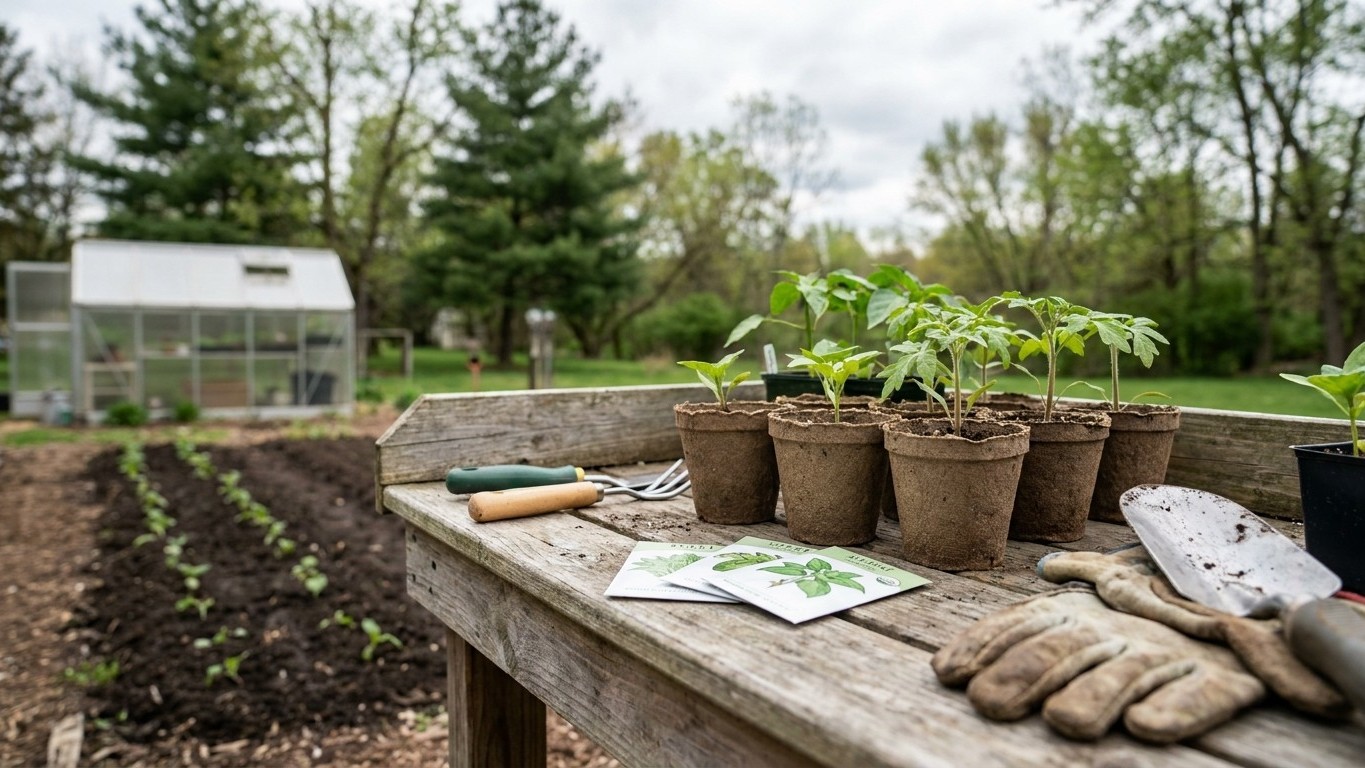

Direct answer: April is when West Virginia’s cold-hardy crops go in the ground, but the state is also sitting right inside its last frost window, so timing depends on where you garden. Peas, onions, potatoes, and leafy greens can go outside now. Tomatoes, peppers, beans, and squash need to wait until the frost risk actually clears, not just until the air feels warm.
What goes in the ground in April

The calendar says April, but the soil doesn’t care what the calendar says. What matters is soil temperature and whether the frost window has closed where you live, and in West Virginia that window is wide. At the Charleston-area reference station (USW00013866), NOAA’s 1991-2020 climate normals put the last spring freeze somewhere between April 9 and April 23. That’s a two-week spread in a river valley alone, and the state’s higher elevations push it later still. A garden in the Eastern Panhandle lowlands may be clear by mid-April; a garden up in the mountains can still see a hard freeze into May.
That spread is the whole story for this month. Crops that shrug off a light frost can go in early April with real confidence. Crops that die at 32°F need to wait until the local window has actually closed, not just until it feels safe.
Safe now versus a gamble
Peas, spinach, lettuce, radishes, and kale can go into the ground as soon as the soil is workable, frost window or not. Onion sets and seed potatoes are standard April plantings across the state. Asparagus crowns and rhubarb divisions go in dormant, before growth starts, so early-to-mid April is prime timing for both. Bare-root fruit trees, cane berries, and grapes should also go in while they’re still dormant, ideally before buds swell.
Tomatoes, peppers, squash, beans, corn, and cucumbers are a different story entirely. These crops are killed outright by frost, and planting them into cold, wet April soil doesn’t just risk a freeze, it also stalls growth even when no frost occurs, since most warm-season seeds barely germinate below 60°F soil temperature. Hold these until the frost window has closed in your specific area.
| Crop group | April outdoor timing | Why |
|---|---|---|
| Peas, spinach, lettuce, radish, kale | As soon as soil is workable | Tolerate light frost, germinate in cool soil |
| Onion sets, seed potatoes | Early-to-mid April | Cold-hardy, need a long season before summer heat |
| Asparagus, rhubarb, bare-root fruit | While still dormant | Planted before bud break, not after |
| Tomatoes, peppers, squash, beans, corn | Not yet | Killed by frost; stall in cold soil |
What to start under cover
Seed-starting math works backward from the local frost window, not forward from a date on the calendar. If your area’s last freeze falls anywhere in the April 9 to April 23 range, tomatoes and peppers started indoors 6 to 8 weeks before that window need to have already gone into trays, which for many gardeners means starting in late February or early March. If you haven’t started those yet, the plants that reach transplant size will simply arrive later in the season, not stunted, just delayed.
What still makes sense to start under cover now includes squash, cucumbers, and melons, which need only 3 to 4 weeks indoors before they’re ready to go out, so a start in early-to-mid April lines up with transplanting after the frost window clears. Cold frames and low tunnels are also useful right now for hardening off anything started earlier indoors, giving seedlings a step between the windowsill and the open garden.
The two ways this goes wrong are worth naming plainly. Start warm-season transplants too early and they turn rootbound and leggy in their trays long before the ground and air are ready for them, weakening the plants before they ever go outside. Start them too late and they miss enough of the growing season that a short-season variety becomes the only realistic option. Counting backward from your own frost date, not a generic one, is what keeps the timing honest.
What is ready to pick
April harvests in West Virginia come mostly from what survived the winter, not from anything newly planted. Asparagus that’s been established for a couple of seasons starts sending up spears toward the end of the month in many gardens, and once spears appear they need cutting every few days or they’ll go to fern. Rhubarb stalks thicken enough to pull by mid-to-late April in most locations, though the leaves stay off-limits; only the stalks are edible.
Overwintered greens are the other reliable source this month. Kale, collards, and spinach that made it through winter under a low tunnel or straight in open ground often bolt-resist just long enough to give a final flush of tender leaves before the plant turns toward flowering. Cold-frame lettuce and spinach, protected all winter, should be producing steadily by now.
It’s also the month to walk the root cellar or pantry shelf with a critical eye. Stored potatoes that have started sprouting eyes are still usable if the sprouts are trimmed, but any that have gone soft or shown dark patches should be pulled before they spread rot to the rest of the bin. Onions with soft necks or a sour smell are past saving. Winter squash, if any is left, should be checked for soft spots near the stem end, which is usually where decay starts first.
The jobs that matter this month

April is the last realistic window for dormant pruning of fruit trees and cane berries before buds swell and break. Pruning after that point costs the tree stored energy it needed for new growth, so getting shears out early in the month, especially at higher elevations where bud break lags behind the valleys, is worth prioritizing over almost anything else in the orchard.
Soil, mulch, and structure
Soil that’s dried out enough to crumble rather than clump is ready for turning and amending; working wet clay soil compacts it for the whole season, so patience here pays off more than speed. Once beds are prepped, a layer of mulch around cold-hardy transplants holds moisture and moderates the wide day-to-night temperature swings that April in West Virginia is known for. Peas and anything climbing should get their stakes or trellis set now, before vines tangle themselves into a mess that’s much harder to untangle later.
Succession sowing of radishes, lettuce, and spinach every couple of weeks through the month keeps a steady harvest coming rather than one big flush that bolts all at once. It’s also a smart month to scout for early pests: slugs thrive in the same damp, cool conditions that cold-hardy crops like, and catching a slug problem in April, before populations build, is far easier than fighting it in June. Rounding out the list, this is a good time to finish ordering any seed still needed for summer crops, since popular varieties sell out through spring, and to give garden tools one more sharpening before the heavy planting push begins.
What not to do in April
The most common mistake in West Virginia gardens this month is planting warm-season crops based on how the air feels rather than what the soil and calendar of frost risk actually say. A run of 70°F afternoons in early April doesn’t mean the frost window has closed. It means a warm spell inside a season that NOAA’s own normals put the last freeze anywhere from April 9 to April 23 at the Charleston reference point, later at elevation. Tomatoes and peppers set out during that warm spell can be killed by a freeze that arrives a week later.
A related error is uncovering cold frames, low tunnels, or newly emerged perennials too early after a mild stretch. Removing protection during a warm week leaves tender new growth exposed exactly when a cold snap is still statistically likely. Keep protection in place, or ready to redeploy overnight, until the local frost window has genuinely passed.
Nitrogen timing trips people up too. Heavy nitrogen feeding on fruit trees or berries right before bloom pushes leafy growth at the expense of flowers and fruit set. Hold nitrogen-heavy feeding until after fruit has set, and lean instead on a balanced feed, or none at all, during the bloom period itself.
Checking this against your own county
A state-wide answer for April is a starting point, not an instruction to follow blindly. West Virginia spans USDA Hardiness Zones 5a to 7a, and that range alone tells you the growing conditions in the Eastern Panhandle lowlands and the high ridges of Pocahontas or Randolph County are not the same garden. The Charleston frost data cited here comes from a river valley station; elevation, valley cold pockets, and simple north-versus-south positioning within the state can shift real planting windows by two weeks or more in either direction.
For a planting calendar built around your specific county, the West Virginia University Extension Service is the right next stop, along with your local extension office, which tracks conditions closer to your actual garden than any statewide figure can.
Common questions
Can I plant tomatoes outside in West Virginia in April?
Not safely in most of the state. The last spring frost falls somewhere between April 9 and April 23 at the Charleston reference station, and higher elevations run later. Tomatoes are killed by frost, so they should wait until that window has closed in your specific area.
What vegetables can I direct-sow in April in West Virginia?
Peas, spinach, lettuce, radishes, and kale can go in as soon as the soil is workable, since all tolerate a light frost. Onion sets and seed potatoes are also standard April plantings.
Is it too late to prune fruit trees in April?
Early April is usually still fine, especially at higher elevations where bud break lags. Once buds have swollen and begun to open, further pruning costs the tree stored energy, so it’s best finished before that point.
Why does West Virginia’s frost date vary so much by location?
The state’s terrain ranges from river valleys to high mountain ridges, and elevation has a strong effect on freeze timing. The April 9 to April 23 window applies to the Charleston-area station; mountain gardens can see frost weeks later.
Gardeners who plant by the Moon can check the April 2027 moon planting calendar, a tradition rather than a proven method.