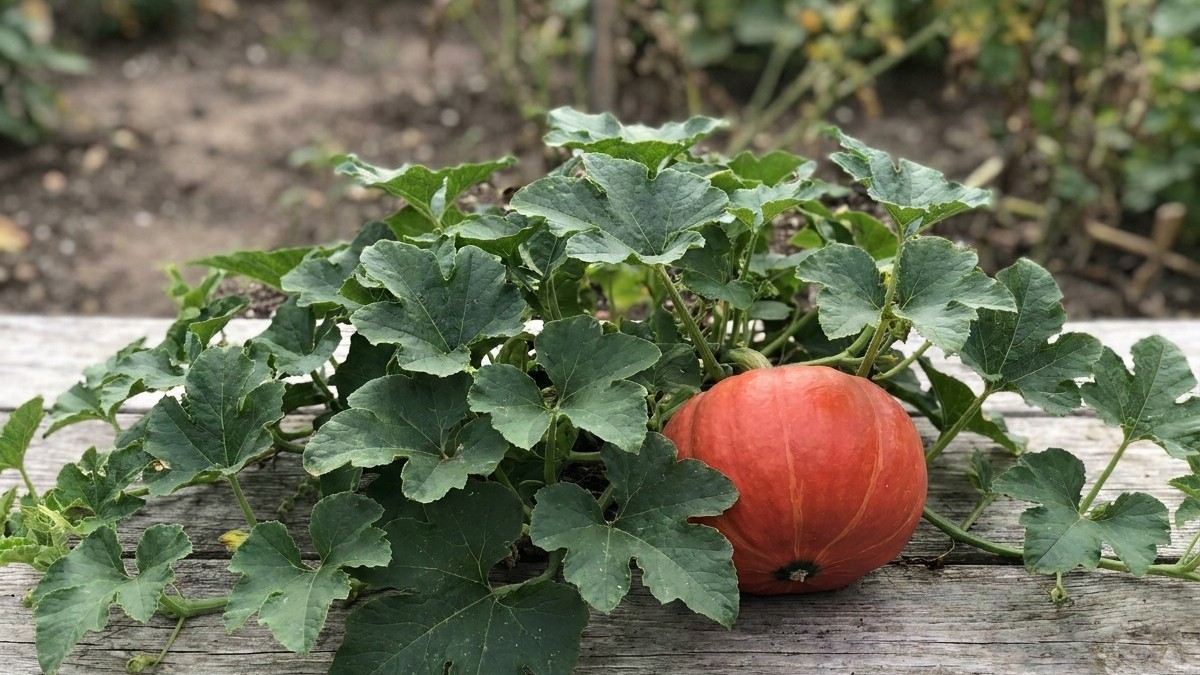

Cut a pumpkin when the rind resists a thumbnail, the color has settled deep and even, and the stem has dried to a woody brown. In Ohio’s zone 6a, that usually arrives before the first fall frost. A whole pumpkin then keeps for months, but only in the right kind of room.
When pumpkins are ready in Ohio
A pumpkin is ready when the rind has hardened and the stem has dried, and the clock for that runs 45 to 55 days after flowering. Ohio State University Extension’s gardening calendar puts the first fall frost at October 5 to October 15 in zone 6a, so the harvest has to be done by the start of that window. The same calendar gives the last spring frost as May 5 to May 15.
The count starts at the flower, not the seed. Utah State University Extension says pumpkins take 45 to 55 days to mature after flowering, and that seed goes in once the soil reaches 65 F. Those are two separate checks. The last spring frost date describes the air, while the soil lags behind it by weeks, so a garden can be past May 15 and still have soil too cool for seed. A soil thermometer pushed a few inches down in the morning settles the question. Seed packets count their days from sowing, so the number printed there includes the weeks the vine spends growing before its first flower.
How late can a pumpkin flower and still ripen in Ohio?
Count backward from the frost window. Take October 5 to October 15 and subtract 45 to 55 days, and the cutoff lands between roughly August 11 and August 31. Because the frost date is a range, plan on the early end. A flower that opens after mid-August is a long shot, and one that opens in September will give a small, green fruit that frost ends. Those late fruits are worth removing or ignoring, since they will never turn.
If your pumpkins set fruit late, the full picture is in Will Pumpkins Ripen Before Frost in Ohio?, which covers what to do when the calendar and the vines disagree.
How do you know a pumpkin is ripe enough to cut?
Look at the fruit instead of the calendar. The color should be even all the way around, including the underside where it touched the ground. Press a fingernail into the rind. If it dents or punctures, wait. The stem should be hard and dry, and the vine near it usually browns and dies back. Cut with pruners or a sharp knife and leave the stem attached, as the Utah State guidance says, because a pumpkin without its stem opens a way in for rot. Lift the fruit from underneath rather than carrying it by the handle, which can snap.
When the forecast calls for frost and the pumpkins are close, cut them anyway. A fruit that is nearly ripe will finish its color indoors better than one that sat through a freeze.
Keeping them, and for how long
The University of Illinois Extension, in its guide to choosing a pumpkin, says a whole pumpkin keeps for three to six months in a cool, dark location between 45-50 F. That is the best case. It describes a sound, fully ripe pumpkin with its stem on, stored under steady conditions. Six months is a ceiling, and plenty of pumpkins will give out well before it.
The word that matters most in that sentence is “whole.” The 45-50 F range applies to an uncut pumpkin with its rind intact. A carved pumpkin has opened flesh and loses its shelf life fast, so carve close to the day you plan to display it. Nothing about the three-to-six-month window carries over.
What shortens a pumpkin’s storage life?
Several things cut into that window. A pumpkin picked with a green patch, a frost nip, or a broken stem starts with a disadvantage. So does any fruit with a soft spot, a gouge, or a bite taken out of the rind. Insects that feed on vines and fruit leave wounds that rot can enter, which is one more reason to know What Eats Pumpkin in Ohio, and When before harvest. Sort the crop as you bring it in. Use the blemished ones first, for cooking or carving, and put only the clean, hard ones into storage.
Utah State University Extension adds one rule of its own: keep stored pumpkins where they will not freeze. A frozen pumpkin may look fine and then collapse as it thaws.
Why keep pumpkins away from apples and potatoes?
The Illinois guidance gives a second instruction that most people skip. Store pumpkins away from ripening fruits and vegetables such as apples, potatoes, and tomatoes. Ripening produce gives off a gas that ages the pumpkin faster. That makes the front porch next to a crate of apples a poor storage spot, and the same goes for the basement shelf where the potato bin sits. Distance and a separate room help more than a lid or a towel.
Where in the house that actually is
Most of the rooms people reach for are wrong. A refrigerator runs colder than the 45-50 F range, and a pumpkin will not fit in one anyway. Any heated living space runs warmer than that range, so a pumpkin on the dining room sideboard is on display, not in storage. A garage looks cool but swings with the weather. On an Ohio October afternoon it can be fine, and in January it can drop to freezing, which is the one condition the Utah State guidance says to avoid.
The room that comes closest in most Ohio houses is an unheated but insulated space that stays dark: a basement room away from the furnace, a cool closet on an interior side of a foundation wall, or an enclosed porch that stays above freezing. Basements often hold the potato bin and the apple crate too, so choose the corner farthest from them.
How do you check a spot before you commit?
Do not trust your hand. A room that feels cool can still run warm in the afternoon. Leave a thermometer in the spot for several days before you move the pumpkins in, ideally a min-max model that records the low and the high, and read it at the height where the pumpkins will sit. You want the reading to stay within 45-50 F. If it runs a few degrees warm, the pumpkins will still keep, only for a shorter time. If it drops toward freezing on a cold night, move them before the first hard cold.
Skipping this step costs you the crop. A pumpkin in a spot that looked right and froze once is a pumpkin you find as a soft heap.
Set the pumpkins on a shelf, a board, or a layer of cardboard rather than on bare concrete, and leave a little space between them so air moves. Check each one regularly. A pumpkin that starts to soften goes to the kitchen that day, before it spoils its neighbors. If you are still working out a first crop, Growing Pumpkins in Ohio covers the season from sowing through harvest.
Common questions
Can I cut a pumpkin that is still partly green?
You can, and a nearly ripe one with some orange will often finish coloring indoors. A fruit that is mostly green with a soft rind will not get there. If frost is coming, cut the ones that are close and leave the rest.
How long can pumpkins stay on the vine in Ohio?
They can stay until the first fall frost, which Ohio State University Extension places at October 5 to October 15 in zone 6a. Once the rind is hard and the color is even, there is little to gain by waiting, and weather and pests add risk the longer they sit in the field.
How long will a whole pumpkin last in storage?
University of Illinois Extension says three to six months in a cool, dark location between 45-50 F. Treat six months as the best case. A pumpkin with a bruise, a short stem, or a warm room will give out sooner.
Can I keep pumpkins on the porch until Halloween?
For a few weeks, yes, as long as the nights stay above freezing and the porch is not next to a bowl of apples. If a freeze is forecast, bring them inside the evening before. For keeping beyond the holiday, move them to the coolest dark room in the house.