
By May, most of West Virginia has cleared its last spring frost window of April 9 to April 23, which means the month splits into two jobs: finishing off the last cool-season plantings and getting warm-season crops into ground that has finally warmed up. Soil temperature, not the date on the wall, decides when tomatoes and squash are safe.
What goes in the ground in May

The frost window that runs April 9 to April 23 across the Charleston reference station has usually closed by the time May opens, but that window is a probability band, not a hard cutoff, and higher-elevation counties routinely lag behind the valleys by a week or two. That gap matters more in West Virginia than in flatter states, because the same May morning that’s frost-free in the Kanawha Valley can still dip cold enough to nip seedlings in Pocahontas or Randolph County.
Once that risk has passed for your specific location, direct-sowing opens up fast. Bush and pole beans, sweet corn, cucumbers, summer squash, and melons can all go straight into the ground, but only once soil temperature has settled above 60°F, something a five-dollar soil thermometer will tell you faster than any calendar. Seed sown into soil that’s still in the 50s tends to sit and rot before it germinates, which is the single most common reason a bean patch fails to come up evenly.
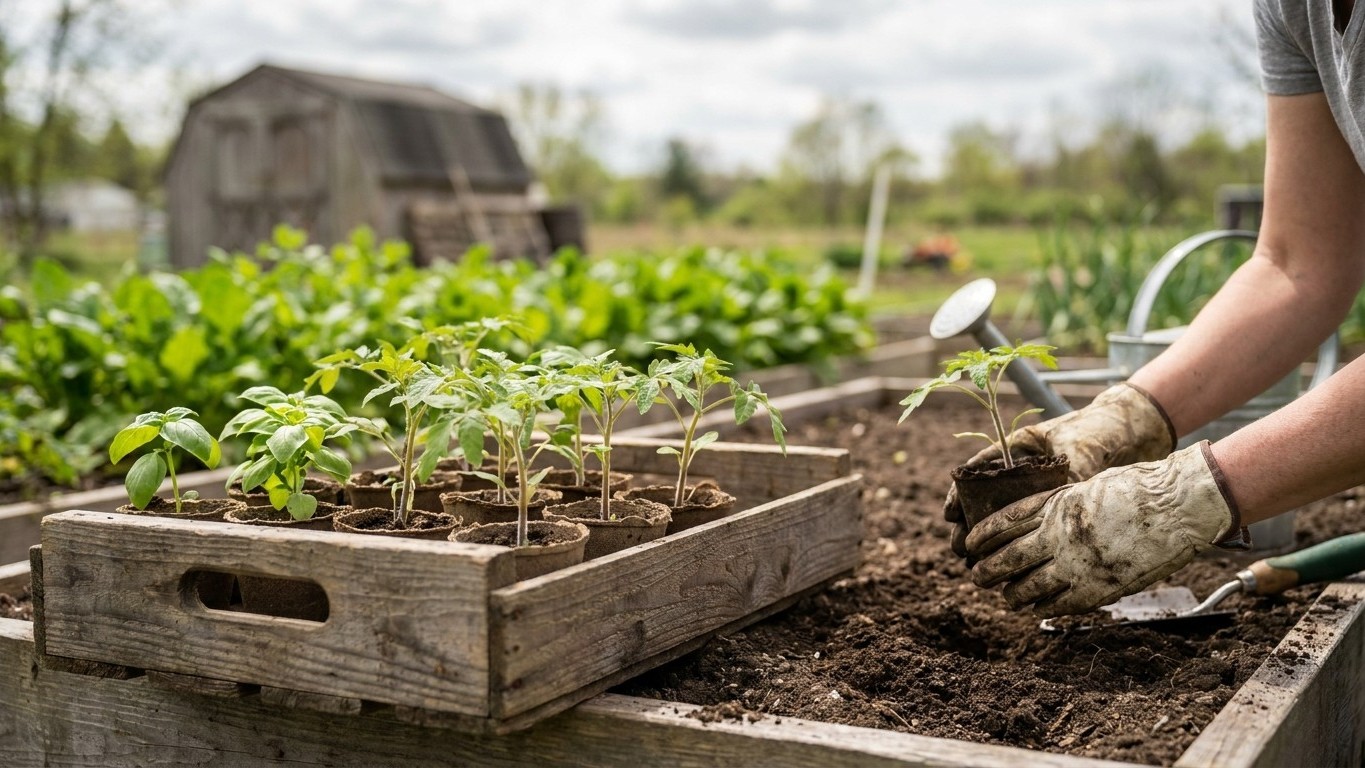
Transplants follow the same logic. Tomatoes, peppers, eggplant, and squash starts can move outdoors once the frost risk for your elevation has genuinely passed, ideally after a few days of hardening off in a sheltered spot. Cool-season holdovers still have a place too: onion sets, seed potatoes, and the last rounds of peas, lettuce, spinach, and hardy brassica transplants like cabbage and broccoli all tolerate the cooler nights May can still throw at higher ground. Garlic planted the previous fall is well up by now and needs nothing more than weeding and patience until early summer.
What to start under cover
May isn’t just about transplanting what’s already been started indoors, it’s also the month to begin the next round under cover, and the math for that runs backward from the first fall frost rather than forward from spring. With the first fall frost landing between October 18 and November 1 at the Charleston reference station, a fall cabbage or broccoli crop that needs roughly 70 days from transplant to harvest, plus another four to six weeks as a seedling before it’s ready to go out, means starting those seeds indoors sometime in late May to give the plant enough runway to mature before cold shuts things down. Push that start date later and you risk a fall crop that’s still sizing up when frost arrives, especially at higher elevations where that fall window closes earlier than the Charleston average suggests.
The same backward count applies to a second round of tender annuals for gardeners who want continuous tomato or pepper harvests into fall. Starting too early under cover produces the familiar problem of rootbound, leggy seedlings sitting in trays waiting for warm enough soil to receive them, which sets the plant back once it finally goes in the ground. Starting too late means the plant never has enough season left to produce before frost cuts it short. A cold frame or unheated hoop house extends the safe window on both ends by a couple of weeks, which is often the difference between a fall harvest and none at all in the state’s cooler counties.
What is ready to pick
Asparagus beds that have been established for a few years hit their stride in May, and rhubarb stalks are thick enough to harvest by mid-month in most of the state. Overwintered spinach and kale, especially anything that spent winter under a cold frame or row cover, is at its sweetest right now, before the plant bolts once daytime temperatures climb consistently into the 70s.
Radishes sown in early spring are usually ready within three to four weeks of seeding, and the tell is simple: pull one and check the shoulder width before the whole row goes woody. Lettuce is at its best cut young, leaf by leaf, rather than left to form a full head that turns bitter as the weather warms. Garlic scapes, the curling flower stalks that hardneck garlic sends up, are worth cutting off and eating in their own right, and doing so also redirects the plant’s energy back into bulb growth ahead of the summer harvest.
Stored crops from the previous season deserve one more check before they’re cleared out. Potatoes and onions that spent winter in storage should be sorted now, since any that have started to soft or sprout will spoil the rest of the bin if left in with the good ones.
The jobs that matter this month

Staking and caging come before the plant needs them, not after. Tomatoes, peas, and pole beans put on rapid growth once soil warms, and a cage installed after the plant has already sprawled damages roots and stems that a cage installed at transplant time never touches. The same goes for trellising cucumbers and squash if space is tight.
Mulching pays off differently in May than it does earlier in spring. Once soil has warmed to the point where warm-season crops are safely in the ground, a two-to-three-inch layer of straw or shredded leaves locks that warmth in, suppresses the first flush of weeds, and evens out soil moisture as May’s rain gives way to the drier stretches that often follow. Watering rhythm matters just as much: young transplants need consistent moisture at the root zone rather than a heavy soak once a week, since shallow, frequent watering trains roots to stay near the surface where they’re more vulnerable to heat later on.
Succession sowing keeps the harvest coming instead of arriving all at once. A short row of beans or lettuce planted every ten to fourteen days through May means the garden isn’t flooded with one crop and then empty. Pest scouting belongs on the same schedule. Colorado potato beetle larvae, squash bugs, and flea beetles all emerge as the weather warms, and catching the first eggs or adults on the undersides of leaves in May is far easier than dealing with an established population in July. A few minutes checking leaves twice a week costs nothing and saves a season’s worth of damage control.
What not to do in May
The most common mistake is trusting a warm afternoon over the ground itself. Air temperature in the 70s doesn’t mean soil has caught up, and tomato or pepper transplants set into soil still in the 50s often sit stunted for weeks even if they survive. Wait for the soil, not the forecast.
Uncovering cold frames or row covers too early after a stretch of mild weather is the second classic error, particularly at higher elevations where a warm week in early May can still be followed by a cold snap that catches exposed seedlings off guard. Keep covers within reach until the frost risk for your specific elevation has genuinely passed, not just the valley average.
Nitrogen timing trips up a lot of tomato growers. A heavy nitrogen feeding right as plants are transplanted pushes lush green growth at the expense of flowering and fruit set, leaving a gardener with a jungle of foliage and little to show for it by midsummer. Hold off on nitrogen-heavy feeding until plants are established and starting to flower, then shift toward a more balanced or phosphorus-leaning feed to support fruit rather than leaves.
Checking this against your own county
A state-wide frost window built from one reference station is a starting point, not a set of instructions for a specific backyard. West Virginia’s terrain moves these dates around more than most states, since a few thousand feet of elevation between the Ohio Valley and the high country around Pocahontas or Randolph County can shift both the last spring frost and the first fall frost by weeks in either direction. The USDA hardiness zone range across the state, 5a to 7a, reflects that same spread.
The WVU Extension Service keeps county-level guidance and local planting calendars that account for exactly this kind of variation, and it’s worth checking before committing a full bed of warm-season transplants to the ground.
Common questions
Is it safe to plant tomatoes outdoors in West Virginia in May?
In most of the state, yes, once soil temperature has warmed past 60°F and the local frost window has closed. At higher elevations, wait until later in the month and confirm with a soil thermometer rather than the calendar.
Can I still direct-sow cool-season crops like lettuce and peas in May?
Early May still works for a last round, especially at higher elevations where nights stay cooler longer, but by late May rising daytime temperatures push these crops toward bolting faster.
What’s the difference between the frost window in Charleston and the mountain counties?
The published frost dates come from a Charleston-area station in a river valley, which tends to warm up earlier than higher terrain. Counties like Pocahontas or Randolph typically see later spring frosts and earlier fall frosts than that reference point suggests.
When should I start fall brassicas if I want a fall harvest?
Counting backward from the first fall frost window of October 18 to November 1, most gardeners start cabbage or broccoli seeds indoors in late May to give the plant enough time to mature before cold arrives, adjusting earlier for higher-elevation counties where that window closes sooner.
Gardeners who plant by the Moon can check the May 2027 moon planting calendar, a tradition rather than a proven method.