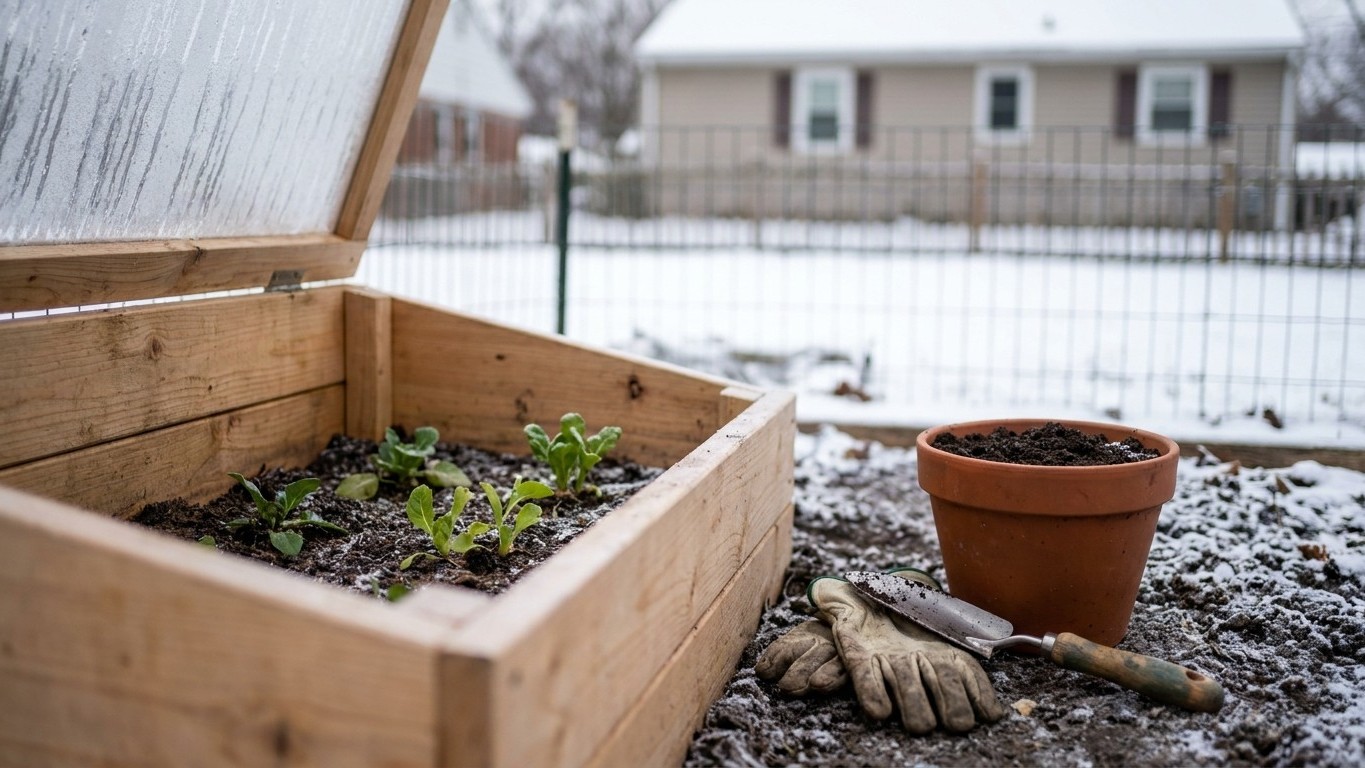

Wisconsin gardens in January live indoors and under cover. The ground is frozen solid across nearly the whole state, so nothing goes into open soil this month. What actually happens now is seed starting for long-season crops, dormant pruning, seed catalog decisions, and forcing rhubarb or chicory in a dark corner of the basement while the real growing season waits three months out.
What goes in the ground in January
Wisconsin spans USDA Plant Hardiness Zones 3b to 6a, and that range alone explains why there’s no single “January garden” for the whole state. The number is built on one variable only: the coldest night an average year brings. It says nothing about frost dates or soil temperature, which is what actually decides whether a seed or transplant survives contact with the ground.
The dates that matter more are the frost windows themselves. Statewide, the last spring frost typically falls between April 16 and April 29, and the first fall frost arrives October 17 to October 29. January sits roughly twelve to sixteen weeks ahead of that earliest spring date, depending on where in the month you’re standing. That’s not a planting window. That’s a planning window.
Soil temperature, not the calendar, is what a seed responds to, and Wisconsin soil in January sits well below freezing under a foot or more of frozen ground and often snow cover on top of that. No cool-season crop, however hardy, germinates in frozen dirt. So the honest answer is that direct sowing and outdoor transplanting are both off the table this month, everywhere from the Lake Superior shore to the Illinois border.
What’s still possible is narrower but real. Cold frames and low tunnels set up in fall can keep hardy greens like spinach, kale, and mâche alive and even slowly growing on sunny days when the cover traps enough heat. Anyone with a cold frame that still has plants in it from fall can check on them now rather than starting anything new. Indoors, forcing is the one true “planting” job available: potted rhubarb crowns or Belgian endive roots brought into a dark, cool space will push tender growth in a few weeks, giving a fresh vegetable harvest in the dead of winter without touching frozen ground at all.
What to start under cover
Seed starting is where January actually earns its place on the garden calendar, and the math runs backward from that April frost window rather than forward from a fixed date. Onions, leeks, and celery are the slow growers that need 10 to 12 weeks of indoor growing before they’re sturdy enough to go outside, which puts a January start right in range for an April 16 to April 29 transplant date. Count backward from whichever end of that window matches a given county, and January lands squarely in the sowing zone for those three crops.
Peppers and eggplant run a similar backward calculation, needing roughly 8 to 10 weeks under lights before they can handle transplanting, but only after the soil itself has warmed well past the frost date, since both crops sulk in cool soil even after the air feels safe. Starting them in the earliest days of January risks the first failure mode: rootbound, leggy seedlings sitting in small pots for too many weeks before the ground is actually warm enough to take them. That leggy stretch shows up as pale, stretched stems reaching for light and a plant that never quite recovers its vigor after transplant.
The second failure mode runs the opposite direction: waiting too long into late winter to start slow crops like onions or celery, then running out of runway before the short Wisconsin growing season closes again in October. Neither mistake is about a wrong date on a packet. Both come from skipping the backward count from the local frost window and going by feel instead.
What is ready to pick
Little to nothing comes out of open ground in Wisconsin in January, and any list claiming otherwise is padding. What’s real is what’s stored, covered, or growing indoors under lights. Kale, leeks, and Brussels sprouts left standing under snow cover can still be harvested by hand, since a blanket of snow acts as insulation and the vegetables underneath often taste sweeter after hard cold, thanks to starches converting to sugars as a frost-survival response.
A cold frame with fall-planted spinach or mâche is worth a weekly check, since those greens keep producing small leaves on any day the sun pushes the frame’s internal temperature above freezing. Indoors, sprouts and microgreens are the fastest fresh food a Wisconsin kitchen can produce this month, ready in a week to ten days from a jar or a seed tray on a windowsill, no soil warmth required at all.
The other harvest job in January is inspection, not picking. Stored squash, potatoes, and onions from the previous season need a hands-on check now: soft spots on squash, sprouting or green-tinged potatoes, and onions gone soft at the neck all signal produce on its way out that should be used or composted before it spreads rot to the rest of the stash. A five-minute check of the root cellar or pantry shelf now can save an entire bin later.
The jobs that matter this month
January’s real workload sits outside the vegetable bed entirely, and it’s heavier than the quiet look of a snow-covered yard suggests. Dormant pruning of fruit trees, brambles, and grapevines is a job with a real deadline: cuts made while wood is fully dormant heal cleanly, while pruning too close to bud break stresses the plant and invites disease into fresh wounds. Apple and pear trees, along with raspberry and blackberry canes, are the classic candidates for a January pruning pass, done on a day above freezing so the wood isn’t brittle and prone to splitting under the pruners.
Seed ordering belongs on this month’s list too, and not as a leisurely browse. Popular varieties, especially disease-resistant tomatoes and any seed sold by small regional companies, sell out early, and a gardener who waits until March is choosing from what’s left rather than what they actually wanted.
Soil work fits here as well. Testing soil pH and nutrient levels now, through a lab or a home kit, gives enough lead time to order and apply lime or amendments before the ground thaws and planting starts in earnest. A compost pile, even a frozen one, benefits from an occasional turn on a mild day to keep decomposition moving rather than stalling out completely in the cold.
Tool maintenance and infrastructure repair round out the list: cleaning and sharpening pruners and hoes, oiling wooden handles, and checking raised beds and fencing for winter damage before a storm makes the repair harder. None of this feels like gardening in the traditional sense, but skipping it costs real time once the season actually opens.
What not to do in January
The classic January mistake in Wisconsin is starting warm-season seeds, tomatoes especially, too early because a stretch of sunny days made the calendar feel later than it is. A tomato started in early January, months ahead of the April 16 to April 29 frost window, ends up leggy, rootbound, and stressed long before it can safely go outside. Starting later, closer to eight weeks before the transplant date, produces a stronger plant every time.
Uncovering cold frames or removing mulch after a brief warm spell is the second common error. A few days near 50 degrees in January doesn’t mean winter is over, and stripping protection off overwintering crops or perennial beds just ahead of the next hard freeze can undo months of insulation in a single cold night.
Feeding nitrogen to anything dormant is a third mistake worth naming. Fruit trees, brambles, and perennial beds in full dormancy have no use for a nitrogen boost right now; it does nothing but sit in the soil until spring growth resumes, and in some cases pushes premature soft growth during a mild spell that then gets killed by the next freeze.
Working soil at all while it’s frozen or waterlogged, whether digging a new bed or trying to amend an existing one, compacts the structure and can damage root systems still resting underground. Whatever the soil job is, it waits for soil that gives under a shovel, not soil that rings like pavement.
Checking this against your own county
A statewide January guide is a starting point, not an instruction specific to any one yard. Wisconsin’s north and south differ by weeks in frost timing, elevation shifts things further, and the moderating effect of Lake Michigan along the eastern shoreline delays both spring warmup and fall freeze compared to inland counties at the same latitude. A gardener near the lakeshore and one two hours inland at the same distance from the Illinois border can be working from genuinely different calendars in the same month.
The University of Wisconsin-Madison Division of Extension publishes county-level guidance that accounts for these local differences, and it’s the better reference once the general picture from a statewide guide has been absorbed.
Common questions
Can I plant garlic in Wisconsin in January?
No. Garlic goes into the ground in fall, several weeks before the ground freezes, so it can establish roots before winter. By January the ground is frozen solid across the state, and garlic cloves planted now would simply sit on top of frozen soil rather than root into it.
Is it too early to start tomato seeds indoors in January?
For most of the state, yes. Tomatoes need roughly 6 to 8 weeks of indoor growth before transplanting, and with the frost window falling between April 16 and April 29, a January start leaves seedlings sitting in pots far too long, leading to leggy, stressed plants by the time it’s actually safe to move them outside.
What vegetables can survive under snow in a Wisconsin garden in January?
Kale, leeks, and Brussels sprouts left standing from fall can survive under snow cover and still be harvested by hand, since the snow itself acts as insulation against the harsher air temperature above it.
Does Wisconsin’s hardiness zone tell me when to plant?
Not directly. The USDA zone range of 3b to 6a is based only on the average coldest night of the year, not on frost dates or soil temperature. For planting timing, the frost window (April 16 to April 29 for the last spring frost) is the more useful figure.