
In Wyoming, December closes the outdoor planting window almost everywhere in the state. Ground is frozen or close to it across most counties, and the last spring frost doesn’t clear until May 7 to May 18. What actually happens this month is garlic and shallots finishing up where soil is still workable, cold frames holding a few hardy greens, and dormant stock going in during any rare thaw. Everything else moves indoors: seed orders, soil plans, pruning shears.
What goes in the ground in December

Soil temperature decides this month, not the date on the wall. A shovel that bounces off frozen ground tells you everything the calendar can’t: below a certain depth, roots simply can’t establish, no matter how mild the afternoon air feels. Wyoming sits in USDA hardiness zone 3a-6a, a range built on the average annual extreme minimum temperature, and that range covers everything from high mountain valleys to lower river basins. A grower near a reference city in the milder part of that range still faces a last spring frost that doesn’t clear until May 7 to May 18, so December ground has months of freeze ahead of it before anything new can take root outdoors.
That means the honest answer for most of the state is that nothing new goes into open ground this month. What continues is narrow but real. Garlic and shallots planted in fall, before the ground locked up, are already down and mulched, and a thick layer of straw or shredded leaves piled on now (if it wasn’t already) helps buffer the freeze-thaw cycles that heave cloves out of loosened soil. Cold frames and low tunnels are the exception to the frozen-ground rule, since the covered soil underneath often stays workable a few extra weeks, long enough to hold spinach, mache, and claytonia that were seeded back in fall.
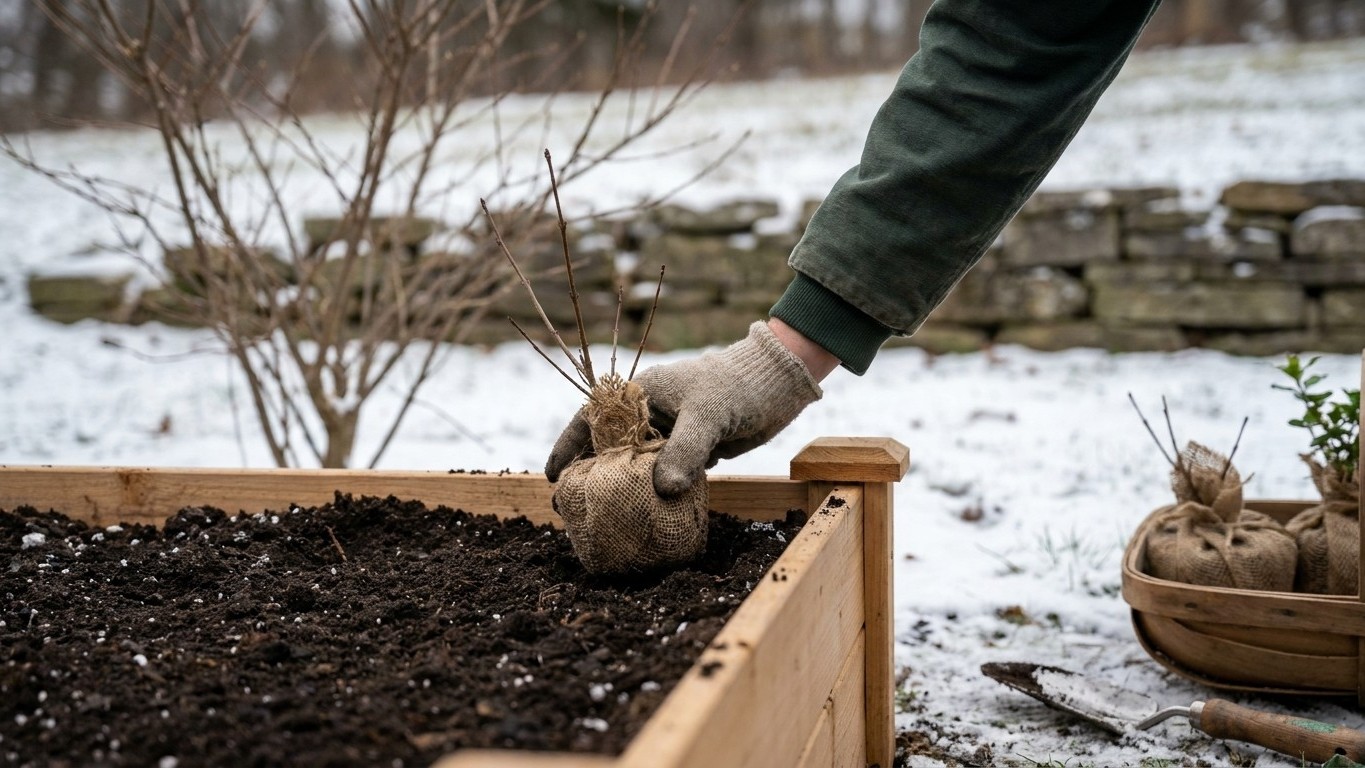
Bare-root and dormant plantings, fruit trees, brambles, and some shrubs, can go in during a genuine thaw if the planting hole doesn’t fill with standing water, but in most of the state that window simply doesn’t open in December and pushes into late winter or early spring instead. Indoors, this is the month to force chicory for winter chicons or bring in a rhubarb crown for early stalks in a dark, cool corner. Neither needs open ground, and both give a harvest while the garden itself sits still.
What to start under cover
Counting backward from the last spring frost, May 7 to May 18, tells you more than any generic seed-starting chart. Most warm-season transplants, tomatoes, peppers, squash, are started 6 to 10 weeks ahead of that date, which lands in February or March here, not December. Starting them now guarantees rootbound, leggy seedlings stretching for light long before the ground is ready to take them.
What does make sense in December is the small group of plants with a much longer runway. Onions and leeks are the classic example: they’re often started 10 to 12 weeks, sometimes longer, before transplanting, and since alliums tolerate a light frost and can go out as soon as soil is workable rather than waiting for the frost-free date itself, a December or January sowing lines up well for an April move outdoors. Slow-growing perennial herbs, rosemary in particular, also reward an early start under lights since germination and early growth are sluggish.
Cold stratification is the other December job. Many native perennial and wildflower seeds need 60 to 90 days of moist cold before they’ll germinate at all. Sowing them into pots of damp seed-starting mix and setting the pots in an unheated garage, cold frame, or the refrigerator now means they’ll have finished their cold requirement in time for a spring sowing outdoors. Miss this window and those seeds sit dormant for another full year. The two failure modes to watch are starting the long-season crops too early, which produces weak, overgrown seedlings by transplant time, and starting the stratification-dependent seeds too late, which pushes germination past the point where they can catch the growing season.
What is ready to pick
Outdoors, there’s little or nothing to harvest across most of Wyoming in December. That’s the honest state of things, but it doesn’t mean the kitchen goes without. Kale and leeks left in the ground under a heavy mulch or snow cover often survive and can be dug out during a mild stretch, since both actually sweeten after hard frost. A pick or garden fork helps break through crusted snow and frozen topsoil without damaging the roots underneath.
Cold frames extend this further. Spinach, arugula, and mache growing under cover can be cut a few leaves at a time on any day the frame isn’t frozen shut, and cutting sparingly keeps the plants producing rather than stripping them bare in one visit. Indoors, sprouts and microgreens fill the gap entirely: a tray of pea shoots or sunflower sprouts on a windowsill goes from seed to harvest in one to two weeks regardless of what’s happening outside.
Stored crops need regular checking this month, since one soft squash or sprouting onion can spread rot through an entire bin. Winter squash should feel hard with no soft spots or mold at the stem; any give under thumb pressure means it needs to be used now, not stored longer. Potatoes showing sprouts or going soft and wrinkled should be pulled and used first. Onions with a soft neck or green shoots emerging are past storage life and belong in the next meal, not the root cellar.
The jobs that matter this month

Dormant pruning is the big one. Fruit trees and cane berries are cut back while they’re fully dormant and the structure of the plant is visible without leaves in the way, which makes it easier to spot crossing branches, dead wood, and the shape you’re aiming for. The exception is extreme cold: wood becomes brittle in a hard freeze, cuts don’t callus well, and pruning is best saved for a day when temperatures sit above freezing rather than during a deep cold snap.
Seed ordering has a real deadline attached to it, even if it doesn’t feel that way. Popular varieties, especially disease-resistant tomatoes and early-maturing corn suited to a short season, sell out from seed companies weeks before spring planting begins. Ordering now means the seed is in hand and ready when the count-back schedule from the last frost says it’s time to sow.
Planning next season’s rotation matters just as much as any physical task. Moving nightshades, brassicas, and alliums to different beds each year interrupts the pest and disease cycles that build up when the same family grows in the same soil repeatedly, and a rough sketch made now, while last season is still fresh in memory, beats trying to reconstruct it from scratch in spring.
The rest of the list is upkeep that pays off later: testing soil so amendments can be worked in before the ground firms up completely, turning compost while it’s still loose enough to move, cleaning and sharpening pruners and shovels so they’re ready without a scramble, and walking the fence line and raised beds to fix anything that will only get harder to reach once snow piles up against it.
What not to do in December
The most common mistake is treating a mild afternoon as a green light. Air temperature in the 50s doesn’t mean the soil six inches down has thawed, and transplanting or direct-sowing based on how the day feels rather than how the ground actually tests usually ends with seedlings sitting in cold, wet soil until they rot or simply stall.
Uncovering cold frames or pulling back mulch after a warm stretch is the second trap. A few days of thaw can fool overwintering greens and garlic into pushing new growth, and that tender growth has no defense when the next cold snap arrives, which in Wyoming it reliably does. Leave protective covers in place through the season and only pull them back for harvesting, not for airing things out on a nice day.
Feeding nitrogen this month is wasted at best and damaging at worst. Dormant plants aren’t taking up nutrients the way they do in active growth, so nitrogen either leaches away with snowmelt or, worse, coaxes a flush of soft new growth that has no cold tolerance at all. Hold off on feeding until growth actually resumes in spring.
Finally, don’t treat a single statewide frost window as gospel for a specific yard. The zone map and the frost dates describe an average across a huge range of elevations and microclimates, and applying them without adjustment is how gardeners end up surprised by a frost that “shouldn’t” have happened yet.
Checking this against your own county
A statewide month is a starting point, not an instruction. Wyoming’s elevation swings by thousands of feet between its river valleys and its mountain benches, and that difference alone can shift a frost date by weeks in either direction. The northern part of the state and the southern part don’t share a calendar, and a valley floor rarely matches a nearby bench a few hundred feet higher.
The University of Wyoming Extension is the resource built for exactly this gap, with county-level guidance that accounts for local elevation and microclimate in a way a state average never can.
Common questions
Is it too late to plant garlic in December in Wyoming?
If it’s already in the ground and mulched, no, it’s simply finishing its fall planting cycle and will resume growth in spring. If it hasn’t gone in yet and the ground is frozen solid, it’s better to wait for the next fall planting window rather than force cloves into ground that can’t be worked.
Can I start vegetable seeds indoors in December?
Only the long-lead crops make sense: onions, leeks, and seeds that need cold stratification. Tomatoes, peppers, and other fast-maturing transplants started this early become leggy and stressed long before the last frost, May 7 to May 18, clears.
What should I do if my cold frame greens look frozen solid?
Leave them covered and wait. Many greens like spinach and mache wilt and look damaged when frozen but recover once temperatures rise, and cutting or disturbing them while frozen causes more damage than the cold itself.
Do frost dates apply the same way at higher elevations?
No. The published frost window reflects a specific station, and higher elevations in Wyoming can see frost in any month of the year. Anyone gardening well above valley floor elevation should treat the statewide dates as a rough guide and check with their county extension office for local adjustments.
Gardeners who plant by the Moon can check the December 2026 moon planting calendar, a tradition rather than a proven method.