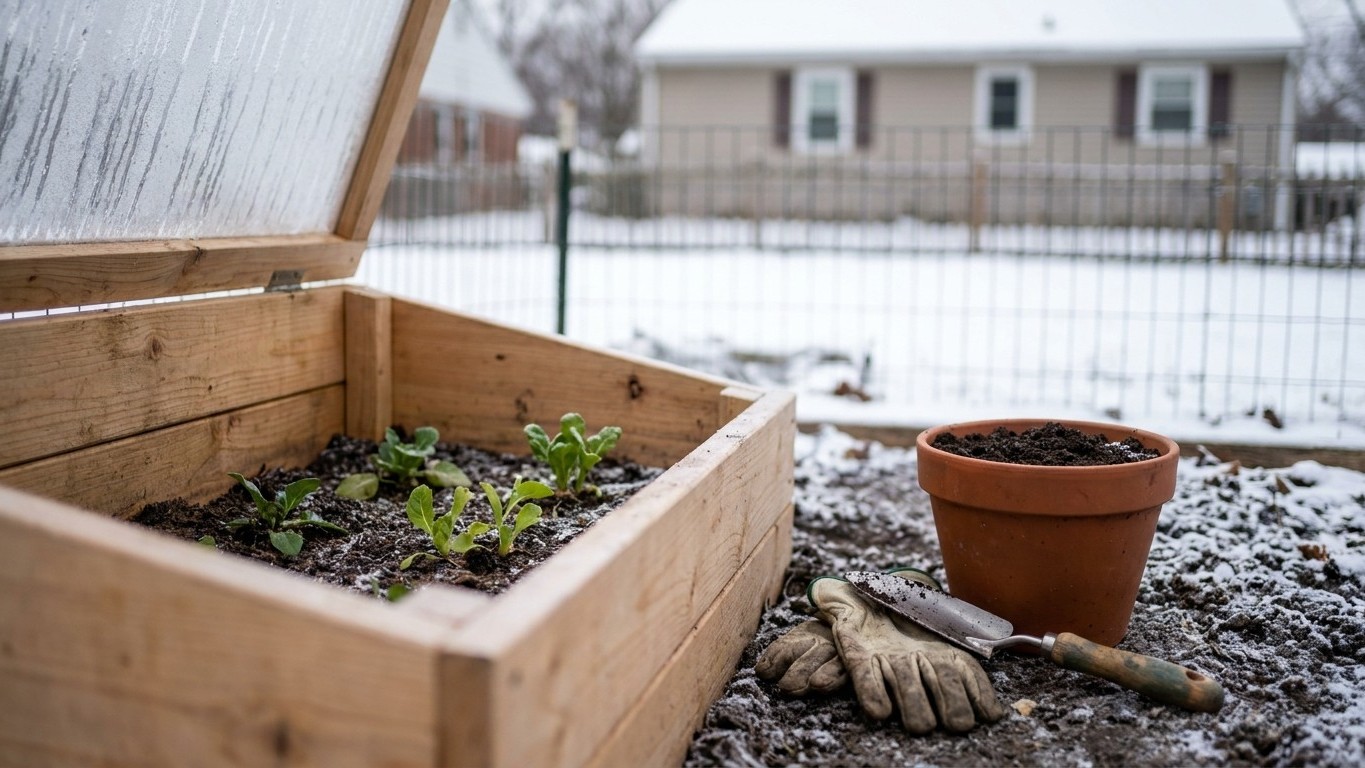

January in Wyoming sits deep inside the frozen months: with a last spring frost window running May 7 to May 18, nothing goes into open garden soil this month. What does work is bare-root and dormant planting, garlic tucked in before the ground locked up, cold frames, and forcing indoor crops like rhubarb or chicory. The bulk of this month’s real work happens in sheds, seed catalogs, and pruning shears, not in open beds.
What goes in the ground in January

Soil temperature, not the calendar, decides what can go into the ground, and across most of Wyoming that soil is frozen solid this month. With the last spring frost falling between May 7 and May 18 depending on location, January sits roughly four months ahead of the safe planting window for anything tender. At elevations above 6,000 feet, where the frost-free season shrinks to around 130 days, the ground may stay locked well past what a calendar suggests, and frost remains possible in any month at the highest sites. So the honest answer is simple: nothing goes into open, unprotected garden soil this month.
That does not mean the garden is idle. Garlic and shallots planted the previous fall are already in the ground, dormant and waiting, and if a rare thaw leaves a patch of workable soil, a late garlic planting can still go in as an emergency measure, though results will lag behind a properly timed fall crop. Bare-root fruit trees, roses, and cane berries can be planted the moment the ground softens enough to dig, though in most of the state that moment does not arrive until later winter or early spring. Cold frames and low tunnels are the one place where sowing is realistic: spinach, mâche, and claytonia can be started under a frame where the added protection buys several weeks of soil warmth a bare bed does not have.
Indoors, this is prime season for forcing. Rhubarb crowns lifted and brought into a dark, cool space will push tender stalks weeks ahead of anything outdoors, and Belgian endive or chicory roots can be forced the same way for a fresh winter harvest that costs nothing but a dark corner and a few weeks of patience. None of this replaces open-ground planting, but it keeps something growing while the soil outside stays hard as concrete.
What to start under cover
Seed starting this month is arithmetic, worked backward from the last spring frost rather than forward from any fixed date. With frost clearing between May 7 and May 18 across most of the state, count back the weeks a given crop needs indoors before it is ready to transplant, and that tells you whether January is too early, on time, or already late.
Onions and leeks are the main exception to a general rule of waiting: both need 10 to 12 weeks indoors before they can handle outdoor conditions, which puts a January start roughly on schedule for a May transplant date. Peppers, which are notoriously slow, also benefit from an early indoor start if the goal is fruit before the first fall frost arrives between September 24 and October 5, since a short high-elevation season leaves little room for a late start to catch up.
Almost everything else, tomatoes, squash, cucumbers, and other fast growers, is too early this month. Starting them now under grow lights means six to eight weeks of stretched, rootbound seedlings sitting on a windowsill waiting for soil that will not be warm enough until well into late spring or early summer at higher elevations. That is the first failure mode: an overeager start that produces a leggy, stressed plant by the time it can finally go outside. The second failure mode runs the other direction, waiting so long that slow growers like peppers or celery never catch up to the short window between the last spring frost and the first fall one. January is the month to check both directions of that calculation before trays go under the lights.
What is ready to pick
Little comes out of open ground in Wyoming this month, and it is worth saying plainly rather than stretching a short list to sound fuller. Snow cover and frozen soil put outdoor harvesting on hold across nearly the entire state.
What still feeds a household comes from three places. Cold frames sheltering hardy greens, spinach, kale, mâche, can still yield a cutting on a mild day, since these crops tolerate hard freezes and simply pause growth rather than dying back. Indoors, sprouts and microgreens fill the gap with a harvest ready in as little as a week from seed, no soil warmth required at all. And in storage, this is the month to walk the root cellar or pantry shelf and check winter squash, potatoes, and onions for the first signs of trouble: a soft spot on a squash, sprouting eyes on a potato, or a papery onion gone soft at the neck all mean use it now before it spreads to its neighbors.
Overwintered kale and leeks left standing in the garden under snow cover are worth checking too, particularly in the milder parts of the state. A shovel to clear snow from a leek row can still turn up usable stalks even in the coldest months, since the soil around the base often stays just warm enough to keep the plant alive under insulation. It is not a large harvest, but it is a real one, and it is one of the few outdoor jobs this month that ends with something on the table.
The jobs that matter this month

January carries more weight than its short harvest list suggests, and the jobs that get done now decide how the whole growing season unfolds later.
Pruning, planning, and seed orders
Dormant pruning of fruit trees, grapevines, and cane berries is best done while the plant is fully asleep and the structure is visible without leaves in the way. Cuts made now heal cleanly before spring sap flow begins, and removing dead or crossing wood this month prevents disease from taking hold in wounds later in the season. Seed ordering belongs on the same list: popular varieties, particularly short-season types bred for high-elevation growing, sell out early, and a January order guarantees stock before the good options disappear.
Soil, tools, and storage checks
This is also the month to test soil pH and nutrient levels while there is time to amend before spring planting, since lime and some amendments need weeks to change soil chemistry. Turning a compost pile, even a frozen one, keeps the pile from compacting into a solid, oxygen-starved mass. Tools benefit from the downtime too: cleaning rust off blades and sharpening pruners and hoes now means no delay once the ground opens up. Beds, cold frames, and fencing damaged by winter weight or wildlife should get repaired before the rush of spring planting arrives, and stored crops need a regular check for the rot and sprouting mentioned above. None of these jobs show up in a harvest count, but skipping them costs real time later.
What not to do in January
The most common mistake this month is trusting a warm afternoon over the actual soil and frost data. A stretch of 50-degree days in January does not mean the ground has warmed, and it does not shift the last spring frost window, which still runs May 7 to May 18 across most of the state. Planting anything tender based on a mild spell is a near-guaranteed loss when the next cold snap arrives, which it will.
A related error is uncovering cold frames or removing winter mulch too early after a warm stretch. Mulch and row cover are doing their job by holding soil temperature steady; pulling them back the moment the air feels pleasant exposes plants and soil to the next freeze with no buffer left, undoing weeks of protection in a single cold night.
Fertilizing is the third trap. Nitrogen applied to dormant plants or frozen beds does nothing for the plant and simply washes away or binds up in soil that is not biologically active enough to use it, since most soil microbes slow down dramatically in freezing conditions. The better move is to wait until soil temperature rises and root growth actually resumes, then feed on a schedule tied to the plant’s active growth rather than the calendar page.
Checking this against your own county
A state-wide window is a starting point, not a fixed rule, and Wyoming makes that gap wider than most states. USDA hardiness zones here range from 3a to 6a, and elevation alone can shift a frost date by weeks between a valley floor and a nearby ridge. The north and south ends of the state, and low-elevation river valleys versus high mountain basins, do not share a single planting calendar even when they share a state line.
Before committing seed or transplants to a date, check local conditions against the University of Wyoming Extension, which tracks county-level frost data and local growing advice tuned to the state’s elevation swings.
Common questions
Can I plant anything outdoors in Wyoming in January?
Not in open, unprotected soil. Cold frames and low tunnels can support hardy greens like spinach or mâche, and bare-root plants can go in if a thaw leaves the ground workable, but this is the exception, not the rule.
When should I start seeds indoors for a Wyoming garden?
Count backward from the last spring frost, which falls between May 7 and May 18 across most of the state. Onions and leeks, needing 10 to 12 weeks indoors, are on schedule for a January start; fast growers like tomatoes and squash are still too early.
Is there anything to harvest in a Wyoming garden this month?
Outdoor harvests are rare, but cold-frame greens, overwintered kale and leeks under snow, and indoor sprouts or microgreens can all supply fresh food. Stored squash, potatoes, and onions should also be checked regularly for rot or sprouting.
What is the biggest planting mistake to avoid in January?
Trusting a warm afternoon instead of actual soil temperature and frost data. A mild spell does not move the last frost date, and planting or uncovering beds too early based on warm air almost always ends in frost damage.
Gardeners who plant by the Moon can check the January 2027 moon planting calendar, a tradition rather than a proven method.