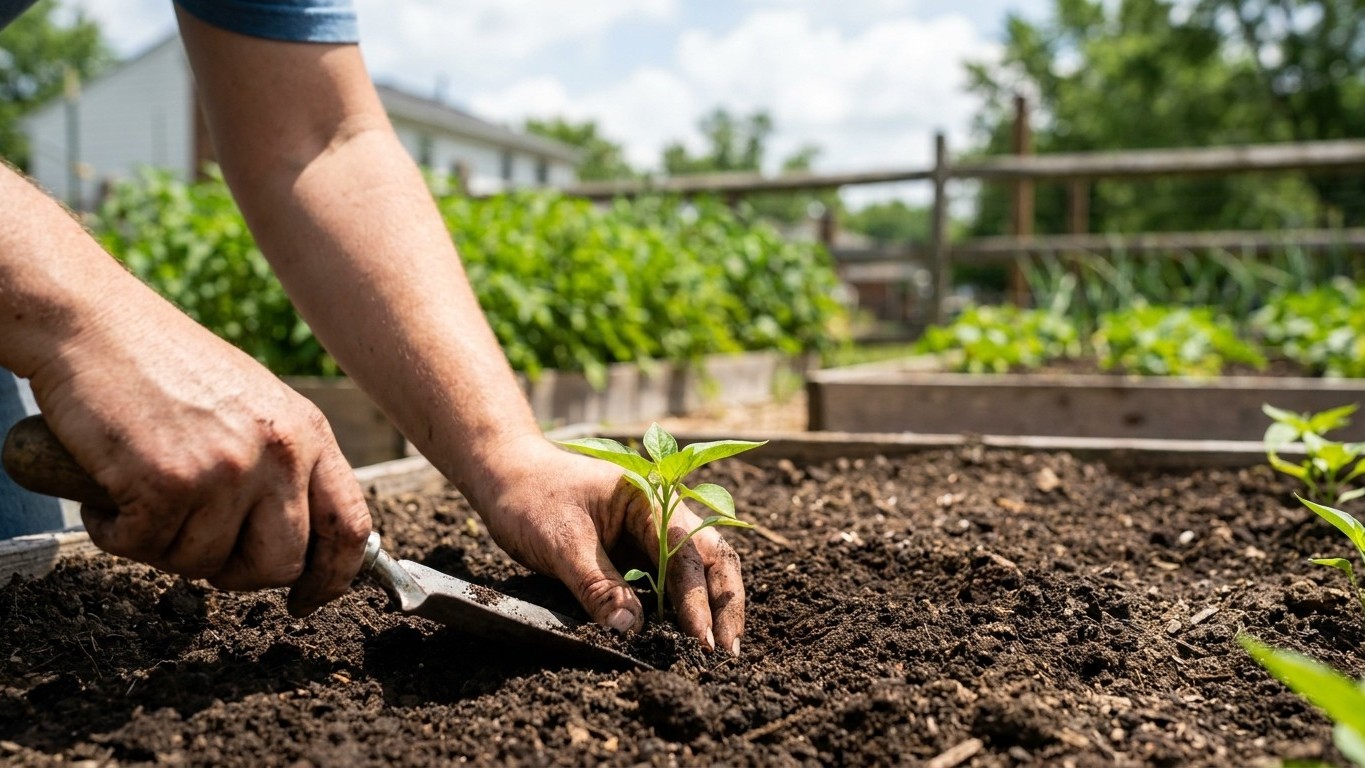

By July, Yukon’s frost-free stretch (mean dates of June 5 and August 25, per Environment and Climate Change Canada’s Whitehorse A station) is already running. That leaves roughly eight to eleven weeks of open ground, which is enough for fast crops and transplants but not for anything that needs a long, warm summer to finish.
What goes in the ground in July
The frost-free window here is short and the mean dates are exactly that: means. In one year out of two, the last spring frost falls later than June 5, and the same is true in reverse for the August 25 fall date. So early July still carries some risk of a cool night, and late July is already counting down toward the next one. What decides whether something belongs in the ground now is not the date on the calendar but how many days that crop needs to finish before the frost window starts to close.
Direct sowing quick crops
Radishes, spinach, leaf lettuce, arugula, and another round of peas can still go straight into the soil early in the month. All of these mature in three to seven weeks, which leaves a comfortable margin even against the August 25 mean. Beets and quick turnips sown in the first half of July should also make it, though a late sowing in the last week is a narrower bet.
Transplants that still have time
Cabbage, broccoli, and kale started indoors in spring can go out as transplants through early July, since they arrive already several weeks into their growth. Onion and leek sets, if not already in, should go in as soon as the soil can be worked. Garlic and shallots are a fall or very early spring job here, not a July one, given how little of the season would be left to bulb up.
| Crop | Method | Approx. days to maturity | July window |
|---|---|---|---|
| Radish | Direct sow | 25-30 | All month |
| Leaf lettuce | Direct sow | 30-45 | Early to mid-July |
| Peas | Direct sow | 55-65 | First half of month only |
| Cabbage/broccoli | Transplant | 60-70 from transplant | Early July |
What to start under cover
Counting backward from a mean first fall frost of August 25 is the safer way to plan than working forward from a fixed sowing date. A crop that needs 40 days to reach transplant size plus another 45 to mature needs 85 days clear, which by late July has already run out. That arithmetic is worth redoing for whatever seed packet is in hand: take the days-to-maturity number, add any transplant lead time, and count back from the mean frost date rather than forward from whenever the seed happens to arrive.
Under cover in July mostly means protecting what is already growing, not launching new long-season crops. A cold frame or a length of row cover over quick greens buys an extra two to three weeks of growing time into September, which matters when the frost-free season is this compressed. The two failure modes both show up here: starting fall greens too early under cover means bolting in the long daylight hours Yukon gets in midsummer, while starting them too late means they never size up before the nights turn cold. Aiming for a sowing in the first half of the month, timed so the crop matures in the four to six weeks before the mean frost date, splits the difference.
Anything genuinely long-season, tomatoes or peppers grown outdoors without protection, corn, melons, is already past the point where starting it now makes sense in this climate. Where those are grown at all in the territory, it is almost always in a heated greenhouse or high tunnel, not as a July sowing outdoors.
What is ready to pick
Crops sown in May and early June are the ones coming off the garden now. Radishes and early lettuce planted before the last frost window closed are usually ready within the first couple of weeks of the month. Spinach sown early can bolt fast once daylight stretches past sixteen hours, so it is worth checking daily rather than waiting for a convenient weekend.
Rhubarb, if it is established, is at its best through July, and stalks should be pulled rather than cut to keep the crown healthy. Chives, mint, and other hardy perennial herbs are also in full growth. Early peas sown in May can start coming in by mid-month; pods are ready when they fill out but before they turn dull and starchy.
Overwintered crops are not a July story here the way they are further south, since the ground is well past thaw by this point and nothing has been sitting under snow. The more useful check this month is on anything started indoors earlier in the season and hardened off recently: look for transplant shock symptoms (wilting, pale new growth) rather than for a harvest, since most of those plants are still weeks from producing.
The jobs that matter this month
Watering rhythm matters more in July than almost any other job on this list. Long daylight hours push evapotranspiration higher even when air temperatures stay moderate, so soil that looks fine on the surface can be dry an inch down. A deep soak two or three times a week beats a light sprinkle every day, since it encourages roots to grow down rather than staying shallow.
Mulching follows the same logic: a couple of inches of straw or grass clippings around brassicas, peas, and root crops holds that moisture and keeps soil temperature more even through the long summer days. Staking peas and any tall brassicas before they flop is worth doing now, before the plants get heavy, rather than after a wind event flattens them.
Succession sowing is the job most likely to be skipped and most likely to be regretted. A second sowing of radishes, lettuce, or spinach in the first half of July, timed against the August 25 mean frost date, can still produce a full crop. Left until August, that same sowing is a gamble.
Pest scouting matters too: aphids and root maggot flies both find brassicas and root crops in July, and catching an infestation in its first week is far easier than dealing with it after it has spread through a bed. A quick check of leaf undersides every few days costs almost nothing and catches most problems before they become serious.
What not to do in July
The most common mistake is treating a warm afternoon as proof the season has fully arrived. Air temperature and soil temperature are not the same thing, and cold soil left over from a short growing season slows germination and can rot seed that would otherwise be fine. Checking soil temperature at planting depth, rather than trusting how the air feels, avoids this.
A second mistake is starting something with too little time left before the mean frost date. A packet that reads “70 days to maturity” sown in the third week of July is asking for a harvest around the first week of October, well past the August 25 mean and past the point where a cold night could reasonably be expected here. Sticking to genuinely quick crops for anything sown after mid-month avoids this.
Heavy nitrogen feeding late in the month is also a poor idea for anything meant to mature and harden off before frost. Nitrogen pushes soft, leafy growth at the expense of the ripening and toughening a plant needs to handle a cold snap. A balanced or lower-nitrogen feed, or none at all, suits July better than a strong dose meant for early-season growth.
Finally, resist pulling row cover or cold frame lids off permanently just because a stretch of warm days has arrived. A single cool night can still undo weeks of protected growth, and the mean frost date is only the midpoint of a range, not a guarantee.
Checking this against your own county
These frost dates and this hardiness zone come from one station, Whitehorse A, and Yukon’s terrain does the rest of the work in shifting them. Elevation, river valleys, and the difference between the south of the territory and the more northern communities can move the safe planting window by two weeks or more in either direction. Canadian hardiness zone 1b, the figure that applies at that reference station, uses seven climate variables and does not convert to a USDA zone at all, so it is a starting point for judging how short and cold the season runs, not a number to plug into US charts.
For local planting guidance suited to Yukon’s specific soils and microclimates, the federal agriculture department’s site is a reasonable starting point: agriculture.canada.ca.
Common questions
Is it too late to start a vegetable garden in Yukon in July?
Not for quick crops. Radishes, lettuce, spinach, and a second round of peas sown early in the month still have time to mature before the mean first fall frost of August 25. Long-season crops like tomatoes or corn grown outdoors without protection are a different story and are already past their window by July.
How reliable is the June 5 last frost date for planning?
It is a mean, not a guarantee. Environment and Climate Change Canada’s own normals show frost falls later than June 5 in about half of all years at the Whitehorse A station, so treating it as a firm safe date rather than the midpoint of a range is a common source of disappointment.
What does Canadian hardiness zone 1b actually mean for a Yukon garden?
It reflects a short, cold growing season based on seven climate factors tracked by Natural Resources Canada, not a single minimum temperature the way the USDA system works. It cannot be matched to a USDA zone number, and it applies specifically to the reference station’s conditions, not uniformly across the territory.
Can tomatoes or peppers be grown outdoors in Yukon in July?
Outdoors and unprotected, the frost-free window is too short for most tomato and pepper varieties to reach harvest reliably. Where these crops are grown in the territory, it is typically under a heated greenhouse or high tunnel rather than as an open-ground July planting.