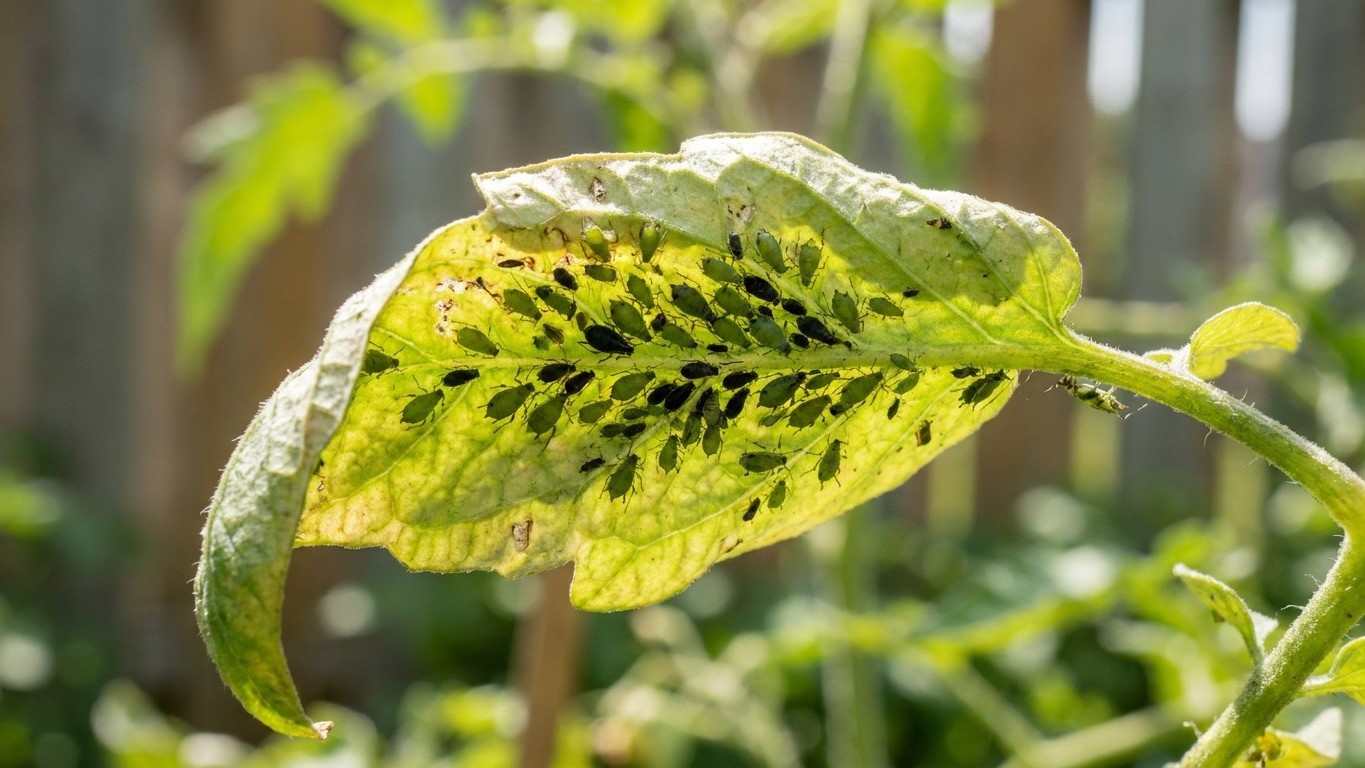

Aphids arrive in Yukon gardens later than almost anywhere else in North America, usually not until mid-June, and they disappear just as fast once the first hard frost hits in September. That narrow window is the whole story: cold soil delays their buildup, but the territory’s marathon daylight hours let populations explode once they get a foothold. Knowing that timing is what separates a gardener who loses a pepper crop from one who barely notices the bugs were there.
Yukon’s Growing Season and Why Aphids Time Their Arrival

Whitehorse typically sees its last spring frost in late May and its first fall frost by mid-September, leaving a frost-free stretch of roughly 90 to 100 days. Aphids need warmth to reproduce quickly, and Yukon soil stays cold well into June even after air temperatures climb. That lag means most outdoor aphid activity doesn’t get moving until the back half of June, weeks behind what a gardener in Ontario or Washington State would experience.
Once they do arrive, though, the territory’s 18-to-20-hour summer days work against the plants. Longer daylight speeds up plant growth, which produces the soft, nitrogen-rich new shoots aphids prefer to feed on. A single female aphid can produce dozens of live offspring without mating, and under warm, bright conditions a new generation can mature in about a week. In practical terms, a garden that looked clean on a Monday can have a visible aphid colony clustered on the undersides of leaves by the following weekend.
Most of Yukon’s outdoor aphids aren’t locals that overwintered in the soil. Because the territory has few of the woody perennial hosts aphids use to lay overwintering eggs on a commercial scale, a large share of the population arrives as winged migrants riding air currents up from British Columbia and Alberta. That’s part of why infestations can seem to appear out of nowhere in early summer rather than building gradually from spring.
Which Aphids Actually Show Up in Yukon Gardens
Two species account for most of the outdoor damage reported by home growers in the territory:
- Green peach aphid (Myzus persicae), a pale green to yellowish aphid that feeds on a wide range of vegetables, from brassicas to peppers, and tolerates cooler conditions better than many other species.
- Potato aphid (Macrosiphum euphorbiae), larger and pinkish-green, common on potatoes, tomatoes, and other nightshades grown in raised beds and community plots.
Inside greenhouses and hoop houses, foxglove aphid and other greenhouse-adapted species show up as well, feeding on ornamentals and starts before those plants ever make it outside. Since so much Yukon food production relies on season-extension structures to compensate for the short summer, the line between “outdoor” and “indoor” aphid problems blurs more here than in milder climates.
What Actually Stops Aphids in Yukon
Cold is the single biggest limiting factor. Aphid reproduction slows sharply once nighttime temperatures drop below about 50°F, and it stalls almost completely below freezing. A hard frost, which Yukon reliably delivers by mid-to-late September, wipes out most outdoor populations in a single night. That’s a built-in advantage no gardener in a longer-season climate gets: you don’t need to manage aphids into the fall, because winter does it for you.
Natural predators do the rest of the work during the warm months. Lady beetles, lacewing larvae, hoverfly larvae, and tiny parasitic wasps in the genus Aphidius all feed heavily on aphid colonies, and they tend to show up naturally in gardens that haven’t been sprayed with broad-spectrum insecticides. A healthy population of these predators can knock down a colony faster than any product a gardener applies at home.
Heavy rain and even a strong hose spray have an outsized effect too. Aphids have soft bodies and weak grip on leaf surfaces, so a hard rinse dislodges them and many never find their way back to the plant. Given Yukon’s relatively dry summer climate, gardeners who irrigate with an overhead sprinkler or spray attachment sometimes see fewer aphid problems than those relying on drip irrigation alone, simply because the leaves get knocked clean periodically.
The Ant Connection
Ants complicate aphid control because they feed on the sugary honeydew aphids excrete, and in exchange they protect aphid colonies from predators, sometimes even carrying aphids to new host plants. If ants are visibly trailing up and down a stem, that’s often a sign of an aphid colony nearby, and dealing with the ants can make predator control far more effective.
Greenhouses and Houseplants: A Different Clock Entirely
Outdoor timing doesn’t apply once plants move under cover. Yukon’s long, dark winter, often eight months or more without reliable outdoor growing, pushes a lot of plant activity into heated greenhouses and onto windowsills. Those warm, humid, frost-free environments let aphids reproduce continuously, with no cold season to reset the population.
This creates a common pattern: aphids overwinter quietly on houseplants or greenhouse starts, then hitch a ride outside in late May or early June when gardeners move seedlings out to the garden or transplant them into raised beds. A grower who never saw an aphid indoors all winter can suddenly find a colony established on transplants within days of setting them outside, simply because the insects were there all along, just reproducing slowly in cooler indoor light before the move.
Anyone starting seeds indoors or overwintering potted herbs and ornamentals should inspect new growth closely before bringing plants outdoors. New leaf tips and the undersides of leaves near the stem are the first places colonies establish, and catching them before the transplant goes outside prevents an entire season of reintroducing the problem.
Practical Steps for Yukon Gardeners
Because the outdoor window is short, timing matters more than volume of effort. A few targeted actions do more good than a season-long spray schedule.
Start by inspecting transplants and any plants brought indoors over winter before they go back outside in late May or early June. A magnifying glass helps spot early colonies clustered on new growth, and catching them at this stage, before plants are set in the garden, avoids seeding the whole bed.
Once plants are outside, a strong jet of water from a hose, aimed at the undersides of leaves, is often enough to control light infestations. For heavier colonies, insecticidal soap applied directly to the aphids, making sure to coat leaf undersides where they cluster, breaks down their outer coating without harming most beneficial insects if used carefully. Neem oil works similarly and has some repellent effect on returning aphids.
Avoid heavy nitrogen fertilizer, especially fast-release synthetic types, since it produces exactly the soft, sappy growth aphids prefer. Slower-release organic fertilizers or compost tend to produce sturdier growth that’s less attractive to colonizing aphids.
Floating row covers, put in place before aphids typically arrive in mid-June, physically block winged migrants from reaching young plants during the most vulnerable early growth stage. They need to come off once flowering begins if the crop requires pollination, but for leafy greens and brassicas they can be left on much of the season.
Planting flowers that attract beneficial insects, such as dill, yarrow, and alyssum, near vegetable beds gives lady beetles and hoverflies a reason to stick around once they show up. Given how short the aphid season already is in Yukon, tipping the balance toward predators early tends to matter more than reaching for a spray bottle at the first sign of trouble.
Clearing plant debris at the end of the season, particularly anything that hosted an aphid colony, reduces the number of insects that might overwinter in sheltered spots like cold frames or unheated greenhouses, even though most outdoor populations die off with the first hard frost anyway.