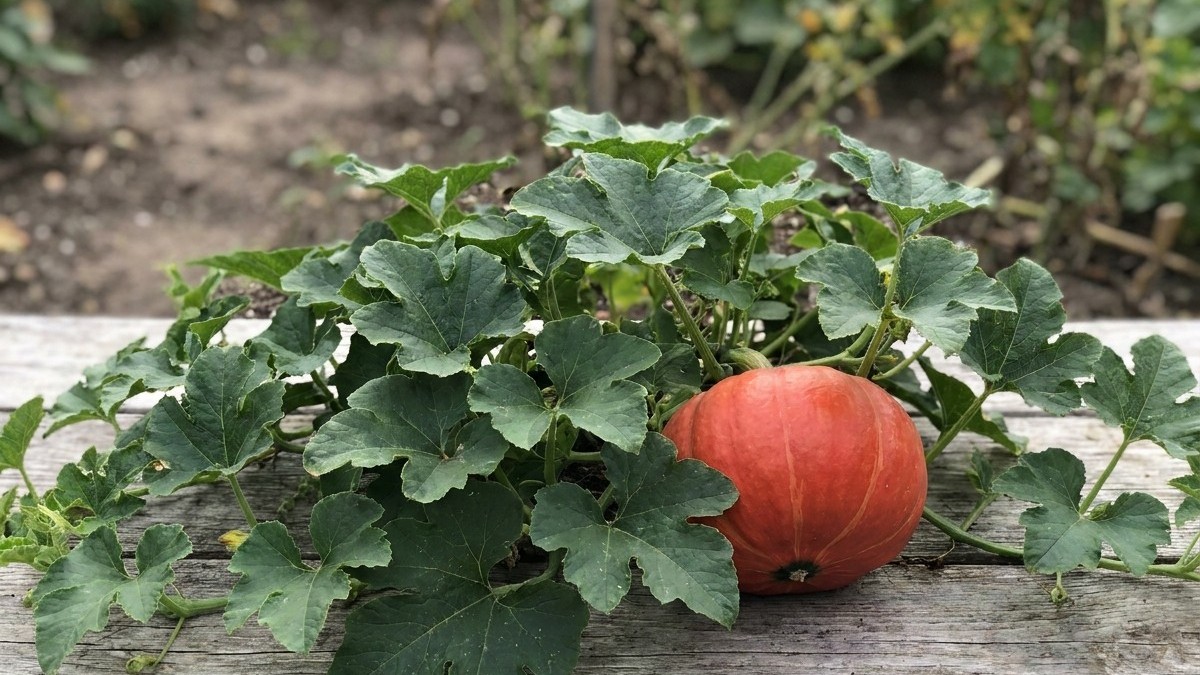

Cut pumpkins in Yukon in the second half of August, before the first hard frost, with the stem attached. Whole and kept cool, dark and unfrozen, they can last three to six months at best. Both answers depend on details: when the flowers opened, how cold the first night gets, and which room the pumpkin ends up in. Each one is easy to check, and each is worth a few minutes before the season turns.
When pumpkins are ready in Yukon
Watch the rind. A pumpkin is ready when the skin has taken its full color and a thumbnail can’t dent it, which comes about 45 to 55 days after flowering. In Yukon that points to a rough window of mid to late August, with the first fall frost as the deadline.
How do you count pumpkin days against Yukon frost dates?
Utah State University Extension puts maturity at 45 to 55 days after flowering. The count starts when the fruiting flowers open, not at seeding and not at transplanting. That matters a great deal in a short season, because a pumpkin sown in mid June may not flower for several weeks.
Environment and Climate Change Canada’s climate normals for the Whitehorse airport station give an average last spring frost of June 5 and an average first fall frost of August 25. That leaves about 81 frost-free days between them. Both are averages over a past thirty-year stretch, so they mark the middle of a window. In one year out of two, the first frost arrives before August 25.
Now lay the pumpkin clock over that calendar. A flower that opens between about July 1 and July 11 has its 45 to 55 days finished by August 25. A flower that opens after the middle of July is racing a frost that may come early, and it tends to produce a green fruit that never colors up. The flowers that open first are the ones that become your pumpkins.
Soil temperature adds one more wrinkle. The same Utah State source says to sow when the soil reaches 65 F. That is not the same as the last frost date. Soil lags the air by weeks, so a spring that looks frost-free by early June can still have ground too cold for pumpkin seed.
The Whitehorse station is one spot in a large territory. Higher ground, valley bottoms and more northern districts can run weeks behind it, and a garden that catches cold air at night will see frost sooner. Plan an earlier cut there, and trust a thermometer in your own garden over any normal.
What if frost is forecast before the pumpkins are ready?
Cut them ahead of it. Utah State advises harvesting with the stem attached and before frost, so a forecast low is the signal to go out with pruning shears, even if the vine still looks healthy. A fruit with full color and a hard rind can be cut that day. A green one is a different case, and Will Pumpkins Ripen Before Frost in Yukon? covers what to expect from it.
Keeping them, and for how long
The University of Illinois Extension says a whole pumpkin keeps for three to six months in a cool, dark location between 45-50 F. Treat that as a ceiling reached under ideal conditions. A pumpkin with a weak spot, a cut stem or a warm corner will give up well before six months.
How long does a whole pumpkin really last?
Three months is the lower end of that range and six is the best case. Where a given pumpkin lands depends on how healthy it was when cut, how steady the temperature stayed, and whether it stayed away from the wrong neighbors. Start by choosing the pumpkins that will store. Leave the stem on and check the rind all over for soft patches, cracks and chewed spots. Insects often cause those marks, so What Eats Pumpkin in Yukon, and When explains what to look for. Damaged fruit goes to the kitchen first, since it won’t last.
Utah State Extension adds one simple rule about the storage spot: it must be where pumpkins will not freeze. A frozen pumpkin looks fine at first, then turns to mush as it thaws. In a territory where winter nights can drop far below freezing, that rule rules out more places than you would expect.
What should a pumpkin never sit next to?
The University of Illinois Extension says to store pumpkins away from ripening fruit and vegetables such as apples, potatoes and tomatoes. Most people know the first half of the advice, which is cool and dark. The second half is the one that catches them out. Ripening produce gives off a gas that ages the pumpkin faster, so a pumpkin stored next to the apple crate will soften sooner than one stored alone.
The same logic makes the porch next to the apple crate about the worst spot in the house for a pumpkin. It tends to be too warm in autumn sun and too cold on a clear night, and it is usually close to the produce that hurts it.
Everything above applies to whole pumpkins. A carved pumpkin is a different object with an open cavity and exposed flesh, and the 45-50 F range says nothing about how long it will last. It spoils much faster, so carve close to the day you want it on display and plan to compost it soon after.
Where in the house that actually is
A refrigerator is the first idea most people have for a cool spot, but it runs well below 45 to 50 F, and most of us don’t have room for a pumpkin in it anyway. A heated living space is too warm. A garage swings with the weather, mild on a September afternoon and below freezing on a January night.
Which room comes closest in a Yukon house?
The best candidates are the cool, unheated parts of the living space: a basement room away from the furnace, a cold pantry on an interior wall, or an enclosed porch that never reaches freezing. Look for the coolest room that stays dark and still, and keep the pumpkins off a bare concrete floor, where the cold can reach them. A shelf or a wooden pallet works. Space them so they don’t touch, and keep them apart from the potato bin and the fruit.
An attached garage can work in early autumn, but a Yukon winter will defeat it. If the garage is your only cool space, plan to bring the pumpkins inside once nights turn hard, and treat the first deep cold snap as the deadline.
How do you check the temperature?
Guessing is what ruins stored pumpkins. Set a thermometer where the pumpkins will sit, and read it at the coldest hour of the night and the warmest of the afternoon for a few days. A cheap min/max thermometer does the job on its own. If the low drops near freezing, move the pumpkins or add insulation. If the high keeps climbing past 50 F, they will age faster than the three to six month estimate suggests. Skipping this check can cost you the whole stack in a single cold night.
Check the pumpkins themselves every couple of weeks. A soft spot or a patch of mold means that one should be used or composted right away, before it spreads. For the wider picture of growing them in the territory, Growing Pumpkins in Yukon covers the full season.
Common questions
Can pumpkins stay on the vine after a frost in Yukon?
No. Utah State University Extension says to harvest with the stem attached and before frost. If a frost is forecast and fruit is still on the vine, cut it that day, because a frozen fruit will not store.
Is June 5 a safe planting date for pumpkins in Yukon?
No. June 5 is the average last spring frost at the Whitehorse airport station, so in one year out of two the last frost comes later. It also says nothing about the soil. Pumpkin seed is sown when the soil reaches 65 F, and soil warms weeks after the air does.
Can I store pumpkins next to apples or potatoes?
Keep them apart. The University of Illinois Extension advises storing pumpkins away from ripening fruit and vegetables such as apples, potatoes and tomatoes. Ripening produce gives off a gas that ages the pumpkin and shortens its keeping time.
Do the three to six months apply to a carved pumpkin?
No. That range is for a whole pumpkin kept at 45-50 F in a cool, dark spot, and it is a maximum even then. A carved pumpkin has exposed flesh and spoils much faster, so carve it shortly before you need it.