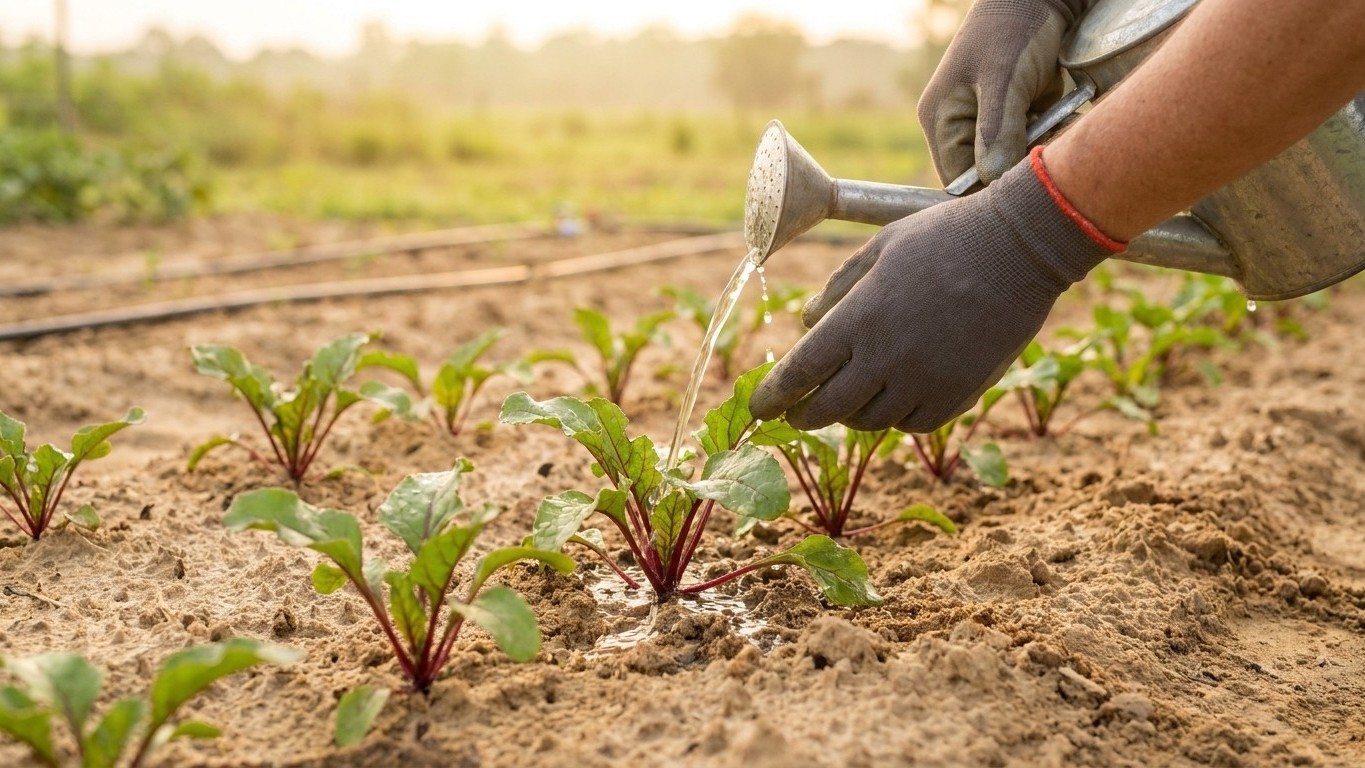

In Louisiana, the two threats to a beet crop are thirst in the first six weeks and heat during root fill, not frost. Beet Soil in Louisiana is typically represented by the Ruston series, which drains fast and holds little organic matter, so beets planted in ground like it need supplemental water from day one and a harvest date locked in before summer heat turns the roots woody. Frost barely factors into the calculation here.
The short answer
USDA’s soil survey data lists the Ruston series as representative of Louisiana. It’s an Ultisol, an old, heavily weathered and leached soil type, and its surface horizon runs about 65 percent sand, 11 percent clay and 24 percent silt, with organic matter around 1.8 percent and a surface pH near 5.5 (slightly acid). It’s classified well drained. For a beet, that combination means the soil sheds water quickly and doesn’t hold much of it in reserve, which is a problem given that Utah State University Extension identifies water stress in the first six weeks after sowing as the trigger for premature flowering, or bolting, in beets. A sandy, fast-draining bed with low organic matter is exactly the kind of ground that dries out between waterings.
The Extension guidance also flags a second, separate failure: heat above 85 F combined with water stress makes the root woody. Louisiana’s Gulf Coast climate runs long, hot summers, and while this page doesn’t have a published count of days above 90 F for a reference city to cite here, the general pattern along the coast is enough to say the window for growing a tender beet root closes earlier in the year than it does farther north. The practical response is the same either way: get beets in the ground early, keep them watered, and pull them before the heat sets in for good.
None of this replaces a soil test. Louisiana spans hundreds of soil series, and the Ruston series is a statewide reference point, not a description of any one garden. A backyard bed built on river-bottom alluvium, a coastal marsh fill, or hill country in the northern part of the state can differ completely from the sandy, acid, low-organic-matter profile described above. Treat the Ruston numbers as a hint about what the region’s ground tends to do (drain fast, run acid, hold little organic matter) and then confirm your own bed’s actual texture, drainage and pH before amending anything.
The six weeks that decide it here
Utah State University Extension recommends sowing beets 2 to 3 weeks before the last spring frost, which puts the first six weeks of root development, the window where water stress triggers bolting, right at the start of the growing season. When to Sow Beets in Louisiana is complicated by the fact that the state’s frost pattern is unusually loose. NOAA’s 1991-2020 Climate Normals for one Louisiana station show the last spring freeze (32 F) falling between January 18 and February 8, but the freeze itself only occurs in 86.8 percent of years at that station. Roughly one year in seven, there’s no freeze at all, and the freeze-free window bleeds across the calendar year rather than sitting neatly in a single season.
That loose pattern cuts two ways for a gardener trying to time beet seed. In southern parishes, where freezes are the exception rather than the rule, using “2 to 3 weeks before last frost” as a planting rule is shaky, because in some years there’s no frost date to count backward from. Farther north in the state, freezes are more reliable and the standard planting math holds up better. Either way, the actual determining factor for the six weeks after sowing isn’t frost risk, it’s whether that stretch of Louisiana spring delivers steady rain or leaves the bed dry.
Gulf Coast spring weather in Louisiana tends to swing rather than settle, with wetter stretches followed by dry spells as fronts move through, and on a sandy, fast-draining Ruston-type soil, a dry spell during those first six weeks after seeding is enough to push the plant toward premature flowering. The seed goes in the ground, germinates, and starts building a root, and if the surrounding soil dries out during that stretch (which it will, given the drainage class), the plant reads that stress as a signal to bolt rather than keep filling out a root. That’s the mechanism worth watching, not the calendar date on a seed packet.
What goes wrong here
- Bolting from dry spells in the first six weeks. A sandy, well-drained bed loses moisture fast, and if a dry stretch hits right after sowing, the beet reads it as stress and shifts to flowering instead of root growth. Water consistently through that window rather than waiting for the plant to show wilting; by the time leaves droop, the bolting signal has often already been sent.
- Woody roots from summer heat. Once temperatures push past 85 F and the plant is also short on water, the root turns fibrous and tough rather than tender. This is a different failure from bolting, tied to later heat rather than early thirst, and the fix is timing the harvest to land before the hot stretch sets in, not just watering harder in July.
- Low fertility from naturally poor soil. The Ruston series carries only about 1.8 percent organic matter and tests naturally low in nutrients because it’s old, weathered and leached. Beets want soil rich in organic matter, so amend with compost, capped at no more than 1 inch of composted organic matter per 100 square feet, rather than assuming native fertility will carry the crop.
- Guessing at planting dates instead of testing soil moisture. Because a freeze doesn’t occur every year in southern Louisiana, backing the sow date off a “last frost” that may not exist that year is unreliable. Check soil moisture and forecast trends directly rather than counting backward from a date that sometimes never arrives.
- Treating bolting and woodiness as the same problem. Watering more after the roots have already gone woody won’t fix bolting that already happened weeks earlier, and vice versa. They’re triggered at different points in the season by different stresses, so the remedy for one doesn’t cover the other.
Checking this against your own county
The Ruston series and the frost data on this page describe Louisiana broadly, not any single yard. Before choosing a planting date or deciding how much to amend a bed, confirm the local numbers with the LSU AgCenter, Louisiana’s land-grant extension service. A parish-level agent can pull the actual soil survey for a specific address, run or interpret a soil test, and give a planting window based on records for that county rather than a single climate station. That’s a better starting point for deciding when to sow than any statewide average.
Common questions
How many days do beets take to mature in Louisiana?
Beets are direct-seeded rather than transplanted, and the days-to-maturity count runs from the seed going into the ground, typically in the 60 to 80 day range depending on variety. In Louisiana, the harvest window matters more than the count itself, since roots need to come out before sustained heat above 85 F sets in and turns them woody.
Does Louisiana’s soil need lime for beets?
The Ruston series runs a surface pH near 5.5, which is naturally acid, but this page doesn’t have a published beet pH preference to compare it against. A soil test through the LSU AgCenter is the reliable way to find out whether a specific bed needs lime before planting, rather than assuming the statewide reference number applies directly.
Can beets be planted in fall in Louisiana instead of spring?
Because a 32 F freeze only occurs in 86.8 percent of years at the reference station, and the freeze-free window straddles the turn of the calendar year, fall planting is worth considering in southern parishes where hard freezes are the exception. Northern Louisiana, with more reliable freezes, still needs the frost timing weighed more carefully.
Why did my beet greens grow but the roots stayed small and tough?
That combination points to woodiness from heat exposure after the root had already started developing, typically when the crop sat in the ground through a stretch above 85 F, especially if water was also short. It’s a separate issue from bolting, which shows up early as flowering stalks rather than a small, fibrous root at harvest.