
In north Florida, indoor pepper seed starting typically falls between early December and mid-January, timed to a transplant date that comes after the last frost and once soil hits 60 F. In central and south Florida, that frost-based math doesn’t apply: those regions run peppers mainly through the cooler months, with summer being the stretch to avoid rather than chase. Which calendar fits depends entirely on where in the state a garden sits.
The short answer
Jacksonville’s climate record, the reference station behind NOAA NCEI’s normals for north Florida, logs an average of 73.2 days a year at or above 90 F. That’s close to ten weeks of the year sitting in temperatures a pepper plant treats as a shutdown signal rather than a growing cue. Above that mark, flowers open and drop before they ever set fruit, regardless of how green and vigorous the plant looks. A pepper can push out leaves all through July and still hand you nothing to pick, because the heat itself is interrupting pollination, not the watering schedule or the soil.
That’s one edge of the window. The other edge is cold, and it works the same way in reverse. Utah State University Extension’s guidance on peppers is blunt about this: fruit set fails at both ends, and nights below 55 F shut things down just as effectively as afternoons above 90 F do. A plant sitting through a cool stretch, even one that never comes close to frost, can drop its blooms the same way an overheated plant does.
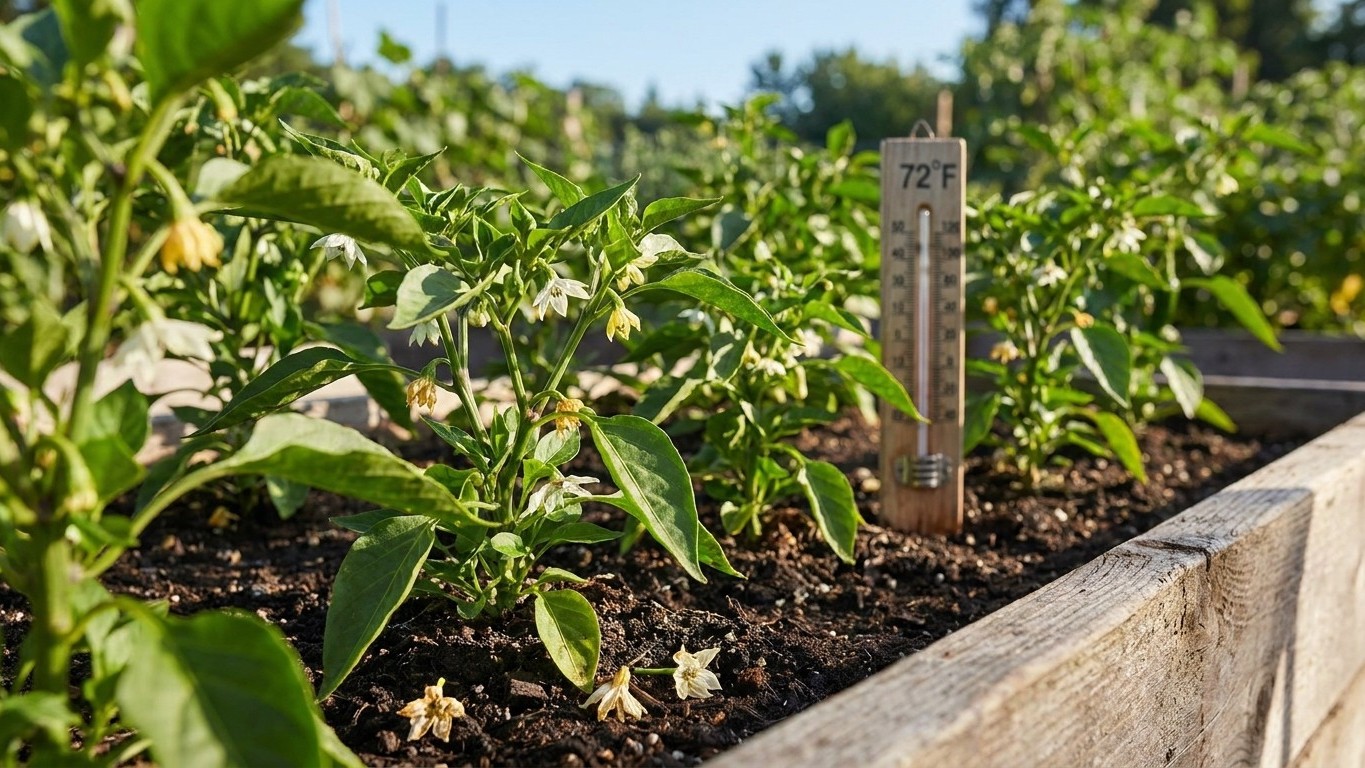
Here’s where the numbers on this site stop and a reader’s own observation has to start. Days above 90 F get tracked here, station by station, because that figure holds steady in the climate record and is useful for planning around. Summer night minimums don’t get the same treatment. They aren’t published here, and they shift too much from block to block, depending on tree cover, elevation, pavement, and distance from open water, for a single station reading to capture reliably. Anyone gardening in Florida needs to watch their own nighttime lows with a home thermometer rather than guess from a map. Latitude doesn’t substitute for this, and neither does the coldest month of the year: a low, open piece of ground can run cool at night in June even while its January average looks mild.
Weigh both thresholds, heat and cold, against your own site before deciding whether a stretch of the season is likely to set fruit or just grow leaves.
When to start seed here
The arithmetic behind a pepper seed-starting date is the same everywhere: settle on a transplant date, subtract 8 to 10 weeks for the seedling to reach transplant size indoors, then check that the soil will actually be warm enough to receive it on that date. In north Florida, the numbers to plug in come from NOAA’s 1991-2020 climate normals for the Jacksonville area, station USW00013889, which put the last spring freeze somewhere between February 16 and March 7. That’s more than a two-week spread, and three winters out of the thirty years in that record saw no freeze at all, so treat the window as a planning range rather than a guarantee.
- Start with the frost window itself: February 16 to March 7 for the Jacksonville-area reference station. A grower further inland or in a low frost pocket should lean toward the later end; one closer to the coast or urban heat may clear frost sooner.
- Check soil temperature separately from the frost date. Frost passing doesn’t mean the ground has caught up; peppers need soil at 60 F before transplanting, and a cool, wet spring can lag well behind the last freeze date.
- Count back 8 to 10 weeks from the transplant target for the indoor sowing date. Counting from the early end of the frost window (February 16) lands seed starting around early December. Counting from the late end (March 7) lands it closer to mid-January.
- That gives north Florida a practical indoor seed-starting window of roughly early December through mid-January, with transplant following once both the frost risk has cleared and the soil has actually warmed, which can run into mid-March in a slow spring.
- In central and south Florida, none of this frost math applies. Those regions are effectively frost-free, so the growing calendar inverts: the main pepper season runs through the cooler months, and summer is the period to work around rather than target. This site doesn’t carry a specific frost date or seed-start window for those regions, and applying the Jacksonville dates there would be a mistake in the opposite direction.
What goes wrong here
Most of Florida’s pepper failures trace back to the same two thresholds already covered, plus a couple of issues the state’s sun and moisture swings create on their own.
- Blossom drop in a hot spell. Once daytime highs climb into the range Jacksonville logs on 73.2 days a year on average, flowers open and fall without setting fruit. Shade cloth in the 30 to 40 percent range over the hottest afternoon hours, plus a heavy mulch layer to keep the root zone cooler, can carry plants through the worst stretch. Accept that a plant may simply pause fruiting during peak heat rather than try to force it.
- Blossom drop in a cool spell. Nights dipping below 55 F stall pollination even with no frost in sight. Since this site doesn’t track summer night minimums, the fix starts with watching your own thermometer, holding off on transplant until nights hold reliably above that mark, and using row cover on any unseasonably cool stretch early in the season.
- Sunscald. Florida’s strong summer sun can scorch both fruit and foliage directly, especially on plants that lost leaf cover to disease, wind, or heavy pruning. Leaving foliage in place to shade developing fruit, and adding shade cloth during the harshest weeks, keeps exposed peppers from blistering on the sun-facing side.
- Blossom-end rot. A dark, sunken patch at the bottom of the fruit usually points to inconsistent watering interfering with calcium uptake, not a lack of calcium in the soil itself. A steady watering schedule and a mulch layer that holds soil moisture even through a hot afternoon do more to prevent it than any soil amendment.
Common questions
Can I Start Pepper Seed in central or south Florida in the same window as north Florida?
No. The frost dates and the December-through-January seed-starting window here apply to the Jacksonville-area station in north Florida. Central and south Florida are effectively frost-free, and the growing calendar there runs on winter as the main season, with summer as the period to avoid. This site doesn’t carry a specific seed-start date for those regions.
What if my soil hasn’t reached 60 F even after the last frost date has passed?
Wait. Transplanting into cold soil stalls root growth regardless of air temperature, and a slow spring can leave soil lagging well behind the frost calendar. Check soil temperature directly with a soil thermometer rather than assuming the frost date and the soil-warmth date line up.
How do I know if my nights are staying above 55 F without a published chart?
Track it yourself with a min-max thermometer or a basic weather station over a week or two before transplanting. Site-level factors like elevation, tree cover, and nearness to water shift night lows enough that a single regional figure won’t reflect a specific yard.
Does Florida’s summer heat mean peppers should skip that season entirely?
Not necessarily, but expect a lull. Once days above 90 F stack up, as they do on 73.2 days a year on average around Jacksonville, plants tend to pause fruiting rather than die outright. Many gardeners keep plants alive through summer with shade and steady watering, then get a second flush of fruit set once temperatures ease.