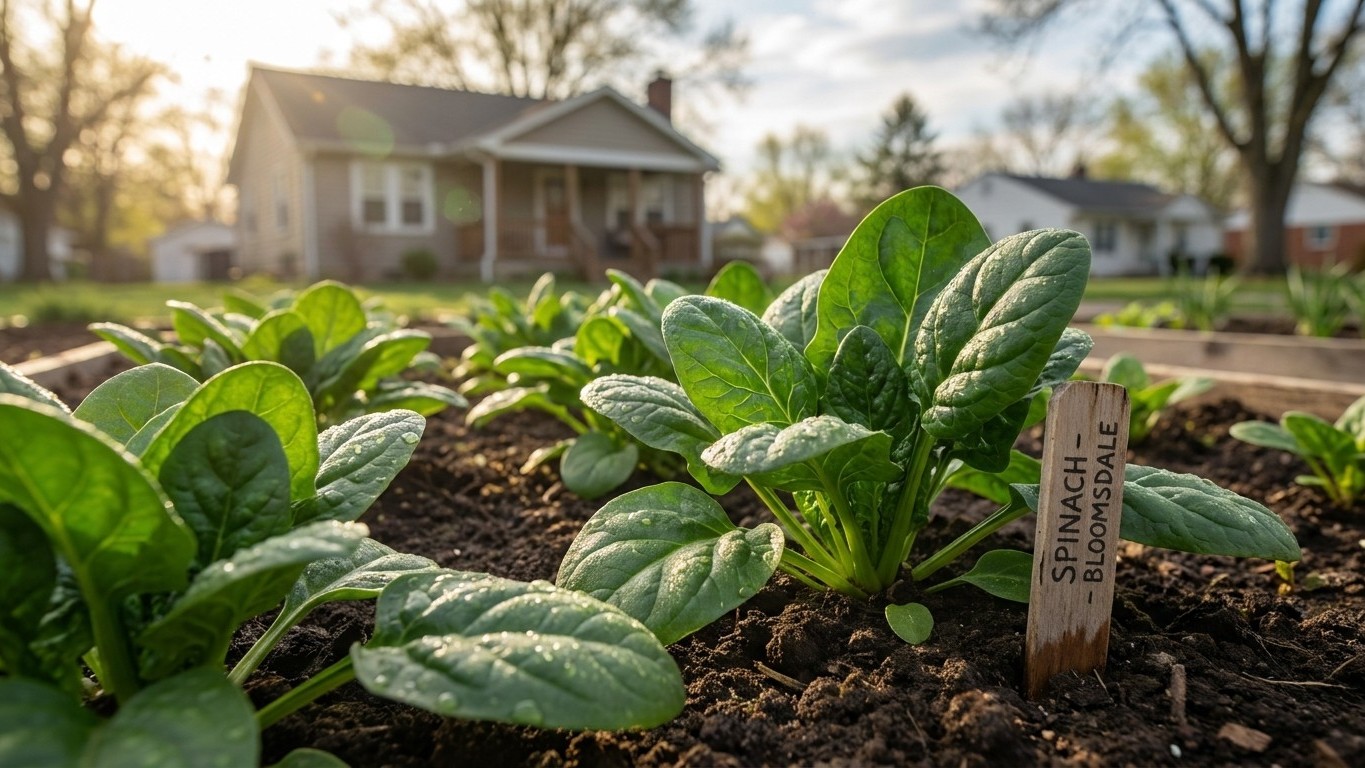

Spinach in Indiana bolts once day length and warmth cross the plant’s tolerance, and both happen fast here. Will Spinach Bolt Early in Indiana? Spring gives a narrow window that usually closes by late May or early June. Fall works backward from the first frost, but the real gatekeeper isn’t the cold, it’s soil that stays too warm to sprout a seed well into August.
The short answer
Indianapolis logs 14 hours and 49 minutes of daylight on the longest day of the year. That number matters more than most gardeners realize, because spinach bolts under long days as well as under heat. A cool, mild summer would not rescue the crop here, because the day length alone is enough to push the plant toward flowering once the calendar rolls past the solstice. There is no shade trick or watering schedule that resets that clock.
Heat piles on top of that. The reference station averages 14.6 days a year at 90 F or above, and spinach starts losing quality and growing poorly once temperatures climb past 75 F, a threshold that is both a growth ceiling and the point where leaves turn bitter. So the honest answer is that Indiana spinach faces a double bind: the days get long enough to trigger bolting at almost exactly the same stretch of the calendar when temperatures start regularly clearing 75 F and pushing toward those 90-degree afternoons. Neither factor alone would be a dealbreaker for very long. Together, they close the spring window quickly and completely.
This is why spinach behaves so differently from a crop like onion, where long days are the whole point, building the bulb rather than ending the plant’s useful life. Gardeners who move between crops sometimes carry the wrong instinct over: more daylight helps onions and hurts spinach. It’s worth keeping that distinction straight, because the two crops are grown at exactly the same latitude, under exactly the same summer sun, and react in opposite ways.
What this means practically for someone planning a garden in central Indiana, or anywhere close to it, is that spinach isn’t a crop you can push deep into summer by choosing a “slow bolt” variety and hoping. The seed sources naming varieties such as Bloomsdale, Melody, Teton, and Olympia don’t publish bolt-resistance ratings or maturity windows for any of them, so there’s no shortcut here worth banking on. The calendar, not the seed packet, decides when the window shuts, which is why When to Sow Autumn Spinach in Indiana matters just as much as knowing when spring planting ends.
How long the spring window really is
Working backward from Indianapolis climate data gives a fairly concrete picture of the usable spring stretch, even without a published days-to-maturity figure for spinach.
- The last spring frost at the reference station falls between April 9 and April 21, with roughly a 10 percent chance of a freeze slipping past even that later date, so anyone sowing on the early edge should keep row cover on hand.
- Spinach seed should go in the ground about two to three weeks before that last frost date, which puts a realistic sowing window somewhere between late March and the first days of April for most of central Indiana.
- From there, the plant has roughly eight weeks of decent growing conditions before day length and rising heat converge. Growth stops being good once temperatures push past 75 F, and that threshold typically arrives as May turns into June across the state.
- That leaves a spring harvest window that, in practice, runs from sowing in late March through a cutoff somewhere in the second half of May, tightening further the closer the calendar gets to the solstice and its 14 hours and 49 minutes of daylight.
- Gardeners in the southern third of the state get a small edge, since frost dates there run earlier than the Indianapolis reference by two weeks or more, which effectively stretches the sowing side of the window forward without changing when bolting hits.
None of this changes if the summer happens to run cool. The day-length trigger fires on schedule regardless of temperature, which is the single most counterintuitive fact about Growing Spinach in a state that otherwise measures its growing season by frost dates and heat spells.
The autumn crop, and when the soil lets you sow
A fall spinach crop flips the spring problem on its head. Day length is now shrinking, which works in the plant’s favor, but two other obstacles take its place: soil that’s still too hot to germinate seed reliably, and a frost date that eventually ends the season outright.
Soil still too warm
Spinach seed germinates poorly once soil temperature climbs above 80 F, and Indiana’s summer heat load, averaging 14.6 days a year at 90 F or hotter, keeps soil well above that mark through most of July and a good chunk of August. Sowing into that warm ground wastes seed and produces a patchy, disappointing stand. Most gardeners here end up waiting until soil has had a chance to cool, which in practice usually means holding off until deep into August before the fall crop goes in.
The frost that ends the season
The first fall frost at the Indianapolis reference station arrives between October 21 and October 30. Counting back the 50 to 75 days that Utah State University Extension recommends between sowing and a fall harvest puts the safe sowing window somewhere between the first week of August and the second week of September, depending on which end of that frost range a gardener plans around. Aim for the earlier target date if the goal is a harvest before the frost window opens, since a late-August sowing that needs the full 75 days pushes harvest close to, or past, the point where frost typically arrives.
Put together, the two obstacles narrow the fall sowing window to roughly a month, and that month sits later in the calendar than most gardeners expect for a “fall” planting. Waiting for the soil to genuinely cool matters more here than watching the thermometer for the first cool morning.
Checking this against your own county
Indianapolis is a single reference station, and Indiana runs long enough north to south that frost dates shift by two weeks or more between the Ohio River counties and the Michigan border. Before locking in a sowing date, check current frost and soil temperature guidance through Purdue Extension, which maintains county offices across the state with localized planting calendars and soil testing resources. A quick call to the county office nearest your garden will confirm how far your local frost dates and soil warm-up actually differ from the Indianapolis numbers used here.
Common questions
Can a shade cloth delay bolting in Indiana?
Shade lowers leaf temperature somewhat, but it doesn’t change day length, which is the trigger that matters most for spinach. It may buy a few extra days on the margin, but it won’t hold off bolting once the solstice passes.
Is there a spinach variety that resists bolting better in this climate?
Varieties such as Bloomsdale, Melody, Teton, and Olympia are commonly available, but no published data compares their bolt resistance or days to maturity. Choosing among them is a matter of preference, not a documented calendar advantage.
Why does fall sowing wait so much later than expected?
Because the obstacle isn’t the approaching cold, it’s soil that’s still too warm to germinate seed well. Soil above 80 F reduces germination, and Indiana summers keep ground temperatures elevated well into August most years.
Does a cooler-than-normal summer change the bolting timeline?
Not much. Bolting is triggered by long days as well as heat, so even a mild summer won’t stop the day-length signal from pushing spinach toward flowering once daylight stretches past the plant’s tolerance.