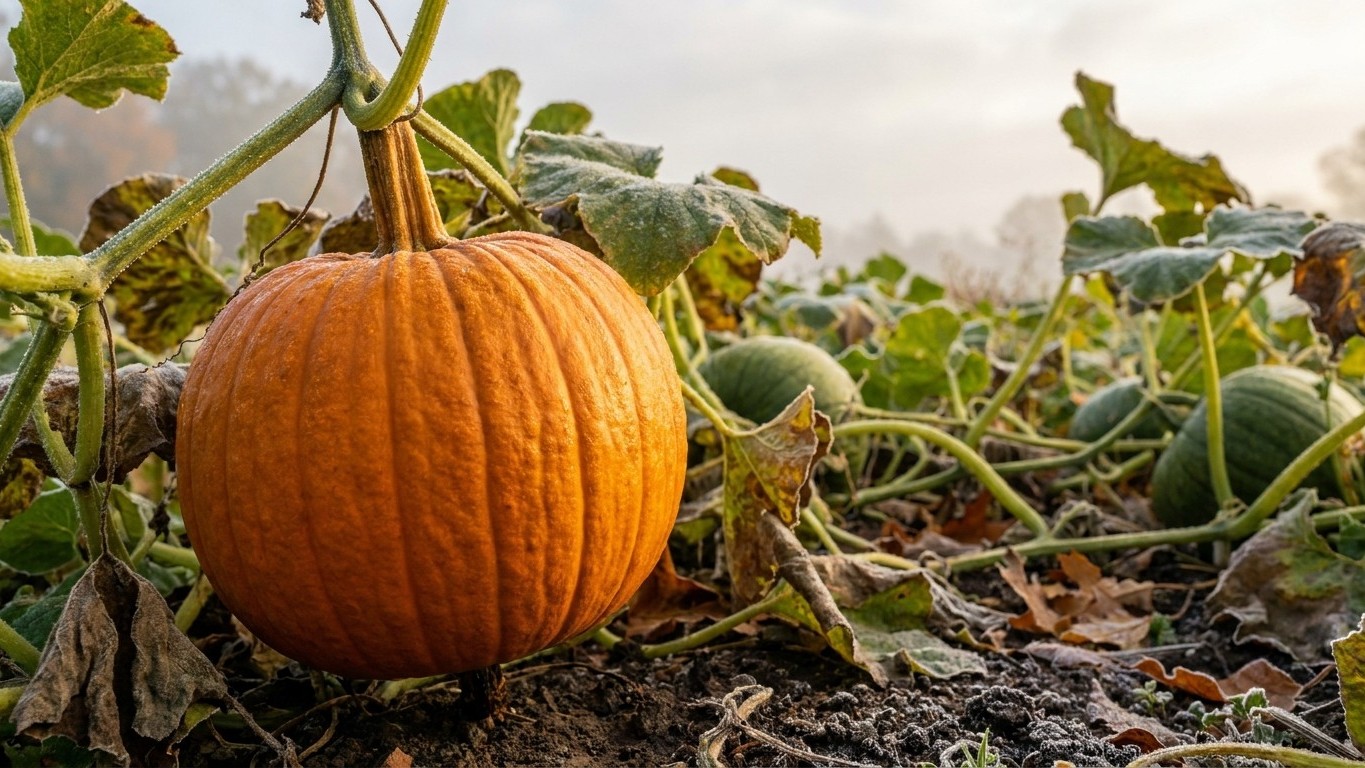

Yes, in most of Louisiana pumpkins can reach the table before frost shuts things down, but the math is tighter than gardeners expect, and the question of Will Pumpkins Ripen Before Frost in Louisiana? deserves a closer look than a quick calendar check. The state’s real obstacle isn’t an early freeze, it’s summer heat stalling flowers and vines dying back long before frost ever shows up. Get the flowering window right and the rest follows.
The short answer
Louisiana’s first fall frost lands somewhere between December 17 and January 8, a window so late that it reshapes how the whole pumpkin calendar works here. Pumpkins need 45 to 55 days after flowering to finish ripening, and that count starts the moment a flower opens, not when the seed goes in the ground. Run that math backward from the frost window and the last flowers with a real shot at ripening need to open somewhere between the final days of October and late November, depending on where your season falls inside that six-week frost band and whether the fruit gets 45 days or the full 55.
That’s an unusually generous stretch compared with most states, and it’s tempting to read it as a green light to plant late. Resist that. South Louisiana barely freezes at all in some years: a 32°F freeze shows up in only about 87 percent of years at the reference station used for these normals, meaning roughly one year in seven brings no hard freeze whatsoever. When that happens, the “window” isn’t really a wall, it’s more of a suggestion, and vines can limp along producing fruit that never quite finishes because summer heat, not cold, already knocked flowering off track months earlier.
North Louisiana plays by different rules. Freezes there arrive far more reliably than along the coast, which means growers in the northern parishes should treat the December end of the frost window as the one that matters, while growers near the Gulf can lean toward the January end, at least in an average year. Neither group should build a planting plan around a single calendar date. The frost window is a band, the flowering deadline built from it is a band, and Louisiana’s climate gives enough year-to-year swing that pinning everything to one day sets a grower up for disappointment.
The practical takeaway: aim to have flowers opening no later than late October if you’re growing in the north, and you can push a little closer to late November along the coast, but treat that later date as a gamble rather than a plan. Everything else, including knowing When to Sow Pumpkins in Louisiana, the variety, the pest pressure through a long hot summer, exists to get flowers open inside that window with margin to spare.
When to sow here
- Start from the last spring frost, not the calendar page. Louisiana’s last spring frost falls between January 18 and February 8, which is startlingly early compared with most of the country. That date tells you when the air stops freezing. It does not tell you when the ground is ready.
- Wait for the soil, not the air. Pumpkin seed wants soil at 65°F before it goes in the ground, and soil warms weeks behind the air. A frost-free week in late January or early February doesn’t mean the dirt is anywhere close to 65°F yet. Growers who sow the moment frost risk passes routinely lose seed to cold, wet soil that just rots it.
- Use row covers to buy time. A row cover laid over prepared beds traps enough heat to move that 65°F soil threshold about two weeks earlier than bare ground would allow. That two-week cushion matters in a state where the growing season is bookended by heat on one side and a long, late frost window on the other.
- Sow as early as the soil honestly allows. Once soil holds steady at 65°F, whether that’s reached on bare ground or with a two-week assist from row cover, get seed in promptly. Every week gained on the front end is a week of buffer against the summer heat that stalls flowering later on.
- Track toward the flowering window, not the harvest date. The goal of an early sowing isn’t an early harvest for its own sake, it’s giving the vine enough calendar room to set flowers before summer heat suppresses fruit set, so those flowers land inside the late-October-to-late-November window described above.
None of this should be read as “sow at the last frost date.” The soil lag is the whole point: in Louisiana specifically, the gap between air warming up and soil actually holding 65°F can push the real sowing window well past what the frost date alone would suggest.
What goes wrong here
- A late flower that never colors. When flowering slips past the safe window, whatever fruit does set simply runs out of days. It sits green on the vine because the 45 to 55 days it needs never fully arrive before frost. The remedy starts at the other end of the season: sow as early as soil conditions allow, use row cover to steal that extra two weeks, and if flowering still looks like it’s running late, hand-pollinate the earliest female flowers you see rather than waiting for bees to find them on their own schedule.
- A fruit caught by frost before it finishes. Even fruit that set inside the safe window can get nicked by an early arrival within the December 17 to January 8 band, especially in north Louisiana parishes where freezes are more consistent. Cover exposed fruit on forecast cold nights with blankets or tarps, and if a freeze is genuinely imminent, harvest with the stem attached and finish curing indoors somewhere it won’t freeze. That’s the extent of the guidance available here; no specific storage temperature or humidity target is published for this step, only that the space must stay above freezing.
- A vine that collapses before the skin hardens. This is the one that has nothing to do with frost. Louisiana’s long, humid summer wears vines down through disease pressure and insect damage well before any cold weather is in play, and a vine that dies back mid-season can’t finish hardening the skin on fruit that’s already set. Squash bugs and cucumber beetles are frequent culprits here; both have their own dedicated pages on managing them in Louisiana specifically and in cucumber beetle control, so scout early and often rather than waiting for visible vine collapse.
- Choosing a variety without checking maturity data first. Names alone don’t tell a grower much. Varieties commonly grown in Louisiana gardens include Jack Be Little, Baby Pam, Small Sugar, New England Pie, Autumn Gold, Connecticut Field, Howden, Big Max, and Cinderella, but no days-to-maturity, size, or color data for any of them is published in the source behind this guide. Treat those names as a starting point for your own research, not a shortcut past the flowering-window math above.
Checking this against your own county
Frost dates and soil temperatures shift across a state as long as Louisiana, and the numbers above come from a single reference station, not a parish-by-parish forecast. Before locking in a sowing date, check current conditions and local guidance through the LSU AgCenter, Louisiana’s land-grant extension service. They track soil temperature trends and pest pressure specific to your parish, which matters more than any statewide average once you’re actually standing in the garden deciding whether this week is the week to put seed in the ground.
Common questions
Can I still get pumpkins if I sow in June in Louisiana?
It depends entirely on when flowers open, not when seed goes in. A June sowing can still work if the vine flowers with enough runway left before the frost window, but pushing sowing later shrinks that margin fast, especially for growers north of the coast where freezes arrive more reliably.
Why does soil temperature matter more than frost date here?
Because Louisiana’s last frost comes so early (January 18 to February 8) that the air warms well before the soil does. Seed sown into cold, wet soil right after frost risk passes typically rots before germinating, regardless of how mild the air feels.
Does south Louisiana ever skip fall frost entirely?
Yes. Roughly one year in seven, no 32°F freeze occurs at all in the reference data behind this state’s frost normals. That’s good news for a slow-finishing vine, but it’s not something to plan around, since the following year can bring frost right at the early end of the window.
Is north Louisiana really that different from the coast?
Enough to matter. Freezes are more consistent in the north, which means growers there should build their flowering deadline around the earlier end of the frost window (mid-December), while coastal growers have somewhat more room to work with toward the January end.