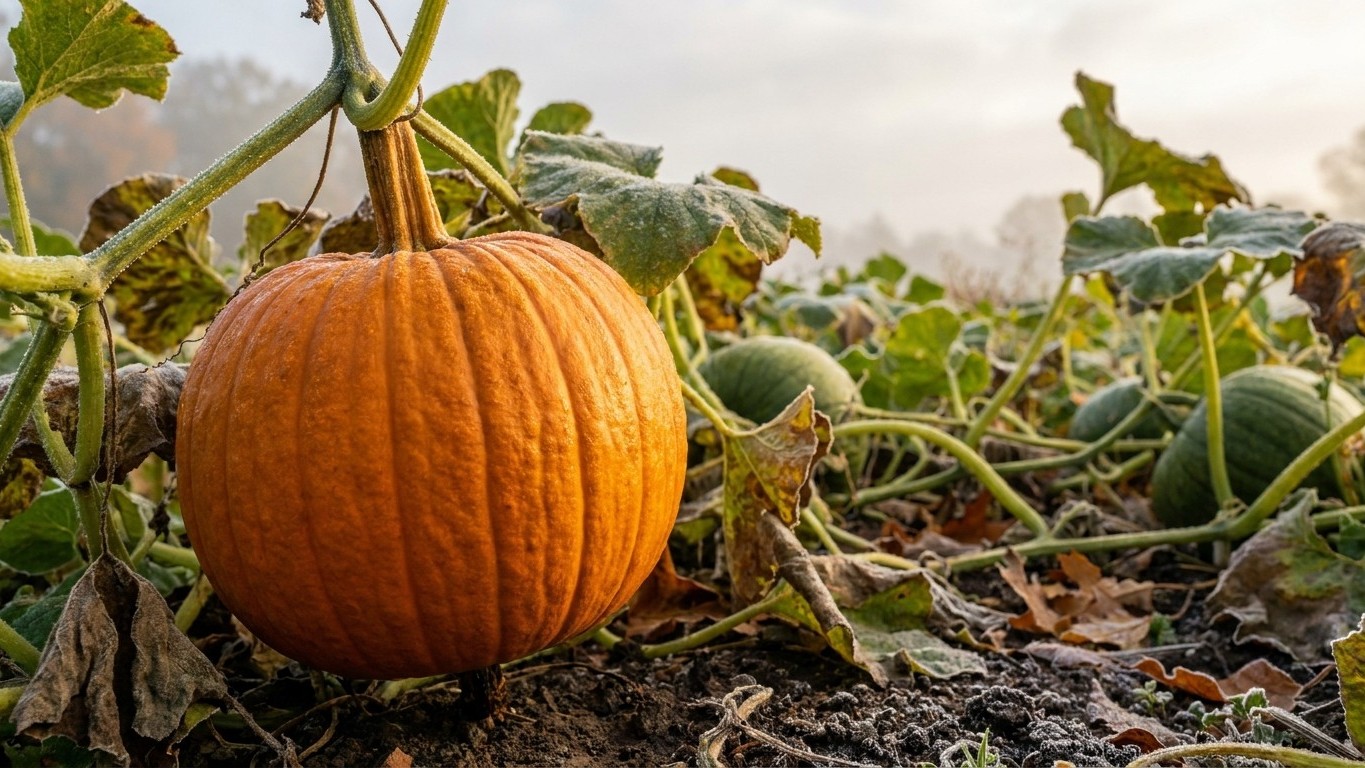

Will Pumpkins Ripen Before Frost in Missouri? Yes, but the margin is thin. Missouri’s growing season lets pumpkins ripen only if their flowers open by roughly early September, because the first fall frost typically lands between October 18 and October 29. Sow too late, and the vine ends up full of green fruit right when frost arrives. The math runs on flowering dates, not seeding dates, and that distinction decides whether your patch delivers orange pumpkins or a lesson in what almost worked.
The short answer
Missouri’s first fall frost arrives somewhere between October 18 and October 29, based on NOAA’s 1991-2020 climate normals. That’s a twelve-day spread, and it matters because pumpkins don’t count days from the seed going into the ground. They count from the moment a female flower opens, and Utah State University Extension puts that clock at 45 to 55 days from flower to ripe fruit.
Run the subtraction and a window appears rather than a single date. Counting back 55 days from October 18, the earlier end of the frost range, lands on August 24. Counting back 45 days from October 29, the later end, lands on September 14. So the latest a flower can realistically open and still finish before frost falls somewhere between late August and mid-September, depending on how much of a cushion you’re willing to gamble away. A gardener who assumes the vine needs the full 55 days, and who expects frost on the earlier side of the range, should treat late August as the real deadline. A gardener banking on a fast 45-day fruit and a late frost can push flowering into mid-September and still come out ahead.
That range also shifts depending on where in Missouri you’re standing. The station behind the NOAA figures sits well north of downtown Kansas City, and the data carries a note that the downtown station itself runs about five days earlier in spring than the airport figures suggest. Southern Missouri, closer to the Arkansas line, tends to stay milder later into fall, which can nudge the safe flowering window a little later than the statewide range implies. None of that changes the underlying arithmetic, only where on the calendar it lands for your particular county.
The practical upshot: if the first female flower on your vine is still waiting to open in late September, the fruit behind it is unlikely to color before frost, no matter how well the vine has been fed and watered. Frost doesn’t negotiate. A pumpkin still deep green when the first hard freeze arrives stays green.
When to sow here
Sowing pumpkin seed too early doesn’t just risk frost damage to a tender seedling, it risks seed that simply rots in cold ground before it ever sprouts. Missouri’s last spring frost falls between April 6 and April 20, but that date only tells you when the air stops freezing. It says nothing about whether the soil is ready to grow a pumpkin. Knowing exactly When to Sow Pumpkins in Missouri means looking past the frost date to the soil conditions themselves.
- Clear the air-frost date first. Missouri’s last spring frost lands between April 6 and April 20, according to NOAA’s climate normals. That window rules out planting before it, but it doesn’t clear the ground for sowing on its own.
- Wait longer for the soil to catch up. Utah State University Extension calls for soil that has reached 65 F before pumpkin seed goes in the ground, and soil temperature lags air temperature by weeks, not days. A field that’s technically frost-free in early April can still sit well below that mark at seed depth two or three weeks later, so anyone sowing on the frost date alone is usually planting into ground too cold to do anything but hold the seed in place.
- Use row covers to close the gap. Clear plastic or fabric row covers trap enough heat at soil level to warm ground faster than bare dirt exposed to spring air, and many growers find covers buy roughly two extra weeks on the front end, letting seed go in sooner than open soil would allow.
- Work backward from the flowering deadline. The late-August-to-mid-September flowering window from the section above means seed needs enough runway to reach flowering by then, accounting for the weeks a vine spends growing leaves and setting its first female blooms before any fruit starts its own 45-to-55-day clock.
Utah State University Extension’s guide to pumpkins in the garden names varieties including Connecticut Field, Jack-o’-lantern, Big Max, Howden, Small Sugar, Cinderella, Jack Be Little, Baby Boo, and Atlantic Giant among the types gardeners commonly grow. The source attaches no maturity days, no size, and no color to any of them individually, and the same 45-to-55-day flowering rule applies across the varieties it covers.
What goes wrong here
- A late flower that never colors. When the first female flower opens past the safe window, the resulting fruit can size up fine but never turn from green to orange before frost cuts the vine down. Watching for and recording your first female flower date, then comparing it to the late-August-to-mid-September deadline, gives you a warning early enough to decide whether to let a later flower set fruit at all or to concentrate the vine’s energy on the ones already forming.
- A fruit caught by frost mid-ripening. Some pumpkins are visibly turning color, just not finished, when the first hard freeze hits. Harvesting with the stem attached before frost arrives, even if the color isn’t complete, beats leaving fruit on a dying vine; Utah State University Extension’s guidance is simply to keep harvested pumpkins somewhere they will not freeze afterward, with no specific storage temperature published beyond that.
- A vine that dies back before the skin hardens. Foliage can collapse from disease, drought stress, or an early light frost well before the fruit’s rind has toughened enough to store. Once the vine is gone, the fruit stops developing that protective hardness, so cutting fruit free with a length of stem and moving it out of the weather as soon as the vine shows serious decline protects whatever ripening progress has already happened, rather than leaving it exposed to weather the plant can no longer buffer.
For the insect pressure that often triggers that vine decline before frost even becomes the issue, see this site’s pages on squash bugs in Missouri and cucumber beetles in Missouri.
Checking this against your own county
The frost windows above cover Missouri broadly, but a state stretches from the Iowa border to the Arkansas line, and five or six days of difference in either direction can matter when you’re counting backward from a hard deadline. Before locking in a sowing date, check the local numbers with University of Missouri Extension, which tracks county-level frost data and can tell you whether your particular spot runs closer to the early or late end of the statewide range.
That’s especially worth doing if you garden near the Kansas City airport station itself, since the downtown figures already run about five days earlier in spring, or in the southern part of the state, where fall frost tends to arrive later than the statewide window suggests.
Common questions
Can I still plant pumpkins in July in Missouri?
It depends on the variety’s own growth habit and how close you are to the late-August-to-mid-September flowering deadline. A July sowing leaves little room for a vine that’s slow to reach its first female flower, so it only works if that flower opens well within the safe window described above.
What happens if frost hits before a pumpkin turns orange?
The fruit stops developing color and won’t finish ripening off the vine the way a tomato might. Utah State University Extension’s guidance is to harvest with the stem attached before frost and store where the fruit will not freeze, rather than leaving it exposed once a hard freeze is expected.
Do all pumpkin varieties need the same 45 to 55 days?
That range comes from Utah State University Extension’s general pumpkin guidance and applies broadly across the varieties it names, including Connecticut Field, Howden, and Small Sugar among others. The source doesn’t publish variety-specific day counts, so treat 45 to 55 days as the working figure regardless of which type you’re growing.
Should I harvest pumpkins before frost even if they’re still green?
If a hard freeze is imminent and the fruit shows no sign of coloring, cutting it free with the stem attached at least stops further weather damage, even though a green pumpkin won’t continue ripening toward orange once separated from the vine. Whether it’s worth keeping at that point is a judgment call the published guidance doesn’t settle either way.